For a printable version of this webpage: Raspberries
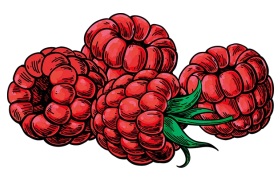
Raspberries
Skagit County produces over 4 million pounds of raspberries annually. This edible fruit in the rose family probably got its name from the old English word “rasp” meaning “rough berry” because of its rough surface. Raspberries can range in color from the popular red and black varieties to purple, yellow, or golden. These sweet, tart berries have a short shelf life and are harvested only during the summer and fall months. Raspberries are a fragile fruit and whole berries are best preserved frozen.
Nutrition
Each color of berry has a unique composition of vitamins, minerals, and antioxidants. Red raspberries are a good source of vitamin A, vitamin C, and fiber. One cup contains 70 calories and has no fat or cholesterol.
Selection
Raspberries are ready when they separate easily from the stem. When purchasing berries, choose firm, plump, full-colored berries. Because raspberries are highly fragile with short storage capacity, buy only those you can use or preserve immediately. Before processing, rinse berries under running water.
Storage
Handle gently and refrigerate quickly. Optimum storage conditions are 32°degrees F. Do not wash raspberries until just before using and avoid soaking or submerging them in water.
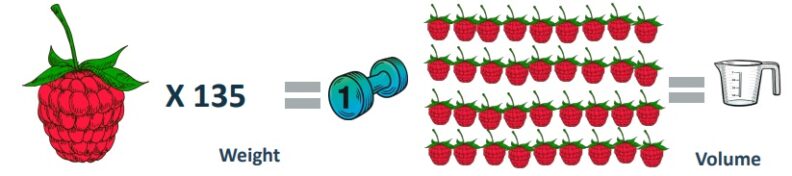
Measurements
Freezing
- Sort, wash, and thoroughly drain.
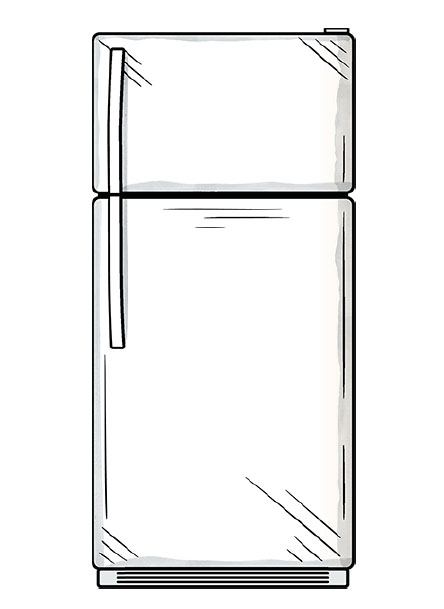
- Place raspberries in moisture/vapor-proof freezer containers or freezer-weight plastic bags. Leave ½ inch of headspace for expansion during freezing.
- Berries can also be frozen individually on a tray, then packed into containers once frozen.
- Additional options for freezing berries include packed with sugar, or in a sugar syrup. To freeze with sugar carefully mix sugar into berries, stirring until sugar is dissolved. Pack into containers leaving ½ inch headspace.
- Pack into moisture/vapor-proof freezer containers or freezer-weight plastic bags. Label, seal and freeze.

Tip: Frozen berries or puree may be used later to make fruit spreads, juice or in baking.
Drying
Fruit Leathers
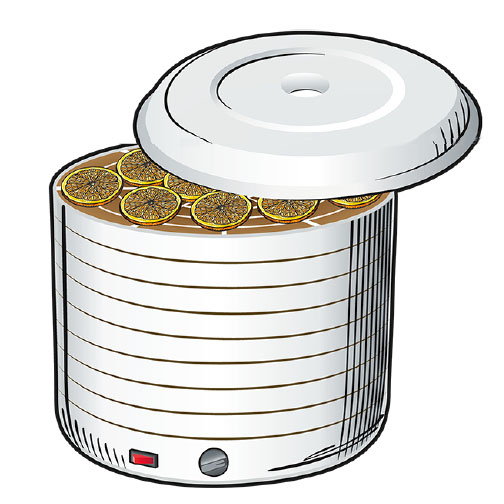
Raspberries are not recommended for drying because of their high seed content and slow drying time; however, raspberries make excellent fruit leathers.
To Make Raspberry Fruit Leathers:
- Purée berries, strain seeds, sweeten to taste as desired and pour on a fruit leather drying sheet or drying tray covered with plastic wrap.
- Place in a dehydrator or warm oven (140° F.) and dry until leathery with no moisture pockets.
- Cool thoroughly. Roll or cut into bite-size pieces. Package fruit leathers in moisture/vapor proof containers. Label. Store in a cool, dark, dry place.
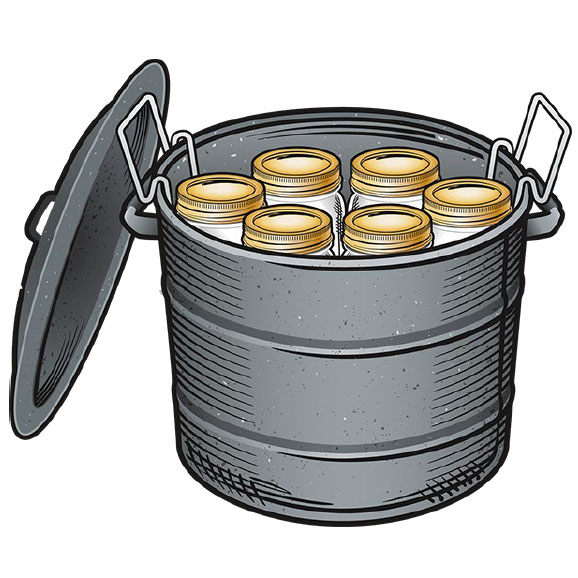
Boiling Water Canning
Raspberries can be processed in the boiling water canner, but because they are so fragile, canning does not result in a quality product.
Canned Raspberries
An average of 12 pounds is needed per canner load of 7 quarts; 8 pounds is needed per canner load of 9 pints.
Wash and sort. Pack berries in hot jars (shake gently to get full pack). Cover with boiling sugar syrup, fruit juice or water to 1/2-inch headspace. Remove air bubbles. Wipe rims with a clean, damp paper towel. Adjust two-piece lids and process in boiling water canner according to directions below.
Once processing is complete, turn off heat, remove canner lid and wait 5 minutes before removing jars. Let cool at room temperature, undisturbed, for 12 to 24 hours and check for seals. Wipe jars, remove rings, label, and store in a cool, dry place.
Processing Directions for Canned Raspberries:
| Style of pack | Jar Size | 1–1,000 ft | 1,001–3,000 ft |
| Hot | Pints | 15 minutes | 20 minutes |
| Hot | Quarts | 20 minutes | 25 minutes |
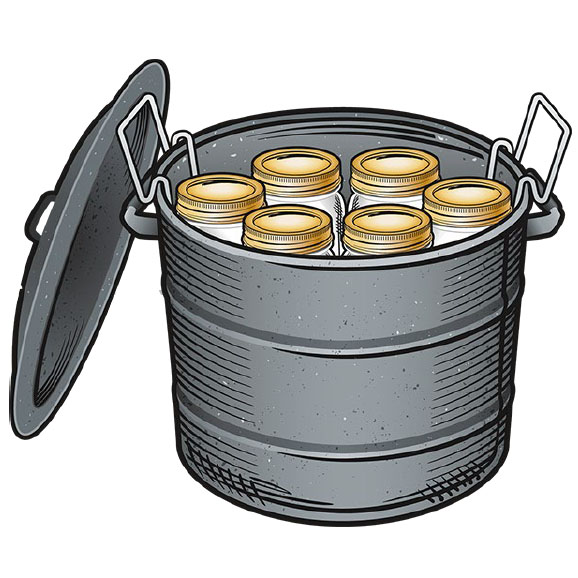
Boiling Water Canning
Raspberries can be made into a variety of fruit spreads, either alone or in combination with other fruits. Recipes for jams, jellies and preserves can be found in commercial pectin packages. Options are available for full sugar, low sugar and freezer jam products. Recipes using pectin have been carefully formulated and should be followed exactly. Cooked fruit spreads must be processed in a boiling water canner for storage at room temperature.
Raspberry Syrup
Select 6½ cups of fresh or frozen berries. Wash, and crush in a saucepan. To prepare juice, heat fruit to boiling, then reduce heat simmer until soft (5 to 10 minutes). Strain mixture through a colander and drain until cool enough to handle. Strain collected juice through a double layer of cheesecloth or jelly bag. Discard the dry pulp.
The yield of pressed juice should be about 4½ to 5 cups. Combine juice with 6¾ cups of sugar in a large saucepan, bring to boil, and simmer for 1 minute. For thicker syrup, increase cooking time.
To make a syrup with whole fruit pieces, save 1 or 2 cups of the fresh or frozen fruit. Add fruit when adding sugar, and simmer as directed for syrup.
Remove from heat, skim off foam, and fill into hot half[1]pint or pint jars, leaving ½-inch headspace. Wipe rims with a clean damp paper towel. Apply two-piece lids and process in boiling water canner according to directions below.
Once processing is complete, turn off heat, remove canner lid and wait 5 minutes before removing jars. Let cool at room temperature, undisturbed, for 12 to 24 hours and check for seals. Wipe jars, remove rings, label, and store in a cool, dry place.
Processing Directions for Pear Preserves:
| Style of pack | Jar Size | 1–1,000 ft | 1,001–3,000 ft |
| Hot | Half Pints or Pints | 10 Minutes | 15 Minutes |
Preserve Skagit Crop Sheets describe three food preservation techniques—freezing, drying, and boiling water canning—consistent with USDA Food Preservation and Food Safety recommendations. Pressure canning for low acid foods such as meats and vegetables is not included.
Additional resources and recipes, as well as information on Pressure Canning, can be found on the WSU Skagit Food Preservation Website https://extension.wsu.edu/skagit/fam/food-preservation/ or the National Center for Home Food Preservation https://nchfp.uga.edu/index.html.
Copyright 2022 WSU Skagit Extension. Any opinions, findings, conclusions, or recommendations expressed on this fact sheet are those of the author(s) and do not necessarily reflect the view of the USDA. WSU Extension programs are available to all without discrimination