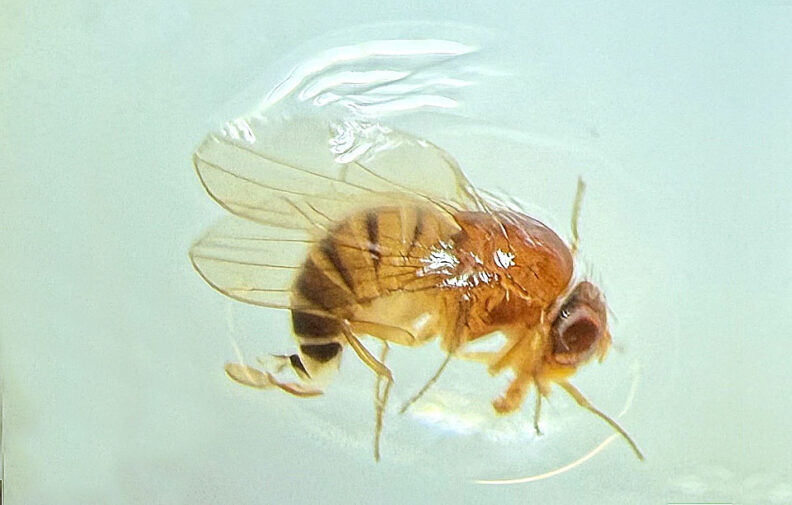
Monitoring for Spotted Wing Drosophila Begins in Skagit County
Monitoring for Spotted Wing Drosophila (SWD) in blueberry fields throughout Skagit County began on May 26, 2026. Traps are checked weekly to track the presence of adult flies and provide growers with timely information about pest pressure during the growing season.
This year, monitoring has revealed an atypical pattern of emergence.
As of June 12, 2026, the Skagit County monitoring program has recorded a cumulative total of 1,302 adult SWD flies. For comparison, the average cumulative count at this point in the season since 2017 is only 56 adult flies.
Trap counts alone do not determine fruit infestation levels, and it’s important that blueberry producers know the number of larvae in fruit, especially before peak harvest season.
Why Early Monitoring Matters
Spotted Wing Drosophila is different from many fruit pests because females can lay eggs in healthy, ripening fruit. Once larvae develop inside berries, fruit quality can quickly decline, leading to economic losses and harvest challenges.
SWD populations can change rapidly depending on environmental conditions such as temperature, humidity, and food availability. That’s why monitoring both adult and larval populations is essential throughout the season.
Looking Beyond Trap Counts
Adult trap catches provide an early warning system, but inspecting fruit for larvae gives further insight into what is happening inside the crop.
According to researchers Tait et al. in the Journal of Economic Entomology:
“Monitoring for larvae within fruit has the advantage of providing real-time information that growers can use to adjust insecticide applications and/or harvest schedules.”
Fruit inspections can help producers determine whether management actions are needed and whether harvest timing should be adjusted to protect fruit quality.
The Fruit Dunk Method
This simple technique allows growers to inspect fruit samples and identify larvae.
Resources:
Regular fruit inspections are a great way to determine the status of fruit quality. The fruit dunk method is one of the most effective ways to find SWD larvae in ripening blueberries as blueberry harvest approaches, and SWD populations continue to develop.