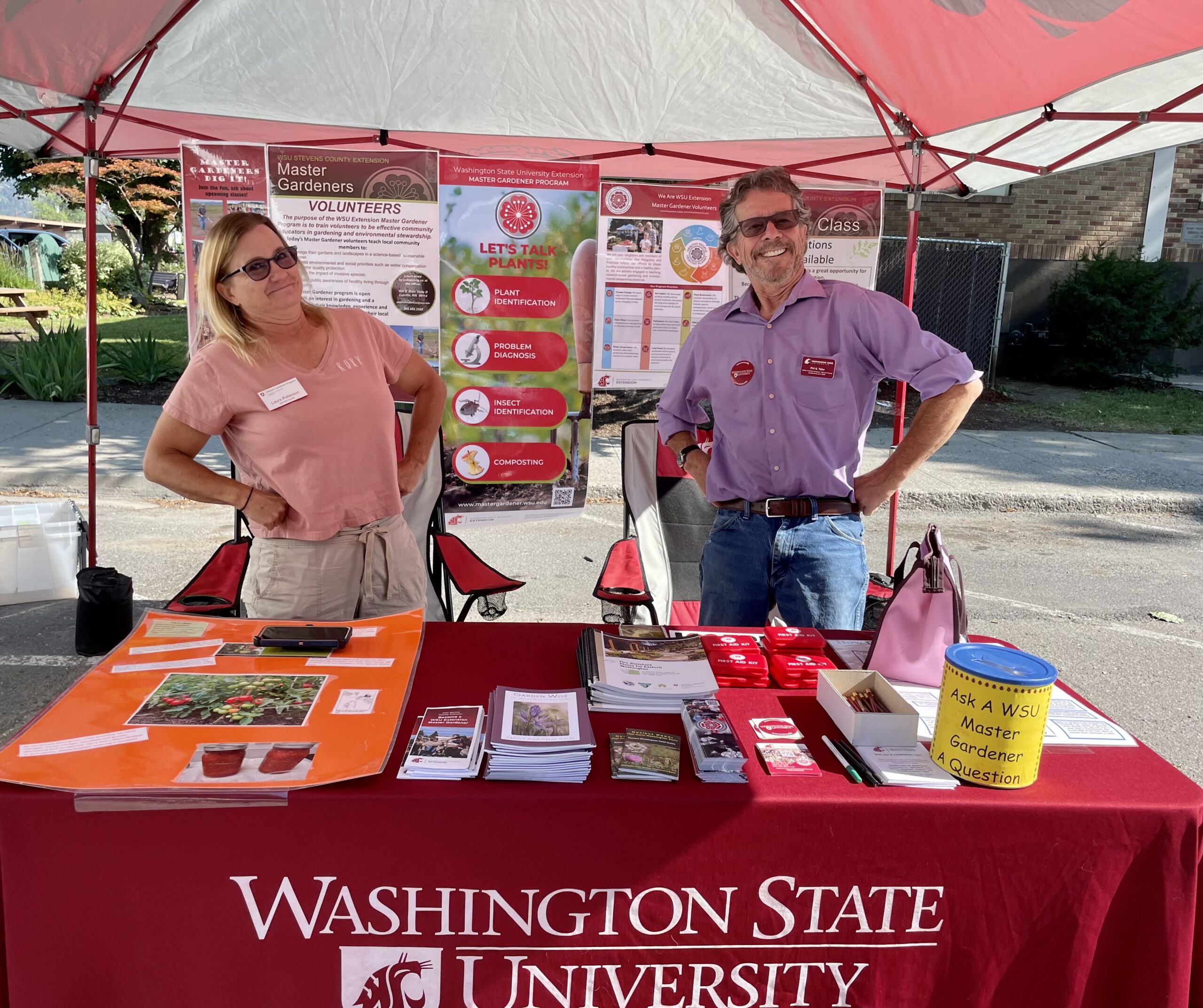
Ask a Master Gardener

We’re trained to help you!
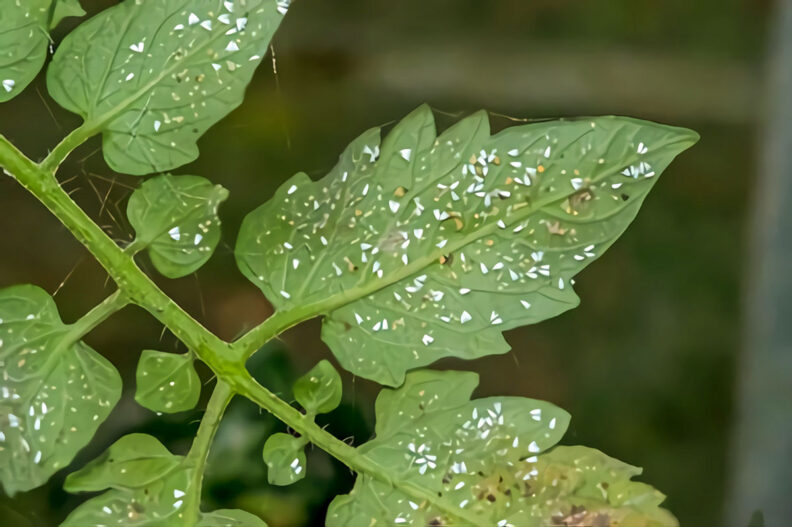
For more than a half century, home gardeners have been bringing us their questions and issues. We have University trained volunteers who can help you tackle those intractable problems! Our diagnostic team specializes in pinpointing issues with plants and pests, offering free research-based advice on effective management strategies for both the pests and the overall health of gardens and landscapes.
You can also do a quick lookup in our collection of local weeds and pests that we have compiled for you.
More Information
Ask a Master Gardener
Physical Samples
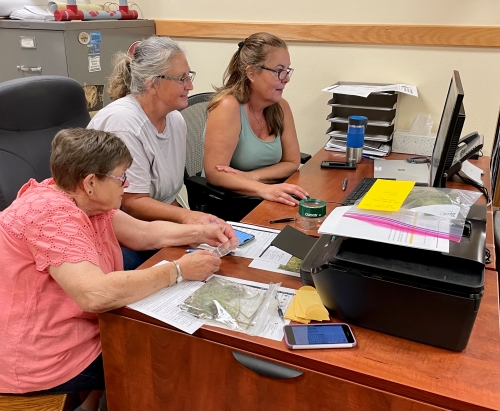
Bring in a plant or bug to the Stevens County Extension office!
- Samples must be in a sealed, transparent glass or plastic container.
Master Gardener Office Hours:
(Mid-March through late September)
- Mondays, 9-11 a.m.
- Thursdays, 1-3 p.m.
Ask a Master Gardener Email/Online
For your convenience, you can submit questions, including photos, by either:
- emailing us at: AskaMasterGardener@stevensmg.org
- filling out the Question Submission form
Photos should be in focus, and if possible, taken close up and farther back, and/or from different angles if needed. The next time Master Gardeners are in the office, they will research your question/issue and send a detailed email response.
Help us to Help You: please complete the appropriate form below and include it with your sample/question.
- Lawn or Turf Problem Diagnosis Form (pdf) – Use this form for any lawn/grass/turf issues.
- Ornamental Plant Problem Diagnosis Form (pdf) – Use this form for any Ornamental plants or garden issues.
- Insect (Pg 1) or Plant/Weed (Pg 2) Identification Form (pdf) – Use this form for any insect or plant you want identified.
NOTE: We do NOT do soil-testing at this office. Soil-testing laboratories in Eastern Washington can be found in this downloadable PDF (instructions on collecting a good soil sample included): Soil Testing Packet (pdf)
Other Research-Based Resources
Hortsense
Hortsense contains home gardener fact sheets for managing plant problems.
Other gardening resources
Find publications and links to a vast library of gardening resources.

Evergreen Thumb Podcast
Gardening Tips and Insights with WSU Extension Master Gardeners
Local Gardening Info
Weeds to Watch Out For
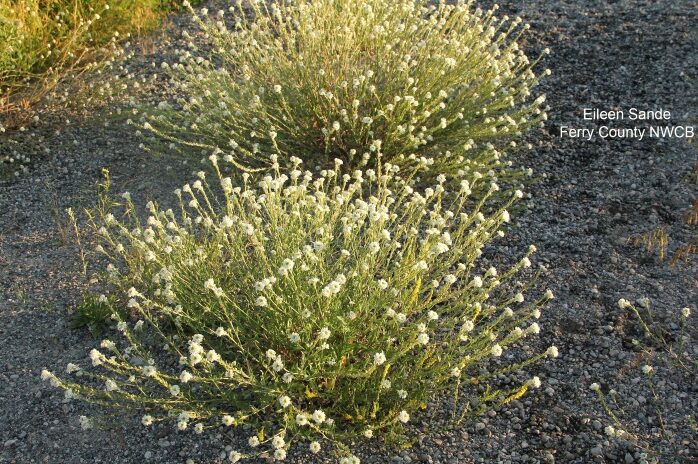
Hoary Alyssum
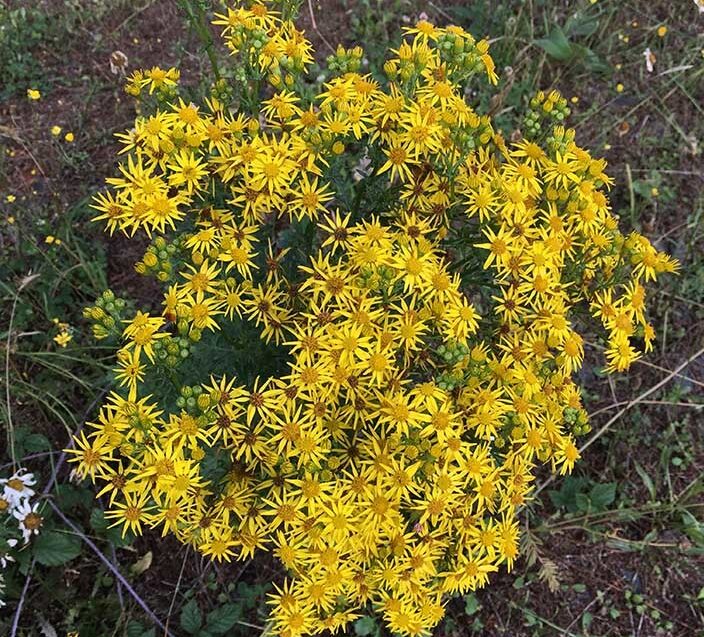
Tansy Ragwort
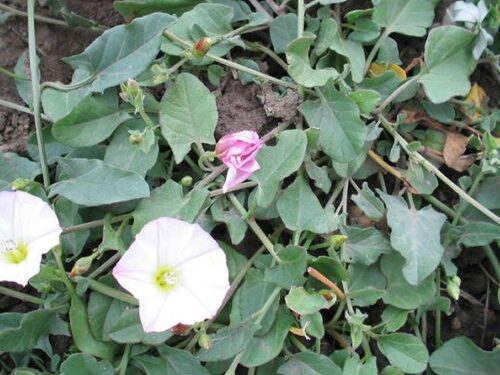
Field Bindweed
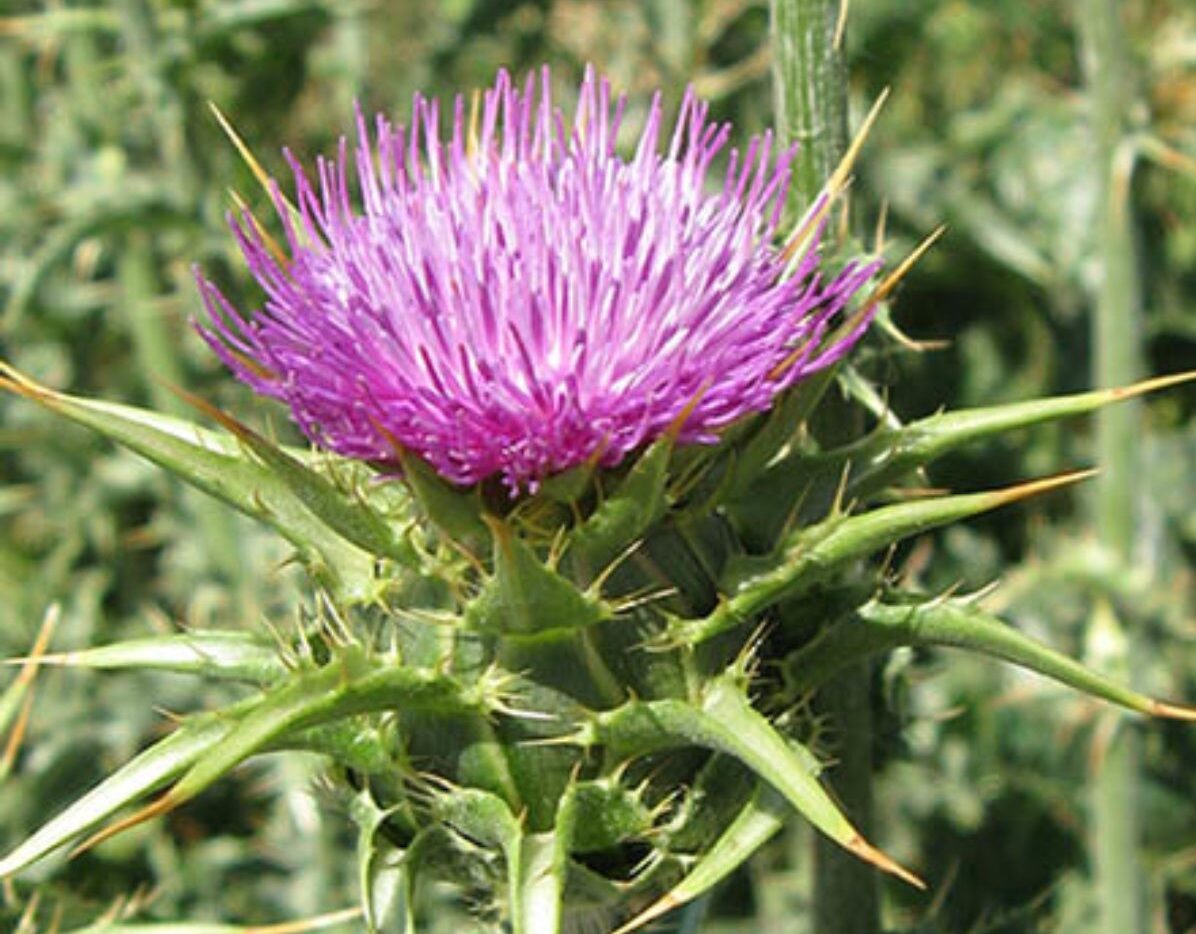
Milk Thistle
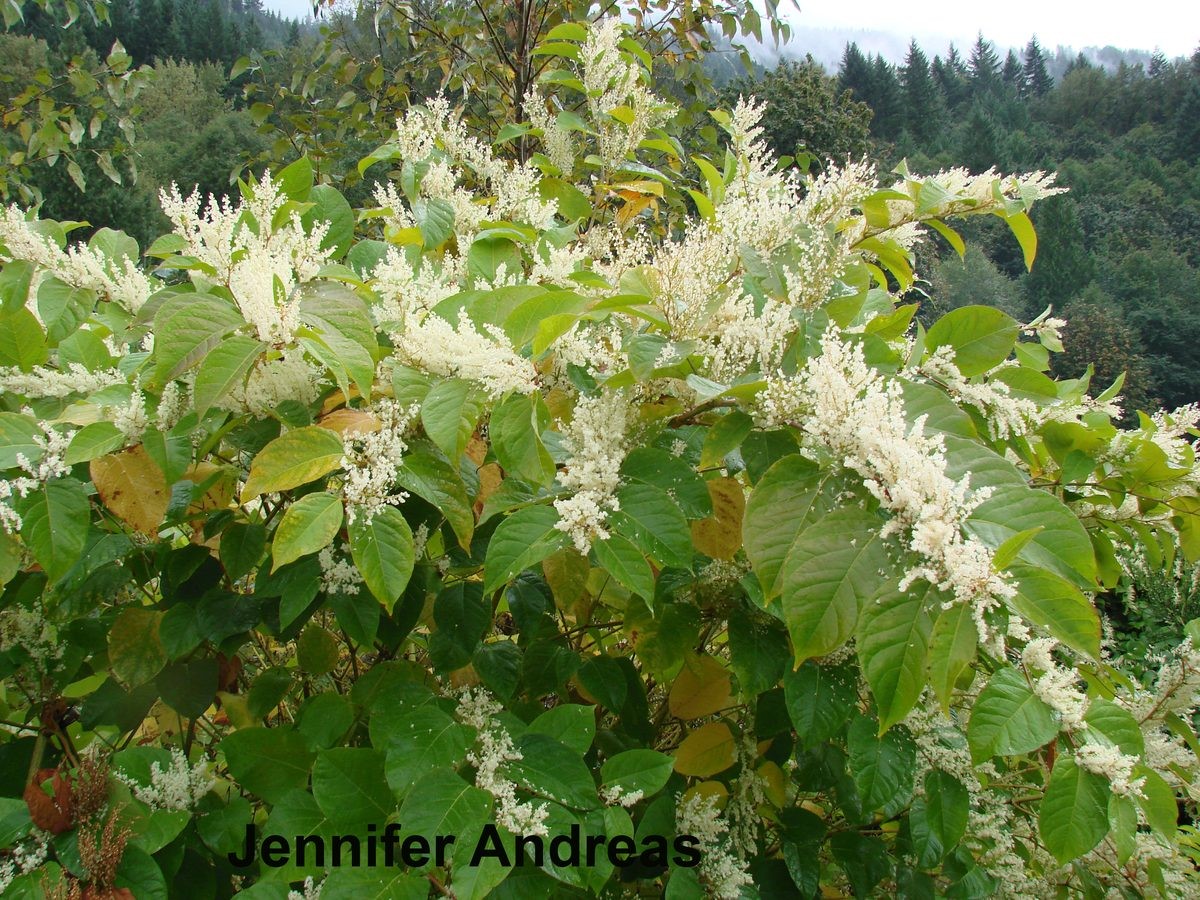
Japanese Knotweed
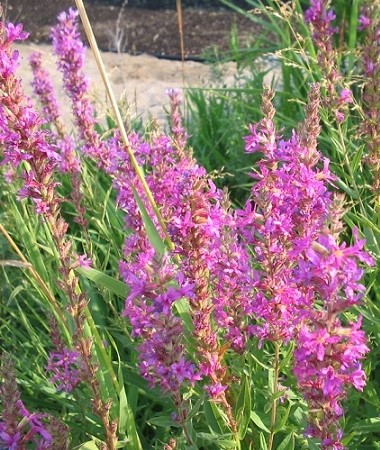
Purple Loosestrife
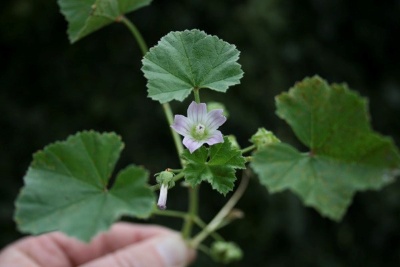
Common Mallow (Cheeseweed, Buttonweed)
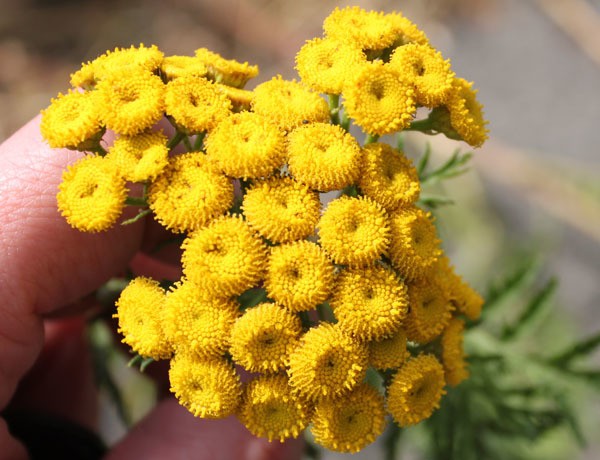
Common Tansy (Tanacetum vulgare)
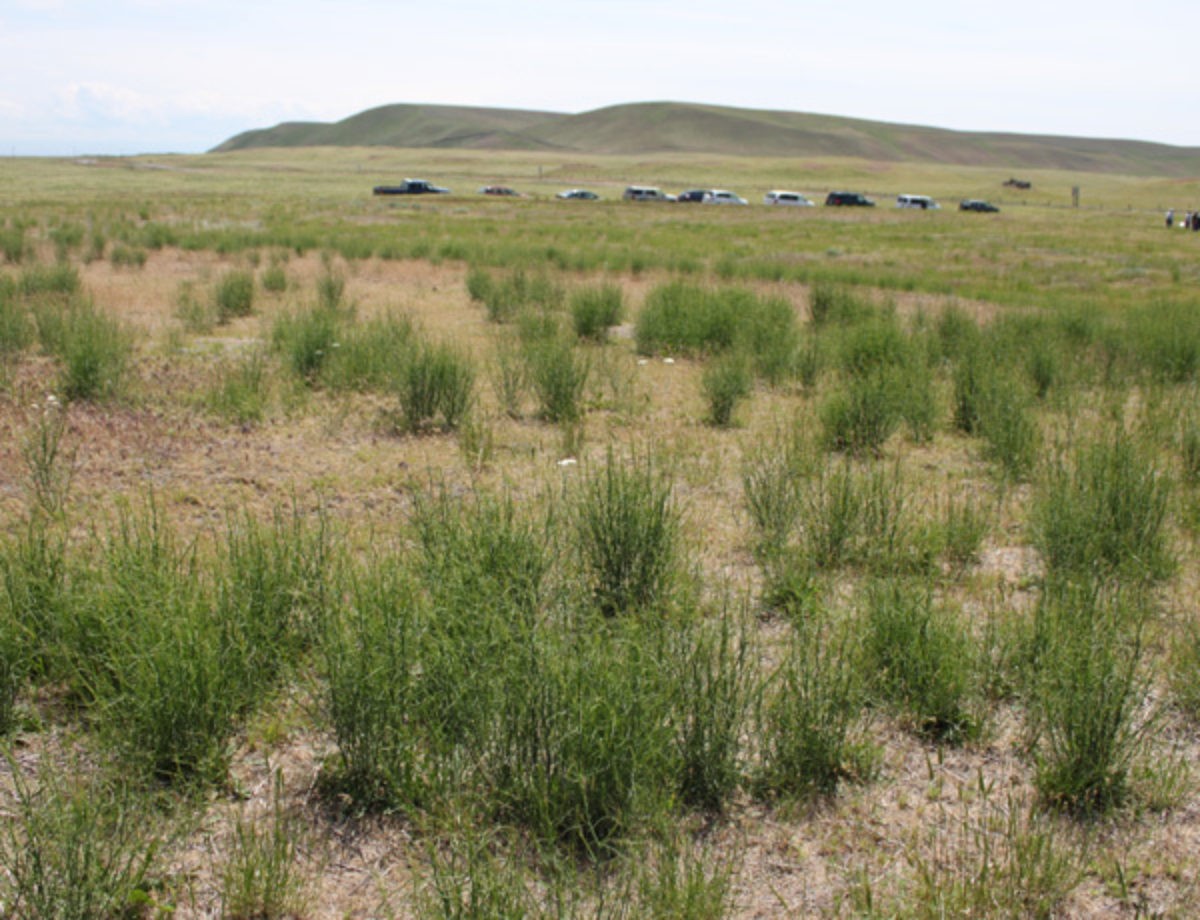
Rush Skeletonweed (Chondrilla juncea)

Dandelions
Insects to Watch Out For
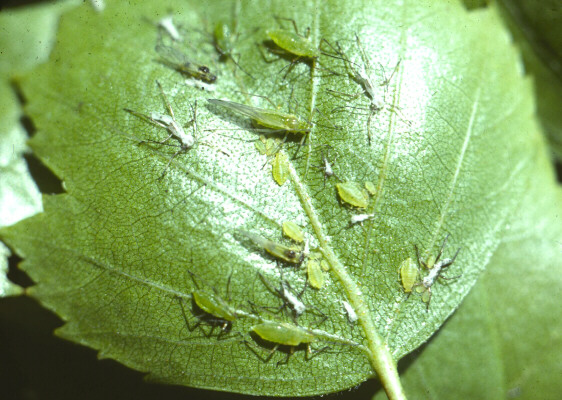
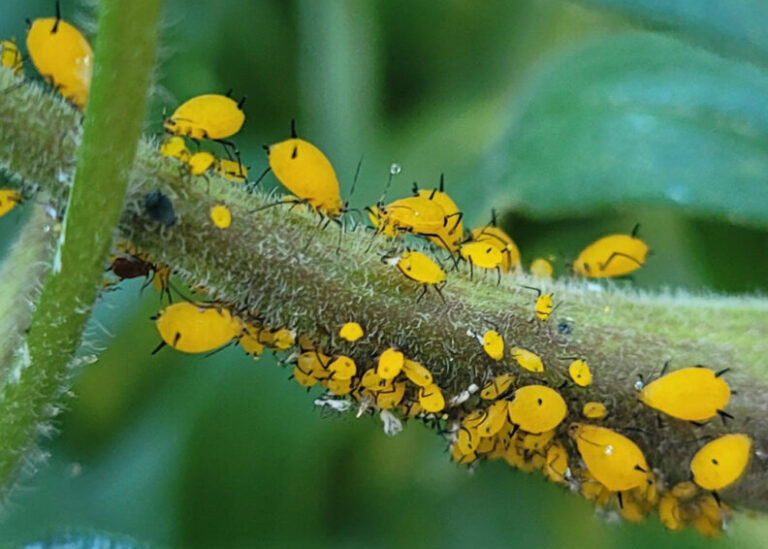
Aphids
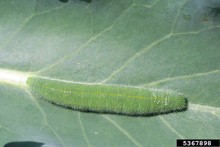
Cabbageworm
– Adults are white butterflies with black spots on the forewings.
– Eggs are yellow and oblong and are on both upper and lower sides of leaves.
– Caterpillars can grow up to 1 inch in length and are velvety green with faint yellow stripes running lengthwise down the back and sides.
– They move sluggishly when prodded.
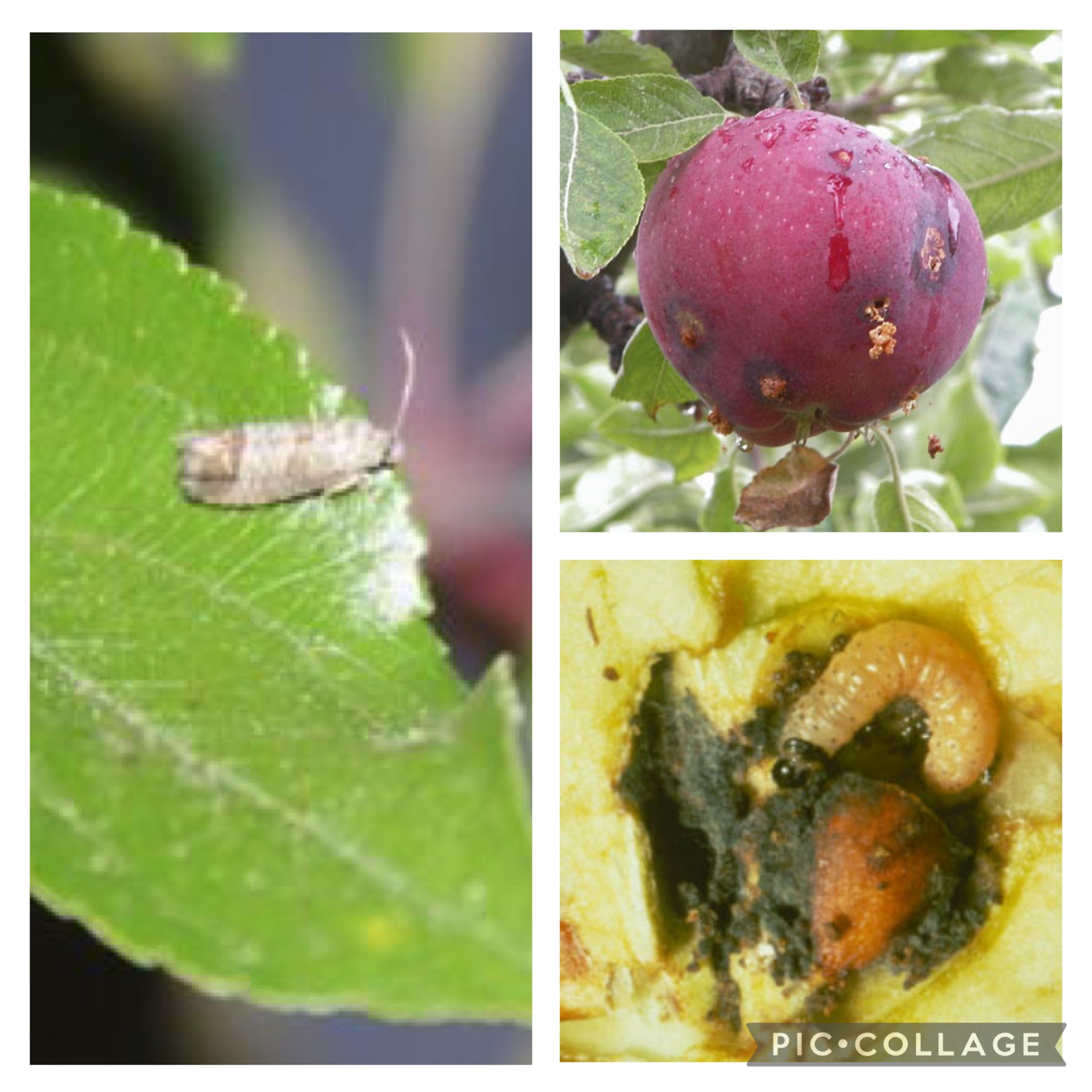
Codling Moth (Cydia pomonella)
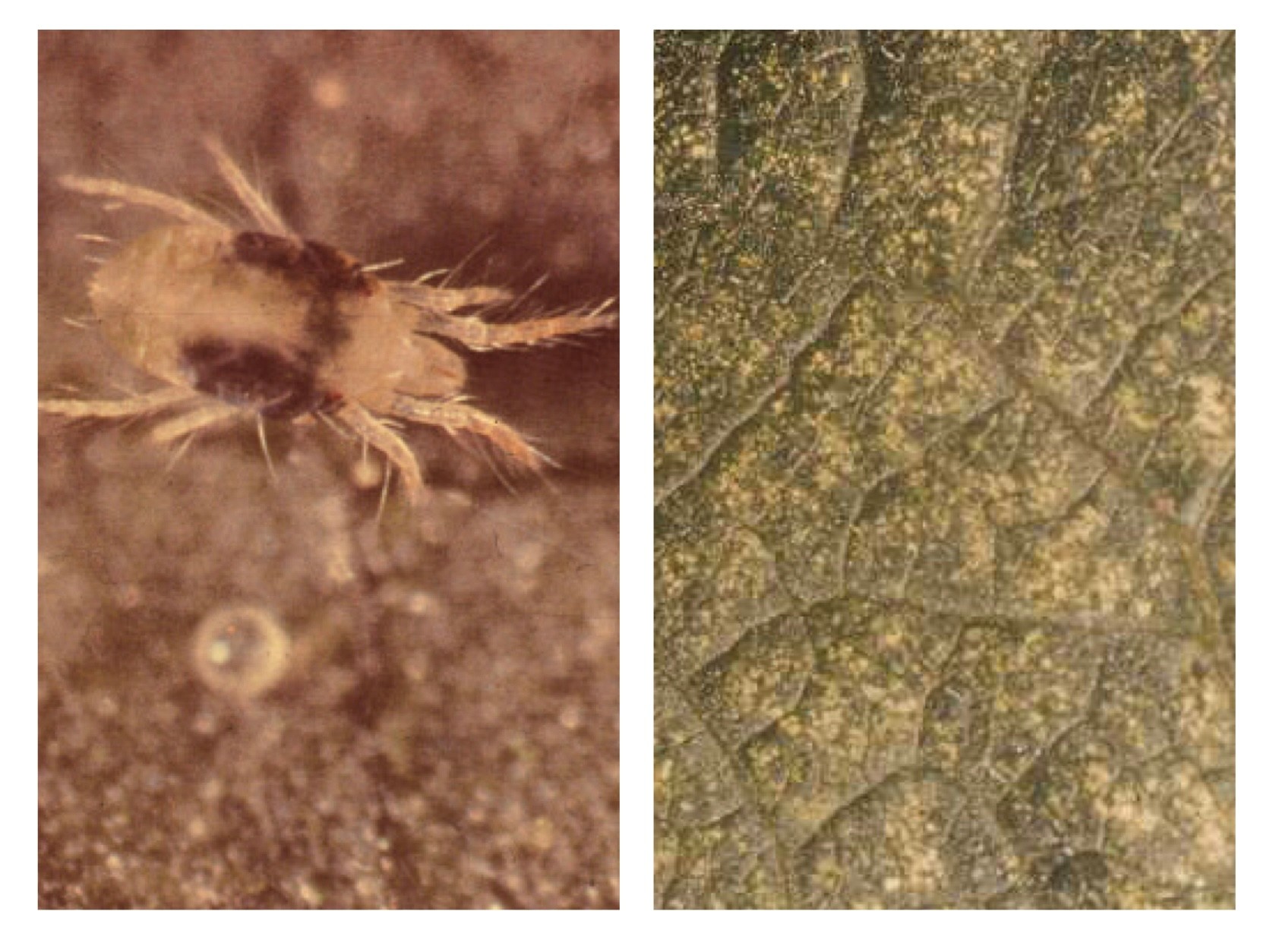
Spider Mites (Tetranychidae)
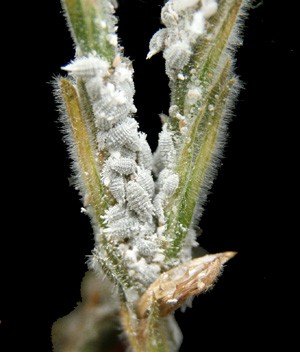
Mealybug (Pseudococcidae)
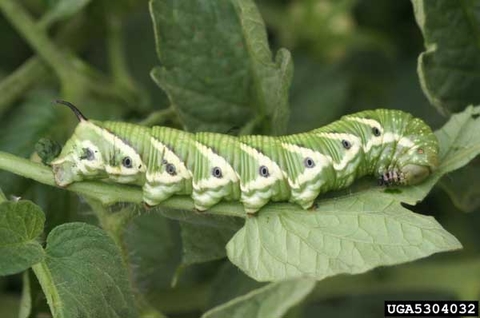
Tomato Hornworm
They are very large caterpillars with a horn-like tail, and their favorite plant is tomato.
Hornworms chew leaves and can completely defoliate plants, as well as chew holes in the fruit.
Physical removal is usually the only necessary management
Beneficial Insects
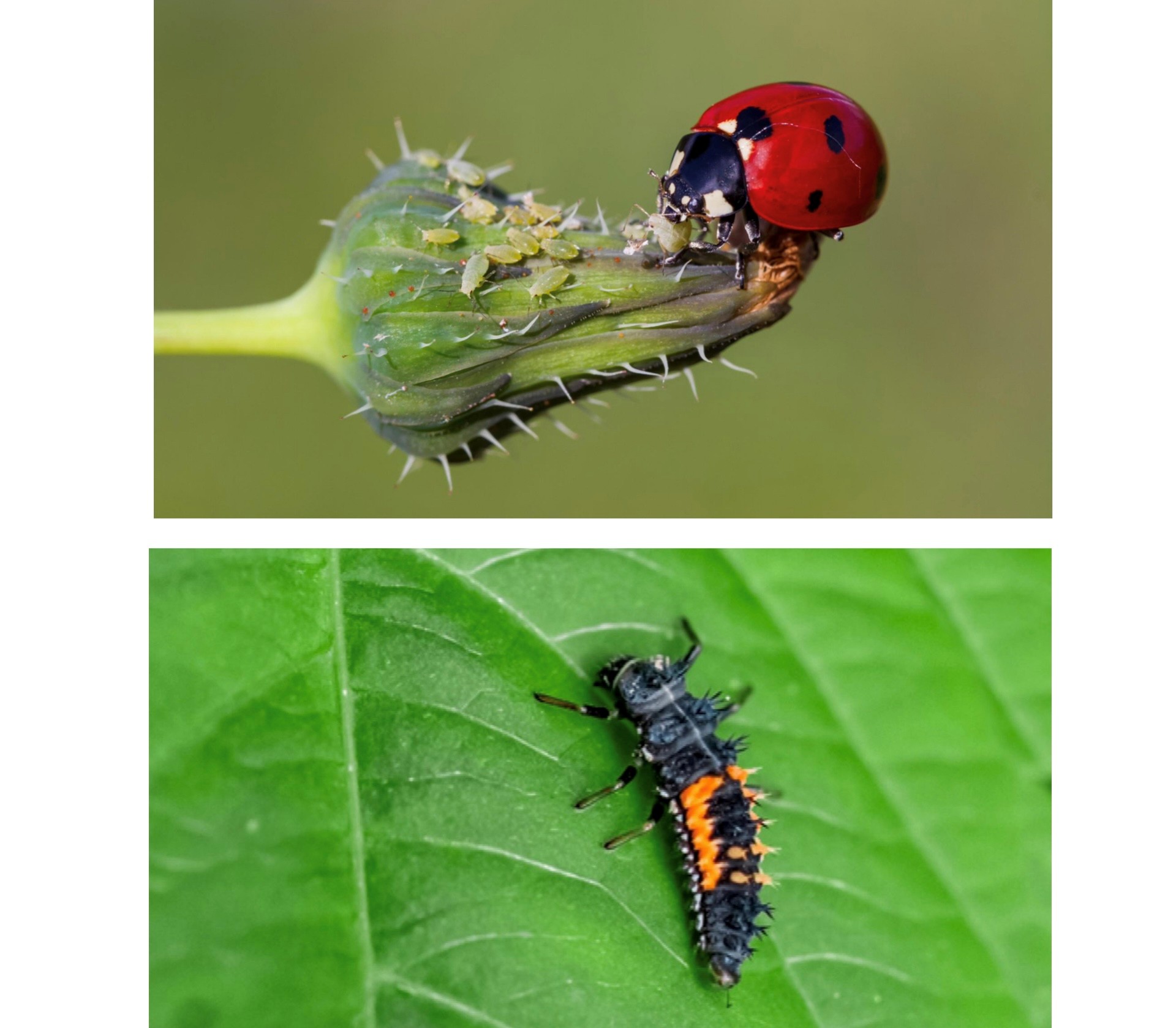
Lady Beetle (Coccinellidae)
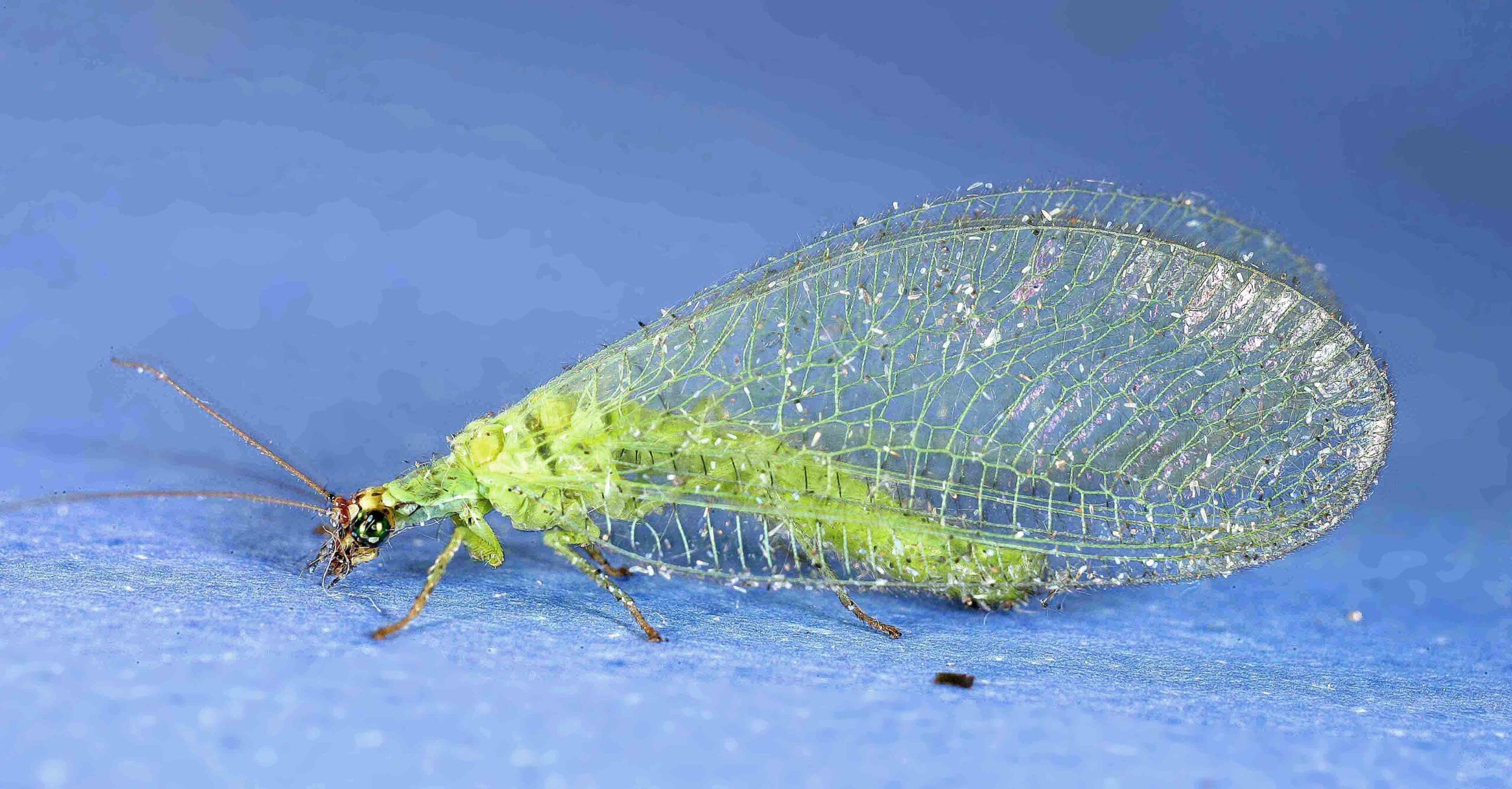
Lacewing (Chrysopidae)
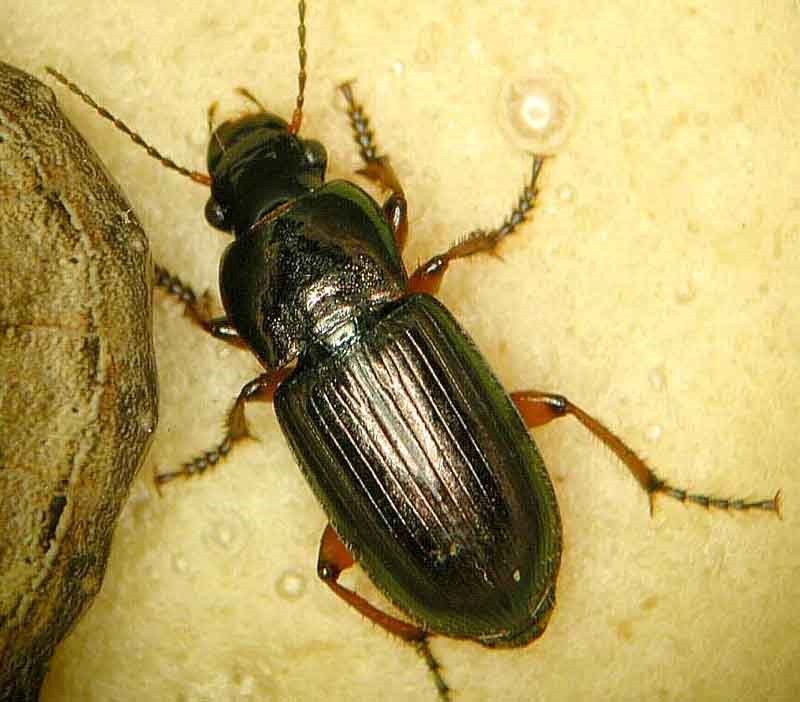
Predatory Beetle: Ground Beetle (Carabidae)