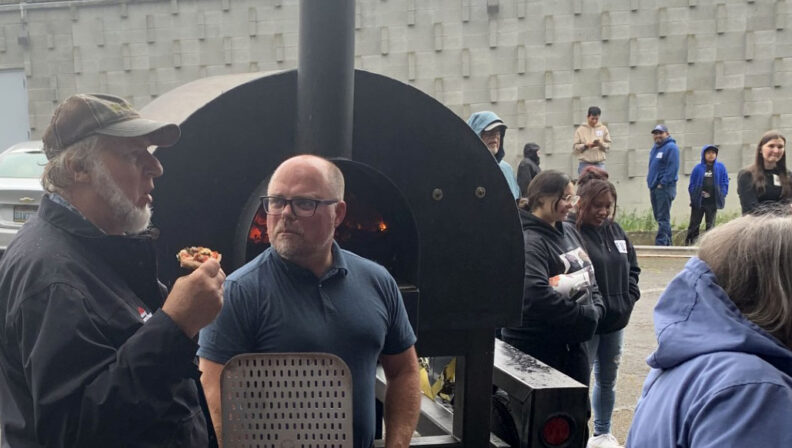
On June 5, the Pizza for Producers team fired up the wood-fired oven at the Skagit County Historical Museum to help celebrate the opening of Where Our Food Comes From, a new exhibit featuring the photography of local artist and storyteller Craig J. Barber.
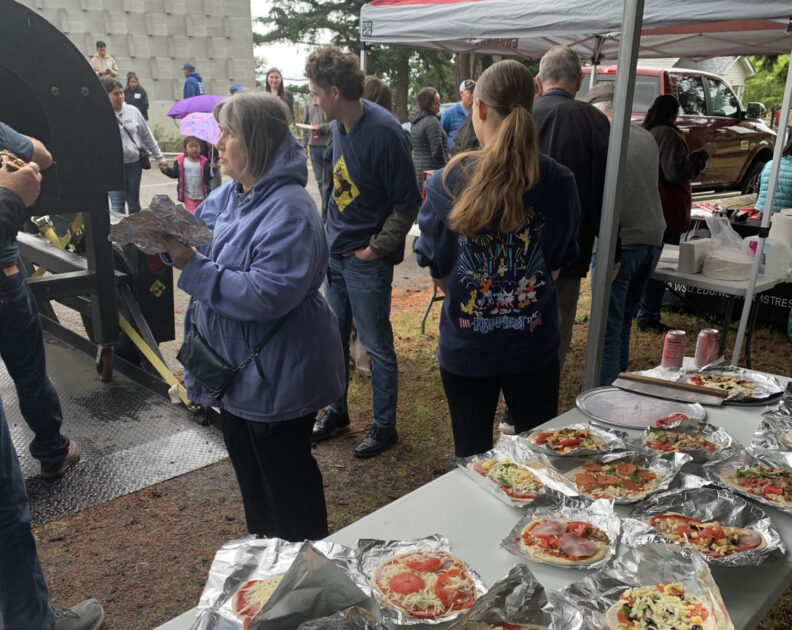
The evening exceeded all expectations.
More than 240 community members attended the exhibit opening, filling the museum with conversation, curiosity, and appreciation for the people who grow our food. During the event, the Pizza for Producers team served more than 100 wood-fired pizzas while sharing information about agricultural mental health resources and the importance of supporting farmers, farmworkers, and rural communities.
At first glance, pizza and mental health outreach may seem like an unlikely pairing. But the mission of Pizza for Producers has always been rooted in creating opportunities for connection. Food brings people together. Conversations begin. Relationships form. And in agriculture, those connections matter.
The exhibit itself perfectly reflected that mission.
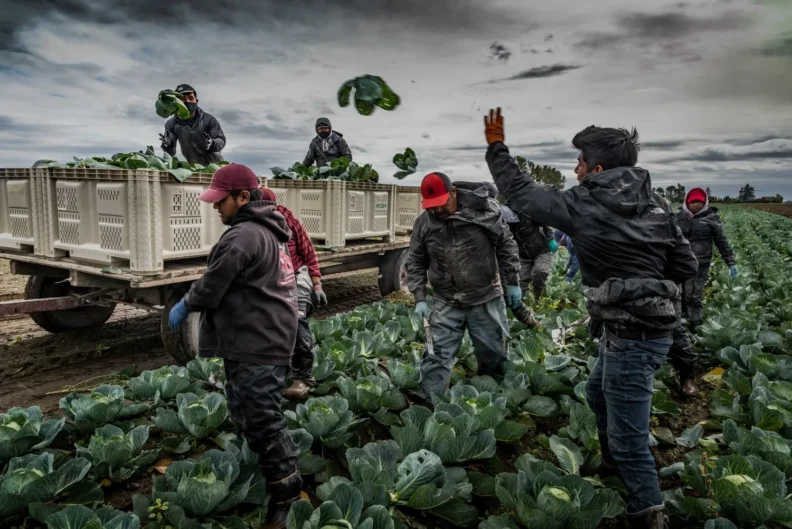
Flying Cabbages by Craig J. Barber Harvesting cabbage: bend over, cut, stand up and toss. Bend over, cut, stand up and toss. These heads will be trimmed, washed and sent to market.
For nearly four years, photographer Craig J. Barber has documented the people, places, and daily work that make the Skagit Valley one of the most productive agricultural regions in the country. His book, Where Our Food Comes From: The Magic of Skagit Valley, captures the beauty, challenges, and dedication found in the fields, barns, and farms that sustain our communities.
Through his photographs, visitors were invited to look beyond the produce stand and grocery shelf and see the hands that plant, harvest, care for livestock, and steward the land throughout the year. From winter fields of kale and leeks to lambing season, vegetable harvests, and livestock husbandry, Barber’s work highlights a reality farmers know well: the work never truly ends.
The exhibit also serves as a reminder that agriculture is about more than crops and livestock. It is about people.
The farmers and farmworkers featured in Barber’s images face many of the same challenges seen across rural America—weather uncertainty, market fluctuations, labor shortages, rising costs, and the emotional demands of caring for land, animals, and businesses. These challenges can place significant stress on individuals and families throughout the agricultural community.
That is why programs like Pizza for Producers exist.
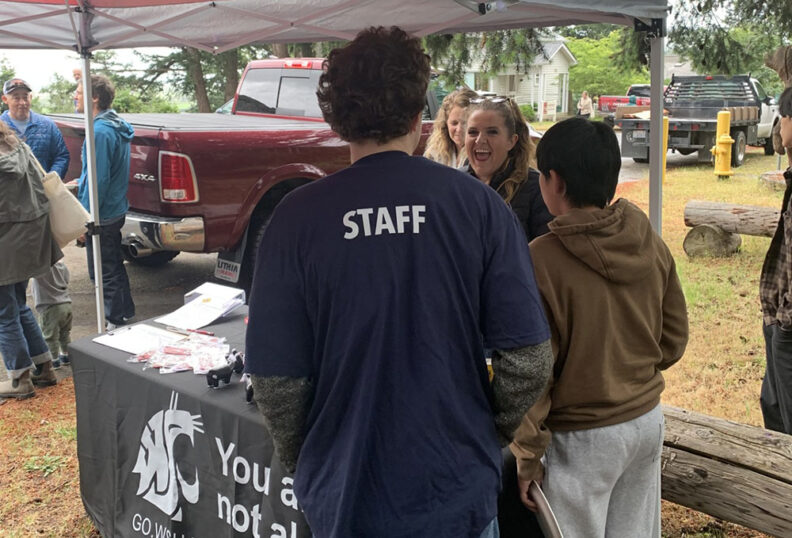
By bringing people together in spaces where agriculture is already being celebrated, we create opportunities to share resources, build community, and remind producers that support is available when challenges arise.
The June 5 event demonstrated what can happen when organizations, artists, educators, and community members come together around a shared purpose. Conversations about agriculture flowed naturally alongside discussions about food, art, history, and well-being. Neighbors connected with neighbors. Farmers connected with consumers. Stories were shared.
We extend our gratitude to the Skagit County Historical Museum for hosting such a remarkable event and to Craig J. Barber for his dedication to documenting the people and practices that shape our region’s agricultural identity.
Most importantly, we thank the more than 240 attendees who joined us to celebrate the exhibit and the agricultural community it honors.
Because understanding where our food comes from begins with understanding the people who make it possible.