WSU Extension Clark County Master Gardeners have tips for you to “green” up your lawn. Some people want every blade to be perfect and others are much more casual. Master Gardeners have information for any level of lawn care preference.

Ready for some healthy grass?
We will come to your neighborhood
Need online resources right now about natural lawn care?
Why is natural lawn care so important?
What can you do to reduce toxins?
Our partners for Green Up Your Lawn
Ready for some healthy grass?
We offer free presentations in Clark County, WA about growing a great lawn. These are an hour or so in duration and are usually held indoors. Presentations are suited for HOAs, neighborhood associations, garden clubs, or service groups.
- We share information from the lawn pros at the turf program of Oregon State University to emphasize lawn care that uses very few, if any, harmful chemicals.
- By mowing to the right height, watering enough (but not too much), using non-toxic weed control, fertilizing at the right time, and over-seeding in the fall, your lawn can look great without distributing toxins in our environment.
- Non-toxic lawn care methods result in a thick turf that reduces the need for weeding – and the need for applying potentially harmful chemicals or excess fertilizer.
These “natural lawn care” methods care save you money and protect your family and the environment at the same time.
Free workshops for your neighborhood
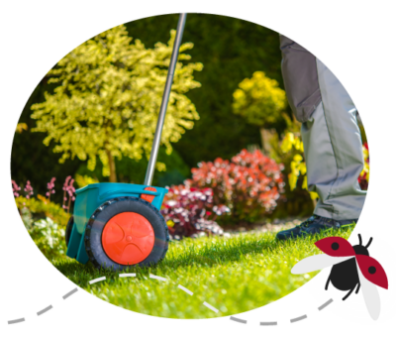
In addition to the indoor presentation, we also offer free on-site, hands-on outdoor demonstrations in season (March – October) for groups of six or more neighbors. Demonstrations take place near a lawn or grassy area and involve hand tools.
To schedule a presentation or demonstration, contact Melissa Brown, project manager, at melissa.brown1@wsu.edu or (360) 947-5524 text preferred.
Online Resources
Our program is part of a larger effort called “What’s Your Lawn Style”? The web page for What’s Your Lawn Style offers information on “green” lawn care without toxins, including short videos that detail lawn care steps you can take without using toxins, whether you are interested in low input, medium effort, or dedicated lawn care.
Why is natural lawn care so important?
The herbicide 2,4-D, which kills weeds, is a potential carcinogen for people. It also can make children or pets ill right away and harms aquatic life, such as fish. We are working in partnership with Clark County and others to reduce use of weed-and-feed products that are a source of 2,4-D.
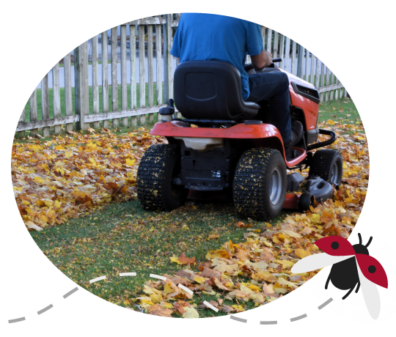
For more on the downsides of weed and feed and alternatives to the product, watch this short video from our friends at OSU Master Gardeners and their What’s Your Lawn Style campaign.
What can you do to reduce use of toxins on your lawn?
We recommend hand-pulling or digging weeds and very careful use of spot-treatments for persistent broadleaf weeds. Be sure to follow instructions for packaged products.
While nitrogen is not itself toxic, excess nitrogen in fertilizer is a problem. Plants can only take up a certain amount of nutrients at a time. If we apply too much at once, the fertilizer ends up in our rivers and lakes. That creates conditions for toxic algae that ruins the water for humans and animals.
One way to avoid excessive nitrogen application is to time your fertilizing for when the grass is growing (late May and early October, for example). Use slow-release nitrogen or organic products. Calculate the amount you need using online tools and apply according to instructions. Use an online lawn fertilizer calculator to determine application rates.
For large lots, consider contacting the WSU Small Acreage program, which offers workshops and training for weed control, maintaining planting pasture-type grasses, and more.
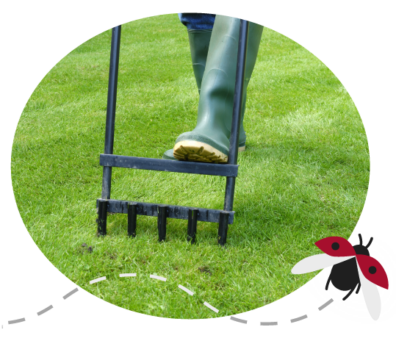
Lastly, fertilizers that use phosphorus are seldom needed by lawns in our region. If someone applies phosphorus, the element ends up in our lakes and streams. Excessive phosphorus in water also damages aquatic eco-systems. Use lawn fertilizer without this mineral unless you have a soil test that indicates you need it.
Our Partners
Through a grant from Washington State Department of Ecology, Master Gardeners partners with Clark County Public Works Clean Water Outreach to reduce use of toxins for lawn care, including weed-and-feed products and excessive nitrogen.

Our pages provide links to external sites for the convenience of users. WSU Extension does not manage these external sites, nor does Extension review, control, or take responsibility for the content of these sites. These external sites do not implicitly or explicitly represent official positions and policies of WSU Extension.
WSU Extension programs and employment are available to all without discrimination. Evidence of noncompliance may be reported through your local WSU Extension office. Persons with disabilities who require alternative means for communication or program information or reasonable accommodation need to contact Erika Johnson at the above listed email, phone or mailing address at least two weeks prior to the event.