Use Food Well
Online and In-Person Education Opportunities
Food for Thought: Make Your Food Last Longer
Are you throwing away food that could still be used? Learn how proper food storage can protect food quality, extend freshness, and reduce unnecessary waste. Participants will explore practical ways to organize the refrigerator, freezer, pantry, and fresh produce so food remains visible, accessible, and usable for longer.
Plan Less. Eat Better. Waste Less.
Join WSU Kitsap Extension for the Use Food Well Class Series, featuring practical, research-based strategies to help you prepare your kitchen and make the most of your food before, during, and after the holiday.
Food Safety: From Store to Table
Join WSU Kitsap Extension for the Use Food Well Class Series, featuring practical, research-based strategies to help you prepare your kitchen and make the most of your food before, during, and after the holiday.
University of Idaho: Just freeze it
University of Idaho: Holiday food hacks!
Learn the tips and tricks of planning holiday dishes so you will be ready to go when the holiday is here.
University of Idaho:
Learn fun and easy ways to prepare safe gifts from your kitchen and to avoid those that are not safe.
Food Waste in Kitsap: Why It Matters
Kitsap households throw away 11.3 million pounds of food each year—much of it food that could have been eaten. An estimated 30–40% of discarded food was still edible. That’s up to 3.8 million meals—and money—going to waste. Wasted food also means wasted grocery dollars, ($1,800–$2,900 per household) as well as time, transportation, and resources.
So let’s see if we can help you find a better way to save!
We will explore benefits of sanitation, storage, and planning.
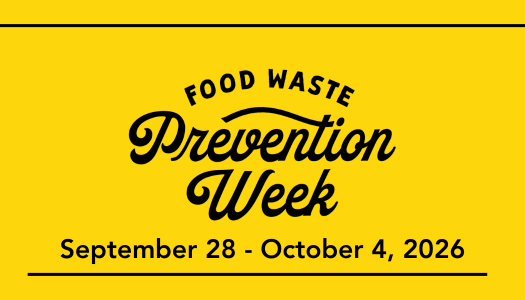
2026 Webinar Schedule
We are thrilled to offer a variety of webinars this year featuring leaders in food waste prevention, recovery, and composting across multiple sectors.
Visit https://foodwastepreventionweek.com/webinars/ to view schedule and registration. Check out the descriptions below the schedule to learn more about each webinar.
Food Safety: From Store to Table
Wash hands and surfaces often
We all know how important it is to wash hands after visiting the bathroom. You should be just as diligent about keeping clean in the kitchen! Bacteria can easily spread between your hands, cutting boards, utensils, counter tops and food.

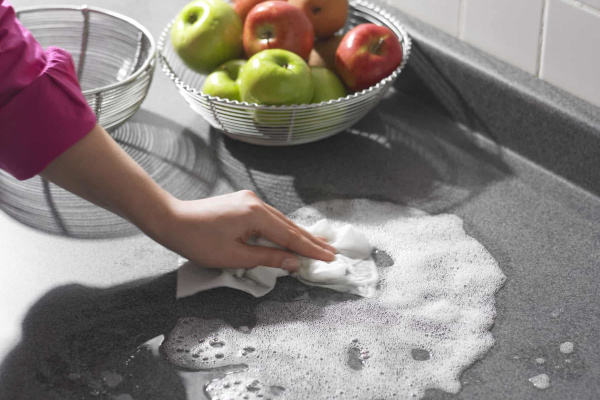
Follow these steps to clean while you cook and prevent food poisoning:
- Wash your hands with warm water and soap for at least 20 seconds before and after handling food, and also after using the bathroom, changing diapers, and handling pets.
- Wash your cutting boards, dishes, silverware, and counters with hot soapy water after preparing each food.
- Cloth towels can trap bacteria, so wash them often in the hot cycle of your washing machine. Or better yet, use disposable paper towels to clean up in the kitchen.
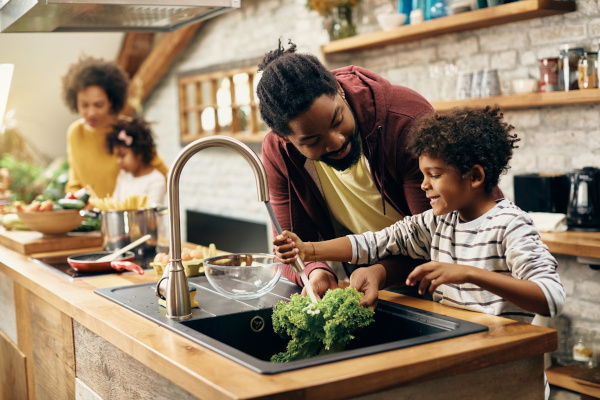
- Rinse fresh fruits and vegetables under running tap water, including those like carrots or squash with skins that you’ll remove.
- Rub firm-skinned fruits and vegetables like potatoes under running tap water or scrub with a clean vegetable brush while rinsing.
Separate: Don’t cross-contaminate
“Cross-contamination” means different foods coming into contact, which lets bacteria move between them. It’s an easy way for bacteria to spread throughout your kitchen, which puts your family at risk of food poisoning. But cross-contamination is easy to avoid by being careful with how you handle your ingredients, especially raw meat, poultry, seafood, and eggs.

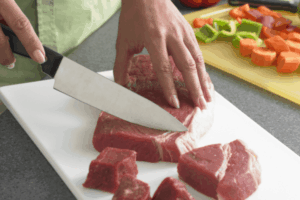

Follow these steps to avoid cross-contamination while you cook:
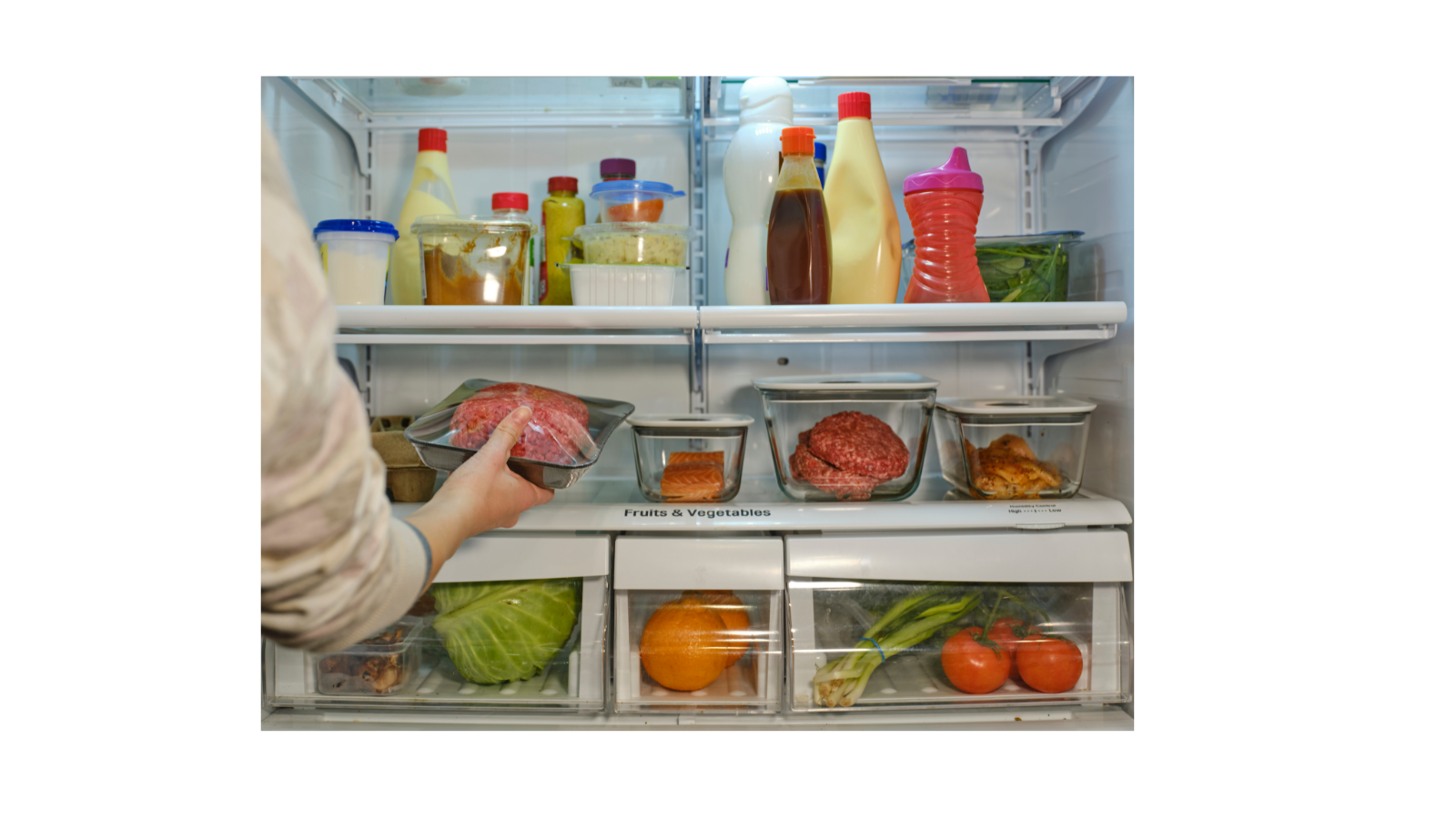
- Separate raw meat, poultry, seafood, and eggs from other foods in your grocery cart, in shopping bags, and in your refrigerator.
- Use one cutting board for fresh produce and a separate one for raw meat, poultry and seafood.
- Never put cooked food on a plate that has touched raw meat, poultry, seafood or eggs.
Cook: Heat your food to a safe temperature
For bacteria, heat is deadly—and what’s bad for harmful bacteria is good for you! Always cook your food to a hot enough internal temperature to kill the bacteria that cause foodborne illness.
The safe temperature depends on what you’re cooking. Use our safe cooking temperatures chart to find the right temperature for your dish.
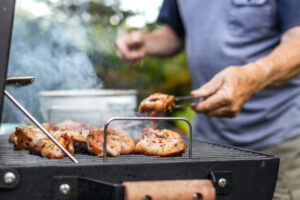
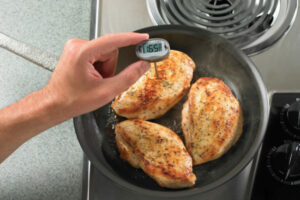
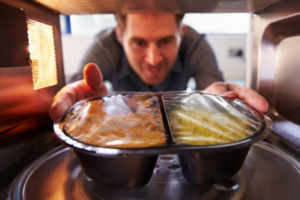
Other tips for safely cooking or heating your food:
- Use a food thermometer to quickly and easily check the internal temperature of cooked foods.
- Check the internal temperature in the thickest parts of meat and poultry, e.g. the innermost part of the thigh and wing and the thickest part of the breast for chicken.
- Remember, color is not a reliable indicator of doneness in meat! A food thermometer is the safe, reliable way to check that your food is cooked thoroughly.
- Cook eggs until the yolk and white are firm, not runny. Avoid recipes in which eggs stay raw or only get partially cooked.
- When cooking in a microwave oven, make sure there are no cold spots in food (where bacteria can survive). For best results, cover your food, stir, and rotate it (on a turntable or a couple times by hand) for thorough cooking.
- Bring sauces, soups and gravy to a boil when you reheat them. Heat other leftovers thoroughly to 165 °F to kill harmful bacteria.
Chill: Refrigerate promptly
Cold temperatures below 40 °F slow the growth of harmful bacteria. That’s why it’s best to refrigerate food right away after shopping or eating. Don’t over-stuff your refrigerator, because cold air needs to be able to circulate.
Keeping your refrigerator at a temperature of 40 °F or below, and your freezer at 0 °F or below, is one of the most effective ways to reduce the risk of food poisoning. You can use an appliance thermometer to check that the temperature is right.
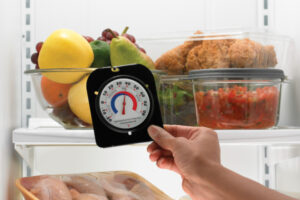
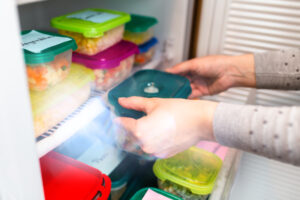
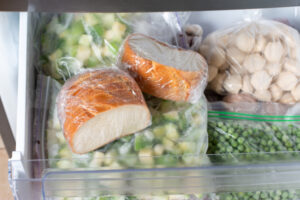
- Refrigerate or freeze meat, poultry, eggs and other perishables as soon as you get them home from the store.
- Never let raw meat, poultry, eggs, cooked food or cut fresh fruits or vegetables sit at room temperature for more than two hours (or one hour at above 90 °F). If you’re not cooking it promptly, put it in the fridge or freezer.
- Never thaw food at room temperature. There are three safe ways to thaw food:
- in the refrigerator,
- in cold water, or
- in the microwave.
- If you thaw food in cold water or the microwave, be sure to cook it immediately.
- Always marinate food in the refrigerator, never at room temperature.
- Got lots of leftovers? Divide them into multiple shallow containers so they’ll cool more quickly.
Storage: Make Your Food Last Longer
Instead of the Expiration Date Use your Senses Instead

Your senses can be a great judge of whether food should be eaten. If something smells and tastes good, it often is. Milk and yogurt are products that often outlast the date on the label (with proper storage of course!). So next time you’re looking through the fridge and not sure if you’ve waited too long to dig into a package, be brave and take a sniff before tossing food just based on the mysterious date on your package, which leads to hundreds of dollars of perfectly edible food being tossed.
Want to dig in deeper? Read the NRDC’s issue brief on date labels.
Preventing Waste at Home
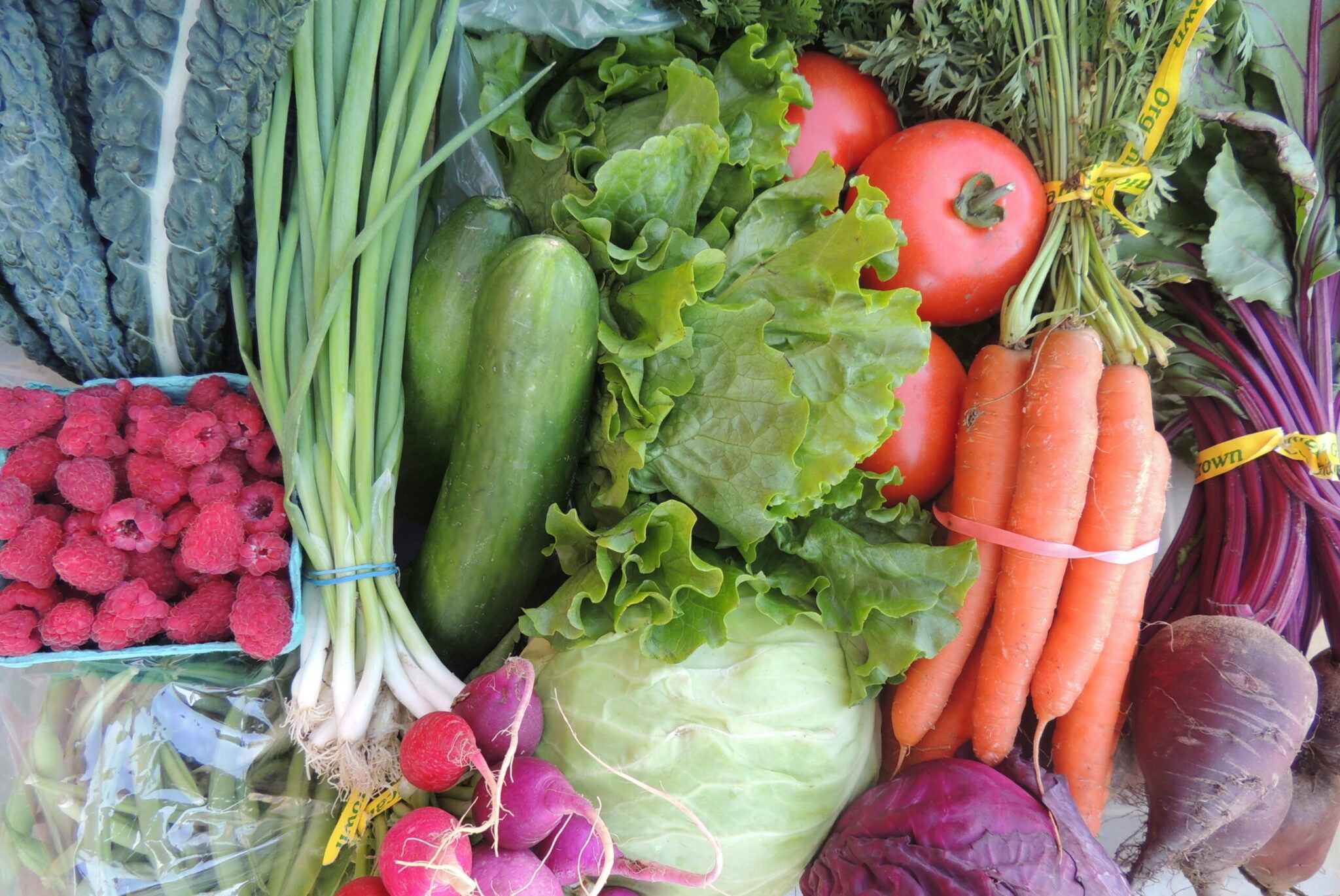
Take a major step to prevent your food from going bad by upgrading your food storage skills. Options include separate food storage areas for specific produce that will help the foods store longer, rotation practices for dried goods, and also where things are stored adds to cleanliness, awareness, and planning.
Starting when food comes into the house, where it is stored can extend the life of product such as where it is stored in the refrigerator. Some times when food starts to look funky, you wonder is this ok to Eat or Toss. There are several websites designed to assist with these everyday tasks. Save More Than Food covers food storage, freezing, and reviving your favorite foods to maximize the freshness. NRDC’s comprehensive and interactive food storage guide includes even more tips on how to store everything from beans and oils to seafood and meats.
Creating specific food storage areas for foods such as “potatoes and onions” which shouldn’t be stored together as they will promote quicker ripening. Store separately. Seattle Public Utility has created a great resource for showing where food should be kept and how it should be seperated to Stay Fresh Longer. These tips and tricks will help you make the most of what you have to save you money and effort. Use the food you brought home with hope, to its best potential.
Resource List
- Food Labeling
- Food Safety, Extending Food Use
- Food Organization and Storage
- Meal Planning Tools
- Food Preservation
- Next Steps
Let’s check the Expiration Date
Did you know that date labels aren’t regulated in the United States? Date labels are not required to be placed on 99% of food products, nor are there standard rules about what they mean. Confusion surrounding date labels can lead to a lot of good food being thrown away. In the future, we can hope to have new, consistent labeling due to the Food Date Labeling Act which has been introduced in Congress to create a consistent, voluntary national framework.
What Do the Dates Mean?
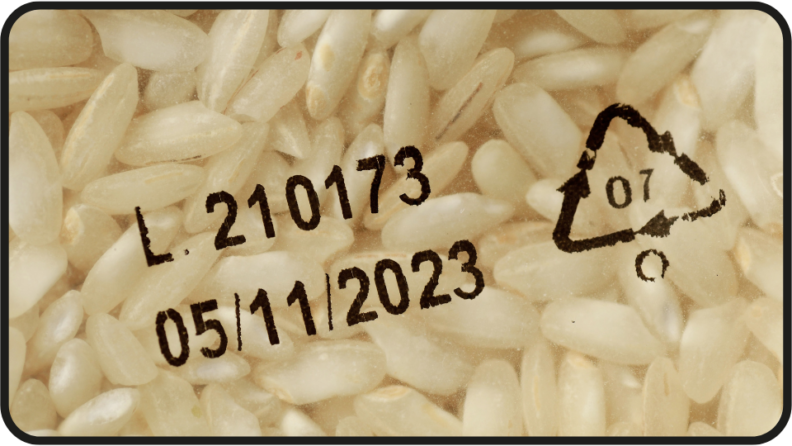
Best if Used By/Before
When the manufacturer expects the food to have its best flavor or quality.
Sell By
Helps stores manage inventory. It is not a safety date.
Use By
Generally indicates peak quality—not when a food suddenly becomes unsafe. Infant formula is the important exception and should not be used after its “Use By” date.
Freeze By
Suggests when to freeze a food to help maintain its best quality.
Shop with Food Waste Retailers
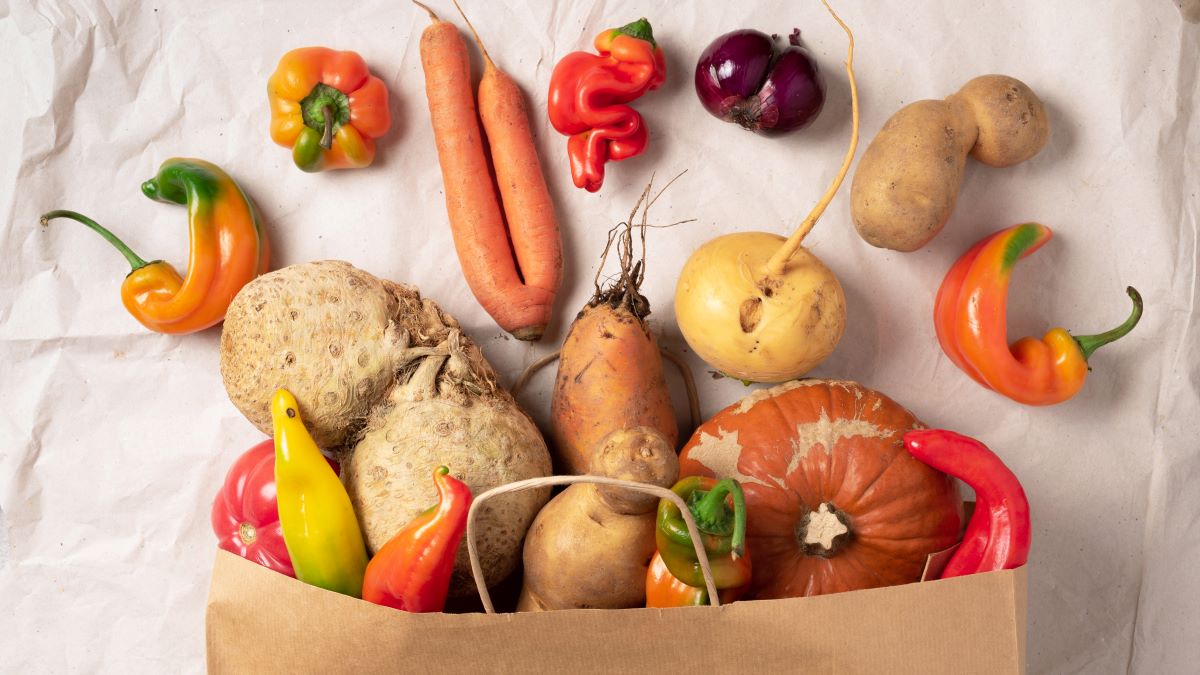
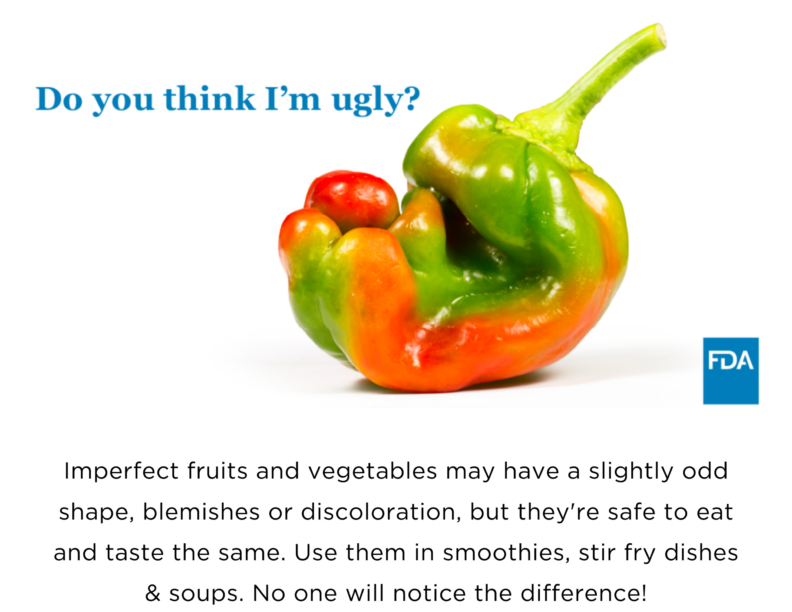
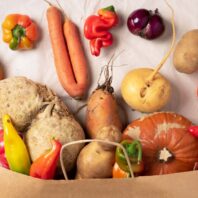
If available, purchase “ugly” fruits or vegetables that often get left behind at the grocery store but are safe to eat. “Ugly” produce has physical imperfections but are not damaged or rotten. “Ugly” fruits and vegetables are safe and nutritious and can sometimes be found at discounted prices.
Some online food retailers specialize in selling food that otherwise would have gone to waste. Click here for online shopping resources to help save you money and keep high-quality food from ending up in the landfill.
App your way to more Savings!
- Flash Food: Flash Food is an app that helps businesses to sell food that would likely otherwise go to waste. Find pizza, pastries, sandwiches and even groceries for less of their regular price.
- Imperfect Foods: Imperfect Foods is a grocery delivery service that specializes in food waste reduction by providing access to food that has cosmetic imperfections, recused ingredients, imperfect sizes and more at a reduced price.
- Perfectly Imperfect Produce: Perfectly Imperfect Produce ships fresh produce from local farmers and wholesalers in either a produce box or meal kit option.
- Misfits Market: Misfits Market allows users to customize their grocery delivery experience while working with farmers and producers to collect items that might go to waste but instead come to your door at a reduced price.
- Too Good To Go: Too Good To Go is an app that helps businesses to sell food that would likely otherwise go to waste. Find pizza, pastries, sandwiches and even groceries for less of their regular price.
A Long History of Preservation
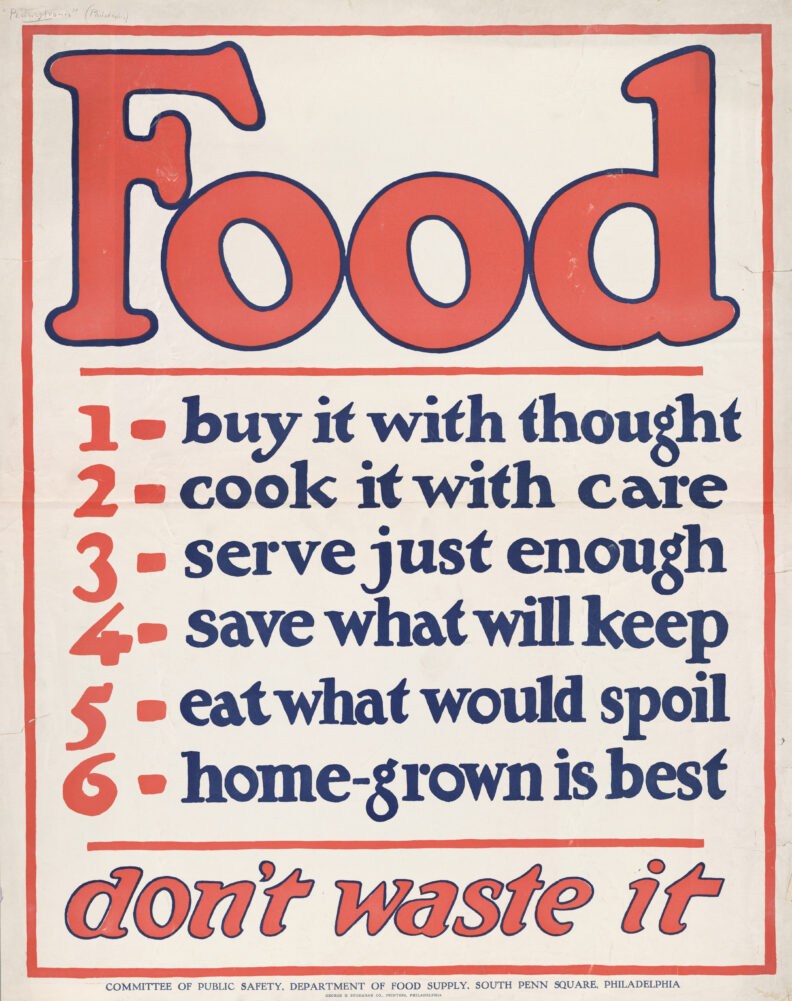
WWI marked the first large-scale use of propaganda posters by governments. Posters, with easy-to-understand slogans and compelling images, made powerful propaganda tools. The government needed to shape public opinion, recruit soldiers, raise funds and conserve resources. There was also a need to quickly mobilize citizens to important home front activities…including gardening, food conservation and food preservation. In an era before television and widespread radio and movies, posters were a form of mass media. They appeared in windows and were posted on walls everywhere, in as many languages as were spoken in this nation of immigrants.
Meal Planning
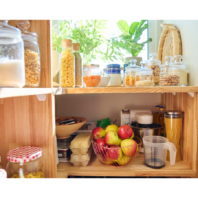
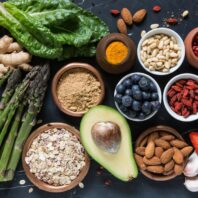
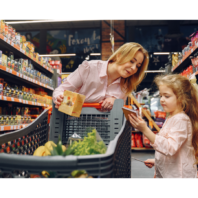
- Before heading to the store, check your refrigerator, freezer, and pantry. Ask yourself: What do I already have? What needs to be used first? What meals can I make with it? What do I need to complete those meals?
- Action: Add only the missing ingredients to your shopping list.
- You don’t always need another trip to the grocery store. Recipe tools such as Meal-O-Matic, SuperCook, and Food Saving Recipes can help you find meals based on foods you already have.
- Action: Search your ingredients before shopping for something new.
- Give ingredients more than one job. Buying broccoli for one meal? Plan where the rest will go. Cooking chicken for tacos? Cook enough for another meal later in the week.
- Action: Have a plan for the portion you won’t use the first time.
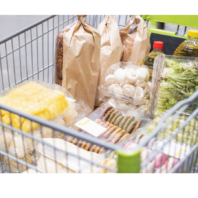
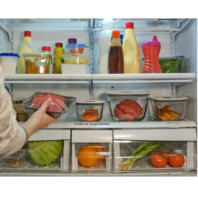
- Buy What You’ll Actually Use: More food isn’t always a better deal. Consider your household size, schedule, portion sizes, and how quickly a food will be eaten.
- Action: Buy the amount you realistically expect to use.
- Prep With a Plan: Make foods easier to grab and use. If you’re already preparing part of an ingredient, consider prepping enough for another planned meal.
- Action: Batch prep food so it is easier to incorporate into meals throughout the week.
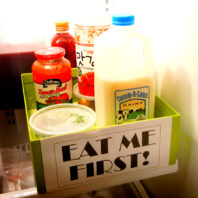
- Create an “Eat First” Area: Foods can easily get forgotten at the back of the refrigerator. Designate a spot for “Use it First” items. Keep leftovers, opened foods, and produce that needs attention together where you can see them.
- Action: See it. Use it. Don’t lose it.
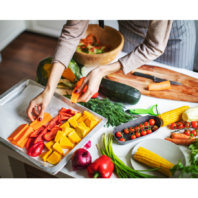

- Plan for Leftovers: Leftovers can become part of your plan. A meal plan instead of an afterthought. Ask: Will I eat this tomorrow? Can I turn it into another meal? Should I freeze it?
- Action: If you aren’t going to eat it soon, freeze it while it is still good.
- Keep an “Everything Goes” Meal: Leave room in your week for foods that need to be used. Many family favorite meals and comfort foods include a little of this and a little of that, and THAT is what makes it special and a family favorite. Try: Stir-fry, Soup, Casserole, Quiche or frittata, Tacos, Pasta, Grain bowls, Pizza or flatbread
- Action: Plan one clean-out-the-fridge meal each week.
- Rescue Food Before It Becomes Waste: Before throwing food away, Ask: Can I use it? → Freeze it? → Share it? Don’t wait until food is no longer usable to make the decision.

Paisley Gallagher (she, her, hers)
345 6th St Suite 550 Bremerton WA 98337
360-228-7302 or paisley.gallagher@wsu.edu
Office hours: Mon -Thur. 6am to 4pm