Welcome to the Skagit County 4-H Dog Program! This handbook was created to provide an overview of the 4-H Dog Project and its purpose, requirements, rules, events, and awards.
The purpose of the Skagit County 4-H Dog Program is to involve youth in fun and rewarding learning experiences relating to the world of dogs, while teaching members how to train and care for their dog. 4-H promotes character growth in leadership, responsibility, community service, and sportsmanship.
Dogs do not need to be owned by a 4-H member, but they must have regular access for training, and as stated in the 4-H Policies and Procedures | 4-H Youth Development Program | Washington State
University, the dog must be under the 4-H member’s care and training at least 60 days before any
qualifying event.
AGE DIVISIONS
CLOVERBUD Ages 5 to 7 years old on October 1st
Cloverbuds are non-competitive and will not be scored in any event. Cloverbuds are not eligible for any out of county activities or events. A special Cloverbud ribbon will be given for each event entered.
Cloverbuds may exhibit their dogs on their designated Fair day(s) and follow all exhibitor and
Herdsmanship rules. Leaders and parents are encouraged to have their 4-H Cloverbuds enter, making
this a fun beginning experience. Classes include: Showmanship, Obedience, Breed Poster, Educational
Poster, Costume Contest, Trick Dog Contest, Skill-a-thon, Dog Bowl, and Public Presentation.
JUNIOR Ages 8 to 10 years old on October 1st
INTERMEDIATE Ages 11 to 13 years old on October 1st
SENIOR Ages 14 to 18 years old on October 1st
Washington State 4-H Dog Program Policies are available for download on the WSU State 4-H website.
Training dogs is the core of our project and to ensure success, it is imperative that 4-H members have a dog that is safe for themselves and for others they interact with at 4-H meetings, fairs, and other events.
As stated in the Washington State 4-H Dog Program Policies General Rules Dogs that exhibit aggressive, unsocial, or problem behavior that cannot be controlled by their handler are a serious safety issue. Leaders and Superintendents have the immediate authority to excuse or place restrictions on such dogs’ participation in 4-H activities. Leaders and Superintendents must inform their 4-H Extension Staff of their decision and the appropriate plan of action to follow. It is up to each county to decide what that action will be. Every effort should be made to see that the member is not excluded or excused. Alternative suggestions should be offered to the 4-H member and family.
Any friendly purebred or mixed breed dog may be used as a 4-H project, provided the member can effectively manage the dog without assistance. Leaders may provide a safety evaluation prior to admittance to 4-H training meetings should there be any question about a dog’s suitability as a 4-H project. Leaders must use their discretion to determine whether a dog is safe and suitable for the 4-H member, and reserve the right to evaluate a dog at any time if safety is a concern. During an evaluation, leaders will consider the age and skill level of the 4H member as it relates to the dog being considered for a project.
The evaluation will consist of a minimum of:
- Determining whether the member can walk the dog on lead without assistance.
- Determining whether the dog can walk safely by another non-reactive dog without lunging,
barking, or exhibiting otherwise unfriendly or aggressive behavior.
If it is determined a dog cannot be effectively and independently managed by a member, leaders may offer alternative suggestions such as securing training outside of 4-H for the dog and/or handler, borrowing a suitable dog from a family member or friend, and/or participation in part with a trained 4-H dog, if one is available. Leaders may recommend local trainers upon request. Every effort will be made to include the member in all other 4-H activities and events. Once a dog has a successful evaluation, the member may resume 4-H training meetings with their dog.
Approved by SCDL March 20, 2023
The purpose of 4-H Showmanship is to prepare and evaluate a 4-H member’s ability to properly care for and exhibit their animal. This includes the animal’s condition, cleanliness, and grooming. 4-H Showmanship classes are judged on a member’s ability to present their dog to its best advantage before a judge by demonstrating proper breed presentation, ring etiquette and procedures, knowledge of dog anatomy, breed history and standard, care and health, and the 4-H dog program.
Premium points will be awarded according to the Skagit County Fair Premium Book.
Classes will be divided by age group; Cloverbud, Junior, Intermediate, and Senior, and further divided by experience level, except for Cloverbuds.
CLASSES
NOVICE 4-H members in their first year, or exhibiting at the fair for the first time.
OPEN 4-H members in their second year or above who have not received an Award of Merit at
the State 4-H Fair on county day.
SPECIALS Any Junior, Intermediate, or Senior 4-H member who has received an Award of Merit at
State 4-H Fair on county day must compete in the Specials Showmanship class at county
fair the following year. Leaders may recommend the Specials class for a member who
competes in AKC Junior Showmanship Open classes. Once an exhibitor advances to the
Specials class, with any dog, they must compete in the Specials class for the remainder
of their 4-H career.
Effective October 21, 2019; Revised to include Junior Specials March 2022; Revised October 2023
RIBBON AWARDS
Blue ribbon 85 – 100 points
Red ribbon 70 – 84.5 points
White ribbon 69.5 points and below
Washington State Guide to 4-H Showmanship, Scorecards, Knowledge Topics, and Questions Study
Guides are available for download on the WSU State 4-H website.
4-H Obedience events demonstrate a dog’s ability to follow specified routines in the obedience ring and emphasize the usefulness of a dog as a companion in a family home, in public places, and in the presence of other dogs, and under all conditions. Members should follow the principles of good sportsmanship both in and out of the ring. All handlers in a class are required to perform the same exercises in substantially the same way so that the relative quality of the various performances may be compared and scored.
Premium points will be awarded for regular 4-H Obedience Classes only, as listed in the Skagit County
Fair Premium Book. All non-regular Obedience classes receive ribbons only. 4-H members may only
enter one regular Obedience class at the Skagit County Fair per dog. Obedience classes are based on
the skill of the 4-H member and their dog. Non-regular Obedience classes will only be offered if time
permits.
Classes will be divided by age group; Cloverbud, Junior, Intermediate, and Senior. All classes are judged on a point system with each class, except Team, having a maximum of 200 points. Ribbons will be awarded according to the Washington State 4-H Dog Program Policies.
Washington State 4-H Guide to Dog Obedience and Scoresheets are available for download on the WSU State 4-H website.
CLASSES AND DIVISIONS
A. TIER 1
● Sub-Novice
● Beginner Novice
● Pre-Novice
B. TIER 2
● Novice
C. TIER 3
● Advanced Novice
● Graduate Novice
● Pre-Open
D. TIER 4
● Open
E. TIER 5
● Graduate Open
● Pre-Utility
F. TIER 6
● Utility
G. OTHER
● Versatility
● Veterans Modified
● Rally (not a State 4-H Fair class)
● Introductory Obedience (not a State 4-H Fair class) FIRST YEAR members or exhibitors
only
● Alternative Introductory Obedience (not a State 4-H Fair class) CLOVERBUD members
only
● Trick Dog (not a State 4-H Fair class)
NON-REGULAR CLASSES
H. Brace Obedience
● Sub-Novice
● Novice
● Advanced Novice
I. Team Obedience
● Sub-Novice
● Novice
● Advanced Novice
RIBBON AWARDS
For Sub-Novice, Beginner Novice, Pre-Novice, and Novice
Blue Ribbon 185 – 200 points
Red Ribbon 170 – 184.5 points
White Ribbon 169.5 points and below
For Advanced Novice, Graduate Novice, Pre-Open, Open, Graduate Open, Pre-Utility, and Utility
Blue Ribbon 170 – 200 points
Red Ribbon 100 – 169.5 points
White Ribbon 99.5 points and below
RULES OF ADVANCEMENT
If a member receives a blue ribbon in Obedience at State Fair with a given dog they are required to
enter another class on the same tier, or move to the next higher tier. If they have received two blue
ribbons at State Fair on the same tier, they are required to move to the next higher tier.
Patterned after equestrian show jumping, dog agility combines the elements of a dog’s agility,
briskness, confidence, and a handler’s control over an obstacle course designed for dogs. It is a fun sport with great spectator appeal.
All Washington State 4-H Agility Safety Rules must be followed.
Dogs must be a minimum of 15 months old to compete in 4-H agility. It is recommended that dogs be a minimum of 15 months old to begin agility training and larger breeds be at least 18 months old. This is because for most breeds the growth plates in the bones are still developing until the average age of fourteen months, even later for large breeds. The final determinations for training age and the type of training must be made by the owner and trainer.
Classes will be divided by age group, Junior, Intermediate, and Senior, and jump height. Ribbons will be awarded according to the Washington State 4-H Dog Program Policies. This is a ribbon-only event, no premiums will be given.
CLASSES
● Beginner On-leash (not a State 4-H Fair class)
● Standard Elementary
● Standard Pre-Novice
● Standard Novice
● Standard Open
● Standard Excellent
● Jumpers Elementary
● Jumpers Pre-Novice
● Jumpers Novice
● Jumpers Open
● Jumpers Excellent
These classes will be further divided by height as follows:
A. Beginner On-leash
- 10” or under at the withers
- 14” or under at the withers
- Over 14” at the withers
B. Standard and Jumpers classes
- 14” or under at the withers
- 18” or under at the withers
- 22” or under at the withers
- Over 22” at the withers
RIBBON AWARDS
Blue ribbon 85 – 100 points
Red ribbon 70 – 84 points
White ribbon 69 points and below
Champion and reserve champion awards will be awarded to the top exhibitors of each age group and jump height in each class that earn a blue ribbon. If two or more dogs tie with the same score, the dog with the fastest time will be champion and the second fastest dog will be reserve champion.
Clean Run ribbons will be awarded to all exhibitors that achieved a score of 100.
RULES OF ADVANCEMENT
A dog and handler team receiving a blue ribbon at a State Agility Trial must advance to the next level the following year.
STATE 4-H FAIR QUALIFICATION
- Exhibitors must qualify as part of the county allotment.
- The dog must have been entered in Obedience at a County Qualifying event.
- If an exhibitor earns a blue ribbon in Showmanship at a County Qualifying event, the dog will
qualify for the State Agility Trial by earning a blue or red ribbon at a County Qualifying Agility Trial. - If an exhibitor earns a red ribbon in Showmanship at a County Qualifying event, the dog will qualify
for the State Agility Trial by earning a blue ribbon at a County Qualifying Agility Trial. - If an exhibitor qualifies for State 4-H Fair in both Agility and Obedience with the same dog, the
exhibitor must choose which class will constitute their premium class. The other class will be
awarded ribbons only. If the exhibitor chooses to enter Agility as a premium class, they must choose
either Standard or Jumpers for their premium class, and designate the other class as ribbons only. - If an exhibitor qualifies for State 4-H Fair with one or more dogs in both Obedience and Agility, the
exhibitor will participate in Showmanship on their designated county day with their Obedience dog.
If the exhibitor does not complete a Showmanship class at all, all premiums will be forfeited. - If a dog only qualifies for State 4-H Fair in Agility, the exhibitor will exhibit in Showmanship on the
same day as the State 4-H Fair Agility Trial. - A dog may enter one Standard Agility and one Jumpers Agility class at State 4-H Fair.
- A dog who is entered in a Standard Agility class at State 4-H Fair must have qualified in that same
class at a County Qualifying Agility Trial. - A dog who is entered in a Jumpers Agility class at State 4-H Fair must have qualified in that same
class at a County Qualifying Agility Trial.
Washington State 4-H Dog Guide to Dog Agility is available for download on the WSU State 4-H website.
4-H Rally is a sport in which the dog and handler complete a course that has been designed by the Rally judge. There should be a sense of teamwork between the dog and handler both during the numbered exercises and between the signs; however, perfect heel position is not required. Unless otherwise specified in these rules, handlers are permitted to talk, praise, encourage, give additional commands and signals using one or both arms, clap their hands, pat their legs, and use any verbal means of encouragement. 4-H Rally is a companion sport to 4-H Obedience. Both require teamwork between dog and handler along with similar performance skills. Rally provides an excellent introduction to 4-H companion events for new dogs and handlers and can provide a challenging opportunity for competitors in other events to strengthen their skills.
Classes will be divided by age group; Cloverbud, Junior, Intermediate, and Senior. All classes are judged on a point system with each class having a maximum of 100 points. Ribbons will be awarded according to the Washington State 4-H Dog Program Policies. Rally Obedience is currently not a State Qualifying event.
Members competing in obedience classes that are all on leash, such as Introductory or Sub-Novice shall compete in the Rally Novice class. Members who received a blue ribbon in Rally Novice the previous year or are competing in obedience classes with off leash exercises such as Beginner Novice or Pre-Novice may compete in the Rally Intermediate class. Members competing in advanced obedience classes with off leash exercises or jumps may compete in Rally Advanced or Rally Excellent classes, depending on their experience and skill level.
CLASSES
A. Rally Novice
All signs are judged with the dog on leash. Rally Novice must have 10 to 15 signs, Start and
Finish not included, with a minimum of three and a maximum of five stationary exercises per
class.
B. Rally Intermediate
All signs are judged with the dog on leash. Rally Intermediate must have 12 to 17 signs, Start
and Finish not included, with a minimum of three and a maximum of seven stationary signs.
Intermediate courses will have a minimum of three Advanced level signs. There are no jumps in
this class.
C. Rally Advanced
All signs are judged with the dog off leash, and all dogs must enter and leave the ring on leash.
Rally Advanced must have 12 to 17 signs, Start and Finish not included, with a minimum of
three and a maximum of seven stationary exercises. A dog is required to jump once in the
Advanced class. Courses shall have a minimum of three Advanced level stations plus the one
required jump.
D. Rally Excellent
All signs are judged with the dog off leash. All dogs must enter and leave the ring on leash. Rally
Excellent must have 15 to 20 signs, Start, Finish and Call marker not included, with a minimum
of three and a maximum of seven stationary exercises. Two jumping exercises must be used in
the Excellent class utilizing one or two jumps. Courses shall have a minimum of two Advanced
level stations and a minimum of three Excellent level stations, plus the two required jumps and
the Sit Stay exercise per class. In Rally Excellent, handlers are not allowed to pat their legs or
clap their hands to encourage the dog. Verbal encouragement, multiple commands and
inaudible signals using one or both arms and hands are allowed; the handler’s arms need not be
maintained in any particular position at any time. Handlers may not touch their dog or make any
physical corrections.
E. Rally Master
All signs are judged with the dog off leash. The Master class must have 15 to 20 signs, Start and
Finish not included, with a minimum of three and a maximum of seven stationary signs. Courses
will have a minimum of four Master level signs plus the one required jump (301, 302 or 303), a
minimum of three Excellent level signs and a minimum of three Advanced level signs. There are
no retries for any of the signs on the Rally Master course. Unlike the Rally Novice, Intermediate
and Advanced classes, the Rally Master class handlers are not allowed to pat their legs or clap
their hands to encourage the dog without penalty. Verbal encouragement, multiple commands
and inaudible signals using one or both arms and hands are allowed; the handler’s arms need
not be maintained in any particular position at any time. Handlers may not touch their dog or
make any physical corrections without penalty.
F. Rally Choice
All dogs are eligible to enter this class and may continue to compete indefinitely. There are no
jumps in this class and all exercises are judged with the dog off leash. Verbal encouragement,
multiple commands, and inaudible signals using one or both arms and hands are allowed; the
handler’s arms need not be maintained in any particular position at any time. Penalties will be
assessed for handlers clapping their hands, patting their legs, touching the dog or any physical
corrections. Failure of the dog and handler to perform the sign correctly on the first attempt will
result in a 10-point deduction for an IP or incorrectly performed sign, and the handler should
move along without attempting a retry. The Choice course will have 15 to 20 signs, Start and
Finish not included, with a minimum of three and a maximum of seven stationary signs. Courses
will have a minimum of four Master level signs, a minimum of three Excellent level signs, and a
minimum of three Advanced level signs. The course will be the same as the Master class, except
the jump will be replaced with any other class sign.
JUMP HEIGHTS
The dog’s jump height shall be given on the entry form. Entries will be arranged according to the jump height of the dogs, from either high to low or low to high.
Height of dog at withers: Height to be jumped
Less than 10 inches 4 inches
10 inches to less than 15 inches 8 inches
15 inches to less than 20 inches 12 inches
20 inches and over 16 inches
RIBBON AWARDS
Blue ribbon 85 – 100 points
Red ribbon 70 – 84 points
White ribbon 69 points and below
RULES FOR ADVANCEMENT
If a member earns a blue ribbon, they are encouraged to advance to the next highest Rally class that is comparable to their current obedience class. If a member earns a blue ribbon for two consecutive
years, they must advance to the next level, with the exception that members may only compete in off
leash Rally classes if they are currently competing in an obedience class with off leash exercises.
Washington State 4-H Guide to Dog Rally Obedience is available for download on the WSU State 4-H website.
The purpose of the 4-H Dog Judging Contest is to increase 4-H members problem solving and
discretionary abilities. It is also designed to challenge 4-H members to increase their knowledge of their chosen project area.
Judging classes will be in three major areas. To qualify for the State 4-H Fair Judging Team, contestants must complete all areas of the contest.
- Placement classes
- Oral reasons class
- One Obedience or Showmanship placement class
Contestants may not take papers, books, or electronic devices, unless it is being used as a medical
device, into the judging contest area. Talking or collaborating during the contest is not allowed. Any
contestant observed talking to another contestant during the contest will be disqualified. Any questions are to be directed to a designated monitor or adult volunteer only.
The highest scoring contestants will be selected to form the Skagit County 4-H Dog State Judging Teams in each age division to exhibit at the State 4-H Fair. A special ribbon will be awarded to each team member selected to compete at the State 4-H Fair. Premium will be awarded according to the Skagit County Fair Premium Book.
*An exception may be made by Skagit County Dog Leaders to qualify a 4-H member for individual State 4-H Fair Dog Judging competition if there are not enough qualifying members to form a team of 3 or more. Approved October 21, 2019
Washington State 4-H Dog Judging Contest guidelines are available for download on the WSU State 4-H website.
The purpose of the Dog Quiz Bowl contest is to provide an opportunity for youth enrolled in the 4-H dog project to demonstrate their knowledge of dog related subject matter in a competitive setting where attitudes of friendliness and fairness prevail. It is also hoped that these contests will provide an educational experience for both participants and spectators.
The top 5 scoring Intermediates and Seniors may be selected to form the Skagit County 4-H State Dog Bowl Teams to participate at the State 4-H Fair. A special ribbon will be awarded to each team member selected to compete at the State 4-H Fair. This is a ribbon only event, no premiums will be given.
Washington State 4-H Quiz Bowl Rules are available for download on the WSU State 4-H website.
The primary objective of the Washington State 4-H Dog Skill-a-Thon Contest is to provide an opportunity for 4-H members to demonstrate knowledge and understanding of animal science and management related to dogs in a competitive setting. 4-H members are also given the opportunity to expand their knowledge about dogs and be recognized for their understanding of the many aspects of dog care and training, as well as the roles of dogs in society.
The Skill-a-Thon offers age-appropriate quizzes and stations that are designed to test 4-H members’ knowledge of dogs. Some stations may include visual diagrams or equipment or hands-on activities to demonstrate a dog-related task. The contest superintendent strives to provide an educational experience for participants and spectators.
Contestants may not take papers, books, or electronic devices, unless it is being used as a medical
device, into the judging contest area. Talking or collaborating during the contest is not allowed. Any
contestant observed talking to another contestant during the contest will be disqualified. Any questions are to be directed to a designated monitor or adult volunteer only.
Classes will be divided by age group; Cloverbud, Junior, Intermediate, and Senior. Contestants earning a blue ribbon are eligible to compete in the State 4-H Fair contest. This is a ribbon only event, no
premiums will be given.
Washington State 4-H Skill-a-Thon Contest guide is available for download on the WSU State 4-H
website. DOG COSTUME CONTEST
Dog breed posters are required for all fair exhibitors. Posters will be judged on educational quality,
effectiveness and force of impact, simplicity, clarity, and originality. Age and experience of the exhibitor will be considered. The poster must be about the breed of dog being exhibited. This is a premium contest.
Educational Displays will be judged on the following: Design; color, lettering, illustration, layout,
Originality and Creativity, and Educational Value. The scorecard can be found in the How-To Guide.
Exhibitors are limited to four fair entries, including the breed poster.
Premium points and money will be awarded to Junior, Intermediate, and Senior exhibitors according to the Skagit County 4-H Fair Premium Book. Cloverbuds will receive a special ribbon.
Skagit County 4-H Educational Display HOW-TO GUIDE is available for download on the Skagit County 4-H website.
The Trick Dog Contest will be offered to 4-H members of all ages. Classes will be divided by age division and experience level. Novice handler and dog teams must perform a minimum of two tricks on leash. Open handler and dog teams must perform a minimum of five tricks off leash. Advanced handler and dog teams must perform a minimum of 10 tricks off leash. Treats may be used in this contest. The number of attempts varies by class. Entry forms will be provided to 4-H members on their designated fair exhibit days and must be submitted prior to the contest. Junior, Intermediate, and Senior members are eligible to receive premiums for completing the required number of tricks. Cloverbuds will receive a special ribbon.
Washington State 4-H Trick Dog Contest is available on the WSU State 4-H website.
As a 4-H member, you are expected to give public presentations as part of your total 4-H experience. Public Presentations are divided into three general categories; Demonstrations, Illustrated Talks, and Persuasive Speech. A demonstration puts words into actions by telling others how to do something while you are doing it. Illustrated talks require participants to use a series of posters, pictures, graphics, or other visual aids to show how to do something or illustrate a process without requiring a finished product. In a persuasive speech, the participant takes a point of view on a topic and attempts to convince others to share that same point of view. Public Presentations can be given by an individual or by teams of two. Public Presentations will be judged according to age group; Cloverbud, Junior, Intermediate, and Senior.
County Public Presentations are judged in March. To receive ribbons and fair premium, 4-H members must give their Public Presentation at the Skagit County Fair.
Premium points and money will be awarded according to the Skagit County 4-H Fair Premium Book. Cloverbuds will receive a special ribbon.
4-H Members that earn a blue ribbon on their county public presentation and present at Skagit County Fair are eligible to exhibit their presentation at the State 4-H Fair.
GETTING TO THE POINT – How to do a 4-H Public Presentation EM4787E is available for download on the WSU State 4-H website.
As a 4-H member, you are expected to keep a Record Book. Keeping records helps you keep track of what you are learning and helps you develop a business sense. Record Books are due the first Monday in October for the completed year and are judged by age group; Cloverbud, Junior, Intermediate, and Senior. A special award is given for the top record book across all projects for Skagit County for each age group. This is a ribbon and recognition only; no premiums are given.
RIBBON AWARDS
Total points possible per project – 100 points
Gold Medal 95 – 100 points
Blue Ribbon 85 – 94.5 points
Red Ribbon 70 – 84.5 points
White Ribbon 69.5 points or lower
A complete Level 2 C0934 Record Book for a 4-H Dog Project member should include the following, divided by labeled tabs:
Exterior cover including 4-H member’s full name, club’s name, age division, and 4-H calendar year
Cover Page
(Divider) Calendar
(Divider) Project Record
Project Record
*Project Journal – See Animal Management and Time Invested Records or See Add Sheets
Project Photos
Project Highlights
*Project Financial Summary – See Animal Management Record or See Add Sheets
Skagit County Dog Project Add Sheets:
Animal Management Record Book
Animal Time Invested Record Book
Dog Project Record Book C0794
(Divider) Permanent Record Book C0935
(Divider) 4-H Story
(Divider) Supplemental Information
*Project Journal and Project Financial Summary are not used in the dog project, but must be included in your record book with See Animal Management Record Book or See Add Sheets written across the page.
Skagit County 4-H Record Book Guidelines, books, forms and scoresheet are available for download on the Skagit County 4-H website.
There will be at least two qualifying matches in addition to the Skagit County Fair in which members may qualify for State 4-H Fair Obedience competition.
- Qualifying Events must comply with all state 4-H policies and procedures.
- Qualifying Events are open to all county 4-H members enrolled in the Dog Project. Per Washington State 4-H State Dog Leaders recommendations, a qualifying show may be open to members of other counties providing county superintendents and staff agree to allow members to attend a qualifying show in a different county; the county superintendent must approve any qualifying shows for their members outside their own county.
- Qualifying Events must follow the same procedures and be judged by the same criteria as the class
is judged at a county or State 4-H Fair. - Judges will be hired with the same care and consideration for quality as a judge for county fair. Judges should not repeat a judging assignment in the same county, in the same event that year. Example: a judge can judge showmanship in one qualifying event and obedience in another, but cannot judge obedience in both qualifying events for that year.
- All contestants will only be judged once per class; re-judging is not allowed unless an error has been made by the Judge, in which case the exhibitor will be re-judged in that exercise only, as per AKC regulations.
- Any dog fouling the obedience ring will receive a zero score in that exercise only.
- Danish system scoring will be used.
- Qualifying Event results will be recorded and turned in to the Superintendent following the event.
- In order for an Qualifying Event obedience score to be eligible for State 4-H Fair, members must enter the same class at their county fair.
Washington State 4-H Dog Program Policies Qualifying Event Guidelines are available on the WSU State 4-H website.
TO EXHIBIT AT THE FAIR:
To exhibit at Skagit County Fair, 4-H members must be enrolled in the 4-H Dog Project by the first of January, and dogs must be under the 4-H member’s regular care and management for 60 days prior to the official county exhibit activity. Exhibitors are required to register for the fair online. All Washington State 4-H Ground Rules and Herdsmanship rules will apply. There are exceptions and additions listed under Skagit County Fair Rules that apply to the policy at the Skagit County Fair.
SKAGIT COUNTY FAIR RULES
The term “dog” will refer to all canines, i.e., dogs, bitches, puppies, etc.
4-H members must follow the 4-H Ground Rules for Youth and Adults outlined in Section 2 General Rules of the Washington State 4-H Dog Program Policies on pages 4 and 5 of this handbook, as well as any additions or modifications specific to Skagit County as follows:
- Each club is responsible for its own Fair passes and entry fees.
- All 4-H members, leaders, parents, and adult volunteers must follow the Washington State 4-H Dog Program dress code.
- All dogs must pass vet-check to exhibit at the fair. Proof of rabies vaccination by a licensed veterinarian is required for vet check. NO EXCEPTIONS.
- To exhibit at the fair, 4-H members must attend a minimum of two-thirds of their club project/training meetings and one county approved event. County approved events include a 4-H qualifying match, Silvana Community Fair, or an AKC match or show. If a member is unable to attend a county approved event, they will need Superintendent approval to exhibit at the fair.
- Any 4-H member who would like to enter a second dog in the Skagit County Fair must have a strong recommendation from their main club leader and approval from the Superintendent prior to fair entry deadlines. The Superintendent will evaluate benching space, leader recommendation, and make decisions on a first come, first serve basis. 4-H members will be eligible for all ribbons, awards, and premium points for classes entered with both dogs.
- 4-H members may enter a second dog for Brace Obedience competition at the fair with approval from the Superintendent. If approved, the second dog may only be benched on the designated day of competition.
- All 4-H members exhibiting at the Fair must complete a Skagit County 4-H Dog Superintendent Entry Form online for each project dog entered. A link to the entry form will be provided by your club leader. Completed forms must be submitted to the Superintendent no later than the third Monday in June. The exhibitor, leader, parent, or guardian may fill out the form. If under any circumstances you are unable to participate at the Fair, please notify the Superintendent as soon as possible. NO LATE ENTRIES WILL BE ACCEPTED.
- Cloverbud 4-H members may show their dog at Fair on their designated day and give their public presentation. They must follow all 4-H exhibitor and Herdsmanship rules. They will not be scored but will receive special ribbons in all events in which they participate. They are not eligible for premiums.
- 4-H Members are solely responsible and liable for the conduct of their dogs. Any dog that exhibits aggressive, unsocial, or problem behavior that cannot be controlled by their handler, may be dismissed and not allowed to return to fair.
- 4-H Members are responsible for making sure their dog is attended at all times by a responsible person, i.e. club member or leader. At least one responsible person must be seated in the benching area at all times for every three dogs. It is a general rule that parents are not permitted in the benching area, except for times when all members must be away from the bench, such as during the county photo, awards ceremonies, or unless otherwise directed by the Superintendent. It is required that a parent or responsible adult be seated at the end of
each club benching area at all times. - Every dog must have approved benching equipment as stated in the Washington State 4-H Dog Program Policies, Section 3: Herdsmanship. Materials other than chain, if sturdy, may be used for benching ties, provided it is short enough to prevent the dog from falling off the bench. No rope ties can be used. A harness, buckle collar, or other non-choking collar must be used. No training or martingale style collars are allowed on the bench. See example photo on page 21.
- Dogs may be watered on the bench, but water must be promptly removed and stored out of sight. Under no circumstances may dogs be fed in the benching area.
- Dogs must be groomed when brought to the fairgrounds. No major grooming will be permitted, i.e., clipping coat, nail cutting, etc. You may clean eyes, do a quick ear check, or spruce up your dog’s coat. Parents cannot help with grooming once dogs are benched. In addition, it is expected that 4-H members clean up after their dog.
- Fair days are public exhibition days. Everyone entered in the Fair must exhibit on their scheduled days. Refusal to do so may result in forfeiture of all awards and premiums.
- Dogs are brought to the fair each day on their designated days for showing. All dogs must be kept on leash while at the Fair, except when permitted in the show ring. Dogs are to be kept away from livestock. Dogs are only allowed in the dog barn, ring area, or potty pen except while entering and leaving the grounds. Any 4-H member or dog caught away from the specified areas without permission from the Superintendent may result in forfeiture of all premiums. Any dogs brought to the fairgrounds that are not entered in the fair may result in dismissal of the 4-H member and forfeiture of all premiums.
- One regular Obedience Class will be allowed per dog entered. Non-regular Obedience classes will only be offered if time allows.
- First year 4-H members may use a head collar in Obedience with Superintendent approval, but will not be eligible for State 4-H Fair competition.
- Bitches in season are allowed to exhibit at the fair, but must wear ‘britches’ when in the dog barn. The show superintendent must be notified if a bitch is in season. Bitches in season will always show last in their obedience class.
- No classes will be held for late exhibitors. 4-H members must be at ringside when their exhibitor number is called.
- Any grievances which may result in the loss of premiums or ribbons must be brought before the bench show committee before the end of Fair. The committee will consist of a member of the 4-H extension staff, the Superintendent, and the main club leader. Their decision is final.
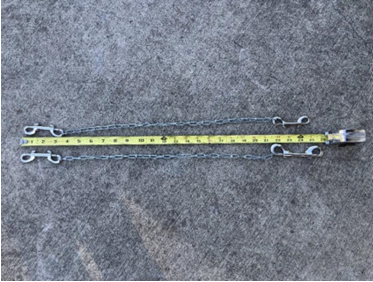
Example Benching Chains
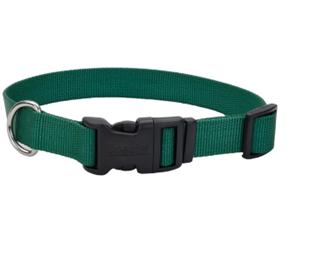
Example Buckle Collar
STATE 4-H FAIR QUALIFICATION
To qualify for the State 4-H Fair, you must have a blue ribbon or a combination of a blue and red ribbon in Showmanship and Obedience. A red ribbon in both Showmanship and Obedience or a white ribbon in either Showmanship or Obedience are not eligible for State 4-H Fair competition. Each year we receive a county allotment, or number of exhibitors, that we can qualify for State 4-H Fair and they are chosen as follows:
First Pick Showmanship – Blue Obedience – Blue
Second Pick Showmanship – Blue Obedience – Red
Third/Last Pick Showmanship – Red Obedience – Blue
Sub-Novice, Beginner Novice, Pre-Novice, and Novice exhibitors receiving a blue ribbon in both
Obedience and Showmanship are eligible for State 4-H Fair competition, starting with the highest
scores in the following order of preference:
● Blue ribbon in Showmanship and red ribbon in Obedience
● Red ribbon in Showmanship and blue ribbon in Obedience
Advanced Novice and above exhibitors receiving a blue ribbon in Showmanship and a minimum score of 100 points with a passing total of at least half the number of exercises in their Obedience class, or with a red ribbon in Showmanship and a blue ribbon in Obedience are eligible for State 4-H Fair competition.
Exhibitors must qualify as part of the county allotment. Exhibitors receiving a red ribbon in both Showmanship and Obedience or a white ribbon in either Showmanship or Obedience are not eligible for State 4-H Fair competition. If the county allotment is reached during any “pick,” the highest scores go first. If there are not enough eligible exhibitors, we will not fill our county allotment.
Exhibitors with two or more dogs may be eligible for State 4-H Fair with a blue or red ribbon in Showmanship and a qualifying score in Obedience. One of the exhibitor’s dogs must qualify for State 4-H Fair in Obedience. The dog that qualifies in Obedience must be the dog entered for State 4-H Fair competition in Obedience and Showmanship. The dog must be entered for State 4-H Fair competition in the same class in which they qualified at the county level. If an exhibitor qualifies for State 4-H Fair Obedience with one or more dogs, the exhibitor must choose which dog to enter, with the exception that Intermediate and Senior members may enter two dogs in this show section if space is available in their county allocation. Two dogs may be entered in the same class or different classes. Junior members may enter only one dog in this show section except in Brace Class.
If the county allotment is reached during any “pick,” the highest scores go first. If there are not enough eligible exhibitors, we will not fill our county allotment.
WASHINGTON STATE 4-H DOG PROGRAM POLICIES is available for download on the State 4-H website.
Showmanship: The highest scoring exhibitor in each class for each age division with a blue ribbon will receive a Champion rosette. A Reserve Champion rosette may be given to the next highest scoring exhibitor in each class and age division with a blue or red ribbon qualifying score of 77 points or above.
Obedience: The highest scoring dog in each class for each age group with a blue ribbon qualifying score will receive a Champion rosette. A Reserve Champion rosette may be given to the next highest scoring dog in each class for each age group with a blue or red ribbon qualifying score of 177 (Novice or below) or 135 (Advanced Novice and above) or above.
All other contests: Ribbons awards will be given for each age group, class, and/or skill level.
TOP SHOWMANSHIP AWARD
All Junior, Intermediate, and Senior 4-H exhibitors who earned a Champion rosette on their designated exhibit day at county fair are eligible to compete in the county Showmanship Finals. The top handler in each age division will be awarded a special rosette, sponsored by Doggy Come Play.
OVERALL HIGH POINT AWARD
The Junior, Intermediate, and Senior 4-H exhibitor with the highest combined scores in Obedience and Showmanship at Fair will be awarded an Overall High Point rosette, sponsored by Doggy Come Play. In the event of a tie, the award will be given to the 4-H exhibitor with the higher Obedience score.
STATE 4-H FAIR TEAMS
All 4-H exhibitors who qualify for State 4-H Fair Obedience, Agility, Judging, and/or Dog Bowl Teams will receive a special rosette sponsored by Doggy Come Play.
SPECIAL AWARDS
Local area Kennel Clubs, businesses, and the Dog Leaders Council may offer special awards. The criteria for these awards may vary from year to year to allow as many different members as possible the opportunity to receive these awards. *Additional and/or special awards may be announced at the fair and can be given at the discretion of the Judges, the Superintendents, or the Skagit County Dog Leaders.
The MT. BAKER KENNEL CLUB AWARD will be presented at County Achievement Night to a 4-H member from each Washington State 4-H Fair Obedience class, i.e., Sub-Novice, Beginner Novice, Pre-Novice, Novice, and so on.
To be eligible for this award, 4-H members are required to participate at Skagit County Fair in Obedience and Showmanship, submit a Record Book for the county contest, and enter a minimum of three optional county fair contests from the following list: Public Presentation, Skill-a-thon, Judging, Dog Bowl, and/or Educational Poster.
Recipients are determined by combining the Obedience and Showmanship scores from Fair competition with the Record Book score. Points based on the following ribbon scale will then be added for each optional county fair contest entered. 4-H Members who compete in more than the minimum of three required optional county contests will receive points for each contest entered, with the exception that only the highest ribbon earned for contests with more than one entry, such as educational posters, will be counted. Approved March 18, 2019
MERIT = 12 points BLUE = 10 points RED = 7 points WHITE = 3 points
The SKAGIT COUNTY AGILITY AWARD is sponsored by the former Tails Up 4-H Cub and will be presented at Skagit County Achievement Night to a 4-H member from each age division, i.e., Junior, Intermediate, and Senior.
To be eligible for this award, 4-H members are required to compete in a State 4-H Fair Agility Standard and Jumpers class at the Skagit County Agility Trial and exhibit the same dog at Skagit County Fair. 4-H members must receive a blue ribbon in each class, or a combination of a blue and red ribbon.
Recipients are determined by combining the FIRST RUN scores in each of their Standard and Jumpers class. Run times will be used to break any score ties. Please note that second run scores used to qualify for State 4-H Fair Agility will NOT count toward this award. Approved April 15, 2019/Updated November 2023
The 4-H DOG STATE FAIR ACHIEVEMENT AWARD is sponsored by the former Tails Up 4-H Club and will be presented at Skagit County Achievement Night to any members who qualify for and exhibit in all Washington State 4-H Fair 4-H Dog events currently offered for their age group. Intermediate and Senior members must exhibit in eight (8) Washington State 4-H Fair 4-H dog events, and Junior members must exhibit in seven (7) Washington State 4-H Fair 4-H dog events.
The required events are as follows: Obedience, Showmanship, Agility Standard, Agility Jumpers, Public Presentation, Educational poster, Dog Judging Contest, Skill-A-Thon, and *Dog Bowl.
*Dog Bowl is not a State 4-H Fair event, but participation may be recognized for Intermediate and Senior members if there is a qualified team going to State 4-H Fair.
To be eligible for this award, 4-H members are required to submit an award application and provide proof of exhibit for each event. A photograph of the member participating in an event or a letter signed by the club leader will be accepted as proof of exhibit. Approved August 23, 2021
The 4-H DOG JUDGING EXCELLENCE AWARD is sponsored by the former Tails Up 4-H Club and presented at Skagit County Achievement Night for all Skagit County exhibitors who place in the top 10 individuals in the State 4-H Fair 4-H Dog Judging Contest. Approved August 23, 2021
The 4-H DOG JUDGING TOP ORAL REASONS AWARD is sponsored by the former Tails Up 4-H Club and presented at Skagit County Achievement Night to a Skagit County 4-H Dog Project member who received the Intermediate or Senior Top Oral Reasons Award at the State 4-H Fair Dog Judging Contest. Approved August 23, 2021