Composting Methods
Choosing a composting system –
Match the system to your setting and the materials you generate. Large properties can support sheet composting or open passive heaps, while smaller yards or patios often benefit from contained bins, tumblers, or in-ground methods. If most of your waste is kitchen scraps, vermiculture, bokashi, or trench composting may be a better fit. Larger volumes of yard debris or manure are better suited to larger pile-based systems.
For examples of the composting systems mentioned on this page, visit the Blueberry Park demonstration garden later this year, or watch a video created by Cornell Cooperative Extension of Tompkins County called the Pro’s and Con’s of Compost Bin Options showing how many of these systems look and behave.
Composting Method Selection Flow Chart
START ———————————————–
Do you want fast results (1–4 months)?
Yes → Go to Next Question——–No → Choose PASSIVE options
Do you have time/ability for regular maintenance?
Yes = choose managed options ————————- No → Choose PASSIVE options
Managed options:
- Aerated pile/bin
- Tumbler
- Vermiculture/ Worm bin
- Bokashi (with burial/finishing step)
Passive options:
- Passive Heap pile
- Trench/pit
- Sheet Composting
Next question for either path: How much space do you have?
Small/limited space options:
- Tumbler
- Trench/ Hole
- Aerated pile or bin
- Vermiculture/ Worm bin
- Bokashi (with burial/finishing step)
Moderate to large space options:
- Any method
Final filter: What type of waste?
Mostly kitchen:
- Tumbler
- Vermiculture/ Worm bin
- Bokashi (with burial/finishing step)
Mix of kitchen & yard:
- Tumbler
- Trench/ Hole
- Aerated pile or bin
- Vermiculture/ Worm bin
Mostly yard waste:
- Passive pile
- Sheet Composting
- Large aerated pile
Pile Based
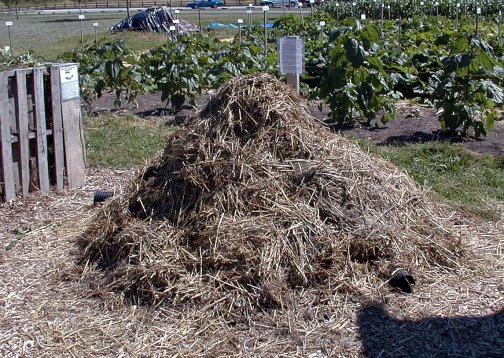
The cheapest option in a loose stacked pile of compostable material, heaped 3-5 feet wide and 3 feet high. This pile can be used as hot compost by turning frequently, or left to decompose over a span of time. A heap or pile may not be attractive to some people; the material tends to spread; and pests have free access.
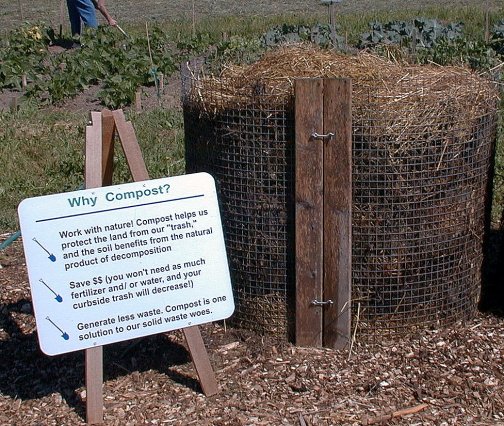
A wire-mesh holding unit is one of the least expensive and easiest units to build. This bin provides for easy turning of the organic materials by simply lifting the wire, setting it to the side, and using a garden fork or shovel to scoop the organics back into the pile while harvesting finished compost from the bottom.
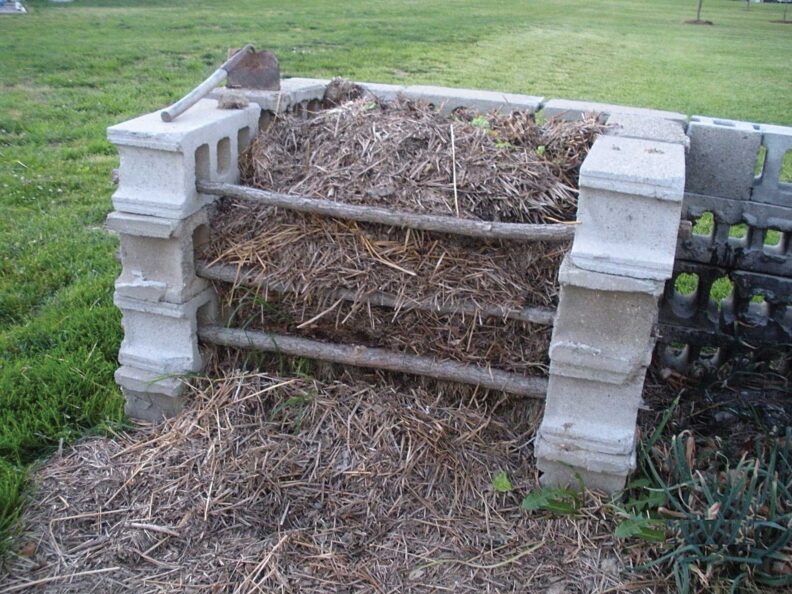
A concrete block holding unit is sturdy, durable, and easily accessible. If concrete blocks must be purchased, a concrete-block holding unit may be slightly more expensive. Expect to use about 50 blocks for one bin, and another 32 blocks for each additional stall.
The design featured in the picture was published in the Backwoods Home Magazine and offers a simple gate design and good airflow.
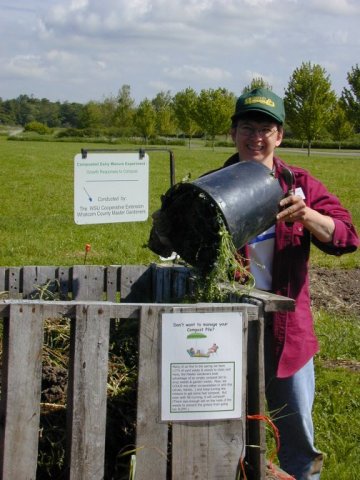
Wood pallets make an easy-to-build, sturdy compost bin. Not only that, they’re free! Many companies still consider wood pallets a waste material and pay to have them hauled away with their garbage. If you see pallets at a business, ask if you can have them. Select four pallets of the same size to make the four sides of your bin. Connect the sides by tying them with string, rope, or wire, or by nailing them with double-headed nails. However you connect them, be sure to do it in a way that makes them easy to take apart when you want to move the pile or harvest the compost. Wood pallet bins are harder to turn regularly, so many people use them to compost slowly.
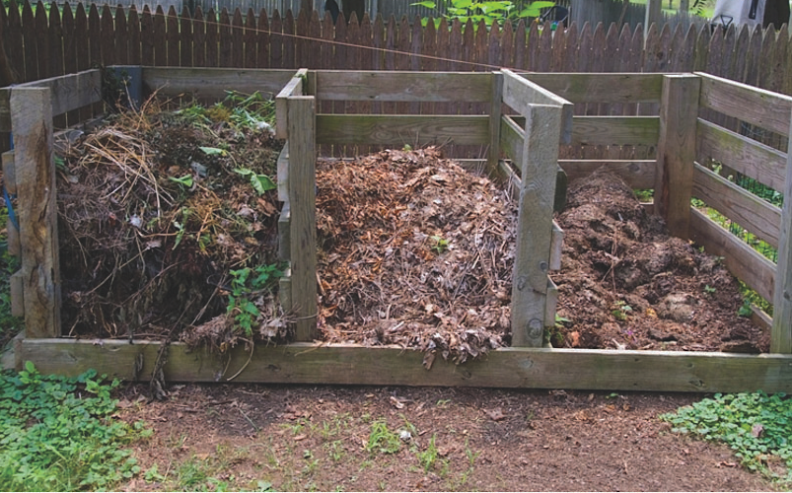
Multiple bins are used for ease of turning the compost. You build your pile in the first bin and later, when the compost is ready to turn, you move it into the second bin and start building a new pile in the first. Then you turn from the second into the third bin, and the first into the second. Eventually, you get all your compost into one bin at the end, and material in the top part of this bin cures while you harvest finished compost from the bottom of the bin.
Contained
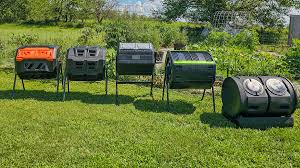
Enclosed, rotating bins designed to make turning easy and speed up decomposition. They work well for small yards or patios and help keep pests like rodents and raccoons out. While some tumblers promise compost in just a few weeks, the material typically takes longer to break down, especially since the smaller volume does not retain enough heat to safely compost weeds gone to seed or diseased plants. Because tumblers are off the ground, they often lack worms, but adding a handful from another compost bin can help speed the process. For consistent use, having two tumblers allows you to alternate between decomposition phases, producing finished compost more steadily.
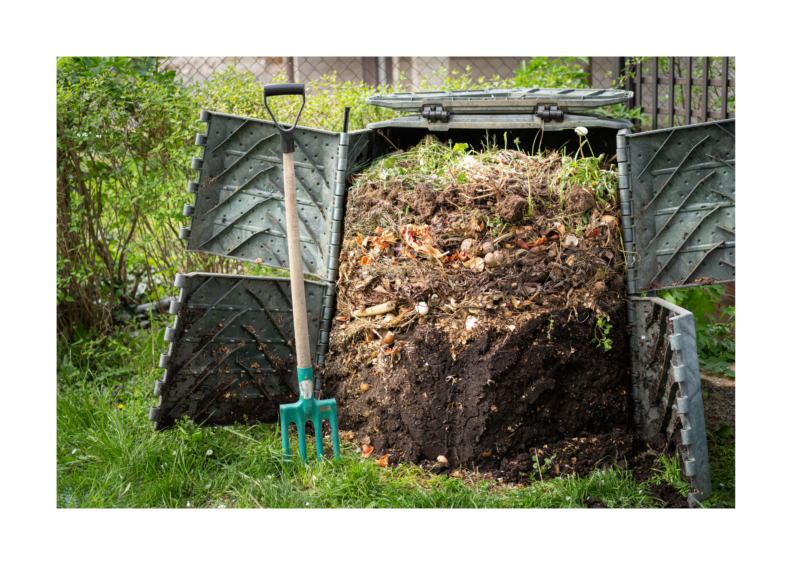
A contained systems designed for backyard composting in small to moderate spaces. Their primary function is to hold and insulate organic materials while allowing airflow through side vents and contact with soil at the base. The enclosed design helps retain heat and moisture, reduce odors, and deter pests, making them well-suited for suburban neighborhoods. Materials are added from the top and finished compost is typically removed from an access door near the bottom as it matures.
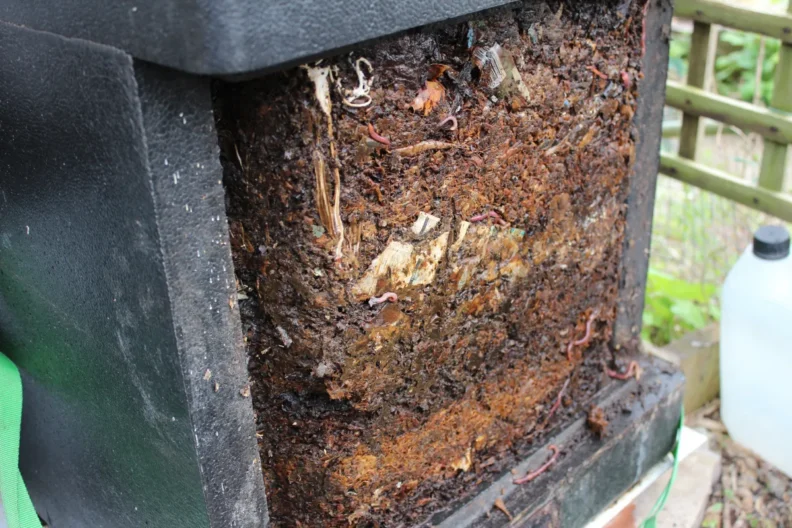
An insulated hot bin is a contained composting system designed to retain heat and support rapid decomposition. With built-in insulation and controlled airflow, it maintains the high temperatures needed for active (thermophilic) composting, allowing materials to break down quickly — often within 4–8 weeks.
Its primary function is fast, efficient compost production in a small footprint. The enclosed, insulated design helps process food scraps and yard waste year-round, even in cooler climates, while reducing odors and deterring pests.
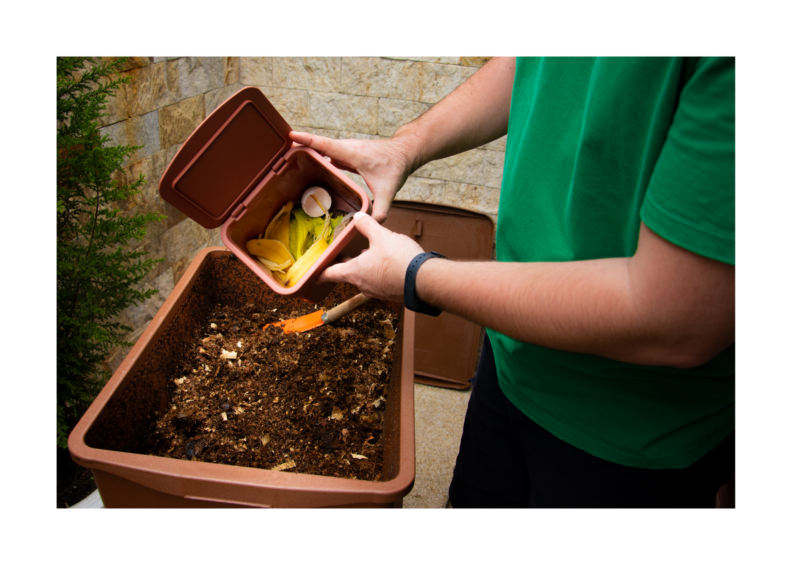
A “real composting” approach designed for small spaces. Using interlocking bins for airflow while intermixing “greens and browns” this flexible, low-visibility approach to composting in apartments allows people without outdoor space to still divert food waste from the landfill. Compost is then taken to a garden space, yard application, or community drop-off.
Cornell Cooperative Extension DIY Instructions
In-Place
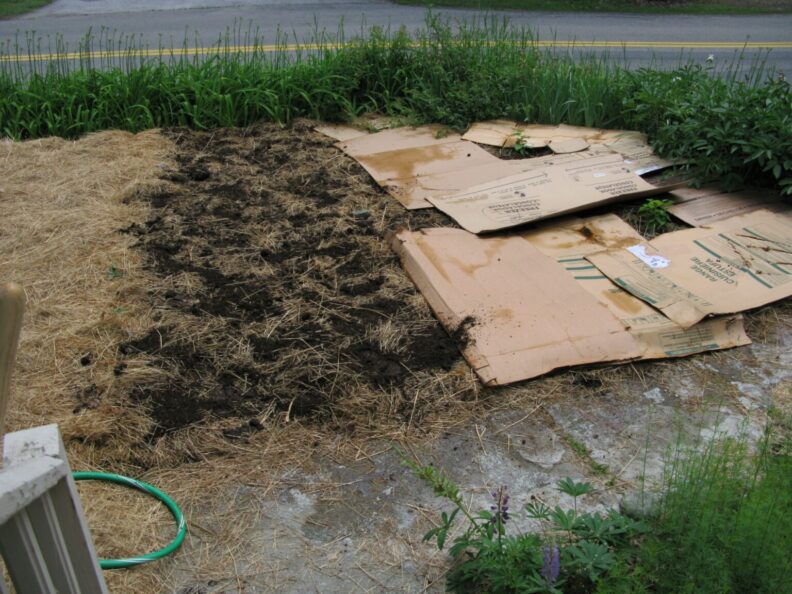
Organic materials are layered directly on the soil surface and allowed to decompose over time. Instead of building and turning a pile, materials such as cardboard, leaves, grass clippings, food scraps, and manure are layered in alternating “browns” and “greens,” then left to break down naturally to build soil directly where you want to grow. As materials decompose, they suppress weeds, improve soil structure, increase organic matter, and feed soil microorganisms. Because it is not typically turned, sheet composting is considered a passive system and may take several months to a year to fully break down.
- Sheet mulching and lasagna composting with cardboard by OSU Extension Service
- Lasagna Mulching by Virginia Cooperative Extension
- WSU Native Plant Salvage Project: Sheet Mulching Basics
- CalWild Gardens: Sheet mulching for drought-tolerant gardens in California
- University of California Agriculture and Natural Resources: How to Replace Your Lawn & What to Put There Instead
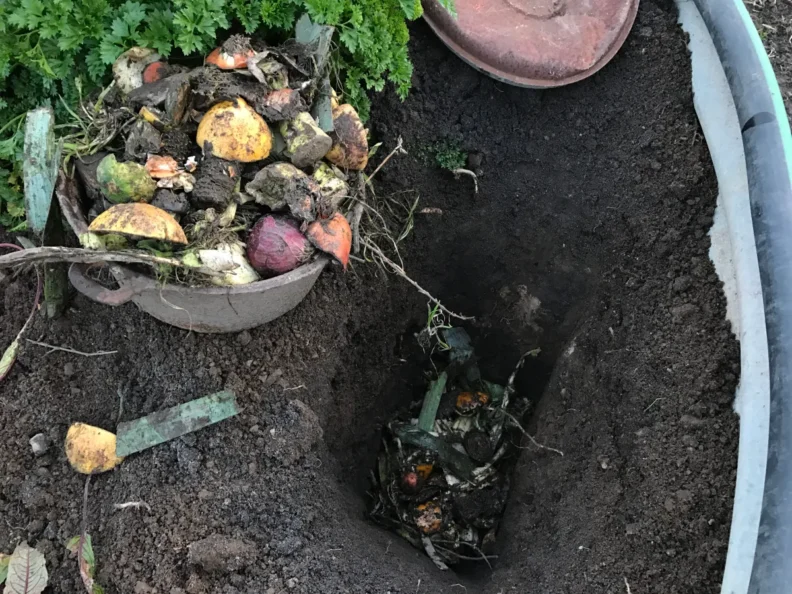
Trench compost is one of the lowest-maintenance system available and so works well for both hands-off and hands-on composters. It adds fertility to garden soil, but does not make finished compost that can easily be moved.
Trench composting is great for alternating rows is a “lazy” gardening by alternating trench rows with garden rows, incorporating scraps directly in the soil, boosting fertility without turning piles. By digging 12-18 inch deep trenches between planting rows and rotating these areas annually, you create nutrient-rich soil that attracts worms and moisture.
Alternatively, digging individual holes or pits directly into the soil returns nutrients to the soil where plants can use them and requires minimal effort.such as around the drip line of trees, at least 8 inches deep to avoid attracting rodents.
- Trench Composting: The Lazy Gardener’s Secret to Rich, Nutrient-Packed Soil! by Compost Magazine
- Factsheet Series #5 Trench Composting by the Garden Centre
- Trench Composting – A Simple Method of Reusing Kitchen Waste by Nebraska Extension
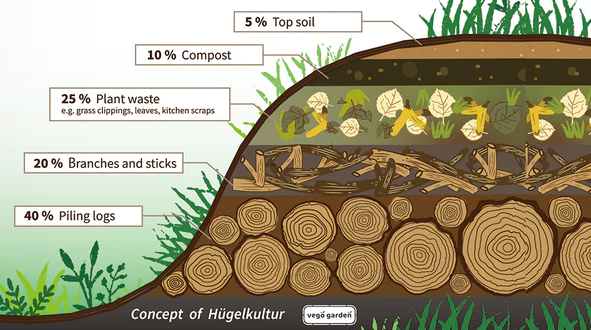
Hugelkultur is an in-place composting and soil-building method that uses buried woody material — such as logs, branches, and brush — as the foundation of a raised garden bed, layered with smaller organic materials (leaves, grass clippings, manure, compost) and covered with soil to create a mound or berm.
Its primary benefit is moisture retention, provided by the structure of longer term decomposition, gradually releasing nutrients.
Ideal for building soil and changing the geography of your property.
In-Ground
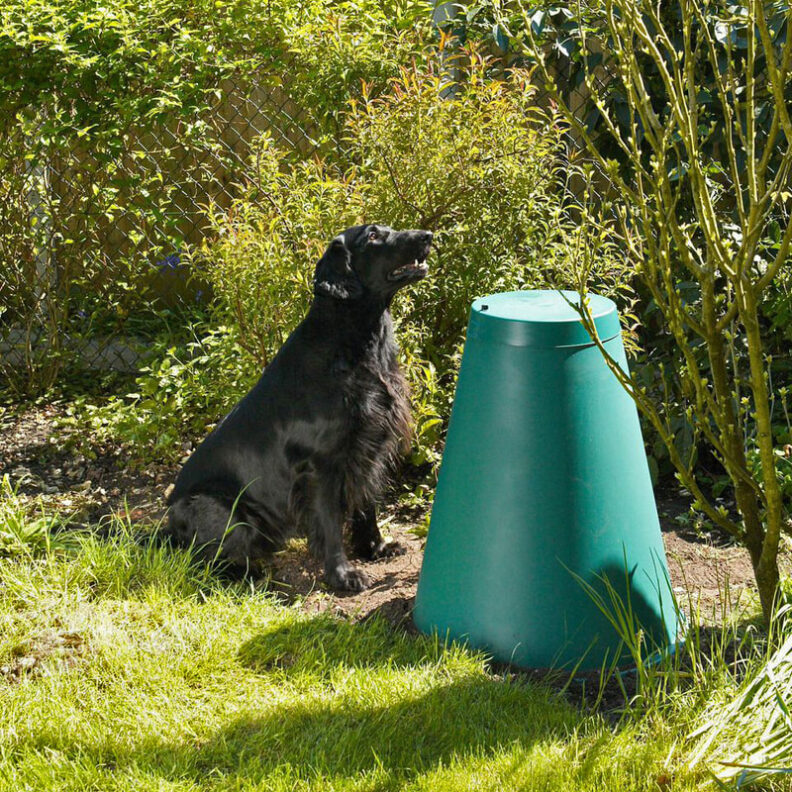
A cone composting unit is an in-ground, contained composting system shaped like an upside-down cone with an open bottom. The cone sits partially buried in the soil, allowing direct contact with earthworms and soil microorganisms while containing materials above ground.
Its primary function is to process kitchen scraps efficiently in a small space. Food waste is added through the top, and decomposition occurs below and around the unit, with nutrients moving directly into the surrounding soil.
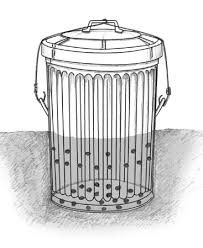
A simple, pest-resistant system designed specifically for composting food scraps in urban environments. Because open piles that include food waste can attract rats, raccoons, and other urban wildlife, this method uses a sunken garbage can with a tight-fitting lid to contain materials while still allowing decomposition.
The digester is installed directly into the ground, with holes punched in the sides and bottom of the can. Food scraps are added through the top, and soil organisms and microbes enter through the holes to break down the material. Nutrients gradually move into the surrounding soil, improving fertility in the immediate area.
“How To” Instructions.
Small Footprint Options
Compact composting options such as mechanical composting units, Vermiculture, Bokashi, or Stealth can be done in a house or garage area. If you have some yard, trench composting or using a cone has the least maintenance. If you decide to use a tumbler, you will need to alternate between two separate tumblers to get a finished product.
Mechanical
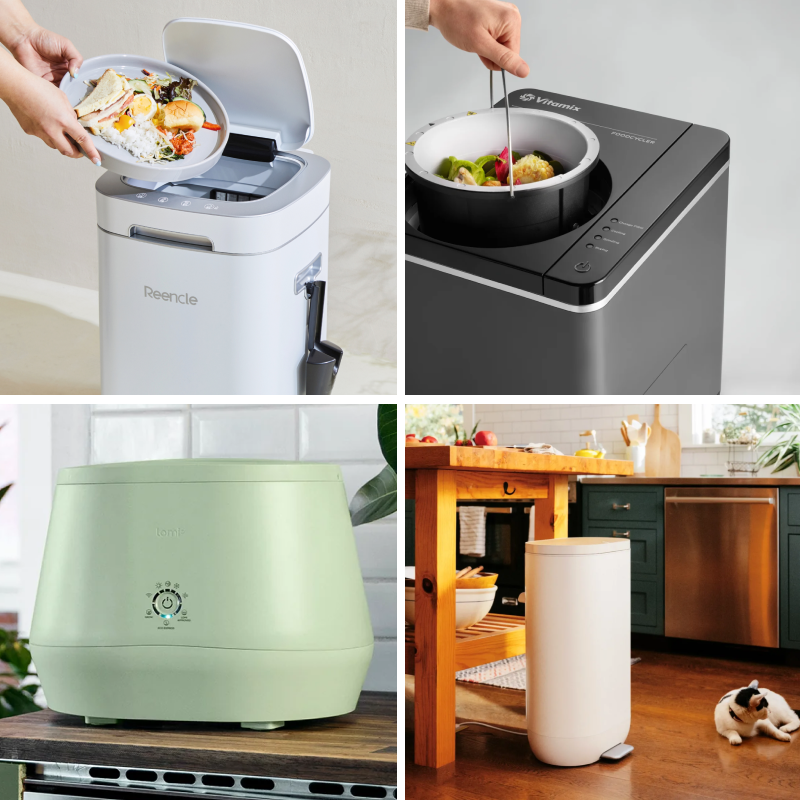
Compact mechanical/electric composting units
Vermiculture
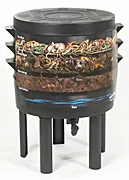
Vermiculture Bins
Visit our Vermiculture page to visit this subject in more depth with “How To” and “DIY” options.
Fermentation
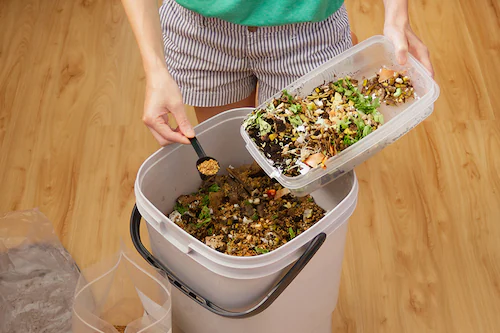
Bokashi
Visit our page of Bokashi page for “How To” instruction and DIY options.
Advanced- Not So Common Composting
Compost Happens and there isn’t much that can’t be composted. With that said, you want a safe finished product and not bring in a heard of rodents like the Pied Piper. That is most easily done by using the “Do and Do Not” list of compostable items.
The Humanure Handbook by Joseph C. Jenkins is a highly recommended comprehensive guide to composting, including human waste and has been a great starter point for many beginning compost enthusiasts.
- Composting Chicken Manure by Tilth Alliance
- On-Farm Mortality Composting of Livestock Carcasses
- Composting Dog Waste – Sarasota County – UF/IFAS Extension
- BLACK SOLDIER FLY COMPOSTING GUIDE
You might also consider letting someone else compost it. We have several great “Off Site” composting options that can be located on the Washington Compost Facilities website or more specifically, Yard Waste Recycling for Kitsap. You might also check out Kitsap County Solid Waste’s Composting in Kitsap for how these services can be used.
Starting on this page, we learn about a selection of composting options and a brief description.
We recommend that you visit these pages to learn more specifically on these topics
You may also be interested in our Backyard Composting workshop series with hands-on experience, offered in the Spring and Fall
As compost decomposes, volume typically reduces by 40–60%, sometimes more.
- Active hot pile (8–12 weeks): 50–60% reduction
- Passive pile (1–2 years): 40–60% reduction
- Leaf-only piles: Often 70%+ reduction
- Manure-heavy systems: May shrink even more due to high moisture and rapid breakdown
Step by steps guides for constructing a variety of low cost composting systems.
- University of Wisconsin, Extension Learning Center: DIY Compost Bin Series – providing 6 designs with detailed instruction.
- Tilth Alliance Composting Bins – Food Digester, Worm Bin for the yard
- University of Florida, Extension Sarasota County– Several examples of bins and directions, including a “Self Contained Bin” designed specifically for composting pet waste separately.
- Institute for Local Self-Reliance – DIY Compost Screeners
- Carolina Farm Stewards – Compost Bioreactor
- Kerr Center: Hot Composting with the Berkeley Method
- University of Missouri Extension: Making and Using Compost
- Compost Education Centre: FactSheet Series: Hot Composting
- On-Farm Composting Handbook by Cooperative Extension June, 1992
- Kitsap Conservation District Agriculture Technical Assistance
- North Dakota State University: Composting Animal Manures: A guide to the process and management of animal manure compost
The smell of food is all it takes. By burying food scrap 8 inches or more in your pile reduces this temptation.
- Rodent Control Regulations from Kitsap Health District
- Assessing Rodent Potential Evaluation Guide: Rodent Reduction Rubric (ILSR and Compost Power)
- Guide: Oh Rats! How to Avoid Rodents at Community Composting Sites
Funding for this education is provided by Kitsap County Public Works, Solid Waste Division.