Check out some of these terrific opportunities to explore science in Kitsap County and areas beyond!
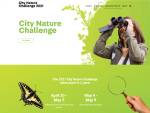
City Nature Challenge
Multi-day event engaging residents and visitors in documenting nature to better understand urban biodiversity.
Nature’s Notebook
Interested in what’s happening to plant and animal populations, either on a seasonal or long-term basis? Turn your interest into a valuable collaborative community science program! Track Seasonal Changes in Plants and Animals.
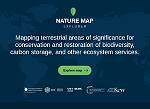
Nature Map Explorer
Interested in what’s happening to plant and animal populations, either on a seasonal or long-term basis? Turn your interest into a valuable collaborative community science program!
BC Parks iNaturalist Project
Confirming British Columbians’ love of nature and the outdoors, nearly 3 million observations of wildlife and natural species in BC had been aggregrated over iNaturalist and other nature-observation apps to date. This year, we’re calling on you to help us reach 3 million observations in BC’s Big Nature Challenge.
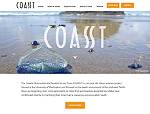
The Coastal Observation and Seabird Survey Team (COASST)
COASST is a 19-year-old citizen science project housed at the University of Washington and focused on the beach environment of the northeast Pacific. Since our beginning, over 1,000 participants on more than 450 beaches spanning four states have contributed directly to monitoring their local marine resources and ecosystem health.
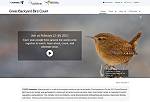
Great Backyard Bird Count
Participate in the Great Backyard Bird Count, an annual event that gets bird watchers to count birds across the continent and then tallies the highest number of birds of each species seen together at one time.
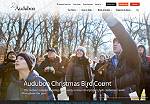
Audobon’s Bird Count
Christmas Bird Count and contribute to a wildlife census that will help scientists assess the health of bird populations.
Bird Watch
Join eBird, an online checklist project created by the Cornell Laboratory of Ornithology and the National Audubon Society. Ebird allows people to report real-time bird sightings and observations.
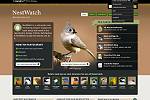
Nest Watch
Join NestWatch, a continent-wide project to monitor bird nests. The project was started by the Cornell Laboratory of Ornithology and the Smithsonian Migratory Bird Center.
Celebrate Urban Birds
Observe birds in an urban neighborhood for the Celebrate Urban Birds project, and send the data to scientists at the Cornell Laboratory of Ornithology.
Project Feeder Watch
Help Project FeederWatch with a winter-long survey of birds that visit feeders at backyards, nature centers, community areas, and other locations in North America.
Star-Dust
Want a chance to have an interstellar dust particle named after you? Help NASA by volunteering for Stardust@home and searching images for tiny interstellar dust impacts.
Globe at Night – Measure night-sky brightness
Join the Globe at Night program in documenting light pollution by submitting data based on the visibility of constellations.
Classify Galaxies
Do what a computer can’t! Join the Galaxy Zoo project to help scientists classify galaxies according to their shapes.
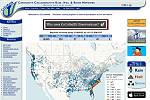
Community Collaborative Rain, Hail, Snow Network (CoCoRas)
Volunteer to join the Community Collaborative Rain, Hail, and Snow Network. The data you help collect will be used for weather forecasting and monitoring, severe weather alerts, and climate studies.
US National Native Bee Monitoring Research Coordination Network (RCN)
The US National Native Bee Monitoring Research Coordination Network (RCN) is a USDA-funded effort to coordinate and support efforts to monitor native bee populations in the US, with the broader goal of conserving our nation’s native bee fauna. From 2020-2023, native bee biologists from across the US will work together to develop a national plan for native bee monitoring. The plan will include components such as monitoring protocols and the designation of priority areas for monitoring. The RCN will also develop new educational and training opportunities in areas that are fundamental to native bee monitoring.
Learn About Local Plants
Join the National Phenology Network’s plant monitoring program. Learn about plant species in your area and record your observations about observable phases in the annual life cycle of
Observe Plant Life Cycles
Join Project BudBurst to gather environmental and climate change information in your local area. Observe the life cycles of trees, shrubs, flowers, and grasses to see when they have their first leafing, first flower, and first fruit ripening.
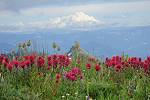
MeadoWatch
At MeadoWatch, our mission is to engage Mt. Rainier National Park visitors in scientific research to understand how climate change will influence the timing of flowering and seed production in the iconic high mountain meadows.
Western Redcedar Dieback Map
Western redcedar is critical to the livelihood of our forests and communities. However, many reports of dieback have been shared recently. We need YOUR help to understand why! Help science go faster by sharing observations of healthy and unhealthy redcedar trees!
World Water Monitoring Day
Celebrate World Water Monitoring Day. Use a test kit to sample local bodies of water for water quality data and share the results with other communities around the world.
Eyes on the Watershed
Interested In Exploring Your Watershed? Start by picking a watershed close to you and explore the Story Map associated with it.
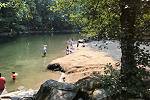
WA State Dept. of Ecology – Protecting Our Waters
Each of us can make small changes at home, at play, and at work to help keep water clean — and that adds up to a pollution solution.
Global Earth Challenge
The world is facing a climate crisis – hurricanes batter coastlines, rising seas sink cities and wildfires ravage landscapes. With the planet in flux, we need people of all backgrounds observing these changes and contributing to science. That’s where Global Earth Challenge comes in. Global Earth Challenge is the world’s largest ever coordinated citizen science campaign. The initiative works to integrate existing citizen science projects, as well as build the capacity for new ones – all as part of a larger effort to grow citizen science worldwide.
Hush City
Hush City is a free, citizen science mobile app, which empowers people to identify and assess quiet areas in cities as to create an open access, web-based map of quiet areas, with the potential of orientating plans and policies for healthier living, in response to issues framed by European environmental policies.
iNaturalist
Smartphone technologies and apps such as iNaturalist make collecting photographs and biological information about living things easy as part of a BioBlitz. High quality data uploaded to iNaturalist becomes part of the Global Biodiversity Information Facility, an open-source database used by scientists and policy makers around the world.

SEEK
iNaturalist also has a tool that helps young people and families to explore, called Seek. Identify plants and animals in a few quick steps with this app. While exploring outside, point the Seek camera at living things. Follow the instructions on screen, and the image recognition technology will identify different types of plants, birds, amphibians, insects, fungi, and more. Seek helps to classify to the species level where possible, earning participants virtual badges.