Livestock producers and other grazing land managers use knowledge (theory) of how plant species respond to grazing when they select practices to encourage specific plant communities. One way plants have been grouped in their response to grazing is as “increaser”, “decreaser”, and “invader” species (Dyksterhius 1949). The practical question is, what grazing practices should be used, and how, to retain desirable species likely to disappear, manage those with a propensity to increase, and resist invasions of undesirable species? For the conservation grazing land manager, managing for desired sward species is supported by understanding species’ capacity to “resist” grazing through either avoidance or tolerance (Briske et al. 1991; See Sidebars on Grazing Resistance and Grazing Resistant Plants in Western Washington).
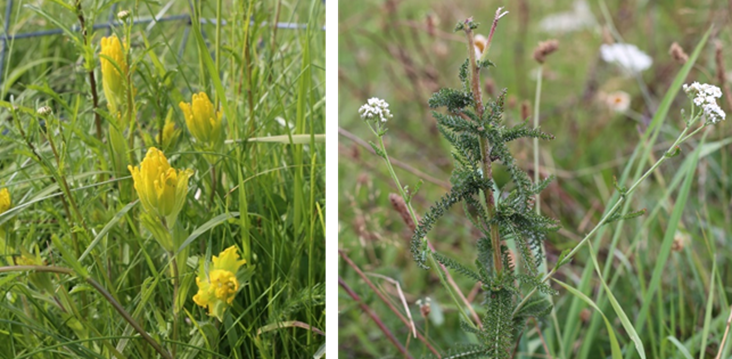
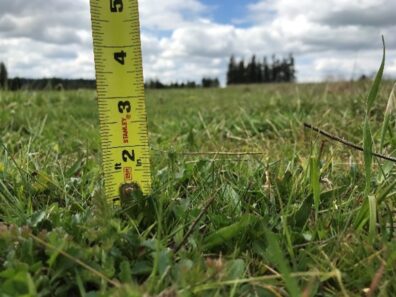
Concepts like those that describe plant resistance to grazing can be used, over time, to accumulate ecological knowledge about the interaction of grazing with the form, function, and “chemical toolbox” (secondary compounds) of specific grassland plant species. This is critical to retain sensitive species and reign in over-zealous ones (see Figures 1 and 2). For example, which practices select against upright growth form, which support target forb species, and which support sensitive native species (Admin 2017)? Numerous down-stream decisions flow from this knowledge, including grazing intensity and timing prescriptions, selecting grazing systems and livestock type and breed, applying coordinated disturbance actions, managing soil, and restoration such as seeding to increase plant diversity.
Sidebar: Grazing Avoidance + Grazing Tolerance = Grazing Resistance
Grazing avoidance is achieved through plant form (morphology) adaptations and biochemical compounds that reduce palatability. Plant form adaptations include modified tiller length and angle that make the plant more difficult to consume, mechanical deterrents including spines, awns, and waxes, and potentially more numerous, finer leaves to avoid herbivory. Biochemical defenses include storage of “secondary compounds” (alkaloids, glucosinolates, cyanogenic compounds, tannins, lignins, and resins) in plant parts to deter grazing and/or interfere with digestion. Grazing tolerance is achieved also through plant form strategies, but also biological function adaptations (physiology). Tolerance based on plant form adaptations includes high leaf replacement potential (e.g. regrowth points lower on the plant) and rapid regrowth from these low growth points. Tolerance based on plant function includes increased rate of photosynthesis (compensatory photosynthesis) and rapid leaf tissue replacement following grazing, and competitiveness at accessing water and nutrients relative to less grazing tolerant plants.
Sidebar: Grazing Resistant Species in Western Washington
Grazing resistant species in western Washington tend to be short-lived, short-statured, exhibit reproductive strategies that resist grazing (annual reproduction, vegetative reproduction such as rhizomatous root systems or spreading by stolons), leaf out and set seed early in the season, and summer dormancy. They may present fine and short-lived leaf blades, hold axillary meristems (re-growth points) close to the ground to avoid grazing, and contain volatile compounds that limit livestock intake, such as cyanogenic compounds in Subterranean clover (Trifolium subterraneum). Plants that grazing animals avoid benefit from “interspecific competition”, or in other words, these grazing resistant species benefit from the sunlight, fertility, and moisture available when more preferred and grazing intolerant species diminish. Little may be known about the grazing resistance or tolerance of target native species of interest. An example source of information is provided by the Scottish Forestry agency. This agency provides information on grazing resistance of native grass and forb species (Scottish Forestry n.d.) and is useful for developing grazing plans based on grazing resistance. The inventory ranks species on a 1-5 scale of grazing resistance for 36 species plus additional grazing response information for ten other species. Additionally, land managers can search out information on individual species regarding composition of plant secondary compounds, tolerance to grazing, leaf replacement potential, and competitive ability in terms of resource acquisition.