Managing distribution of grazing animals to generate uneven, or heterogeneous, landscapes contrasts with long-held objectives in the range and pasture sciences to manage grazing for even forage use (Toombs et al. 2009). Following historical overuse of many grazing lands in the 19th century, and with a focus primarily on livestock and forage production, the goal in range and pasture sciences has been to develop practices that maximize yield of palatable species at peak digestibility while minimizing bare ground (Freese et al. 2014, Fuhlendorf et al. 2012). As noted, this focus has been described as utilitarian, and the resulting landscape as lacking in variability, or heterogeneity, that is required to support biodiverse wildlife populations by providing habitat niches.
Tools to manage distribution of grazing animals include fencing, paddock layout, watering points, mineral placement, animal breed selection, animal behavior modification, and rotation schedules in a planned grazing system. As can be seen, there is overlap with managing grazing distribution and other management tools.
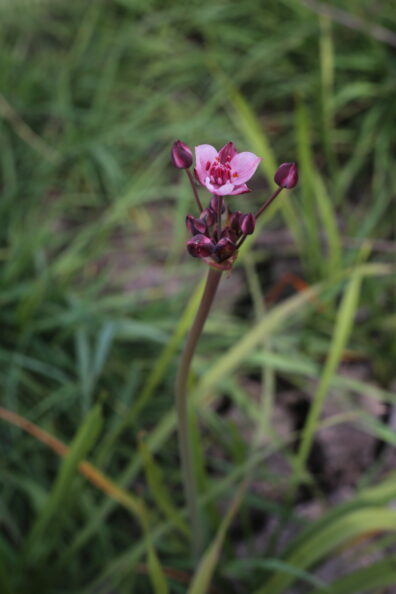
A goal of grazing distribution is to create patches along a disturbance gradient so that suitable habitat is available for grassland fauna (birds, insects, other) with varying vegetation structure preferences. Figure 1 shows a picture of Butomus umbellatus in mire in Hungary, a flowering plant that prefers mud habitat (note cracked, hardened bare soil in image). This is a highly disturbed site along a gradient. Researchers that work in this area argue that “…habitat can’t be to managed at a fine scale. You can use livestock to create a gradient and you get what you get.” Whether habitat can be managed or not at a fine scale, livestock can be used to create a disturbance gradient that creates wildlife niches.
Disturbance Gradients
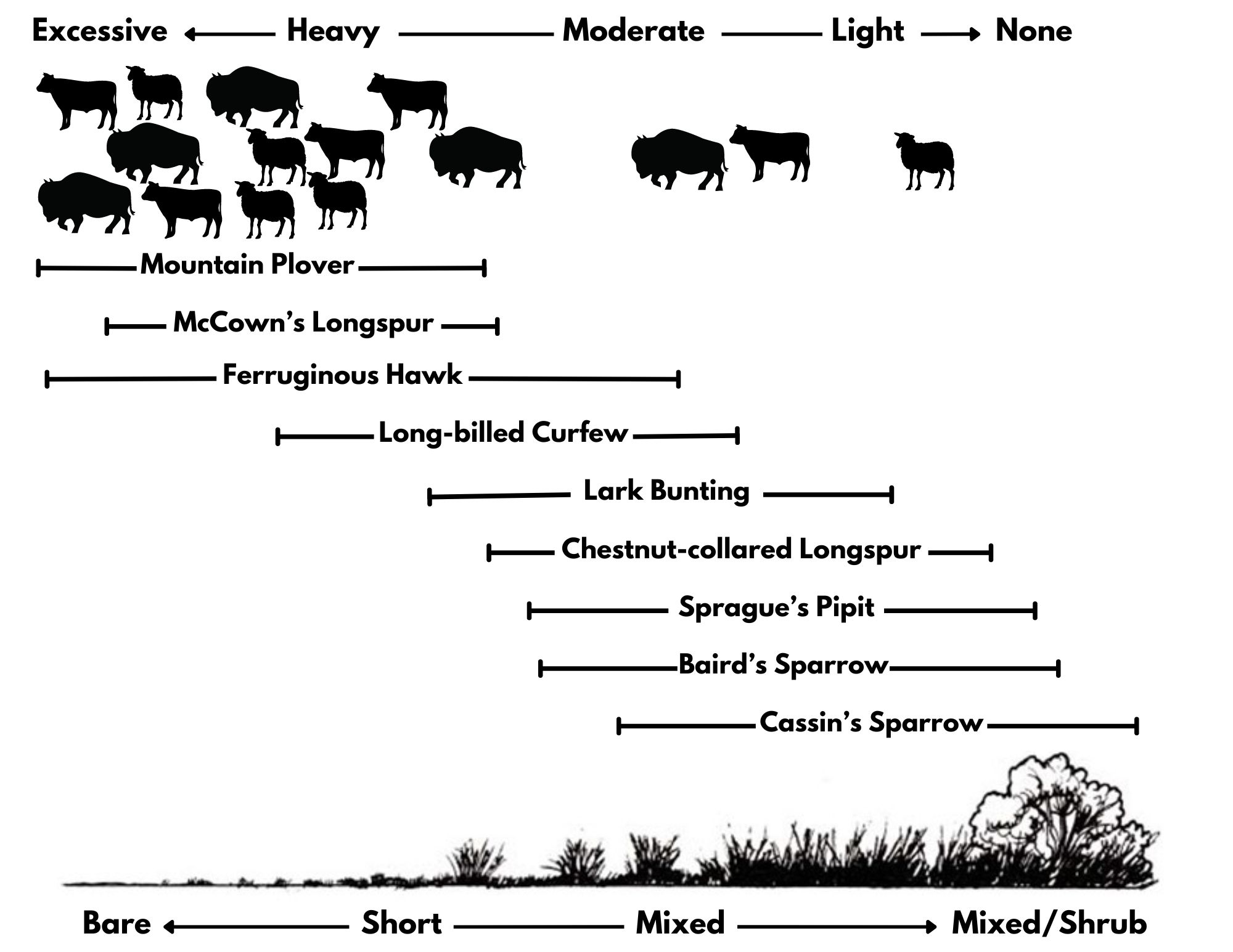
Disturbance gradients can also be created for bird species. Different wildlife species prefer highly disturbed sites, and others prefer less disturbed sites. Bird researchers in the great plains have identified the disturbance intensity preferences of several grassland bird species. Habitat for these different species can be created by distributing animals on the landscape to vary time since disturbance (in months or years). Animal distribution can also be used to represent a variety of times since disturbance simultaneously from year to year. Figure 2, modified from Derner et al. (2009), shows bird response to vegetation disturbance. Species listed here are typical to North American Great Plains.
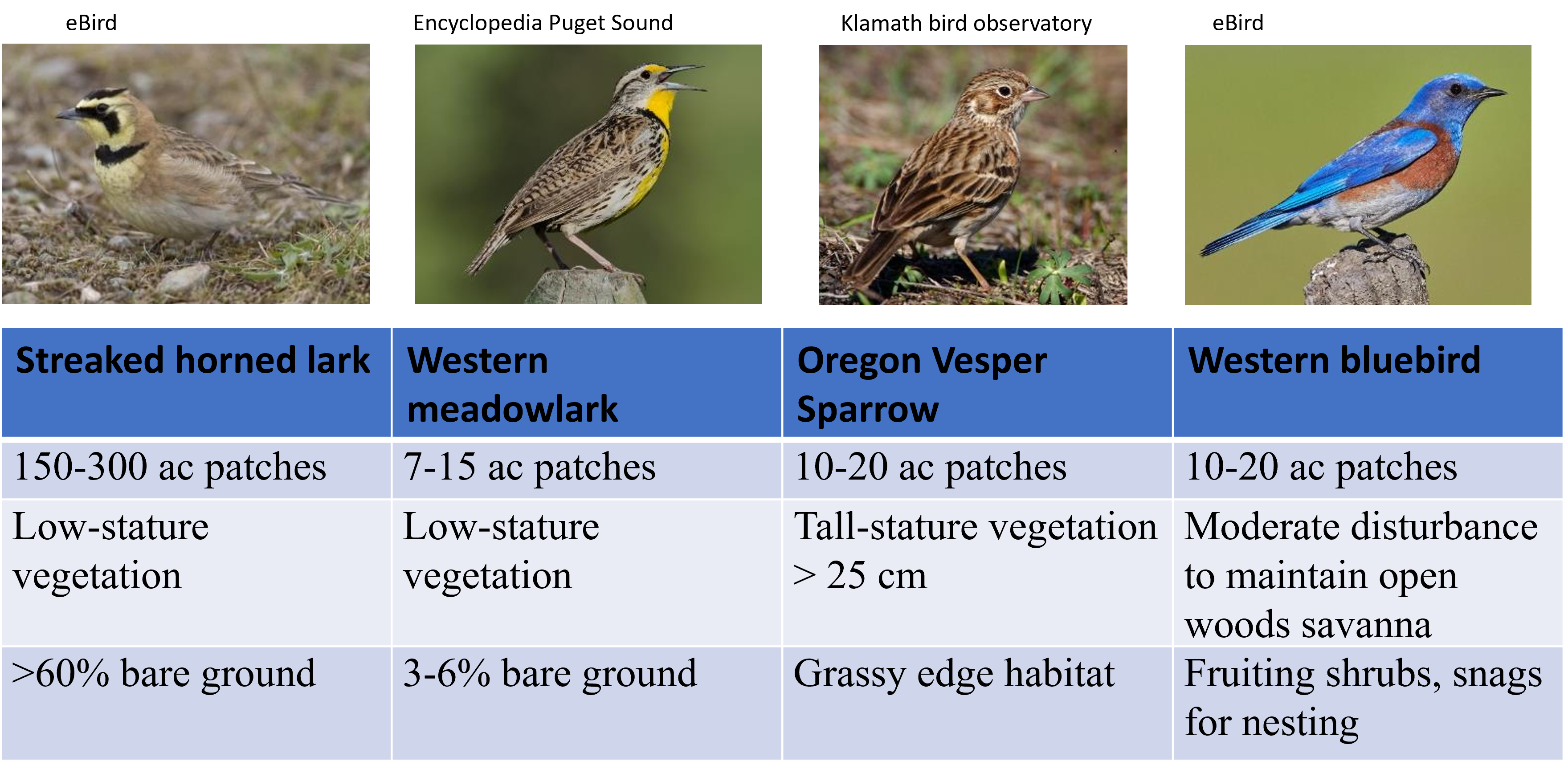
We can also propose a sample Western WA vegetation gradient structure for grassland birds in this region. Click for an enlarged image. Animal distribution can be utilized to vary the intensity of site use. This illustrates as well how no one stocking rate may be appropriate for all species. Many individual sites will not be large enough to create a full disturbance gradient. In that case the entire site may be appropriately devoted to high or low disturbance, and animal distribution managed to meet that goal.