
Native Breeds to Optimize Feed Conversion, Reduce Off-Farm Inputs
(click here to return to Ecological Knowledge Transfer main page)
Management Focus: Native Breeds to Prevent Rough Forage Dominance and Optimize Feed Conversion
Grassland Ecology Principle(s): Animal behavior/breed selection, succession
Target Species (if applicable): dominant reed (specific species updated shortly)
Location: Hortobagy National Park
 Site and Management description:
A local herder uses the local Hungarian grey cattle to utilize reeds that are difficult for many animals to graze on. His experience is that the native breed, compared to Simental, exhibit improved forage use, and can better digest the feed (convert it to energy). He has also observed that they grey cattle use more reed in their diet. Modern breeds may have higher rates of gain but not utilize as much of the available local forage.
Key Management Strategy: select an appropriate breed well-suited to use available forage, and that can reduce inputs from intensively farmed areas elsewhere (i.e. hay)
Thoughts to Ruminate On: Is the breed or the management more important? Should governments and conservation organizations dictate breed selection? How should local ecological knowledge be taken into consideration?
Additional scientific resources: energy conversion by grey cattle, economics PhD evaluating gain and profitability of Simental v. Hungarian grey. Study: conservation breed/Simental comparison, the latter more profitable with faster gain, but better use of available forage by traditional breed
From Utilitarian to Ecosystem Management Approach to Grasslands
(click here to return to Ecological Knowledge Transfer main page)
Management Focus: Transition from Utilitarian to Ecosystem Management Approach to Grassland Management
Grassland Ecology Principle: integration of conservation objectives alongside forage and livestock production
Target Species (if applicable): plant species in grasslands for habitat, and on-farm wildlife generally
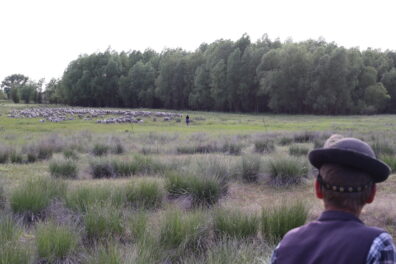
Location: Examples of efforts to design grazing with some attention to habitat and species protection are available widely and increasing. Some areas our project group have explored are northern England, and the North Pennines where 40% of England’s remaining “high nature value” grasslands remain. Alpine pasture management and herding culture in and around Hortobagy National Park in the Carpathian basin are two additional examples. The “Super G” project and UK Wildlife Trusts provide information in western Europe. Researchers out of the Hungarian Centre for Ecological Research speak better to central and Eastern European approaches. See resources below.
Description of Current Dynamic: Grassland management is undergoing a broad transition, as much in Europe as elsewhere. In North America this has been described as a transition from “utilitarian” focus on forage and livestock production to an “ecosystem management” approach (Derner et al. 2009, Havstad et al. 2007, Freese et al. 2014, Fuhlendorf et al. 2012). With several grasslands biodiversity management mechanisms in place in Europe’s Common Agricultural Policies (CAP), it is a good location to to observe this dynamic. In western Europe, agriculture intensification over the past 100 years has significantly decreased grassland biodiversity (Bardgett et al. 2007, Stevens et al. 2010, Walker et al. 2004). Despite this, there are remnants of more extensive grazing systems on semi-natural grasslands on the continent. These sites provide insight on the compatibility of biodiversity with livestock production (Baldi and Batary 2023).
In central and eastern Europe, including the Balkans, grazing systems are more extensive, managed in pastoral systems. In particular in the Carpathian Basin in Hungary. Excellent work by the Centre for Ecological Research has been describing and documenting the ecological knowledge of pastoral herders, and efforts to appropriately/effectively transfer it to upcoming grassland-based livestock producers and conservationists (Molnar et al. 2016). While the knowledge of traditional herders has diminished globally and within Europe, there are still opportunities in Hungary and other European countries (several in central Europe) to study and learn about traditional, extensive grazing systems that sustain species-rich habitat (Kotowski et al. 2023).
Thoughts to Ruminate On: what is the role of herders versus electric fence(the “electric shepherd”) in managing livestock? What are intensive and extensive grazing systems. Can traditional ecological knowledge be taught, or must a person be raised within a traditional grazing system to learn the skills and knowledge?
Follow-On Resources:
- Centre for Ecological Research. https://ecolres.hun-ren.hu/en/home/
- Dr. Paul Newell Price, head of research at ADAS
- European “Super G” project focused on sustainable management of permanent grasslands in Europe (https://www.super-g.eu/final-conference/).
- Newcastle University Agriculture. https://www.ncl.ac.uk/nes/about-us/facilities/agriculture/
- Tees-Swale Naturally Connected. https://northpennines.org.uk/
- Conservation Grazing Guide for Western Washington: https://wpcdn.web.wsu.edu/wp-extension/uploads/sites/2056/2024/03/Conservation-Grazing-Guide_v6.pdf
Literature citations:
- Bengtsson, J., J. M. Bullock, B. Egoh, C. Everson, T. Everson, T. O’Connor, P. J. O’Farrell, H. G. Smith, and R. Lindborg. 2019. Grasslands—more important for ecosystem services than you might think. Ecosphere 10(2): 1-20.
- Freese, C. H. S. D. Fuhlendorf, and K. Kunkel. 2014. A transition framework for the transition from livestock production toward biodiversity conservation on Great Plains Rangelands. Ecological Restoration 32(4):358-268.
- Fuhlendorf, S. D., Engle, D. M., Elmore, R. D., Limb, R. F., and Bidwell, T. G. 2012. Conservation of pattern and process: developing an alternative paradigm of rangeland management. Rangeland Ecology and Management 65(6):579-589.
- Havstad, K. M., D. P.C. Peters, R. Skaggs, J. Brown, B. Bestelmeyer, E. Fredrickson, J. Herrick, and J. Wright. 2007. Ecological services to and from rangelands of the United States. Ecological Economics 64:261-268.
- Derner, J. D., W.K. Laurenroth, P. Stapp, and D. J. Augustine. 2009. Livestock as ecosystem engineers for grassland bird habitat in the western Great Plains of North America. Rangeland Ecology and Management 62:111-118.
- Westoby, M. B. Walker, and E. Noy-Meir. 1989. Opportunistic Management for Rangelands Not at Equilibrium. Journal of Range Management 42(4): 266-274.
- Fuhlendorf, S. D., W. C. Harrell, D. M. Engle, R. G. Hamilton, C. A. Davis, and D. M. Leslie. 2006. Should Heterogeneity Be the Basis for Conservation? Grassland Bird Response to Fire and Grazing. Ecological Applications 16(5): 1706-1716.
Organic Pasture Transition ok UK Farm; AM Fungi to Reduce Inputs
(click here to return to Ecological Knowledge Transfer main page)
Management Focus: Farm Transitioning to Organic; Developing Grazing System to Support Arbuscular Mycorrhizal Fungi to Reduce N, P, and K Inputs
Grassland Ecology Principle: Soil management
Target Species (if applicable): pasture sward species selection, and grazing systems, to support AM fungi (AMF)
Location: Northern England at the toe of the North Peninnes about 30 min east of Durham

Site and Management Description: In the UK, numerous decades of agricultural intensification has led to grasslands whose composition has been simplified to a few species. Often, those remaining (or that have been seeded) are generalists that respond vigorously to high fertility. Perennial ryegrass (Lolium perenne), for example, actually a native to the Hungarian plains, responds well to nitrogen, potassium, and phosphorous inputs.
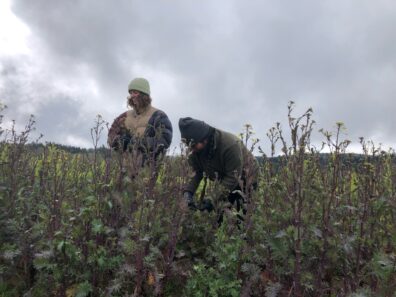
When a grazing system transitions conventional fertilizers are not available. The site discussed here (and pictured to the right) is under organic transition, and the farmer is variously trialing field mixes. Yields will be much lower, but the farmer is experimenting with ryegrass, white clover, plantain, chicory, and red clover. Researchers at Newcastle University, through Super G project, have been evaluating more diverse mixes that include chicory, plantain, sainfoin, red clover, yarrow, caraway, Salad Burnett, field scabious, and wild chervil. The last five species are for pollinators. They have had limited success with plant establishment or farmer adoption of the more diverse mixes. Still, there is interest exists in diversifying the ryegrass/clover combo not only in northern England, but further afield in Europe, through integration of forbs. Another post will take this up.
AM fungi may play a role in sustaining yield in low-input systems. Though they possess unique chemical capacities to mobilize soil nutrients, AMF don’t photosynthesize. They connect with forage grasses through fungal hyphae, and research indicates they [re-]distribute nutrients (nitrogen, phosphorous and likely potassium) in exchange for plant sugars. A key to managing AM fungi in this system, which includes winter forage kale as a strip-grazed fodder, is including a AMF host with the forage kale through the winter. The farmer here is experimenting with interseeding ryegrass with the radish (it is a good AMF host), and starting a PhD to study this.
The interesting potential here are more ecologically efficient pasture systems, and potential to sustain yields while reducing inputs. This would provide an economic benefit as well money, which would support adoption.
Thoughts to Ruminate On: How diverse does a pasture sward need to be to be considered “species rich”?
Follow-On Resources (coming soon):
Community Value-Added Food Processor Specialist Job Opening
 Job Title: Community Value-Added Food Processor Specialist
Location: Olympia, WA
Employer: Washington State University Extension
Job Type: Part-time, temporary hourly
8-mo. appointment; 8-15 hrs/week
Base Pay: $22 to $30/hrs depending on level of experience
Job Description
The WSU Thurston County Extension program is looking for a temporary part-time food service, food processing, culinary, or food science professional to work in a community farm-to-school food processing facility. The successful candidate will process fresh cut vegetables, collect basic data on operating times, and work with partners to distribute processed produce. This temporary position is funded by a USDA Rural Business Development Grant and will run for approximately 6-8 months starting at the date of hire. Funding affords 5-8-hours per day, and 1-3 days per week, averaging 15 or fewer hours per week over the course of the project.
This is a dynamic position and the preferred candidate will possess a diverse skillset with capacity in the following areas: food processing operations, safe food handling, and use of daily processing logs.
Examples of Work:
- Coordinate with farmers and farm cooperatives to purchase, receive, and handle raw agricultural product at the processing site.
- Maintain inventory logs and other records.
- Coordinate with school food service partners to plan and distribute minimally processed produce.
- Collect operational data for processing rates and times, processing wastage, and other information to evaluate the enterprise.
Essential Duties and Responsibilities:
- Able to work around equipment and in a warm environment in food service facility conditions with issued PPE.
- Able use hand trucks to move product and lift case goods up to 50 lbs while working safely.
- Able to sort and pack vegetable food product, and package and label product.
- Able to stand and walk for long periods of time, carry buckets with water and chemicals.
- Able to develop and follow food service procedures.
- Able to understand oral and written instructions, work efficiently and adhere to deadlines.
- Able to drive as required by the position.
- Able to complete necessary food safety training and develop and implement specific hazard prevention practices including using daily logs.
- Able to wash down and scrub processing equipment using cleaning chemicals and hoses, develop and conduct equipment inspections, and complete detailed worksite logs.
- Able to work 5-8-hour days and able to work 2-3 days per week.
- Able to work with basic Microsoft Office programs.
Required Education/Training/Certification Qualifications:
- High School diploma or GED.
- One year of relevant experience in culinary, food service, or equivalent food service industry; or as otherwise described.
Preferred Qualifications
- Experience following food safety and standard operating procedures, including using food safety plans, conducting equipment inspections, and sanitation practices.
- Experience with basic data collection for operating and food safety logs, completing equipment inspections, collecting swab samples for testing, and tracking labor and materials use.
- Knowledge of cleaning requirements and packaging standards.
- Experience with use of sanitation chemicals.
- Food safety training/experience to follow health regulations for safety and sanitation.
How to Apply
Applications accepted until the position is filled. The successful candidate will begin as soon as they are available. To apply send a current resume and cover letter to WSU Thurston County Extension Director, Stephen Bramwell: bramwell@wsu.edu. All qualified applicants will receive consideration for employment without regard to race/ethnicity, color, religion, national origin, gender, sexual orientation, gender identity, age, disability, protected veteran status or any other status protected by law.
Thurston County Agriculture and Meat Processing Workforce Support and Recovery Proposal – DRAFT
Project Development Partners
- WSU Extension
- Northwest Agriculture Business Center
- Thurston Economic Development Council
- Thurston Conservation District
- Pierce Fresh
- Northwest Meat Processors Association
- Pierce County Conservation District
- Pac Mountain Workforce Development Council
- Washington State Department of Agriculture
This proposal was developed over a series of meetings held between October 2021 and February 2022 with livestock producers, meat processors, and agriculture and meat processing technical service organizations.
Labor Program Summary for Thurston County Commissioner review: Ag labor program summary
Project Informational Resources Links:
- Slide summary of project proposal: Ag Industry Impact Compiled
- Jobs data; compilation of COVID-19 impacts to crop production, livestock production, and meat processing industry: Data summaries
- Document draft ag labor recovery proposal, last edited March 24th, 2022: ARPA Ag Labor Proposal_v2
Proposal Context
Thurston County farmers are experiencing disruptions related to the COVID-19 pandemic. Impacts to agriculture and the meat processing industry (namely impacts to labor market) have emerged as prevailing challenges facing farmers and the agriculture industry.
To address outstanding agriculture labor and meat industry problems, a group of several agriculture resource partners and farmers met from early from October 2021 and ongoing into 2022 to discuss strategies to alleviate impacts to agriculture industry labor issues. This work group included representatives from the Thurston Economic Development Council, Thurston Conservation District, WSU Extension, Pac Mountain Workforce Development, Northwest Agriculture Business Center, Pierce County Fresh, and the Pierce Conservation District, Northwest Meat Processors Association, and Washington State Department of Agriculture.
The current proposal addresses problems facing agriculture in Thurston County and the greater region:
- Labor shortages in agriculture generally
- Labor shortages in the meat processing industry specifically
- Disruptions in meat processing due to labor and infrastructure disruptions
The program proposed here will 1) help recruit and retain agricultural workers through outreach and marketing, training, wage premiums, industry support and networking, and strategic cultivation of the local food value proposition for workers in this region, and 2) match funding allocated by Pierce County to complete an assessment of meat processing infrastructure in the region and generate proposals to address infrastructure issues.
Situation – COVID-19 Impacts on Agriculture in Thurston County
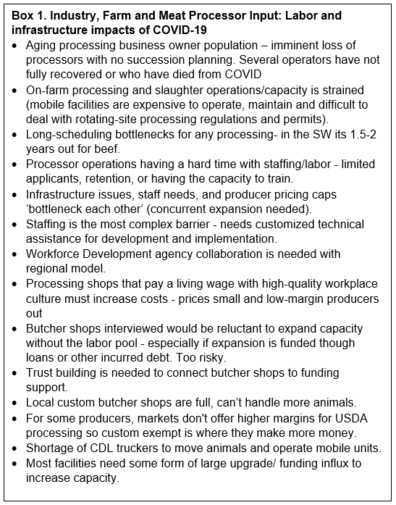
In 2021 and early 2022, disruptions to the agriculture and meat processing sectors due to COVID-19 were evaluated through a survey and series of listening sessions with farmers, technical service organizations, and initial outreach to meat processors. Outreach results are summarized in Box 1.
Thurston County-specific COVID-19 disruptions obtained through survey work in late summer 2021 are summarized below and in Figure 1. Three pressing impacts are noted here:
- Among Thurston County farmers, difficulty acquiring and retaining labor is the second highest ranking significant negative impact of COVID-19 (behind reduced availability or increased cost of farm inputs)
- 46% of Thurston County farmers are having significant difficulty acquiring and retaining labor
- 27% of Thurston County farmers are experiencing significant impact regarding decreased access to or increased costs of using regional processing facilities

Figure 1. Impacts of COVID-19 on Thurston Agriculture Businesses
Goals
1. Provide immediate relief to economic harm to the agriculture and meat processing industry caused by labor shortages through:
- Recruitment using targeted outreach, marketing, branding improvements, and other messaging tools
- Retention by providing incentives, program support, apprentice and employer training, leadership training, and business networking support
- Access to cost-reimbursed continuing education coursework in leadership, farming, and meat cutting using existing available curriculum whether online or in-person
2. Identify immediate opportunity for reducing meat processing bottlenecks by:
- Assess current processing capacity and needs by matching Pierce County financial support for a meat processing facility feasibility assessment
- Mobilize the results of the meat processing needs evaluation through targeted short-term funding opportunities that are imminently available through the Washington State Department of Agriculture, United States Department of Agriculture, and other funding opportunities
Concept
The concept of this workforce response proposal is to provide seed funding to establish a regional agriculture and meat processing sector apprenticeship program. Thurston County funding would provide funds to initiate this program that would develop a regional and even statewide reach in subsequent years.
The program would initially fund an agriculture labor workforce development program lead (hereafter referred to as “program coordinator”) who would work closely with regional Workforce Development councils. The “seed program” would operate through 2024 with funding through an ARPA allocation in Thurston County. The program coordinator would bring industry-specific skills for training and placing apprentices, supporting employers, and overall program coordination. PacMtn Workforce Development Council will be a critical partner, and would provide support in workforce onboarding, retraining collaboration, and related tasks.
Functionally, funding will support the program coordinator and provide a budget to successfully recruit, train, and retain motivated agricultural workers, thereby alleviating labor shortages in agriculture generally and meat processing specifically. The budget will provide resources from 2022 through 2024 to deploy marketing and outreach/communication tools, facilitate tuition-paid training, and offer professional development/continuing education opportunities for workers. The program coordinator would be housed with a local technical service providers (WSU Extension or Thurston Conservation District) and overseen by a steering committee with representation from farmers, farm research and education agencies, and workforce development entities (see Organizational Structure, below).
Principles
– Don’t recreate the wheel. The program will leverage existing resources and partnerships, such as with available meat processing apprenticeships, online training resources, ag job marketing networks, and regional workforce development councils/organizations
– Develop tailored professional development. The program coordinator will work with job placement sites and program participants to develop tailored training and placement plans that meet professional development needs and aspirations of each trainee.
– Focus on leadership and sustainable career paths. Retention and industry viability rely on growing new leaders within the agriculture sector, whether farm businesses, or owners of meat processing shops. The program will help increase the value proposition and value to trainees and mentors by supporting leadership training, and apply pay premiums, job titles, and certifications as compensation for these trainings. This funding proposal provides seed money to start the program, and other funds will be sought to continue the program and/or broaden it for a regional focus.
– Industry branding and value. By directly facilitating innovative job marketing, relationships, business-to-business networking, and direct one-on-one support, the program seeks to make the agriculture and meat processing sectors desirable places to work, and he lp the upcoming workforce feel passionate about what they do. This includes necessary cultural changes and leadership development regarding best employment management practices, gender equity, and focus on diversity, equity, and inclusion in the agriculture and meat processing industries.
Proposed Activities
Recruitment
| Core activities | Additional activities | Partner organizations |
| · Hire a program coordinator to recruit, place, and support new hires
· Support the value proposition for local ag and processing jobs, storytelling, industry branding · Utilize existing job posting resources · Monitor job boards · Evaluate applicants · HR support / Compliance assurance to programs, etc · Bilingual, ESL support; DEI strategies |
· Career coaching, resume building, other
· Write/advertise job posts · Coordinate secondary certifications · Legal compliance · Attend job fairs · Online recruitment platform |
· Thurston Co farms
· Thurston Co meat processors · Pac Mountain Workforce Development, other WFD partners · Eat Local First – utilize and expand job board of existing networking organization · Washington State Job Board for Ag · WorksourceWA.com |
Placement
| Core activities | Additional activities | Partner organizations |
| · Maintain farm/meat processor employer listings
· Site placement review; employer needs assessment · Apprentice review; skill needs and capabilities assessment · Tailed training plan development · Hiring events, apprentice site search support |
· Site criteria and vetting
· Employer and apprentice goal-setting · Generate and maintain value-proposition for employers · Build connections to workforce pipelines · Employer workshops, apprentice workshops · Succession planning assistance |
· Thurston Co farms
· Thurston Co regional meat processors · Pac Mountain Workforce Development, other WFD partners · NW Meat Processors Association |
Retention
| Core activities | Additional activities | Partner organizations |
|
|
|
Education/curriculum
| Core activities | Additional activities | Partner organizations |
| · Track standards for completion
· Training cost reimbursement · Annual programming budget – development and compliance · Coordinate workshops, webinars, other education offerings · Track deliverables and program outcomes |
· Complete reporting and oversight requirements
· Compliance to state, local and federal requirements. L&I, etc · Support certifications acquisition/ requirements
|
· Northwest Meat Processors Association
· Seattle Puget Sound Meat Cutters Program · WSU Extension Animal Science · Range Meat Academy · Illinois Meat Academy · South Seattle College Meat Cutting/Meat Cutter School · Niche Meat Processors Assistance Network · ATTRA (Internship Curriculum Handbook) |
Job site support, training, vetting, compliance
| Core activities | Additional activities | |
| · Employer training and networking
· Apprentice training and networking · HR policy, procedure, compliance and oversight · DEI and ESL support |
· Facilitation/conflict resolution process
· Intellectual property and private ownership concerns? |
· Labor and Industries
· · Workforce Development |
Resources and Tools for the Program Coordinator
Program funding will provide the agriculture labor workforce placement coordinator with financial resources and tools to support labor recruitment and retention. The program coordinator will use these resources to effectively serve as a job placement, training, and retention specialist.
Organizational Structure
A specifically agriculture technical service agency will serve as the employer or record for the apprenticeship program coordinator.
An Advisory Board will guide continued program design and implementation, as well as oversight during program operation. The steering committee will advertise, recruit, and manage the selection process for the program coordinator. During program operation the Advisory Board will meet regularly with the program coordinator and partner organizations to provide strategic guidance and input. Representatives from at least the following organizations will be provided seats on the Advisory Board: Thurston County, WSU Thurston County Extension, Thurston EDC, the Northwest Agriculture Business Center, Thurston Conservation District, Pierce Conservation District, Pierce Fresh, PacMtn Workforce Development, Washington State Dept. of Agriculture (or designee on Washington Meat Up), at least one livestock producer, and one meat processor.
Relationship to Long-range Agriculture Labor Support Funding and Stewardship
This apprenticeship program will begin in Thurston County, and ultimately the goal of this work is to design a Western Washington or perhaps statewide program. The initial implementation of this work in Thurston County would be a pilot project, funded by Thurston County from 2022 through 2024. Once operational, it is envisioned that this program will transition to being housed by another host organization such as the WSDA and serve a wider region.
- Support long-range industry goals
- Support long-range industry salary goals
- Capacity building for the industry
- Capacity building for processing facilities. Loans and business development support.
- Capacity building for the meat producers. Loans, grants and business development support.
- Provide referral services
- ESL; DEI strategies and support
- Consumer education
- Succession planning assistance for meat processors
- Support land and business acquisition
- Provide business networking and mentorship
- Coordinate housing support
Professional Training and Program Development Partner Organizations
- Seattle Puget Sound Meat Cutters Program https://www.ufcw21.org/meat
- South Seattle College Meat Cutting/Meat Cutter School https://tradecollege.org/colleges/seattle-community-college-south-campus/personal-and-culinary-services/culinary-arts/meat-cutting/
- Feasibility studies, Niche Meat Processors Assistance Network. https://www.nichemeatprocessing.org/
- UFCW Meat Cutters Apprenticeship Program https://www.ufcw.org/apprenticeship/
- Range Meat Academy https://rangepartners.com/range-meat-academy/
- Northwest Meat Processors Association https://www.nwmpa.com/
- WSU Animal Science Program https://ansci.wsu.edu/
Sentinel Lands Communications Plan – December 2021
Experience 4-H! Sew a Table Runner
In this class, 4-H sewing volunteers will teach you how to sew a table runner. For success, youth must be able to sew a long continuous seam on a sewing machine. This class requires sewing supplies, sewing machine, and an adult to help. Supply list will be emailed to registered participants.
January 23, 2021 @ 1:00PM Pacific Time
Register in advance for this class at
https://wsu.zoom.us/meeting/register/tJMrd-GprDwpGdT0FYoEahY-a_fnptJndSJk
Questions? Contact Toni Gwin at tgwin@wsu.edu.
Thurston Strong Agriculture Business Grant
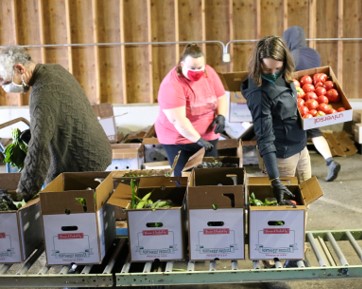 The Thurston Strong Agriculture Grant is offered as a helping hand to agricultural businesses attempting to recover from economic injury as a result of COVID-19. All Thurston County agricultural businesses meeting eligibility requirements will be considered. The Thurston Economic Development Council will administer the program on behalf of Thurston Strong partners. The majority of funding support has been provided by local jurisdictions (Thurston County, Cities of Lacey, Olympia and Tumwater) through a dedicated portion of their individual CARES Act allocations. For technical assistance, contact our Business Hotline at 888-821-6652.
PURPOSE
Expedite the safe and successful recovery of for-profit agricultural businesses, agricultural cooperatives, and farmers markets impacted by COVID-19.
To apply for the grant, visit the Thurston Strong COVID-19 Economic Recovery Initiative (https://www.thurstonstrong.org/)
ELIGIBLE RECIPIENTS
- Agricultural businesses with 50 or fewer employees (or FTE equivalent) that serve the public and require additional capital to safely recover from economic injury due to COVID-19
- Food manufacturers/value-added food processors who manufacturer food products using ingredients purchased from agricultural producers in Thurston County
- Food/farm cooperatives with 50 or fewer members that aid in the purchase and distribution of agricultural products grown in Thurston County
- Farmers Markets
**Eligible businesses must have a physical location in Thurston County and a registered Unified Business Identification (UBI) Number.
Businesses owned by an employee, manager, officer, or elected official of any of the participating jurisdictions, or the Thurston Economic Development Council are ineligible.
PRIORITY CONSIDERATION
Should requests outpace available funding, priority funding will be given to:
- Crop and livestock operations producing edible products
ELIGIBLE AMOUNT
$10,000-$30,000 per eligible applicant as follows:
Farms, Value-Added Food Manufacturers and Processors:
- $10,000 grant
Cooperatives
- Under 7 employees/members/vendors = $10,000 grant
- 8-15 employees/members/vendors = $20,000 grant
- 16-50 employees/members/vendors = $30,000 grant
Farmers Markets
- Under $500,000 in annual market sales = $10,000 grant
- Between $500,000 and $2 Million in annual market sales = $20,000 grant
- Above $2 Million in annual market sales = $30,000 grant
INELIGIBLE EXPENSES
- Anything not associated with reopening or adapting a business that existed prior to March 1, 2020
- Funding may NOT be used for expenses that have been or will be reimbursed by other federal funding programs (e.g. Economic Disaster Injury Loan or Payroll Protection Program).
REPORTING REQUIREMENTS
None. But please be sure to let us know about any success stories so we can start sharing some good news with our broader community.
APPLICATION TIMELINE
Applications received and reviewed on a rolling basis from inception until funding has been exhausted. Successful recipients will be notified by email or telephone as soon as possible.
WSU Extension Agriculture Educator Sought for Thurston County
Press Release
For Immediate Release May 19th, 2020
Contact: Stephen Bramwell, WSU Extension Thurston Co., (360) 790-9308, bramwell@wsu.edu
WSU Extension Agriculture Educator Sought for Thurston County
WSU Extension in Thurston County is hiring an Agriculture Educator. The Educator will assist in managing and promoting agricultural education programs throughout the county, and provide support for on-farm and community research.
“This educator will greatly expand the support for farming, ranching, and local food system development,” said Stephen Bramwell, Director of the WSU Thurston County Extension Office. “Clearly we’re living through unprecedented times, and there is a big need for building food system infrastructure, working with current farmers and training new farmers, and creating the systems to get food to where it is most needed.”
The agriculture educator will coordinate and manage agriculture and community food systems workshops, support regional applied research projects, and coordinate and manage Cultivating Success courses that focus on training new farmers.
Specifically the educator will work in areas of food system infrastructure, animal science and forage management programming, and building out market opportunities for grassfed livestock production. The position will also focus on addressing gaps in the food system, such as for commercial processing facilities for value-added production, and supporting market development for high-value crops in this rapidly developing region.
Applicants are sought with Bachelor’s Degree in agriculturally related fields, 3-5 years of related work experience, and good communication and information literacy skills. To apply, send a resume and cover letter to bramwell@wsu.edu. The position is open until filled.
Extension programs and employment are available to all without discrimination. Evidence of noncompliance may be reported through your local Extension office. Reasonable accommodations will be made for persons with disabilities and special needs who contact Stephen Bramwell; 360-867-2161; bramwell@wsu.edu at least two weeks prior to the event.