Our Mission
The Clallam County Waste Prevention Program is here to help citizens, organizations, and businesses implement sustainable actions to make positive social, environmental and economic impacts in our community.
What’s in the Waste Stream?
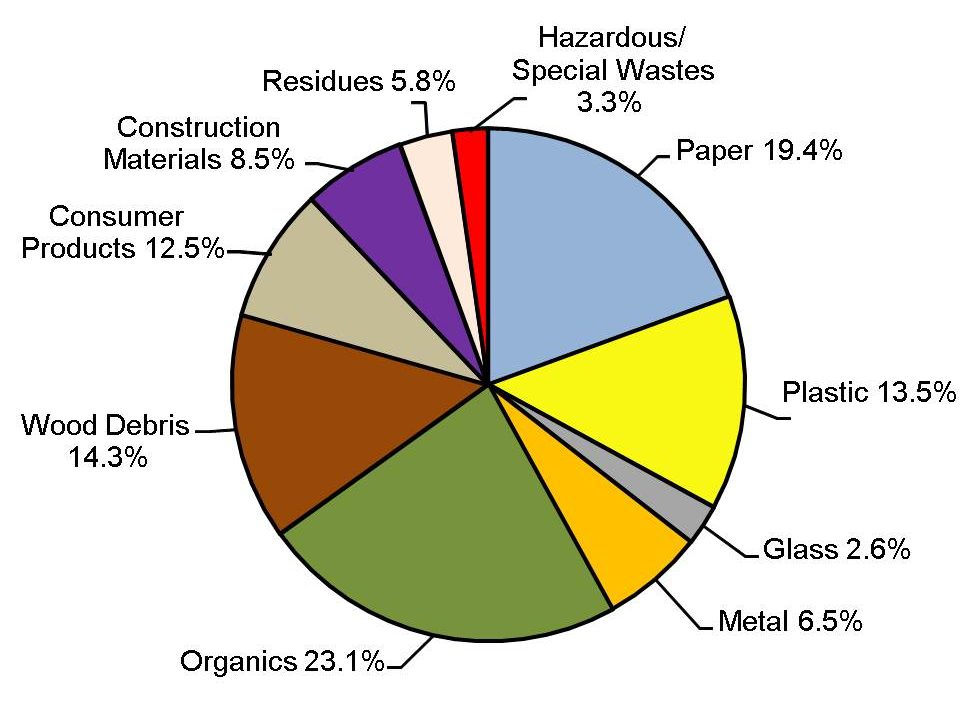
| Type of Waste | Total |
|---|---|
| Organics | 23.1% |
| Wood Debris | 14.3% |
| Consumer Products | 12.5% |
| Construction Materials | 8.5% |
| Residues | 5.8% |
| Hazardous or Special Wastes | 3.3% |
| Paper | 19.4% |
| Plastic | 13.5% |
| Glass | 2.6% |
| Metal | 6.5% |
Did you know?
2015-2016 Washington State Waste Characterization Study
The average Clallam County resident disposes of nearly 4 lbs. of waste every day, or 1,460 lbs. a year. That means the average family of four throws away 5,840 lbs. each year! Much of this waste has vast and varied potential for reuse.
Composting…
is one beneficial use of these still valuable resources. With organic and paper waste making up nearly half (42.5%) of the total waste composition in Clallam County, composting can reduce amount we throw away. It is not only a vital strategy in reducing harmful greenhouse gases, but it also produces a nutrient rich soil amendment.
Food Recovery
The USDA estimates that 30-40% of all food produced in the US ends up in a landfill. While composting is a great way to process food scraps, preventing food waste in the first place is a more efficient strategy for reducing waste. At home we can make just enough, shop wisely and manage leftovers to prevent food waste. Leftover edible foods from homes and businesses can often be donated to meal programs, food banks or livestock operations for a better use of food resources.
The Waste Management Hierarchy
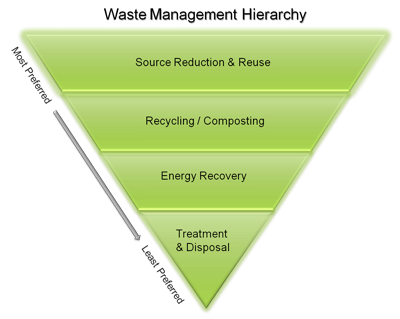
Most Preferred to Least Preferred:
1. Source Reduction and Reuse
2. Recycling and Composting
3. Energy Recovery
4. Treatment and Disposal.
Learn more on the EPA’s website.
Reducing, Reusing and Recycling…
are great ways to prevent waste. Reducing and rethinking our consumption and the impacts of the materials we buy can be a great place to start. Reuse can also have a big impact on reducing waste. Items that are still good like construction materials, household items and textiles could be donated to nonprofit resale stores or offered at discount or free through social media networks or local resale pages. By learning both what and how to recycle, you can ensure that recycled materials are a clean and uncontaminated source of raw material for new products. You can help make sure that recycling can be a viable service in our community by recycling right.
Master Composter and Recycler Program
Currently, this program is on hold.
To learn more, please contact Benji Astrachan, Food Access and Food Recovery Specialist benji.astrachan@wsu.edu
Visit our program pages…
to see how we can help you reduce your waste at home, during events and at your work or business.
Learn more about Composting through the Institute for Local Self Reliance (ISLR)
The WSU-Extension, Waste Prevention Program is sponsored in partnership by our Local Solid Waste Financial Assistance program through the Washington State Department of Ecology.