Our Mission
The Clallam County Waste Prevention Program is here to help citizens, organizations, and businesses implement sustainable actions to make positive social, environmental and economic impacts in our community.
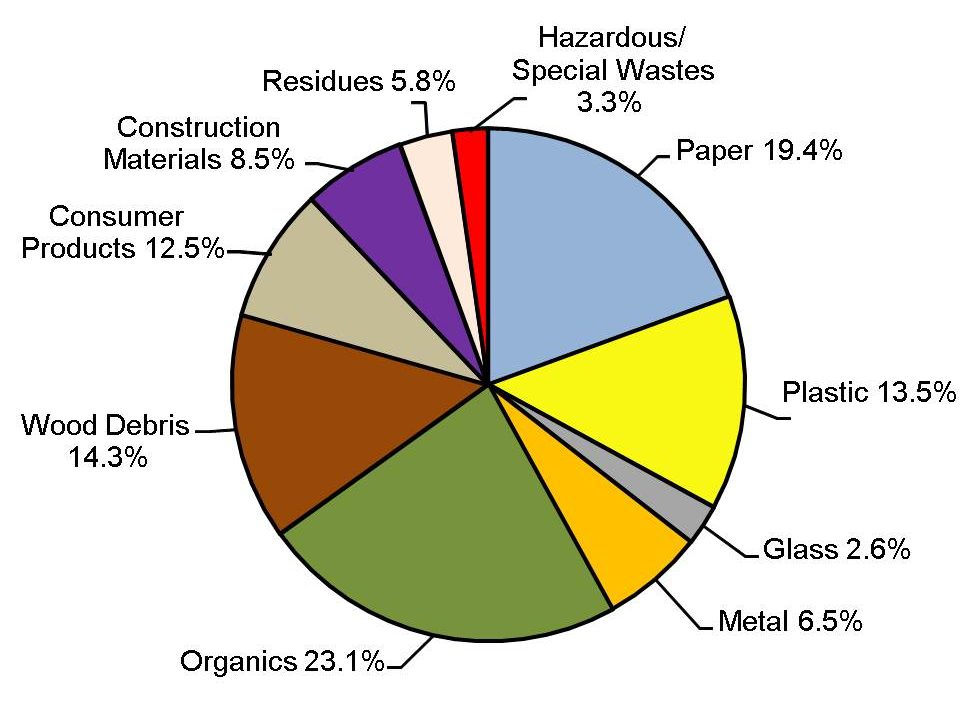
What’s in the Waste Stream?
| Type of Waste | Total |
|---|---|
| Organics | 23.1% |
| Wood Debris | 14.3% |
| Consumer Products | 12.5% |
| Construction Materials | 8.5% |
| Residues | 5.8% |
| Hazardous or Special Wastes | 3.3% |
| Paper | 19.4% |
| Plastic | 13.5% |
| Glass | 2.6% |
| Metal | 6.5% |
Food Waste Prevention
The USDA estimates that 30-40% of all food produced in the US ends up in a landfill. Preventing food waste and making sure nutritious food is used and consumed in the first place is the most efficient reduction strategy. At home we can make just enough, shop wisely and manage leftovers to prevent food waste. Leftover edible foods still whole or in their original sealed packaging can often be donated from homes and businesses to meal programs, food banks or livestock operations for a better use of food resources. Furthermore, resources and policy exist to support safe donation of edible food to those in need, from national and state Good Samaritan Laws to established food recovery and donation codes and processes with local health jurisdictions.
Local food banks and pantries work hard to ensure food is redistributed to those in need. Visit the Port Angeles Food Bank and Sequim Food Bank websites for donation guidelines.
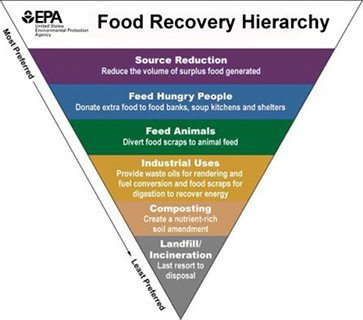
The Waste Management Hierarchy
Most Preferred to Least Preferred:
1. Source Reduction
2. Feed Hungry People
3. Feed Animals
4. Industrial uses
5. Composting
6. Landfill / Incineration
Learn more on the EPA’s website.
Composting
Composting is a beneficial use of still-valuable food waste. With organic and paper waste making up nearly half (42.5%) of the total waste composition in Clallam County, composting can reduce the amount we throw away. Composting is not only a vital strategy in reducing harmful greenhouse gases, but it also produces a nutrient-rich soil amendment.
Learn more about composting through WSU Extension
Learn more about Composting through the Institute for Local Self Reliance (ISLR)
The Waste Prevention Program offers seasonal composting workshops for individuals and families looking to implement composting practices at home, on small farms, or on homesteads. Our coordinator can also connect local businesses and production farms to appropriate local resources and information about creating, implementing and troubleshooting on-site composting systems to prevent organics waste.
Contact us
Contact Waste Prevention Program Coordinator Benji Astrachan at benji.astrachan@wsu.edu to learn more about waste prevention, food recovery and composting.
The WSU Extension Waste Prevention Program is sponsored in partnership by our Local Solid Waste Financial Assistance program through the Washington State Department of Ecology.