Lawns
Gwen Stahnke, WSU Extension Turf Grass Specialist (formerly), Walla Walla Community College Turf Management Instructor (retired)
Introduction
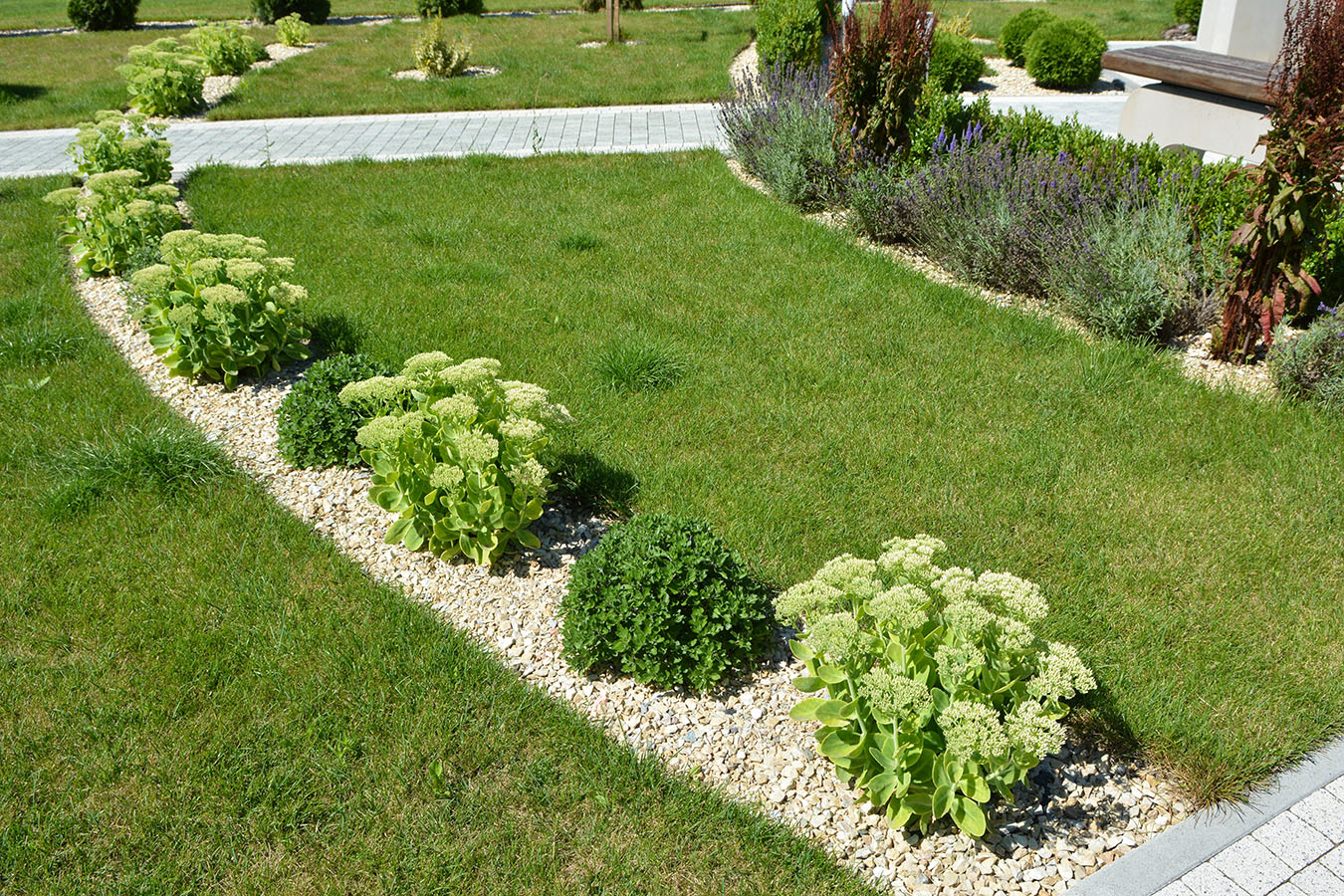
Grasses cover a lot of ground—both literally and figuratively. In this chapter we will be discussing lawns which, traditionally, are expanses of turfgrass, as opposed to ornamental, bunch, or cereal grasses.
Lawns serve important functions in a landscape. They can be aesthetically pleasing and provide a playing or walking surface while covering erodible soil, producing oxygen, and filtering pollutants.
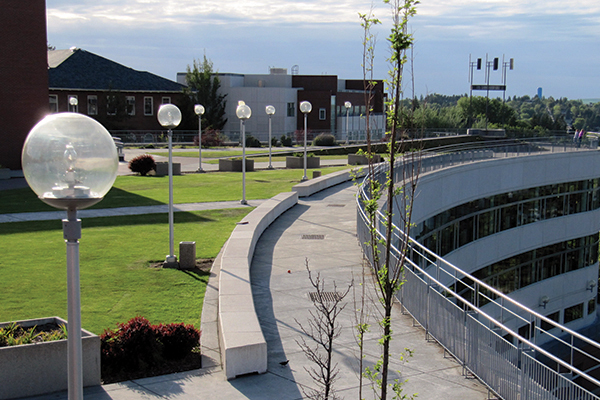
Lawns can fill areas where otherwise problematic weeds might get established. They can also provide defensible space for wildfire prevention and control. Turfgrasses are most commonly chosen for lawns because they are hard wearing and attractive. They can be repeatedly cut or mown low because the growing point is at the base of the plant. Turfgrasses are even used as roofing material (Figure 1) because of their insulating quality and other environmental benefits, but we will discuss them only for use in lawns in this chapter.
Establishing a healthy turfgrass lawn requires an understanding of anticipated usage, good ground preparation, and choosing the right species and cultivars for the site. Once the turfgrass is properly established, continued maintenance—moderate watering, consistent mowing, and fertilizing, dethatching, and aerating when needed—will keep it healthy for years to come. This chapter discusses each of these topics in detail.
Biology of Grass
Grasses have adapted to conditions ranging from rainforests to deserts and even intertidal habitats and are the most widespread plant form on earth. Formerly of the family Gramineae but now also known as Poaceae, this family is considered by some to be the most important plant group because it includes the staple food grains and cereal crops (Table 1) that feed much of the world.
True grasses (family Poaceae) are monocots and usually have round, hollow stems. Reeds and sedges are considered grass-like but are classified into different families. Flowers of true grasses are usually arranged in spikelets.
Table 1. Economically important grasses (not all of which will grow in the Northwest)| Grain Crops | Leaf and Stem Crops | Turfgrasses |
|---|---|---|
| Barley | Bamboo | Bentgrass |
| Corn (maize) | Bluegrass (meadow grass) | Bermudagrass |
| Millet | Reeds | Bluegrass (meadow grass) |
| Oats | Ryegrass | Fescue |
| Rice | Sugarcane | Ryegrass |
| Rye | Not applicable | St. Augustine grass |
| Sorghum | Not applicable | Zoysia |
| Wheat | Not applicable | Not applicable |
Scientific Classification of Grasses
Kingdom: Plantae
Order: Poales
Family: Poaceae (formerly of the family Gramineae)
Subfamilies: (6 of 12):
Bambusoideae (bamboo)
Danthonioideae (pampas grass)
Ehrhartoideae (rice)
Panicoideae (corn, sorghum, sugarcane, millet)
Poaceae (turfgrasses)
Pooideae (wheat, barley, bromegrass, reed grass)
Identifying Turfgrass Species
Vegetative parts of a grass plant (Figure 2) are useful for identifying a grass species. Always use more than one plant and identifying structure for identification, since vegetative characteristics can vary depending on environmental conditions or cultivar. Plant aspects to consider for identification include:
- Leaf blade
- Ligule
- Auricle
- Leaf sheath
- Leaf bud
- Collar
- Vernation
- Growth habit


Leaf Blade
The blade is the upper, flattened portion of a turfgrass leaf.
- Is the leaf texture fine, medium, or coarse?
- Are veins prominent?
- What shade of green is the blade?
- Is the blade smooth (glabrous) or hairy (pubescent)?
- Is the tip of the blade sharply pointed, boat-shaped, or blunt and round?
Ligule
The ligule is an appendage on the inner side of a grass leaf at the junction of the blade and sheath. Not all grasses have ligules.
- Is the ligule absent, membranous, or hairy?
- If present, what is the size and shape of the ligule?
- What does the upper edge of the ligule look like? Is it smooth, notched, or hairy?
Auricles
Auricles are appendages occurring in pairs at the base of the blade. Not all grasses have auricles. If present, auricles vary in size and shape from barely noticeable knobs to long, clasping arms.
- Are auricles present or absent?
- If present, are auricles small (rudimentary) or prominent (claw like)?
Leaf Sheath
The sheath is the lower portion of a leaf—the part that encircles the stem.
- Is the sheath cylindrical or compressed?
- Is the sheath closed or open, or do the margins overlap?
Vernation
Vernation refers to the arrangement of new, young leaves within the older leaf sheath or the leaf bud.
- Is the new leaf folded or rolled when it emerges?
Collar
The collar is a band or line where the leaf blade and the leaf sheath meet.
- Is the collar divided, broad, or narrow?
Growth Habit
Growth habit refers to the orientation of shoots.
- Is the plant erect or lying down (decumbent)?
- Are there lateral shoots such as rhizomes, stolons, or tillers?
There are two types of growth habits for lateral shoots. The first is the bunch type, which includes ryegrass and fine and most tall fescues. They reproduce via tillers or new aerial shoots which emerge intravaginally from axillary buds at the mid to top of the crown at the base of the mother plant. The second is the creeping type which includes Kentucky bluegrass, creeping bentgrass, bermudagrass, quackgrass, and other grasses that have lateral shoots that arise from axillary buds on the crown. Stolons are lateral stems that are aboveground and are green, while rhizomes are lateral stems that are belowground and do not photosynthesize until they come to the surface to produce a new daughter plant.
Choosing a Grass Variety or Mix
Several kinds of grasses are used for turf in the Northwest. There is not one ideal grass to plant. Many cultivars of each have been developed through selection and breeding. Cultivars differ primarily in leaf color, texture, disease resistance, and stress tolerance, including the amount of traffic and wear they can tolerate (Table 2).
Table 2. Turfgrass descriptive identification features.| Turfgrass Type | Characteristics |
|---|---|
| Bluegrasses | Boat-shaped blade tips, short ligules. Distinctive rhizomes on established plants. Annual bluegrass (a weed in some cases) is yellow green with a long ligule and prolific seed heads. The more perennial types of annual bluegrass are darker in color and have fewer seed heads present. |
| Fine fescues | Very narrow, somewhat rounded leaves, heavy veining. Fibrous-rooted (sometimes rhizomatous). Thatchy. Bunch-type or clumping growth habit. |
| Tall fescues | Wider leaf blade, pointed tip, heavy veining on upper side and somewhat shiny on the underside. Usually has auricles and hook-like appendages on leaf margins. Bunch-type growth habit. Some cultivars are weakly rhizomatous with a more spreading growth habit than other bunch grass cultivars. Can be purple at the base of the sheath, like ryegrasses. |
| Bentgrasses | Continuous parallel veins, fine leaf blades, and pointed leaf tips. Fibrous-rooted (sometimes rhizomatous), stolons present. Thatchy but dense turf should be used for home lawns due to creeping bentgrass producing false crowns with higher mowing heights. |
| Ryegrasses | Upper sides of leaves heavily veined, shiny/waxy-appearing lower leaf surfaces. Pointed leaf tips. Fibrous-rooted. Often have purple sheath bases. Bunch-type growth habit. |
There are advantages and disadvantages to any kind of grass. It is important to choose a turfgrass that is suited to your site’s soil, light, and drainage conditions, as well as the expected use. Kentucky bluegrass, fine fescues, and turf-type tall fescues are best for areas east of the Cascades. Turf-type perennial ryegrasses, fine fescues, and bentgrasses are well adapted to conditions west of the Cascades. Colonial bentgrass is adapted for lawns while creeping bentgrass is better adapted to golf greens because it needs to be mowed at a lower height of cut. Specific cultivars of Kentucky bluegrass can be used west of the Cascades in seed mixtures, especially in high traffic areas. Tall fescues can be used in shady, wet areas, but many will go off-color in winter on the west side of the state.
Site Considerations
Shade or Sun
If many evergreen trees are on your site, select grasses that withstand shade. If there are so many trees that no grass will perform adequately (greater than 50 percent shade), consider ground covers or mulching around the trees.
Seed mixes for moderate shade should include high proportions of fine-leaved fescues, such as creeping red, Chewings, or hard fescue. Tall fescue also withstands partial shade. In dense shade or wet, shady sites, add roughstalk bluegrass (Poa trivialis) to the seed mix, because it is the most shade-tolerant grass grown in the Northwest and will help fill in areas that the other grasses in the mix will not cover. Consider tall fescues on sites with both shade and moderate traffic because fine fescues and roughstalk bluegrass do not withstand intense traffic. Turf-type perennial ryegrasses and Kentucky bluegrasses are not very shade-tolerant.
Drainage
Fine fescues and turf-type perennial ryegrasses do not perform well on soils that are saturated for long periods. Bentgrasses and turf-type tall fescues perform better on these soils.
Expected Use
Any of the recommended grasses can be used for lawns that receive only moderate foot traffic and no heavy play from children. For lawns that receive a considerable amount of heavy play, use primarily turf-type perennial ryegrasses on the west side of the Cascades, with selected Kentucky bluegrasses and fine fescues in the seed mixture. For lawns with heavy traffic east of the Cascades, use primarily Kentucky bluegrass and blend three cultivars that have performed well for your area. Also, a three-way blend of selected cultivars of Kentucky bluegrass, perennial ryegrass, and fine fescues also performs well east of the Cascades. The publication Turfgrass Seeding Recommendations for the Pacific Northwest (PNW 299) which is listed in the Further Reading section of this chapter shows the percentages of Kentucky bluegrass, perennial ryegrass, and fine fescue to use in a three-way mix or other mix depending on what type of area you are planting.
Types of Turfgrass
Kentucky Bluegrass
Kentucky bluegrass is well adapted to areas east of the Cascades in Washington and is one of the best choices for a home lawn there. It does well in high pH soils (7 to 8) and needs full sun. Most cultivars are susceptible, however, to necrotic ring spot disease. The Kentucky bluegrass cultivars America, Majestic, and Midnight are among several with moderate resistance. Mismanaged turf which is overwatered or overfertilized can be made more susceptible to necrotic ring spot. Mixing perennial ryegrass with Kentucky bluegrass will help limit infection by necrotic ring spot, since perennial ryegrass is not susceptible to necrotic ring spot. A complete list of Kentucky bluegrass cultivars with their relative susceptibility to necrotic ring spot is available from the National Turfgrass Evaluation Program (opens in new window) (NTEP).
We do not recommend a monostand (opens in new window) (pure stand) of any turfgrass cultivars. There is no problem having Kentucky bluegrass as part of a mixture, but many cultivars generally do not persist for more than three to five years. Kentucky bluegrass is included in seed mixes, mostly on sports fields, to add stability to an area: it grows via rhizomes, which hold turf together and help damaged areas fill in quickly. This is a definite advantage on athletic fields.
Fine Fescues
Fine fescues for lawns include creeping red, Chewings, and hard fescues. These grasses require little fertilizer compared with other types. They are reasonably drought-tolerant (especially hard fescues) and are shade-tolerant both east and west of the Cascades. Most fine fescues are very susceptible to red thread disease but are moderately resistant to other diseases. Hard fescues are resistant to red thread disease. All fine fescues have a tendency to develop thatch, making them difficult to irrigate as they age, so a good cultural program is important. Be careful dethatching old fine fescue lawns as it is easy to destroy them; the thatch gets torn out in clumps. To manage fine fescue thatch, you must dethatch lightly every year. Spring (mid-April to mid-May) is the best time to dethatch as you have four or five months of good growing weather to recover. Finally, be sure to fertilize after dethatching.
The newer fine fescue cultivars tolerate more wear than the older cultivars but are usually not suitable for heavily trafficked play areas or sports fields. They can be planted with colonial bentgrasses for golf course fairways, tees, and some greens. The Chewings fescues tend to germinate quickest and blend with the colonial bentgrasses most successfully in mixtures west of the Cascades but are the heaviest thatch producers.
Turf-Type Tall Fescues
These types of tall fescue are well adapted to sites that remain somewhat wet for extended periods; however, they can be decimated with net blotch if not fertilized in the fall. They also withstand drought conditions (because they have deep roots) and moderately high salt concentrations. They must have deep soil in order to develop deep roots. Tall fescues have moderate fertility requirements, moderately good shade tolerance, and moderate wear tolerance. The newer cultivars of turf-type tall fescue make a great looking lawn in eastern Washington.
These grasses can be slow to germinate and fill in when soil temperatures drop below 55°F. As a result, annual bluegrass may invade during lawn establishment. If a solid stand is achieved, tall fescues make a good lawn, although they can be overrun rapidly by invading grass species west of the Cascades due to their slow growth in the winter months. Two fertilizer applications in the fall (September and October) will drastically improve the quality of tall fescue over the winter. Additionally, applications of a growth regulator can be made by professionals to limit the growth of annual bluegrass during the growing season, while the tall fescue will continue to grow and crowd out the annual bluegrass from the grass stand.
The older turf-type tall fescues have coarser leaf blades than most of the other grasses planted for home lawns. New cultivars have been developed with finer leaf blades and a slower rate of growth. They can be used in the western parts of Washington, but some people find the olive green to brownish mottled color in the winter undesirable.
Turf-Type Perennial Ryegrasses
These grasses are extremely wear-tolerant, produce beautiful lawns with little thatch, and blend well with other grasses west of the Cascades. They require moderate to high nitrogen fertility. Under low-fertility conditions, perennial ryegrass is rapidly outcompeted by invading grass species.
Seeds germinate very rapidly (five to seven days under ideal conditions) and quickly outcompete weeds. Like fine fescues, ryegrasses are highly susceptible to red thread disease. Perennial ryegrasses may suffer some cold injury during severe winters east of the Cascades. Fertilizing in the fall (September and October) will greatly reduce red thread and leaf spot diseases as well as maintain turf density which will slow down annual bluegrass encroachment. When purchasing perennial ryegrass seed, be sure to ask for turf-type, since otherwise common pasture ryegrasses might be substituted.
Bentgrasses
In western areas of Washington, use only colonial-type bentgrasses, which have shorter stolons for lawns (for example, Bardot, Tracenta, SR 7100, Tiger, or Astoria). Do not use creeping bentgrasses. Colonial bentgrasses perform well under low fertility, on acid soils, and in moderate shade. Thatch development is the worst problem with bentgrasses; they require semiannual dethatching. They are susceptible to Microdochium patch and take-all patch, and are slightly susceptible to red thread. Bentgrass is a prominent weedy grass in lawns in central and eastern Washington and should not be part of any seed mix purchased.
Well-maintained bentgrasses produce the most professional-looking lawns (such as on golf courses), since they can be mowed to very low heights. Bentgrasses are at their best when mowed at 3/8- to ¾-inch high with a reel mower. When mowed above 1½ inches, they tend to produce excess thatch and are prone to scalping. They will also “false crown” which looks puffy and is analogous to growing like a tree, meaning the stems elongate. When you mow bentgrass in this condition, you remove the green leaves while the brown stems remain, leaving an unsightly lawn.
Other Types of Grasses
Do not include Zoysia, St. Augustine, Bermuda, dichondra, centipede, carpetgrass, or mondo grass in western Washington lawns. These grasses are not adapted to Washington’s climate. Common bermudagrass is a weed in the Walla Walla area and is well adapted to the dry climate in eastern Washington. It is very invasive with its long creeping rhizomes. Buffalograss is also adapted to central and eastern Washington and can make a good lawn when planted in combination with a hard fescue. Buffalograss by itself does not do well in shade and needs some organic matter in the soil mix to hold soil moisture. Both seeded and vegetative types of buffalograss are available, but only for central and eastern Washington.
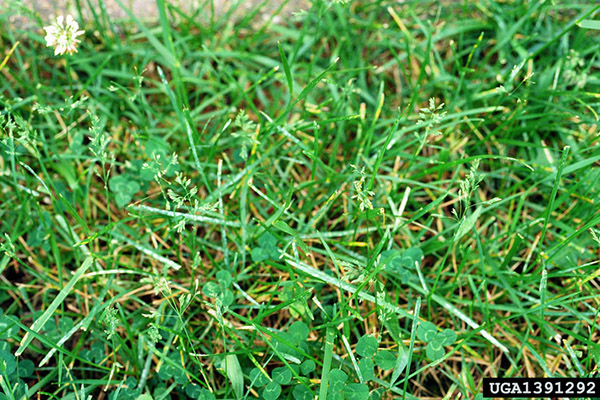
White clover (Figure 3) is sometimes included in lawn seed mixtures. Clover fixes nitrogen and adds it to the soil for the lawn to use which reduces how much fertilizer you need to use. It is not a grass and is usually considered and treated as a lawn weed. It can be killed by most common broadleaf herbicides sold for home lawn use. Mixes with micro clover and other broadleaf ground covers with turfgrass can provide another choice for a lawn mix. White micro clover can be used in eco-friendly lawn mixes, but it may be very difficult to find the seed. More micro clovers are being produced and have demonstrated a benefit to keeping the lawn more green during times of drought. One disadvantage to using a micro clover or broadleaf plants with the grass can be the attraction of bees if it is a public use area. One advantage over regular clover is that micro clover produces fewer flowers as the regular clover, and the flowers of micro clover are closer to the turf canopy and blend better with the stand of turf. However, if not mowed regularly, micro clover will grow tall. To avoid bee stings, consider carefully whether micro clover is a good fit for your lawn, as it does attract bees.
There are other eco-friendly lawn mixtures that have been developed for use. Check the Oregon State University Turfgrass (opens in new window) website for work done previously on ecomixes (search for “eco-lawns”). Be cautious when planting other types of ground covers. Some of them do not take traffic while others can become very invasive. Doing some research on what to plant will help avoid an unmanageable situation.
Cultivars
Kentucky bluegrass is not well-adapted to western Washington, so use only the best recommended cultivars. Other cultivars of Kentucky bluegrass may disappear quickly from the turf. Turf-type tall fescues have been inconsistent in different locations, so use the best cultivars listed for each region.
To find cultivars adapted to the western Washington climate, go to National Turfgrass Evaluation Program (opens in new window) and look up grasses that have been evaluated at Oregon State University, which is site OR1 on their data lists. The OR2 list shows evaluations on how cultivars have done under trafficked situations.
For central and eastern Washington, go to the National Turfgrass Evaluation Program website (see hyperlink above) and look up data from Logan, Utah, or Fort Collins, Colorado. Those sites have the most similar climate to select cultivars that will work for central and eastern Washington. Selected cultivar evaluations have begun in Pullman, Washington, but are not yet available for publication.
A point to note is that many of the cultivars that appear to have performed the best may not be available through retail outlets in your area. You may have to settle for the cultivars being sold in your region at that time. Make sure to research and know the soil type, use, environmental conditions, and location of the turf area. Then you can try to select the best cultivar available to you at that time.
Establishing a New Lawn
Regardless of whether you establish a new lawn by sodding or seeding, the lawn will have the same basic requirements. Use the methods described in this chapter to prepare and maintain a new lawn.
Soil Requirements
One of the most important factors affecting a lawn’s health is the soil or root zone. Consider the following soil characteristics before planting a lawn.
Texture
It is not always possible, or even necessary, to have beautiful topsoil to establish a new lawn or landscape area. Be wary of bringing in topsoil and placing it on top of your existing soil, as you can create layers which prevent normal water movement. In most circumstances, it is much better to rototill the topsoil into the existing soil. Additionally, topsoil can oftentimes be high in silt (very fine particles) which plugs up the surface and inhibits drainage. If you can purchase a sandy topsoil, then that is a much better option. Lawns can grow in essentially any soil texture from sand to clay, and there are trade-offs with each texture. Consider that the lighter the texture (for example, sandy soil), the more difficult it is to hold nutrients and water in the root zone, but sandier soil will not compact much under heavy traffic. Conversely, the heavier the texture (for example, a clay soil), the more water the soil holds, so drainage can become an issue as will compaction from heavy traffic. Heavier textured soils will require less frequent fertilization and watering. In general, a moderate-textured soil works best for lawns and other garden purposes in terms of holding adequate water and nutrients with minimal compaction.
Depth
When new homes are built, two to four inches of imported soil or sand are often placed over cemented hardpans or other obstructions. Since the majority of grass roots are in the upper two to four inches of the soil, a lawn planted on that shallow, imported soil is doomed to failure because of drainage problems, principally during winter or whenever the heaviest rainfalls occur. There must be some oxygen in the soil for the roots to be able to function properly.
It is best to have at least one foot of permeable soil over hardpan, dense clay, or very gravelly subsoil to allow for gravitational drainage. Six inches of topsoil over a well-drained base is the minimum recommended for a good-quality lawn. Sandy subsoils work quite well, provided you follow appropriate fertility recommendations.
Drainage
Construct beds and lawns so they grade away from the house with a one to two percent slope if possible. Using surface drainage (i.e., a 1–2% slope) in this way is always best, since this is far less expensive than installing subsurface drainage. If your soil contains cemented hardpans or extremely heavy clay layers, then drain lines or pipes may need to be installed in the root zone during construction, before the lawn is planted.
For subsurface drainage in a home landscape, usually four-inch diameter drain tile (perforated pipe) is used. Place pipe at least 16 inches below the finished surface and 10 to 15 feet apart. Put about 2 inches of pea gravel below the pipe and then cover the pipe with at least a 4-inch layer of pea gravel, then add sand or sandy soil to the surface. Note: do not cover the drain lines with a sod that has been grown on a heavy, clay-based soil, since the attached soil that comes with the sod can restrict the downward flow of water to the drainage lines.
Fertility
It is always best to do a soil test before finishing soil preparation for a new lawn. Test for phosphorus (P), potassium (K), calcium (Ca), magnesium (Mg), organic matter, and pH. County Extension offices can provide information on soil testing facilities, or view a database of soil-testing laboratories serving the Northwest. See Chapter 3: Soil Science for details on how to collect soil samples for testing.
Revised Code of Washington 15.54.500 (RCW.15.54.500) Phosphorus Fertilizer Law restricts the use of phosphorus in lawn fertilizers. It can be used for establishing a new lawn or for repairing areas with seed. This is best done in the spring or in early fall to get the best growth of the grass seed and limit any possibility of phosphorus moving out of the soil profile.
If lime (Ca) is needed, incorporate it into the soil before establishing a lawn. Nitrogen and potassium, both of which are water-soluble, will find their way into the root zone with rainfall or irrigation, so you can add them later at the time of seeding or sodding.
In western Washington, if it is not possible to test your soil, apply 10 pounds of a starter fertilizer such as 10–20–20 (N–P–K) before planting, to get the lawn off to a good start. This rate provides 1 pound of nitrogen (N) per 1,000 square feet and 2 pounds each of P and K per 1,000 square feet. Establishing a lawn from seed or sod is the only time a starter fertilizer with phosphorus should be used. After that, according to the RCW.15.54.500, a fertilizer with a 3–0–2 or 6–0–4 formulation should be used for maintenance of the turfgrass, since use of phosphorus is restricted after the grass is established. In eastern Washington, there is usually more than enough P, K, and Ca present in the soil, and they are not necessary for establishment.
Many areas of the state have biosolids free to local residents. Some have been composted with sawdust, which will also add organic matter to the seedbed. Other products have been processed to look like a fertilizer pellet. In addition to being free, they also provide a wide range of slow release nutrients, including micronutrients. Check online for a nearby source. Just be careful not to overapply the product, as applying too much could decrease the drainage of the area.
Surface Preparation
After the lawn area is graded, it must be rolled, raked, and smoothed out. The smoother the bedding surface and lawn, the easier it is to mow without scalping and to use for outdoor activities. After grass roots lock soil particles together, minor surface irregularities become very difficult to remove. Loosen compacted soil to the point that a 160-pound person walking across the surface leaves footprints approximately ½-inch deep. If soil is thoroughly rototilled, you will need to roll the area with a landscape roller in order to get the soil to this firmness.
Seeding
Seeding rates for various grasses are given in Extension publications Turfgrass Seeding Recommendations for the Pacific Northwest (PNW 299) and Home Lawns (EB0482). Seeding is best done in early fall right around Labor Day to limit the amount of watering to be done during the summer and to give the grasses enough time to establish before soil temperatures drop in later fall. Seeding can be done in spring and summer, but this will require more watering, and in higher temperatures there is a chance of pythium blight infecting areas with high moisture and high temperatures. A preventive fungicide may have to be used if seeding at this time.
Always store seed in a cool, dry place to keep the seed viable for several years. To achieve best coverage, distribute half of the seed over the site in one direction, then apply the other half at a 90-degree angle to the original direction. Save a few ounces of seed to patch up thin areas or to have analyzed if you later suspect you received poor-quality seed. It is best to buy certified seed (seed with a blue tag on the bag) to guarantee the germination rate, minimal weed seed content, and the proper improved cultivars of seed for the area you are planting. Certified seed is more expensive, but it is very much worth the extra cost over the years of your lawn maintenance.
After seeding, lightly rake the seed into the top ¼ inch of soil, then roll the surface with a lawn roller half full of water. Use sprinklers to maintain constant surface moisture, without constant puddling, until the seeds germinate (usually about seven to ten days). The best method is to use several light irrigations daily. Do not let the bedding surface dry out before the seed has germinated, because the rate and percentage of germination may be severely reduced.
Lawns can also be hydroseeded by a professional. They use a mixture of seed, mulch, tackifier (type of glue), and fertilizer in water, which is sprayed over the area with a large gun. This would be irrigated in the same manner that direct seeding to soil would be done.
Although sodding is more expensive, homeowners with little experience in establishing lawns via seed may see more success with sod. For information on sodding, see Oregon State University publication Establishing Lawns by Sodding (EC 966).
New Lawn Care
Generally, a lawn is considered “new” for its first growing season. Mow the new lawn as soon as there is enough grass to cut, usually after four to six weeks of new growth.
Seeding Rates
Detailed seeding rates for turfgrasses in Washington can be found in the following publications from WSU Extension:
PNW299—Turfgrass Seeding Recommendations for the Pacific Northwest (opens in new window)
Watering
After the grass seed germinates, reduce the watering frequency. In general, how long the new grass can go without water will depend on soil texture and the evapotranspiration rate of the grass itself. For a heavier valley soil, you may be able to irrigate every other day. A new grass grown on pure sand may still need to be irrigated several times per day until it is established due to the low water holding capacity of the sand. After you mow the grass the first time, you can irrigate even less frequently. In fact, withhold irrigation for a few days before the first mowing to let the soil firm up so you don’t rut the surface with the lawn mower wheels. Mature lawns on soils containing adequate organic matter approximately one foot deep can go as long as a week without irrigation. When most of the soil moisture is gone, replenish the water gradually by watering slowly and deeply. Cool season grasses can be watered at 80% of evapotranspiration values to save on water use. Research done at Oregon State University shows that irrigating cool-season turfgrass more frequently with less per application (every other day) provides higher quality turf and uses less water during summer drought stress. You need to know how much water you are applying with each application to make this work.
Pest Control
Diseases generally are not a problem on new lawns except during fall establishment or the first fall after spring establishment in western parts of Washington. Microdochium patch (Fusarium is the older, incorrect name and should not be used), leaf spot, and red thread are the major disease problems. If they are severe enough, fungicides can be applied. However, on perennial ryegrass and tall fescue, applying the correct amount of fertilizer in the fall can mitigate the worst of the disease problems, eliminating the need for fungicides. In general, two applications of 1 lb of nitrogen per 1,000 sq ft—one applied in September and one in October—will dramatically improve turf quality and reduce disease occurrence. If you have a shady site, only make one application. Establishing a lawn in summer may create conditions favorable to the development of damping off (Pythium) and brown patch (Rhizoctonia). To reduce the possibility or occurrence of these diseases, do not overwater. It is important to avoid both drought and saturation, seed at the lowest recommended range, and water fertilizer in to avoid burning the grass. Spring and summer plantings may also allow annual weeds, such as common purslane and crabgrass, to establish which can crowd out newly germinated turfgrass seedlings. To prevent annual weeds from germinating with your new grass, apply a registered pre- and postemergence herbicide. This approach works on all cool-season species except fine fescue. Wait until late summer or early to mid-September if you want a lawn with fine fescue. Finally, do not use an herbicide in a new lawn until it is at least six weeks old. Be certain the herbicide you choose is appropriate for a newly established lawn by reading the label. Because grass species vary in their tolerance to herbicide applications, use the lowest recommended rate.
Fertilizing
If you applied a starter fertilizer, there is usually little need to fertilize a lawn before it is approximately four to six weeks old. After that time, begin a fertilization program as discussed under the Lawn Maintenance section of this chapter. Note, however, that lawns on extremely sandy soils may require some nitrogen three to four weeks after establishment. To prevent leaching, apply no more than ½ pound of available N at the time of lawn establishment and another ½ pound of available N about three weeks later.
Lawn Maintenance
New Lawn Care
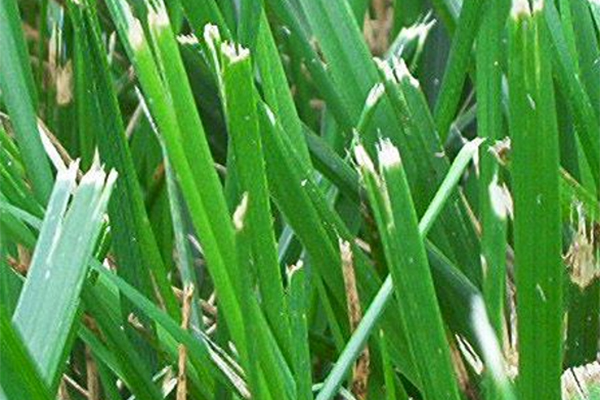
Use a mower with a sharp blade or blades to prevent tearing of the leaf tips which keeps a lawn looking neat and well-trimmed (Figure 4). Do not reduce or lower the mower’s cutting height more than ½ inch (one notch or setting on a rotary mower) per mowing or you will scalp the lawn, causing brown patches. Normally this will not kill a lawn, but if the lawn has excessive thatch, the scalping and browning will further stress the lawn, making it more susceptible to insects and diseases. Mow at regular intervals to promote a healthier lawn.
The mowing height can influence a lawn’s appearance and life span. Table 3 lists recommended mowing heights for grasses in eastern and western Washington. Do not remove more than 30 percent of the leaf blade in a single mowing. Mowing higher should increase the rooting depth for cool season grasses if it is done in the spring or fall when roots are developing. In the middle of the summer, raising the mowing height will not increase the root depth due to higher soil temperatures at that time.
Removing grass clippings is optional. Research shows that mulched clippings (finely chopped clippings left on the lawn) can be beneficial providing needed nutrients and organic matter. Remove longer clippings because they can cause damage to the turfgrass. Also remove clippings if the lawn has excessive weeds, because weed seeds are returned with mulched clippings.
| Grass | Mowing Height (inches) | No Data |
|---|---|---|
| No Data | West of Cascades | East of Cascades |
| Kentucky bluegrass | 1 to 2½ | 1½* to 3 |
| Fine fescue | 1 to 2½ | 1½ to 3 |
| Perennial ryegrass | 1 to 2½ | 1½ to 3 |
| Tall fescue | 2 to 3 | 2 to 3 |
| Bentgrass | ½ to 1 | — |
*1½ is for athletic fields. Home lawn mowing heights are higher.
Good Lawn
Management Practices
- Mow at the proper height (shown in Table 3). Do not increase the mowing height at any time during the season.
- Maintain adequate fertilization for normal growth. Nitrogen is important to stimulate populations of bacterial organisms, but do not overfertilize. A balanced program is essential.
- Water every two to three days depending on soil texture, temperature, grass species, and mowing height. Avoid light, frequent irrigations. Do not overwater.
- Check soil depth and moisture content frequently during the irrigation season, and irrigate properly to maintain correct soil moisture levels.
- Aerate the soil in spring with hollow-tined aerifiers if soil becomes compacted or if water does not penetrate. Research has shown this can save 20% of your water by getting better penetration.
- Use soil tests to determine the pH. Maintain proper pH levels. If the soil becomes too acidic (below 5.0), a light application of lime may help. A soil test will indicate whether Ca is needed.
- Never use creeping bentgrass varieties for home lawns because of the proliferation of creeping stems (stolons). Creeping bentgrasses are recommended only for specialized areas such as golf putting greens. Older home lawns in western Washington may contain colonial or Highland bentgrass, which can be mowed at a height of ½ to 1 ½ inches without accumulating a heavy thatch layer.
A good lawn should last a long time if properly mowed, watered, fertilized, aerated, dethatched, and overseeded as needed. Control pests once they are diagnosed and are at levels harmful to the turf.
Watering
Overwatering can cause many problems, most notably leaching of nutrients out of the root zone. Also, saturated soils suffocate roots because saturated soils are very low in oxygen. Roots prefer to develop where oxygen supplies are high, so saturated soils tend to discourage deep rooting and induce surface rooting. Shallow rooted lawns cannot withstand sudden changes in temperatures or soil moisture. Water the turf every two to three days at approximately 80% of the evapotranspiration rate to get a better quality turf and save on water. Monitor turf closely, and water before wilting or browning occurs. Use a soil probe or shovel to check soil moisture content. Here are some tips to help you know when to water:
- Know your soil’s texture and depth in order to understand its moisture-holding capacity. This will help you know what to expect in terms of the lawn’s watering requirements.
- On hot, dry summer days, lawns may consume more than ¼ inch of water. Average consumption is ⅛ inch per day in western Washington and ¼ inch per day in eastern Washington.
- The surest ways to determine when to water a lawn are to feel the soil in the root zone and to observe the appearance of the grass. Signs of excessive dryness include blue-green to grey-green leaf color, failure of leaves to spring back when pressed down, and lack of dew formation.
Fertilizing
A good nutritional program can reduce weeds, moss, and certain diseases such as rust, take-all patch, and red thread in home lawns. Refer to Chapter 4: Plant Mineral Nutrition and Fertilizers for a complete discussion of plant nutrition and how to calculate and use fertilizers.
Have a soil test done to determine what nutrients are needed. Nitrogen may be the only nutrient needed if phosphorus and potassium levels are adequate. You can save money by buying only the nutrients you need.
For a moderately maintained, established lawn, apply 4 pounds of nitrogen per year per 1,000 square feet in four applications: 1 pound each about May 1, June 15 to 30, September 15, and in November (early November east of the mountains and late November west of the mountains). Do not fertilize during hot weather.
On healthy lawns, never apply more than 1 pound of quick-release N per 1,000 square feet in a single application. If the soil is sandy, do not apply more than ½ pound N per 1,000 square feet in a single application in order to prevent leaching. Instead, apply two separate ½-pound applications two to three weeks apart.
Improved cultivars of perennial ryegrass and Kentucky bluegrass established on soils brought into a site can be deficient in nutrients and are an exception to the above rates. For new lawns and lawns on sandy soils, you may need to apply at least 6 pounds of N per 1,000 square feet to maintain green color throughout the growing season for the first year of establishment. If P and K are needed, use a fertilizer with a 3–1–2 or 6–1–6 ratio of N, P, and K (for example, 12–4–8 or 15–5–10). You may not be able to find these exact ratios in the store, so buy the fertilizer that is the closest. The nutrient levels should average out to this ratio over the year. Using fertilizers with P to start a new lawn is allowed under establishment of grasses in RCW.15.54.500 as long as it is applied in spring or early fall. For well-established lawns (over five years of age), one application of 1 pound slow release N in June and one application in September may be adequate to maintain the lawn when grass clippings have been regularly returned to the lawn increasing N reserves. After ten years with regular return of grass clippings, one application of 1½ pounds of a slow-release fertilizer may be all that is needed for upkeep.
Granular or pelleted fertilizer is best applied over large areas with a cyclone (broadcast) spreader. Note that quick-release fertilizers can burn grass if they are not watered in thoroughly after application.
The nitrogen in many fertilizers is converted to nitrate in the soil facilitating nutrient uptake by plants. Uptake of ammonium and nitrate is different for each plant type. (See Figure 1 in Chapter 4: Plant Mineral Nutrition and Fertilizers for an illustration of how nitrogen moves within the soil.) Most people apply more than one type of fertilizer at different times of the year. The ideal fertilizer is a “bridge” fertilizer containing a small amount of quick-release fertilizer plus a slow-release fertilizer to supply N between fertilizer applications. Most slow-release fertilizers sold have some quick-release fertilizer in them. A common blend includes 50% slow-release and 50% quick-release, but cheaper fertilizers have more quick-release because urea is the most inexpensive fertilizer made.
Natural organic fertilizers can also be used but should not be applied in late fall due to a lack of efficacy since they cannot be broken down by microbes below 45 degrees. The best times to apply them are in June or September because soil temperatures are warmer and more microbe activity will take place, releasing the nitrogen. In early spring, soil temperatures are still low and nitrogen will not be available to the plants. Most natural organics have a low nitrogen percentage (e.g., 5% or 6%) and are applied at a rate of 2 pounds of N per 1,000 square feet to get an adequate response.
Table 4 lists common fertilizer materials. A soil test will determine whether lime is needed. If recommended, apply 25 to 50 pounds per 1,000 square feet in the fall or early spring. Note: lime does not remove moss. Agricultural lime supplies calcium, while dolomitic lime supplies calcium and magnesium. Liming usually is not necessary in eastern Washington.
Table 4. Common sources of N, P, and K nutrients.| Nutrient | Nutrient Content (%) | Comment |
|---|---|---|
| Nitrogen | Not applicable | Not applicable |
| Potassium nitrate | 13 | Can burn* |
| Ammonium sulfate | 21 | Can burn* |
| Urea | 46 | Can burn* |
| Urea formaldehyde | 38 | Not applicable |
| Calcium nitrate | 15 | Can burn* |
| Methylene ureas | varies | Not applicable |
| Sulfur-coated urea | 31–36 | Not applicable |
| Milorganite | 6 | A brand of processed sewage sludge |
| Human and animal wastes | varies | Check local regulations |
| Animal and vegetable by-products | varies | Not applicable |
| Phosphorus | Not applicable | Not applicable |
| Single superphosphate | 20 | Usually nonburning |
| Treble superphosphate | 44 | Usually nonburning |
| Potassium | Not applicable | Not applicable |
| Muriate of potash | 60 | Can burn |
| Potassium sulfate | 50 | Less burn potential than muriate |
Note: Use P appropriately for establishment and repair of grasses. Consult RCW.15.54.500 for more information on proper P use.
*Quick-release nitrogen sources can cause burning of plant tissues if not watered in immediately.
Aeration
Aeration is the process of making holes in the ground in order to improve soil oxygen and improve irrigation infiltration. Aeration of a lawn benefits the lawn in several ways:
- Increases soil oxygen and water penetration
- Encourages grass root growth
- Reduces soil compaction
- Increases germination of overseeded grasses
- Increases fertilizer and lime movement into the soil
- Maintains thatch at its current depth
Methods to Increase Soil Oxygen
Use an aerator with hollow tines to remove soil cores. You can leave these cores on the surface if there is not too much thatch. You can break up the cores with a dethatcher or with a normal lawn mower, although it will dull your blade. The soil should be raked back into the holes and the thatch debris blown off and picked up.
Spikers (machines that punch holes without removing cores) are of less value for aerating because they compact the soil around the holes and do not increase flow of water and nutrients into the root zone. Deep-tine aerifying (8 to 10 inches) can be done by a professional service, which will help break through a problem layer for better drainage.
Thatch Control
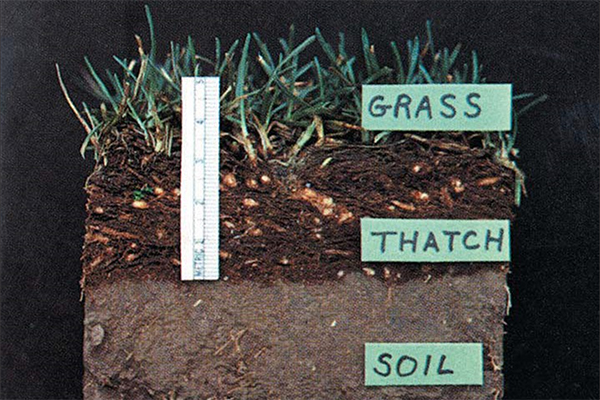
Thatch is a layer of living and dead grass stems, roots, and leaves that develops at the soil surface beneath actively growing grass (Figure 5). Stems and roots are the main contributors to thatch; grass leaves contribute very little. A thin layer of thatch (½ inch) is desirable for adding greater impact absorption, improving wear tolerance, and insulating soil from extreme temperatures.
Thatch-Induced Problems
Excessive thatch (more than ¾ inch thick) is undesirable for several reasons.
- Too much thatch restricts the movement of air, water, plant nutrients, and other applied materials into the soil.
- During wet periods, thatch may act as a sponge and hold excessive amounts of water, thus reducing the oxygen supply to roots.
- During hot, dry weather, thatch may get too dry and become very resistant to wetting, thereby losing its moisture-moderating ability.
- Thatch can harbor turfgrass disease organisms and insects.
- Thatch can act as a barrier that reduces fungicide and insecticide effectiveness since the chemicals may not reach target pests.
- Thatch may cause abnormal development of grass plants. Thatch accumulation usually is greater when grass is mowed high; hence, stems may become elongated with the leaves forming at the top. Frequently, when these leaves are mowed off, the lawn can appear brown, scalped, or off-color.
- Thatch also affects mowing height. As undercomposed material builds up, a mower tends to ride on the thatch and does not cut at the desired height. If you lower the cutting height to overcome this problem, scalping can occur and brown areas can develop.
Thatch Development
Thatch accumulation in lawns is influenced by the following factors:
- Too little or too much nitrogen. Nitrogen stimulates bacterial decomposition of thatch. Other essential plant nutrients, such as phosphorus, calcium, magnesium, and potassium, also must be present in proper proportions. However, too many nutrients can stimulate excessive grass growth and thatch production.
- Excessive wetness or overwatering. Too much water reduces soil oxygen and inhibits bacterial activity needed for thatch decomposition. Also, extended periods of saturation in the root zone induce surface rooting and greater thatch accumulation.
- Mowing height. In general, the higher the mowing height, the greater the tendency to produce thatch. Mow the grass at recommended heights.
- Grass type. Stolon-producing colonial-type bentgrasses, which are persistent and dominate older lawns, tend to develop thatch. Kentucky bluegrass (rhizome producing) and fine fescues are also often heavy thatch formers. High lignin content in fine fescues slows decomposition, which increases thatch accumulation. Perennial ryegrasses and tall fescues do not produce much thatch unless grown on a sand-based sports field where there are no earthworms and fewer microbes.
- Grass parts. Crown tissues, stems, and roots are more resistant to decay than leaves. They contribute most to thatch development in all grass varieties.
- Soil pH. Acidic soil conditions (pH 5 or below) reduce bacterial activity, which may result in slow stem and root decay, especially if calcium is deficient.
Removing Thatch
Remove thatch annually, if necessary, so that it does not build up to more than ¾ inch thick. If thatch becomes too thick (more than two inches), renovation or repeated core aeration may be the only answer.
Spring is the best time to remove thatch, particularly if there are large amounts. At this time, remove all dead surface debris that accumulated the previous year. Turfgrasses are partially dormant at this time and suffer the least amount of injury. If only light thatch removal is required, dethatch almost any time of the year. Normal thatch removal will not injure the lawn severely enough to require reseeding. If properly dethatched, grasses recover quickly and exhibit their normal beauty when conditions are suitable for growth.
Considerable force is necessary to slice or scratch into a thatch mat and remove all of the dead material. Power rakes (which you can rent from an equipment rental store) or other mechanically driven dethatching machines are superior to hand rakes. Dethatching blades for lawnmowers are much less effective at thatch removal. Run dethatchers across the turf in two directions, offset at 90 degrees. Remove loosened material before changing direction. You should not be bringing up any soil. If soil comes up, the dethatching unit is set too deep and you might burn out the engine on the machine. Although lots of fluffy material is pulled up, you will only be removing about ¼ inch of thatch by going over the lawn in two directions. If you have bentgrass with heavy thatch levels, you may need to go over your lawn again in two directions. Mow immediately after removing debris at the recommended mowing height. The last step after dethatching should always be applying fertilizer to give the grass food to recover. If you dethatch lightly, 1 lb of nitrogen per 1,000 sq ft is adequate, but if you dethatch heavily, then apply 2 lb of nitrogen per 1,000 sq ft.
If thatch becomes unmanageable (more than two inches thick), it is best to remove all grass with a power sod cutter, then cultivate the soil and reseed with desirable grasses.
Weed Control
By using good fertilization, mowing, and watering practices, weed problems will be minimized. If weeds need to be controlled, the first step is to identify the weed and its stage of growth so the correct herbicide can be selected. Then, plan to apply the herbicide during the correct timing window. See Chapter 19: Weeds and Weed Management for complete discussions of weeds and their control and Chapter 22: Understanding Pesticides for information on how to legally and safely use pesticides.
Fall is the best time to treat lawn weeds. Mid-spring (early May) is the second best time, but two applications will be necessary for most weeds. Most labels now require at least a 30-day interval before the second application. One application often leads only to knockdown of the weeds and then recovery. Also, be careful in the spring when using herbicides with ester formulations. These herbicides can easily damage newly emerged leaf tissue from trees and shrubs. Grass and weeds should be growing vigorously when treated. If the lawn is dormant (from lack of water) but the weeds are green during the summer, do not apply an herbicide. The weeds are stressed from a lack of water and will not take up the herbicide, wasting the product. Also, do not apply selective herbicides when air temperatures are expected to exceed 80°F because efficacy will be reduced. Always read and follow the label directions.
Be cautious of herbicide drift (particles) and volatility (fumes). Use proper equipment, and never use excessive pressure. Lower pressure increases droplet size, thus reducing drift. Try to spray when wind is less than two to three miles per hour.
Moss in Lawns
Mild, wet winters in western Washington encourage moss growth in lawns. Mosses spread by spores or plant fragments and require a high moisture environment to become established. This begins in fall in western Washington, along with lower temperatures and low light levels, which means a slower growth rate for the grass and less competition for the moss. Mosses invade lawns when environmental conditions and cultural practices favor moss growth. Promoting a healthy lawn is the first recommended step to limit moss invasion. Reducing shade and excess moisture can help, as well as applying adequate fertilizer and mowing the lawn at two to three inches once per week for most cool season lawns in Washington. If this approach is not successful, you may try dethatching or chemical treatments to remove the moss. See Oregon State University’s publication Managing Moss in Lawns in Western Oregon (EM 9175) for more specific details.
Disease Control
Numerous diseases can occur in lawns in the Northwest, but there are only seven common lawn disease problems: Microdochium patch, take-all patch, fairy ring, red thread, rusts, leaf spot (which includes brown blight and net blotch), and necrotic ring spot. Table 5 provides a more comprehensive list with detailed descriptions and solutions for many of the possible problems.
Table 5. Lawn diseases.| Disease/symptom | Conditions favorable for development | Presence in Washington | Management Cultural |
|---|---|---|---|
| Brown patch (Rhizoctonia solani) Brown, irregular-shaped or circular patches. | Moist, warm (above 80°F). | Common in eastern Washington; not common in western Washington. | Avoid excessive irrigation and high nitrogen fertility. |
| Fairy ring (Marasmius oreades) Rings of dark green grass up to several feet in diameter; sometimes dead zones, with or without 1-2 inch tan mushrooms. | Mild, moist. Mushrooms appear mostly in spring and fall. | Common on all turfgrasses in western Washington; fairly common on turfgrasses in eastern Washington. | Open soil mechanically. Soak rings with water daily for 1 month. Keep turf well fertilized. |
| Microdochium patch (not under snow cover) (Microdochium nivale) See also pink snow mold. Browning and thinning of turf in large indefinite spots (1-8 inches). | Cool, wet. | Very common on bentgrass and annual bluegrass in western Washington; common in eastern Washington. | Promote air and soil drainage. Avoid excessive nitrogen. 2 lb sulfur per 1,000 sq ft per year may help. |
| Gray snow mold (Typhula spp.) Irregular, dead, bleached areas (2-24 inches) with gray mold, usually under or near melting snow. | Cold, wet; worse under prolonged snow cover. | Not common in western Washington; very common in northeastern Washington. Occurs wherever there is prolonged snow cover. | Avoid late-season, heavy nitrogen fertilization. |
| Leaf spot and melting out diseases Bipolaris, Drechslera, and Exserohilum species (Helminthosporium spp.) Root and crown rot; yellowing and thinning of turf or tan to purple spots on leaves. | Moist | Common on bluegrasses, tall fescue, fine fescue, and ryegrasses. | Water in morning. Pick up clippings. Do not let grass get matted. Avoid excess nitrogen (> 1 lb N/1,000ft2/app). Fertilize early in fall. |
| Necrotic ring spot (Ophiosphaerella korrae) Dead circles, arches, and patches several inches to several feet in diameter. | Spring and fall in eastern Washington and in western Washington. | On seeded and sodded bluegrass. Most common on sodded turf 2 to 3 years after establishment. | Promote deep-rooted turf by proper fertilizer and water management. |
| Pink snow mold (under snow cover) (Microdochium nivale) Fusarium patch is no longer correct. Circular, light brown to dark brown patches (2-12 inches across). Patches commonly bleached under snow and covered with pink fungus. | Cold, wet; worse under prolonged snow cover. | Not common in western Washington; very common in northeastern region and wherever there is prolonged snow cover. | Avoid heavy, late-season nitrogen fertilization. |
| Red thread (Laetisaria fuciformis, Corticium fuciforme) Bleached or tan-colored irregular areas (2-24 inches) with red fungus strands. | Cool, moist. | Very common in western Washington; occasional in eastern Washington. | Use adequate nitrogen in a balanced N-P-K nutritional program. Late fall fertilizer applications are especially important. |
| Rust (Puccinia spp.) Leaves turn yellow; yellow to orange to reddish-brown powdery growths on leaves. | Variable. | Most common on certain bluegrasses, especially Merion. Also on perennial ryegrasses. | Increase nitrogen. Water during dry periods. Mow frequently. |
| Slime molds (various fungi) White to yellow slimy growth, usually turning to masses of small, dark, powdery "pinheads" on large leaves; occasionally large, gray, powdery mounds (1-3 inches). Not parasitic. | Mild, moist. | Periodically observed in areas west of the Cascades in spring and fall; not common east of the Cascades. | Mow, rake, or wash off with water. Usually disappears after reappearance. 1-2 weeks. |
| Take-all patch (Gaeumannomyces graminis var.'graminae') Thinning or dying of turf in circles (4-36 inches) followed by invasion of weeds and annual bluegrass in center. | High moisture favors disease development, but symptoms do not show until turf is under moisture stress. | Common on bentgrasses in western Washington; occasional in eastern Washington. | Use ammonium sulfate in balanced N-P-K nutrition program (3-1-2 ratio). Avoid high lime. 3 lb of sulfur per 1,000 sq ft per year may help. |
| Yellow patch Ceratobasidium cereale (Rhizoctonia cerealis) Light brown to yellow patches and rings. | Prolonged moisture at 40-60°F. | Common on bentgrasses, bluegrasses, and fescues. | Avoid excessive irrigation and fertilization to ensure deep rooting. |
Source: Adapted from Disease Management in Home Lawns (links to PDF) EB04482E.
Notes: For chemical management of lawn and turf diseases, refer to WSU Extension Hortsense (opens in new window).
Insect Control
Various insect pests attack lawns. Insecticides will control most species commonly encountered. Always read and follow label instructions for any pesticide. Keep children and pets off the lawn for 1 day, or as label instructs, after applying insecticides.
Because insecticides must penetrate the turf to control root-feeding insects, it may be several days or longer before insects are killed and the grass begins to recover from the injury. In a lawn with heavy thatch, aerating first may help insecticide penetration.
Due to the continual change of home insecticide products, specific product names are not listed here. Current pesticide recommendations can be found at the Hortsense (opens in new window) and Pestsense (opens in new window) websites. You can also refer to the PNW Insect Management Handbook (opens in new window).
Ants
Ants are more of an annoyance than a pest when they take up residence in a lawn. Controlling them is difficult. Broadcast treatments with the more commonly available short residual materials are usually ineffective or, at best, only provide temporary control. If the nest can be located, however, then treatments can be effective if the nest is thoroughly and totally saturated.
Billbugs
Lawn billbugs damage lawns both as grubs and adults. The grubs cut off the roots just below the ground while the adults rip and shred grass stems. Kentucky bluegrass lawns are severely damaged while bentgrass has not been damaged. This is more common in eastern Washington since it has only been detected in limited areas in western Washington, although the problem is slowly getting worse. Some control can be obtained by applying insecticide when the damage is first noted and when grubs are present, but for best results, make the application in late May or early June to kill the overwintering adults before they have laid eggs.
Chinch Bugs
Chinch bugs suck juices from the grass plants and inject a toxin into them, turning the turf yellow and killing large areas. Damage is associated with summer drought and may be confused with drought damage or damage from excessive thatch accumulation. Shaded turf areas are less damaged. Areas damaged by chinch bugs will not green up again after rains or irrigation, whereas drought-damaged turf will. Proper watering reduces turf stress and also encourages development of the fungus which parasitizes chinch bugs.
To test for chinch bugs, dig a section of turf at the edge of the damaged area where the grass is becoming discolored. Place the turf in a plastic bag, seal the bag, and place in a warm area. Any bugs present will soon leave the turf and be seen on the plastic. Or, place the turf section in a container of water. The bugs will shortly float to the surface. Positively identify any bugs found before considering treatment.
Cutworms
Cutworms are not usually a lawn problem, but they may move in as an overflow from resident or surrounding weeds. Weeds are their preferred host, so good weed management will prevent most cutworm problems. Insecticide control is usually effective only when cutworms are less than half-grown. Mature cutworms are virtually impossible to kill with insecticides and you are limited to killing them mechanically when and if you can find them.
Crane Fly
The European crane fly, Tipula paludosa, is established in western Washington and is documented in eastern Washington. Although originally a turf and pasture pest, it has also been found feeding on annual and perennial flowers and several types of vegetables and small fruits. More recently, another crane fly, Tipula oleracea, the common crane fly, has also been found to damage turf. Damage to lawns is caused when larvae feed on root crowns. Damage is usually temporary and lawns regrow easily. With extensive lawn damage, weed invasion is a threat, so chemical treatment may be advisable after monitoring larval populations.
The adult crane fly has very long legs and looks like a large mosquito. Its body is about one inch long, excluding the legs. They are especially drawn to the color white, and homeowners are alarmed when thousands of these large flies gather on the sides of homes. The crane fly does not bite or sting, nor does it damage houses.
Adult European crane flies emerge from the soil in grassy areas from late August to mid-September. The adult common crane flies emerge twice per year, at approximately the same time as the European adults in the fall and again in February or March. Females of both crane fly species mate and lay eggs in the grass within 24 hours after emergence. Crane fly eggs hatch into small, gray-brown, worm-like larvae, which develop a tough skin; they commonly are called leatherjackets. Leatherjackets feed on the root crowns of clover and grass during the fall. They overwinter in the leatherjacket stage and feed during this time, as long as the ground is not frozen.
Damage may become especially noticeable in March and April. In warm years, damage can be severe as early as December through February. During the day, leatherjackets mostly stay underground, but on damp, warm nights they come to the surface to feed on the aboveground parts of many plants. Leatherjacket feeding stops about mid-May for both species. They spend July and August in a nonfeeding pupal stage just below the soil surface. From late August through September, pupae wriggle to the surface, and adult craneflies emerge. The same cycle occurs for the common crane fly again in February, when the pupae stop feeding in the soil and they emerge as adults in March and April to lay eggs.
To monitor crane fly populations, survey the turf area in early spring (February or March) or when temperatures are consistently warmer. Select three or four random spots 6 inches by 6 inches (0.25 sq ft) in the lawn. Dig up the top layer (1 to 2 inches) and tear apart these samples to count the larvae. Larvae will usually be located at the base of the vegetative layer (thatch) or in very shallow spots in the soil. Multiply the number of crane fly larvae you find in any one sample by four to get the number of larvae per square foot. If this number exceeds 25 and the turf is thin, consider a chemical control. If the lawn is generally unhealthy, treatment at lower levels (10–15 larvae per square foot) may be necessary. Healthy lawns have been known to have 40 larvae per square foot and still not show any damage.
When unusually warm weather occurs early in the year, watch for early crane fly feeding. Biological control with specific types of beneficial insect-eating nematodes will suppress populations but will not eliminate them. If well-established lawns are properly cared for, chemical treatment is rarely needed.
If you do need to control crane flies, use a registered insecticide as soon as damage has been confirmed and the population identified. Spray timing is important. Applications after mid-April may be ineffective since damage has already been done and larvae may already have stopped feeding. Note: these application dates reflect normal years and, as such, are generalizations. Since European crane flies undergo a weak hibernation, prolonged unseasonably warm periods in December or January can allow them to feed, leading to serious damage. Therefore, if a warm winter occurs, watch your lawn carefully for damage, particularly if your region has a history of crane fly problems.
Fall spraying is not recommended because it is unknown whether a pest problem will occur in spring. Research has shown that, as often as not, natural controls largely eliminate high autumnal crane fly populations by the following spring, thus eliminating the need for sprays.
Consult Hortsense (opens in new window) for recommended pesticides and rates. Several registered insecticides are available in granular form for crane flies. Be careful when spreading granules so children and pets cannot come in contact with them. Make sure to apply at least 1/8 inch of water after spreading the granules. Avoid spills, and keep products off areas such as walks and patios. Be sure to read and follow all label instructions.
Webworm
Sod webworm or lawn moths are a problem in many grasses of eastern Washington. It is not normally a problem west of the Cascades unless it becomes very dry and watering programs diminish. It can also become a problem where bentgrass is prevalent. This is related to thatch stress which can be associated with bentgrass.
White Grubs
White grubs are the larvae of small scarab beetles related to June beetles. Grubs feed on grass roots to the extent that large pieces of lawn can be lifted free from the ground. Grubs can be very destructive to golf courses and lawns. Fortunately, they are not very common at pest levels. Up until 2002, the only white grub with a few outbreaks on golf course fairways in Washington was Aphodius granarius, or the dung beetle. It usually has a single generation and spotty damage, which did not require control measures in most cases.
Over the past ten years, European chafers, a beetle not previously found in Washington, have moved down from British Columbia, Canada, and are currently a serious problem on lawns in the Seattle/Tacoma area, especially in the Burien–SeaTac vicinities. The adult beetles are attracted to drier low maintenance areas to lay their eggs. Damage is most severe on the older turf areas that are allowed to go dormant over the summer. The eggs are laid in June through early July and hatch soon after into feeding grubs. They will feed for a period of nine months on the roots of the grass. Often, the grub’s predators, such as birds, skunks, and racoons, will cause more damage than the actual grubs by tearing up the turf and leaving unsightly patches of overturned grass all over the lawn.
Lawns that are at least minimally fertilized and irrigated seem to have less eggs laid on them and are also better able to tolerate the feeding damage that might occur. For homeowners, moderate fertility and irrigation are the first defense against the European chafer. Chemical controls are also available but will vary depending on the time of application during the life cycle of the insect. It is best to control grubs in their early stages in July when they are smaller than to wait until April or May when they are getting ready to pupate and the damage has already been done to the grass. For more information about the European chafer, see Pest Watch, European Chafer (FS078E), available in the WSU Extension Publications Store (opens in new window).
Yellowjackets
These pests do not harm a lawn but are ground dwellers that may reside in a lawn area. There are aerosol insecticides which can be propelled at distances of 20 feet to control yellowjackets. Use according to label instructions. These products rapidly kill subterranean colonies. After treating an area, do not plug the entrance hole of yellowjacket nests. Returning foragers will enter the nest and be killed by the insecticidal residue.

Bee Warning
Many insecticides are highly toxic to honeybees, bumble bees, and other wild bees. Carbaryl is particularly hazardous to bees. It should not be used where bees are obviously foraging on blooming weeds or flowers. Note: Chlorantraniliprole is a relatively new insecticide that does not harm bees and does not directly impact natural arthropod populations, but it is toxic to fish.
Simple steps like removing (mowing) blooming clover should always be taken before applying materials hazardous to bees. Avoid using dusts if possible. Sprays are preferred for bee safety.
Lawn Renovation
Lawns severely damaged by insects, diseases, or uncontrolled weeds may have to be renovated. Renovation includes a variety of corrective procedures to restore health to an old lawn. Partial renovation can be as simple as overseeding a thin turf area or can include power raking and core aeration if thatch is thicker than ½ inch or the soil is compacted. Power raking is a much more severe treatment than normal dethatching, which should be done to lawns as needed. Total renovation involves killing existing turf and reseeding.
Ninety percent of turfgrass renovation attempts do not succeed in changing turfgrass species, because the lawn areas are sprayed once, overseeded, and rapidly recolonized by weedy grasses as they recover. If renovation is not done properly, the site will look good to begin with, but eventually will return to the conditions (with the same weed species) that existed before renovation. Favorable spring and fall growing weather (i.e., cool, wet) favors lawn recovery following renovation. Midsummer renovation may result in slow recovery and generally is not recommended. However, total kill, sod removal, and reestablishment can be accomplished during late summer, especially west of the Cascades.
Partial Renovation
Follow these steps to renovate a lawn without totally removing existing vegetation:
- Adjust the mower to approximately ¾ inch (slightly lower for bentgrasses) and mow the lawn thoroughly.
- Power-rake the lawn as many times as necessary to remove accumulated thatch. It is best to dethatch in opposite directions. Thoroughness is important.
- Rake and remove material brought to the surface by the dethatching process. (Add it to the compost pile. Remember, thatch is organic matter and will take time to decompose.)
- Mow the turf again at approximately ¾ inch high.
- Remove sod from all high and low spots, adjust these areas to the proper grade, and replace the sod to obtain a uniformly smooth surface. If grass stems and crowns were thinned excessively by power raking, overseed the lawn. Overseed at a rate of one-half the recommended establishment rate using varieties recommended for your area. Growth will initiate quickly both from the remaining grass stems and crowns and from the new seed.
- Maintain constant surface moisture for seed germination.
- Although the turf may be somewhat thin, it is important to mow regularly at the recommended mowing height to develop a dense stand.
Total Renovation
Total renovation involves killing all weeds and undesirable grasses with a nonselective herbicide (e.g., glyphosate). This is the best approach for lawns having large patches of coarse, weedy grasses, such as velvetgrass, quackgrass, unimproved tall fescue, orchardgrass, or non-turf-type perennial ryegrasses. Apply glyphosate in mid-spring or late summer. It may take more than one application to kill creeping perennial grasses and broadleaves, which have rhizomes. Solarization, or control of the plants using a plastic cover over the top of them which will heat up and kill the plants underneath it, is also a method of control, but it is not as effective in western Washington due to the moderate temperatures most of the year.
After killing the grass, if there is not a thick thatch layer, you have a choice of either removing the dead sod or following steps 1 through 5 given above for partial renovation. If you remove all sod and cultivate the soil, follow procedures for establishing a new lawn. It is advisable to use the full seeding rates recommended for the type of seed you are using for new lawns.
After seeding, use a starter-type fertilizer to apply 1 pound of actual nitrogen per 1,000 square feet to hasten establishment. If the soil is extremely sandy and you are using a quick-release fertilizer, make two applications of ½ pound N each, two to three weeks apart, instead of a single one-pound application to avoid the possibility of nutrient loss by leaching and overgrowth of the turfgrass.
Acknowledgments
Additional material was adapted for this chapter with permission from WSU Extension publication Home Lawns (opens in new window) (EB0482E) by Gwen K. Stahnke, Stanton E. Brauen, Ralph S. Byther, Arthur L. Antonelli, and Gary Chastagner.
Further Reading
WSU Extension publications (opens in new window).
WSU Extension Publications
Home Lawns (EB0482E)
Mole Management in Washington Backyards (FS146E)
Saving Water: Lawns and Other Turf (EB0684E)
Turfgrass Seeding Recommendations for the Pacific Northwest (PNW0299)
Recommended Extension Publications
Practical Lawn Care for Western Oregon (opens in new window):
(A useful resource for western Washington lawns.)
Best Practices for Lawn Care in Colorado (opens in new window):
(A useful resource for eastern Washington lawns.)
Other Useful Resources
Conservation Plants Pocket Identification Guide (link to PDF document). 2010. USDA Natural Resources Conservation Service.
Emmons, R.D., and F. Rossi. 2016. Turfgrass Science and Management. 5th ed. CENGAGE.
Scotts Guide to Identification of Dicot Turf Weeds. Publication 9929. Scotts Training Institute.
Scotts Guide to Identification of Grasses. Publication 9927. Scotts Training Institute.
Scotts Guide to Identification of Turfgrass Diseases. Publication 9931. Scotts Training Institute.
Smiley, R.W., P.H. Dernoeden, and B.B. Clarke. Compendium on Turfgrass Diseases. 3rd ed. American Phytopathological Society Press.
The Lawn Institute (opens in new window).
Toshikazu, T., and J.B. Beard. 1997. Color Atlas of Turfgrass Diseases. Wiley Publishing.
Turgeon, A.J., and J.E. Kaminski. 2019. Turfgrass Management (opens in new window). 1st ed. TURFPATH, LLC.
Vargas, J.M., Jr. 1994. Management of Turfgrass Diseases. 2nd ed. Burgess Publishing Co.
Vittum, P.J. 2020. Turfgrass Insects of the United States and Canada. Comstock Publishing Associates, Cornell University Press.