Vertebrate Pest
Management
Dave Pehling, Zoologist, Snohomish County, Washington State University Extension
Introduction
Vertebrates (animals possessing backbones) can occasionally become yard and garden pests. Compared with disease problems (Chapter 17: Plant Pathology) or invertebrate problems (Chapter 15: Entomology), problems with vertebrates are relatively rare.
A “pest,” of course, is in the eye of the beholder, but in this chapter we will define it as an organism that causes, is perceived to cause, or is likely to cause economic or aesthetic damage to people or their property. Pests can be addressed in one of two ways: management or control. Managing pests means excluding, repelling, or discouraging them by manipulating their habitat or preferred plants. Controlling pests means discouraging pests with repellents, eliminating them lethally, or relocating by cage-trapping and releasing them, elsewhere (legally).
Once an animal is perceived as being a problem, the first question to ask is How do I manage or control the animal? Here are several things to consider before starting any management program.
- Type of animal. Identification of the animal is important for effective management in most cases. Since most vertebrates are nocturnal, or simply difficult to observe, identification often must be made by studying just the signs left by the animal: evidence of nesting, chewing, or feeding; paw prints; droppings; or even territorial markings. Sometimes trail cameras can be placed at strategic locations to make a positive identification.
- Benefits of control or management versus the cost of damage. What are the economic or aesthetic thresholds at which the extent of potential damage warrants control? How much damage might occur without any control or management? Can the situation be tolerated?
- Legal, aesthetic, or recreational value of the species. If the species is listed as endangered or protected, your options may be limited. Your regional office of the Washington Department of Fish and Wildlife (opens in new window) (WDFW) is your best resource for this information.
- What might be the consequences of a control or management program for nontarget species or the environment?
Species of Usual Concern
Wildlife damage to gardens can be caused by one or several of many wildlife species. There is good information on most of the animals covered in this chapter at the Washington Department of Fish and Wildlife website, under the Species and Habitats (opens in new window) tab. Here you will find life history information, legal status, and, sometimes, control tips. Another excellent site, also hosted by WDFW, is Living with Wildlife (opens in new window), and it provides many valuable tips for dealing with damage issues.
What follows are sections discussing the vertebrate animals that are most likely to cause problems around the house and garden in Washington State.
Moles
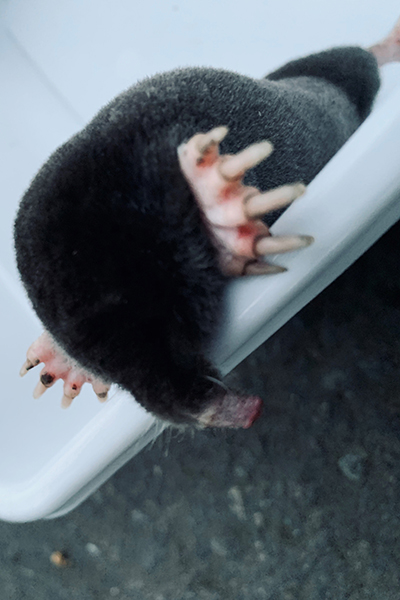
Perhaps the most vexing vertebrate pest in many well-watered yards and gardens is the mole (Figure 1). These animals are not rodents, a common misconception, but in a whole separate grouping from the zoological order Eulipotyphla, family Talpidae. Moles mostly eat insects and worms. Washington State has three of the seven North American species: the tiny shrew-mole (Neurotrichus gibbsii), the coast mole or Pacific mole (Scapanus orarius), and the Townsend’s mole (S. townsendii) which is one of the largest moles in the world at eight to nine inches long.
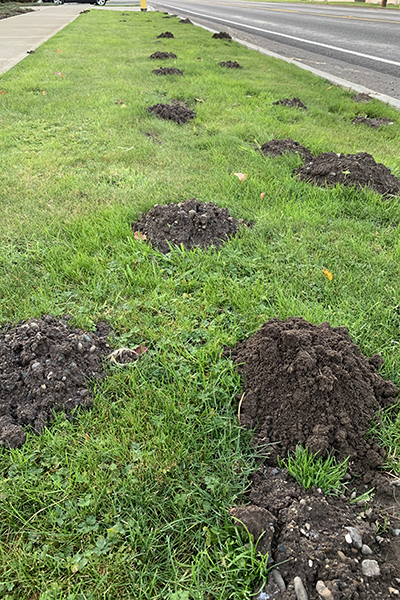
The two larger species, the coast and Townsend’s moles, are very similar in appearance and can be serious tunneling and mound-making pests in lawns, gardens, and fields (Figure 2). Moles are seldom observed, but their presence is obvious by the many large, volcano-like molehills that they produce while tunneling. Moles actually provide valuable soil aeration services and seldom damage plants. The mounds are considered a nuisance by many people, however.
Moles are active year-round and feed almost exclusively on invertebrates (earthworms, grubs, and soil-dwelling arthropods). Rarely, they may sample bulbs, root crops, and sprouting seeds. People usually blame moles for plant damage that is actually caused by voles (Microtus spp.), which also tunnel and will use moles’ tunnel systems.
Management and Control
Some people can tolerate some lawn damage and may be able to live with their moles by simply raking the molehills flat before mowing. Be aware that the lawn will eventually become “lumpy.”
Whatever method you choose for managing or controlling moles, it is most important that you apply your treatments only to active tunnels. You can easily locate these “underground highways” by stomping down molehills in the afternoon. By the next morning, hills that are being used will be pushed back up. During certain times of the year, you may see no activity at all even though moles are present. At these times, you can monitor mole activity by opening small holes in the tunnels with a probe (a broom handle, long screwdriver, etc.) and checking the next day to see if a mole has plugged them up.
Once you locate an active tunnel, use your probe to locate a deep run about 6 to 18 inches away from the mound. When you strike the tunnel, the probe will suddenly drop a couple of inches. Apply your treatment of choice, being sure to follow label directions if using a pesticide, and repeat in all active runs. Monitor the tunnels again in a few days with your probe and you will soon find out whether your treatment of choice is effective or not.
Trapping. Historically, the only effective way to control problem moles was lethal trapping. In Washington, only non-body-gripping-type traps or common rat and mouse traps (“snap traps”) are legal for use as of 2000. (See RCW 77.15.194 (opens in new window), paragraph 3.) None of these, however, have proven effective for mole control. For moles, you can try making “pitfall traps,” as described in the vole section below, but these seldom work on western moles.
The most recent innovation for mole management is the Mole Cat. The Mole Cat blasts the mole with a .27 caliber blank cartridge. These devices are expensive, hazardous if not handled correctly, and often ineffective for dispatching moles.
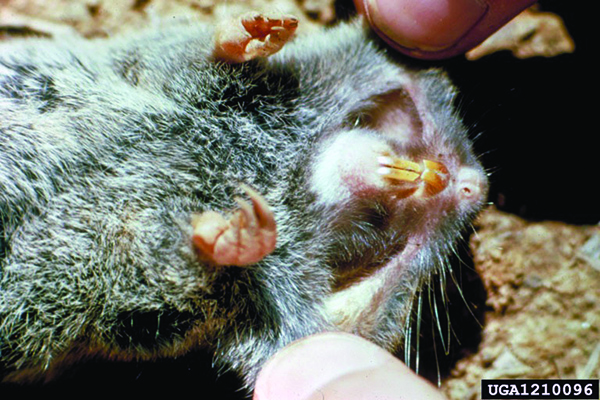
There are two species of pocket gophers in Washington State. The northern pocket gopher (T. talpoides) is the most widespread species in the eastern part of the Northwest (Figure 3). The Mazama pocket gopher (a.k.a. western pocket gopher, T. mazama) is the only pocket gopher west of the Cascades and is found on the Olympic Peninsula and in the southern Puget Sound area. Both of these species grow to about eight inches long. Their fur is usually gray or brown, and their typical rodent incisors are easily visible. Pocket gophers are named for their external fur-lined cheek pouches. These “pockets” are used for carrying food to storage tunnels.
Management and Control
In some cases, you may be able to tolerate these native rodents in your landscape. They are quite solitary so you will not develop large populations. Like moles, their tunneling is beneficial to the soil in many cases. Pocket gophers can churn up 2,000 pounds of soil each year and pull vegetation into their tunnels, which (along with the addition of gopher feces and urine) improves the tilth and fertility of the soil.
Cultural Techniques. If you don’t mind the gopher mounds in your yard but don’t like the damage to your garden, you can plant in raised beds with one-half-inch hardware cloth bottoms. Alternatively, you can build an underground fence to protect small plots as described in the section on voles. Individual flower bulbs can be planted in the ground in one-half-inch mesh wire baskets to prevent damage.
Pocket gophers occasionally feed aboveground, so wire guards may need to be placed there, too.
Lethal Controls. Before using lethal controls in western Washington, call your local WDFW office or check their website. Some sub-species of Mazama pocket gophers are candidates for protection under the Federal Endangered Species Act. The Brush Prairie pocket gopher is a state candidate.
Pocket gophers can be controlled any time of the year but the most successful time is in the spring and fall when mound building is under way. In terms of effective control measures, toxic baits work well whereas live traps seldom do. Though effective, lethal body-gripping traps are not legal to use in Washington.
Baiting with rodenticides is an option. Toxic gopher baits are registered for some uses in Washington as of 2020. For application, place toxic gopher baits in main tunnels exactly according to label directions. Locate the tunnels with a probe and place the bait down the probe hole. An alternative method is to excavate the tunnel with a trowel and place the bait directly in the run. Bait each burrow system according to label directions for best results. Check the area periodically for two weeks after treatment and dispose of any carcasses you find to eliminate any possibility of secondary poisoning of nontarget animals.
Flooding the tunnels quickly with five-gallon buckets of water (much faster than using a hose) will sometimes drive a gopher aboveground where it can be dispatched.
Registered repellents containing dried blood or castor oil are not consistently effective.
Voles
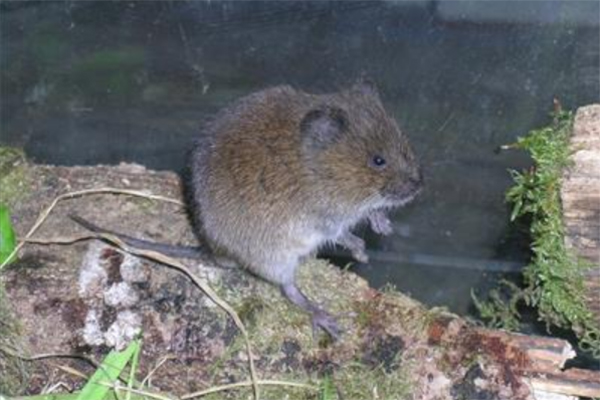
There are over 18 species of voles (Microtus spp.), or “meadow mice,” in the Northwest. They all feed on plant material, and most species are tunnelers, though they also work aboveground. Voles are a primary food source for many predators, such as hawks, owls, coyotes, and foxes, due to their prolific reproduction and widespread abundance. Their populations can cycle dramatically. West of the Cascades, the most commonly seen voles are the Townsend’s vole (M. townsendii, up to 9½ inches, Figure 4) and the creeping, or Oregon, vole (M. oregoni, 6½ inches). East of the Cascades, the montane vole (M. montanus, nearly 8 inches) is most prevalent in gardens and orchards.
These small, short-eared, short-tailed rodents mostly feed on grasses but can cause damage in orchards by gnawing on tree roots and around the bottoms of tree trunks during the winter, often girdling trees and killing them. They will also tunnel through gardens, feeding on many kinds of roots, tubers, and bulbs. Many gardeners incorrectly blame this sort of damage on carnivorous moles. Voles will certainly use moles’ tunnels in addition to their own when making these raids, and they will also feed aboveground.
Voles are active at any time of the day and night and in all seasons. Most species spend most of their time underground or in dense vegetation, so they are seldom seen. Some species may have as many as 5 litters per year, with up to 11 kits per litter.
Biological Controls. Many predators love to feed on voles. Hawks, owls, coyotes, foxes, snakes, weasels, skunks, and others can help keep vole populations moderate. Providing perches for avian predators, particularly owls, can help reduce vole populations.
Trapping. Small vole populations can be controlled with common mouse traps. Other body-gripping traps are not legal to use in Washington. Up to 100 traps per acre may be necessary for large populations. For protecting particular plants or small gardens, you may only need a few traps. You can save time and effort by trapping only where there is feeding activity.
Always read and follow label instructions for any pesticide!
For more information, see: Vole Management in Home Backyards and Gardens (opens in new window), which can be accessed for free through the WSU Extension Publications Store.
Ground Squirrels
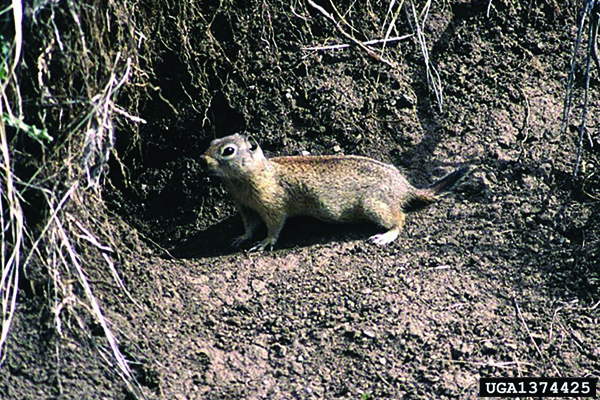
About seven species of ground squirrels (several genera) appear in Washington, mostly east of the Cascade crest. Ground squirrels, sometimes called “sage rats” (Figure 5), range in size from the small Washington ground squirrel (S. washingtoni, about 9 inches) to the non-native California ground squirrel, or “gray digger” (S. beecheyi, 18 inches). These rodents are largely herbivorous and will feed on a wide variety of crops and landscape plants. They are also accomplished tunnel diggers, leaving many open holes, 2–4 inches in diameter, throughout their home ranges. Unlike most other digging rodents, ground squirrels are diurnal, so you can often see them scampering around their burrows. Some species have been implicated in the transmission of plague and other diseases. On the other hand, these native rodents are a valuable part of the food chain and, like pocket gophers, improve the tilth of the land with their constant burrowing.
Ground squirrels generally go dormant during the hottest part of summer and hibernate over winter. Population densities of more than 100 per acre have been recorded.
Management and Control
Several species of native ground squirrels in Washington are legally protected, so check with the WDFW before considering any lethal methods.
Cultural Controls. Metal rodent guards placed around tree trunks usually protect fruit and nut trees from species that climb. Fencing often is not effective in excluding these rodents from an area but solid 3-foot-high fences that the animals cannot see through have sometimes been effective in limiting colony expansion. The bottom of the fence should be buried 12 inches underground. Scare devices are not effective for these animals, but constant harassment (filling in or digging up tunnels, using repellents, etc.) will sometimes drive them away.
Plants that are being damaged can be protected with commercially available repellents or wire cages. Remember that repellents are not very effective if feeding pressure is high and there are lots of animals competing for food.
Trapping. Trapping can be effective with small infestations. Cage live traps may be used, but animals cannot legally be released off the property so they must be destroyed. If you must euthanize a trapped animal, use humane methods. Check with the WDFW for suggestions.
For small ground squirrels, common rat traps are legal and may be effective. One trap for every 10 to 15 squirrels present should quickly control the population. Be sure to keep traps inaccessible to children, nontarget wildlife, and pets.
Other Controls. In situations where shooting is permissible and safe, this is an effective technique for controlling small populations because the problem animals are eliminated. Use nontoxic ammunition when possible to avoid poisoning nontarget scavengers. Encouraging natural predators will help keep populations of these rodents under control. If that is not sufficient, professional WCOs should be considered.
Tree Squirrels
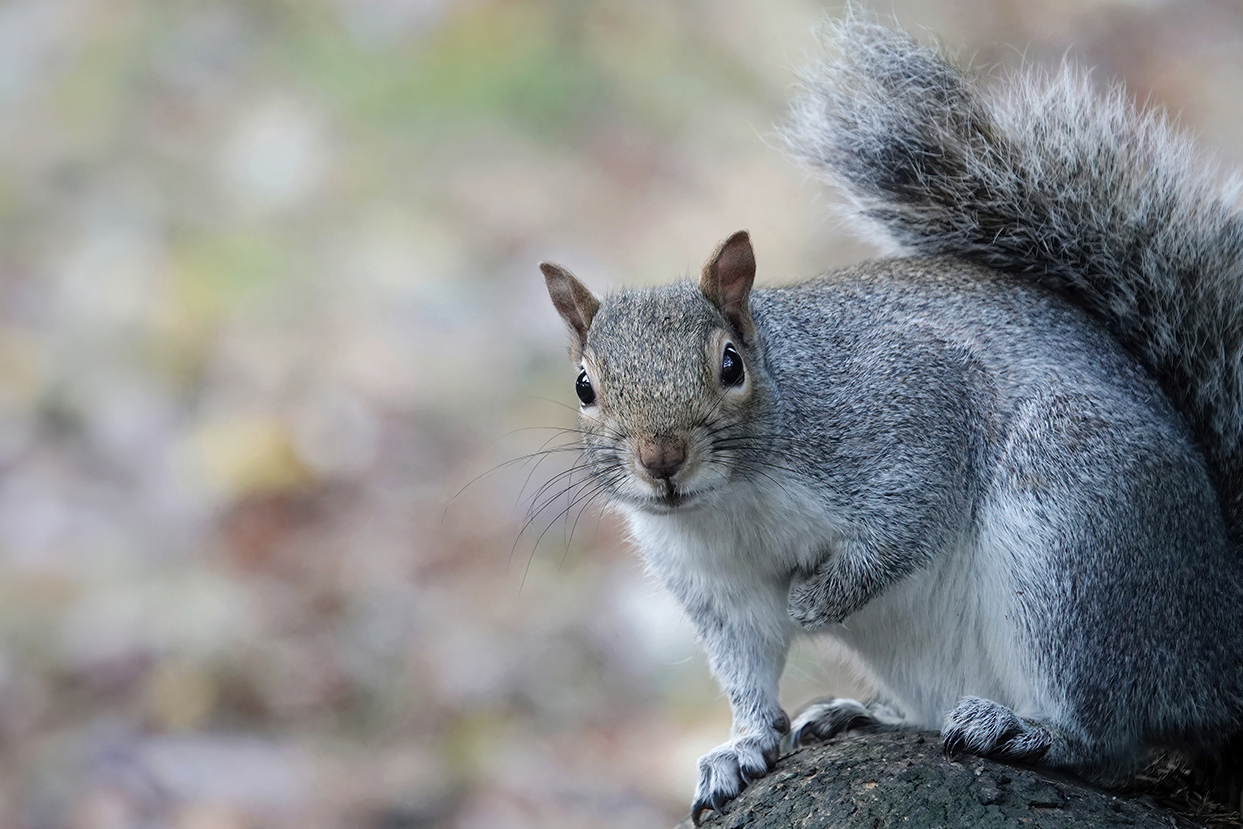
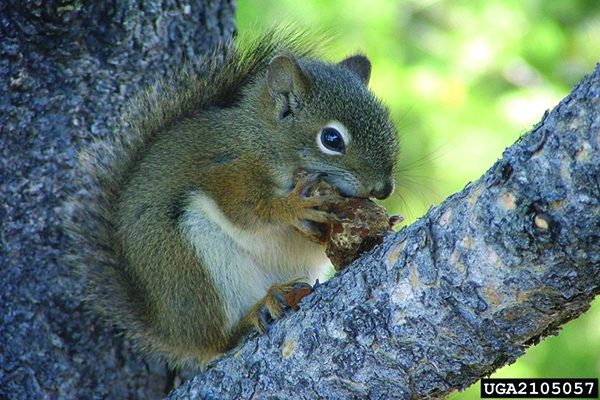
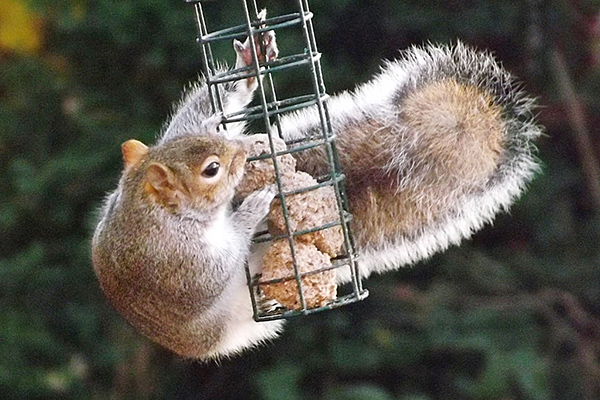
Washington is home to several species of tree squirrels. On the west side of the Cascades, the native Douglas squirrel (Tamiasciurus douglasii) is common in conifer forests. Its eastern Washington counterpart the red squirrel (T. hudsonicus) is the most common native on the east side of the state (Figure 6). Both are about 14 inches in length and have a dark red coat. The Douglas squirrel has an orange belly and, oddly, the red squirrel’s underparts are white. In many urban and suburban areas, the large, introduced eastern gray squirrel (Sciurus carolinensis, about 20 inches total length), with its gray- and rust-colored fur (there are also black populations of this species) and white belly, seems to have taken over (Figure 7).
The introduced eastern fox squirrel (S. niger) usually has a reddish coat and belly, though, like the eastern gray, it can be very dark. At 22 inches long, it is one of the largest North American squirrels. Fox squirrels have become common in a few areas of eastern Washington, such as the Okanogan Valley. The rare western gray squirrel (S. griseus), a shy native, is even larger (up to 24 inches total length) and has a gray coat, a magnificent bushy tail, white belly, and dusky feet. It is found in areas where the garry oak, or Oregon white oak (Quercus garryana), grows, particularly in the Columbia Gorge. It is also found in some pine forests east of the Cascade crest in northeast Washington. Finally, the nocturnal northern flying squirrel (Glaucomys sabrinus, up to 14 inches in length) is fairly common but, being our only nocturnal squirrel, is seldom seen. Flying squirrels are the smallest of the Pacific Northwest tree squirrels. These little gray gliders may be found wherever there are green belts or coniferous forests. They eat primarily mushrooms and lichens that they cache.
Squirrels can become pests when they infest structures or damage crops and landscape plants. They are determined raiders of bird feeders and often dig up freshly planted garden bulbs. Some species occasionally damage trees by clipping twigs, which are often left on the ground around the tree, and stripping bark. In areas where nest and den sites are scarce, squirrels may gnaw into buildings. Providing natural habitats, particularly dead trees with cavities, can divert them away from buildings.
Management and Control
How squirrels are managed depends largely upon the squirrel species and type of damage. Nonlethal methods must be used on all native squirrels unless they are damaging crops, in which case a permit is required from the WDFW. A combination of exclusion, repellents, and cage-trapping is usually adequate. The non-native eastern gray and fox squirrels are not protected, so marauders may be killed any time of year, though the nonlethal methods are more acceptable. Check with your local WDFW office for regulations. Trapping and relocating squirrels is only legal when you have permission from the accepting property owner and a permit from WDFW.
Suggested management methods include standard rodent control steps:
- Eliminate food sources to help keep the carrying capacity low. Clean up unharvested fruits, nuts, ornamental berries, etc. and use “squirrel proof” stations for feeding birds.
- Protect susceptible plants with wire cages or squirrel repellent.
- Cover flower bulb beds during the winter with chicken wire to prevent digging. Stake the wire down securely and cover it with a light mulch.
- Protect tree fruit and nut crops by placing 24-inch-wide sheet metal collars as rodent guards on tree trunks 4–6 feet off the ground. This method will only work if there are no other tall trees, fences, or buildings nearby. Squirrels will leap many feet to raid fruit and nut trees.
Rabbits and Hares
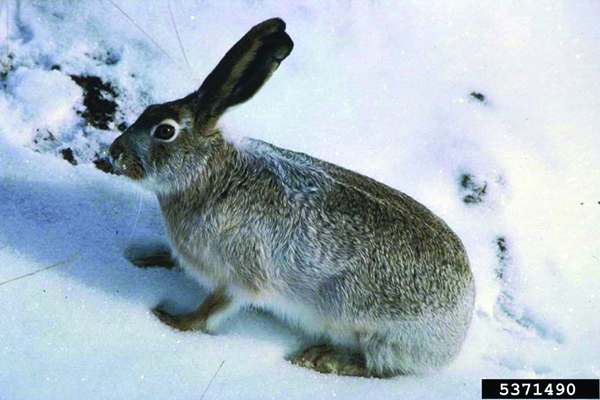
In Washington, there are seven species of rabbits and hares. A few of them can become garden pests. White-tailed and black-tailed jackrabbits (Lepus townsendii and L. californicus) are two of Washington’s hare species and are found east of the Cascades in shrubsteppe habitats (Figure 8). They have become increasingly rare with the loss of shrubsteppe habitats. Our most widespread hare is the “snowshoe hare” (L. americanus), which lives throughout of the forested portions of Washington. These animals sometimes turn white in winter.
Our true rabbits (in contrast to hares) include the rare pygmy rabbit (Brachylagus idahoensis) and the mountain cottontail (Sylvilagus nuttallii); both are eastern Washington species. The eastern cottontail (S. floridanus) was introduced as a game animal many years ago and is still spreading. Domestic rabbits (Oryctolagus cuniculus) have become feral in the San Juan Islands and in some urban areas.
Rabbits and hares may have as many as six or more litters per year, with several kits in each litter. Damaging populations can grow quickly.
These long-eared pests will eat a wide variety of plants. They often feed on woody bark and stems of trees and shrubs during the winter, causing considerable damage to orchards, gardens, and crops. In spring and summer, they devour crops and herbaceous landscape plants.
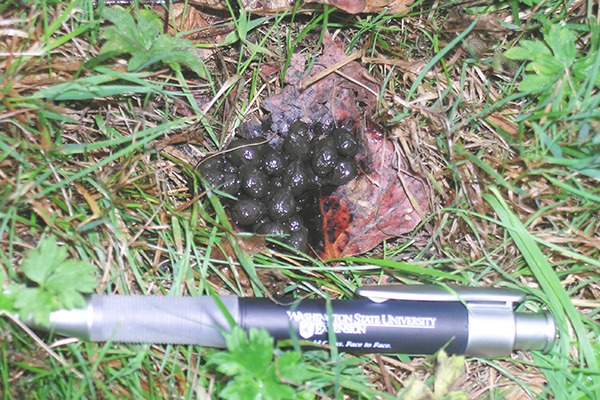
When feeding on bark and twigs, rabbits and hares leave easily identifiable tooth scars. Twigs are neatly clipped at a 45-degree angle and the bark on lower stems and branches may be eaten, leaving parallel tooth scars on the wood. There will usually be droppings visible in feeding areas. Rabbit and hare droppings (Figure 9) are spherical and about 3/8 inch in diameter.
Management and Control
Barriers. Fencing, once again, is the most effective way to reduce damage. A simple chicken-wire fence only a couple feet high is usually all that is needed to protect garden plants from cottontails. Any small mesh fencing will work, but young animals may be able to squeeze through anything larger than an inch or so. The bottom edge of the fence must be very tight against the ground or even buried a few inches. If hares or feral domestic rabbits are causing problems, the fence should be taller: 30 to 36 inches high is adequate. You may need to bend the bottom 6 inches outward at a 90-degree angle and bury it 6 inches deep in the ground to prevent digging underneath.
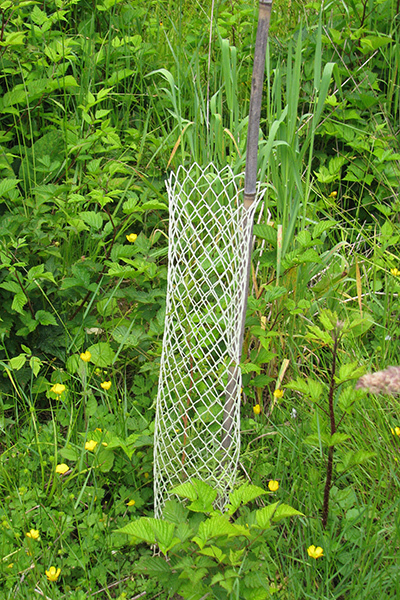
Tree wraps or cylinders of ¼-inch mesh hardware cloth or plastic (Figure 10), about 18 to 20 inches above maximum snow depth, can be placed around individual plants to prevent de-barking. The carrying capacity of an area can be reduced by removing hiding places, such as juniper or briar patches, brush piles, and openings under outbuildings. This will eventually reduce the population and, therefore, the amount of damage in the area.
Repellents. Repellents can be somewhat effective for protecting crops and landscape plants from rabbits and hares if the feeding pressure and population are not too great. There are several repellents available but many are for use only on landscape plants, so be sure to read and follow the label!
Scare devices, such as Mylar balloons and tape or hanging aluminum foil strips or pie pans can afford temporary protection. Motion detector sprinklers (for example, Scare-Crow) can also be effective.
Lethal Controls. Since native rabbits and hares are game animals or otherwise protected by law (the pygmy rabbit is listed as an endangered species), contact the WDFW for regulations and information about controlling your pest species. Feral domestic rabbits may be cage-trapped (but not relocated) or shot at any time. Snares, deadfalls, or other body-gripping traps are not legal to use in Washington. Snowshoe hare and cottontail rabbits are considered a game species, so there is an associated hunting season.
For more information, see Rabbit & Hare Management in Washington Home Yards and Gardens (opens in new window), which is offered for free through the WSU Extension Publications Store. Again, contact you regional WDFW office for information on legal status of rabbits and hares.
Commensal Rodents
Rodents that live in close proximity to humans are known as commensal rodents (opens in new window). These include animals such as mice and rats—the most common and widespread of the vertebrate pests we deal with (although they are more problematic in homes and other structures than in yards and gardens). Rats and mice are relatively minor garden pests, especially compared with birds, raccoons, and deer.
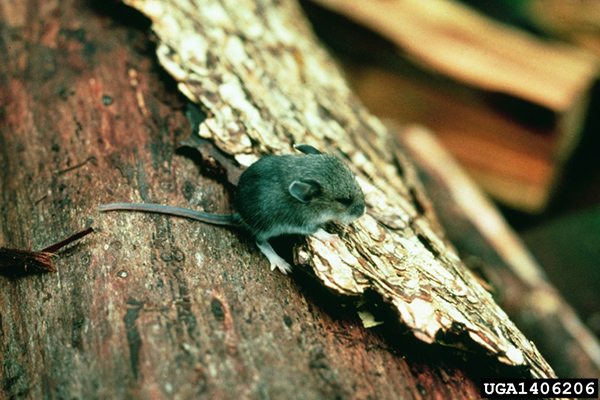
Rural buildings and greenhouses are often infested by native deer mice (Peromyscus maniculatus) rather than house mice, but control methods are the same for both species. Deer mice are distinguished by their white underparts on the body and tail (Figure 11), whereas the house mouse is all brown or gray.
Deer and house mice occasionally dig up and eat sprouting seeds and seedlings in greenhouses and gardens. Two kinds of non-native rats can cause problems for gardeners. The Norway rat and the black rat, also known as the roof rat, both came to Washington as uninvited hitchhikers aboard ships. Adult Norway rats are robust, weighing 10–17 ounces and measuring 13–18 inches in length. The tail is usually shorter than the head and body. Colors range from gray to brown to almost black. The adult roof rat (Rattus rattus) is about the same length but is lighter in build and not as widespread as the Norway rat. The roof rat’s tail is longer than the combined head and body length and the belly is sometimes white. Fur color varies.
Roof rats will often damage a wide variety of fruits and vegetables, including apples, tomatoes, squash, and grapes. Both of these species are unprotected and can be killed at any time. The native bushy-tailed woodrat, also called the packrat, is found in remote forests and seldom become agricultural pests.
Mice and rats are largely nocturnal, so a person may not be aware of an infestation until the population is quite large. Learning what signs to look for will help prevent the buildup of a serious rodent problem. For instance, mice and rats tend to move over regular routes and usually produce defined runways. These runways show up particularly well in dusty areas, especially if flour or other dusty material is sprinkled around likely spots as “tracking patches.” Outdoors, rats leave runways under groundcovers and make 2- to 3-inch holes in and around buildings and foundations. Another sign is the stain that rats leave behind when rubbing against walls during their travels. Finally, the droppings, which are moist and soft when fresh, are a definite sign of infestation. Mouse droppings are about a ¼-inch long and look much like small grains of burnt rice. Rat droppings can vary in appearance, depending on the animals’ age and diet. They can be up to ¾-inch long and ¼-inch in diameter.
Management and Control
There are four important steps to effective rat and mouse management:
- Reduce available food and water.
- Reduce habitat.
- Rodent-proof structures.
- Remove the rodents.
Reduce Available Food. Minimizing exposed food materials is essential for any successful rodent control program.
- Secure garbage in tightly covered metal cans.
- Compost food waste in rodent-resistant composters.
- Never leave pet food exposed outdoors after dark.
- Dispose of dog droppings in the garbage or bury them. Rats can survive on a straight diet of feces.
- Clean up unused fruits, nuts, and old ornamental seedpods.
- Use rodent-proof bird feeders to feed birds, and clean up any spilled or scattered seed.
Reduce Habitat. Reduce the available hiding places for rodents in order to reduce the local carrying capacity and help discourage rodent infestations. Rodents are attracted to woodpiles, dense vegetation, compost piles, and sheds. Reduce dense vegetation and other hiding places around structures as much as possible. Remove branches close to the ground on landscape trees and shrubs. Also, avoid planting dense groundcovers near buildings that might offer shelter to rats.
Rodent-Proof Structures. To rodent-proof structures, close or screen any opening they can get their teeth into. Young mice can squeeze through openings as small as 3/8 inch, so be sure to seal all gaps around pipes, wires, etc., or stuff them with copper wool or stainless steel wool. If rodents attempt to gnaw under doors, cover the edges with heavy sheet metal or wire mesh. Screen any vents or other openings with 19-gauge or heavier ¼-inch-mesh hardware cloth. Offset curtain walls may be installed under foundations or around outbuildings in severe infestations to prevent rats and other burrowing animals from gaining entrance.
Remove Existing Rodents. Along with controlling the food resources and habitat, the rodents themselves must be eliminated. Trapping is the preferred method for controlling commensal rodents, but it is more difficult, labor-intensive, and unpleasant than using rodenticides. There is no poisoning hazard when using traps, and they can be reused many times. Also, there is little chance of dead animal odors becoming a problem, because the animal won’t crawl away to die within a wall or building space.
There are usually no instructions provided when you purchase traps. Here are the general rules you should follow in order to be a successful trapper:
- For rats, set one or two rat traps at least every 15 to 20 feet wherever there are tracks, droppings, or trails. For mice, place mousetraps every 5 to 10 feet. (Note: Mice can be caught in rat traps, but rats may escape from mousetraps and become trap shy.)
- Place traps, with the triggers facing the wall, along baseboards and near possible entry holes or other cover. Alternatively, you can place two traps end to end against the wall so that the triggers face away from each other. When possible, wire traps to a secure anchor to prevent the possibility of trapped rodents dragging them off. If traps are used outside, they must be protected in a box to prevent harm to pets, children, and wildlife.
- Try different baits to see what is most attractive to the local rodents. Nutmeats, peanut butter, gumdrops, or raw bacon are just a few of the possibilities. Attach baits securely to the trap so they cannot be licked off or stolen. Note that rats are generally cautious by nature and may avoid unfamiliar baits or traps for many days, while mice are curious and relatively easy to trap.
Glue board traps can be quite effective when set in confined runways. The law has not yet determined whether these body-gripping traps legally qualify as common rat and mouse traps under I-713, so be sure to check the legal status prior to use. Large glue boards can be used for either rats or mice, but rats sometimes avoid them or can escape or create a mess with these traps, so fasten them down. Be aware that glue boards do not work well in cold, wet, or dusty areas, and captured rodents may be alive and struggling when found, requiring the animal to be killed. Be sure these and other traps are protected from children, pets, and nontarget wildlife.
Traps should be checked daily to remove rodents and to reset any sprung traps. Wear rubber gloves when emptying traps to avoid being bitten by parasites, and put the dead rodents into sealable plastic bags for disposal. A plastic bag turned inside out can act as a glove and a disposal method.
Multi-catch traps, such as the Tin Cat and Ketch-All, are very effective for catching mice alive, but they are relatively expensive and the captured rodents must be dealt with in a humane manner.
Electronic repelling devices are sold by many companies but there is little or no research to back their claims. These units emit various sonic frequencies which are claimed to disrupt rodents’ activities and eventually drive them away. The few devices that have been tested under laboratory conditions have failed to live up to these claims.
Rodenticides are very effective for killing rats and mice, and there is an overwhelming variety of them available. Homeowners may prefer to have a professional pest service monitor the situation and provide bait, traps, and removal. See the Nuisance category of the WSU Pestsense database (opens in new window) for rodenticide recommendations. These substances can, however, have unwanted effects if used inappropriately.
Once control is achieved, it’s a good idea to continue with a preventive baiting program if there is a high probability of reinfestation. Permanent, tamper-proof bait stations (special boxes for presenting rodenticides only to pests) placed around buildings will take care of incoming rodents before they become a problem. Follow the directions on the label for placement of bait stations.
For best results, baits and traps must be placed where rodents will find them easily without having to come out into the open. The bait must also be protected from dampness, wildlife, pets, stock, and children. Be sure bait stations are clearly marked “POISON.” If there are slugs in the area near where baited traps or bait stations are located, you should manage them as they will eat the baits. If using a molluscicide, be sure to follow all label directions.
A rodent control program may be unsuccessful if:
- There is a lot of other food available in the area.
- There are too few bait stations or traps.
- Not enough rodenticide is used for the entire population.
- Baiting or trapping is stopped too soon.
Raccoons
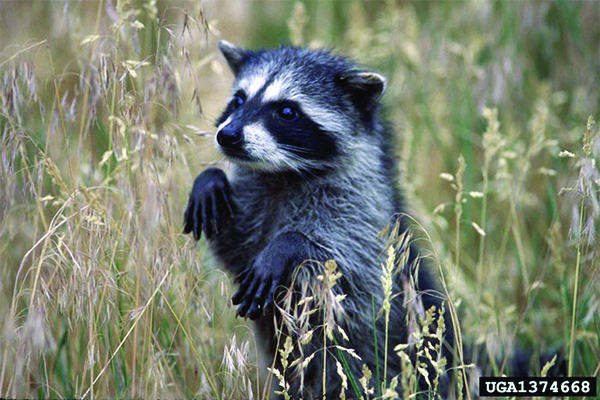
Raccoons (Procyon lotor) are native omnivores living throughout the United States (Figure 12). Raccoons are opportunistic animals, adapting to all sorts of environments. They can weigh as much as 50 pounds and, if they lose their fear of humans, can be aggressive. Deliberate feeding by well-meaning neighbors can cause populations to grow out of control. They can be serious pests in yards, gardens, and structures.
Raccoons are primarily nocturnal and eat a wide variety of foods. These masked raiders easily climb fruit trees and knock over corn stalks. They will readily tip over garbage cans and will roll up newly laid turf or dig holes in it to get at the juicy invertebrates underneath. In structures, they will invade unprotected crawl spaces and rip into attics, often destroying the insulation and leaving large quantities of odorous feces. The droppings, which are also left in yards, often contain the long-lived eggs of the “raccoon roundworm.” This parasite can be deadly to children if eggs are ingested. In eastern North America, raccoons are the primary vectors of rabies.
Management and Control
As with most native vertebrates, exclusion is usually the most effective and preferred way to minimize damage.
Barriers. A simple two-strand electric fence is usually sufficient to protect crops, landscapes, ponds, and gardens. The bottom wire should be about 6 inches from the ground with the top wire about 6 inches higher. Wooden, chain link, or strong chicken wire fences, with a strand of electrified wire stretched along the top and another near the bottom, are also effective.
To protect fruit trees, simple rodent guards, as suggested for squirrels, should be mounted on the trunks well before harvest time.
Deterrents. As a temporary measure to protect ripening crops, a radio playing in the garden may repel raccoons until the crop can be harvested. Place the radio in a garbage can or bucket lying on its side to protect it from rain.
Motion-activated sprinklers and lights can be effective deterrents, but raccoons may become accustomed to these devices within a short time.
A large dog patrolling a fenced yard is an excellent deterrent against most medium to large vertebrate pests.
Trapping. Raccoons may be cage-trapped and destroyed if they are damaging crops or domestic animals. Raccoons cannot be released away from the property where they were trapped without a special permit. Call your local WDFW office for more information. Research shows that most translocated raccoons die within a short amount of time.
Raccoons can be large, aggressive animals and trapping is probably best left to professional WCOs. WDFW offices keep a list of licensed WCOs on their website. Removal of animals is usually a short-term solution unless additional measures are taken, as raccoons are widespread and abundant.
Opossums
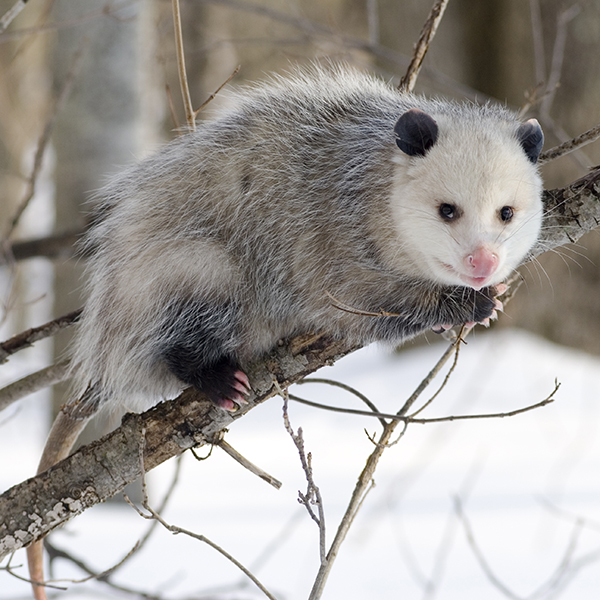
The opossum is the only marsupial native to North America. Female opossums, as with most marsupials, have an external pouch in which they carry their young. The Virginia opossum (Didelphis virginiana) is native to the eastern United States and was introduced to the Northwest in the 1930s. It has become a common animal in many areas. Opossums have a rat-like appearance with their pointed snouts and naked tails (Figure 13). Their fur is mostly gray, and they can grow up to 40 inches long and weigh up to about 14 pounds.
Opossums are quite solitary animals and feed on a wide variety of animal and vegetable material. They can be beneficial since they eat insects and other invertebrates including slugs and snails. On the other hand, they often raid hen houses, gardens, fruit trees, bird feeders, garbage cans, and bird nests. They will readily den under unprotected houses and sheds, causing damage similar to that of raccoons.
Management and Control
Management of opossums is generally the same as for raccoons. Exclusion is the best recommendation. If you want to use a cage trap, be aware that, as with most live-trapped wildlife, any captures must be either euthanized or released elsewhere on the same property, or on lands where you have permission and a WDFW permit to release the animal.
Mountain Beavers
The mountain beaver (Aplodontia rufa) is not really a beaver of any kind but is a unique mammal and the only member of its genus in North America. Mountain beavers are a very restricted species found only in the coastal areas, mountains, and foothills of British Columbia, Washington, Oregon, and California.
Known by several common names including boomer, whistler, Chehalis, and sewellel, this almost-tailless rodent resembles a giant moth-eaten hamster: 12–20 inches long and up to about 2 pounds with scruffy dark-brown fur, enormous whiskers, small eyes, and large digging claws. Mountain beavers usually live in or near wooded areas or damp ravines with abundant vegetation such as ferns, blackberry, and salal. This vegetarian rodent feeds on these and many other plants and trees.
These rather solitary rodents dig many shallow tunnels 4 to 8 inches in diameter and up to 3 feet deep throughout their territories. They feed on nearby vegetation and will sometimes cut and stack the material near their burrow entrances. They often destroy much more vegetation than they actually eat. In home landscapes, mountain beavers seem particularly attracted to rhododendrons, though they will readily feed on a wide variety of herbaceous and woody plants. They usually damage woody plants by clipping off stems and branches, leaving 2-inch stubs. Mountain beavers will often climb several feet into a shrub or tree to “prune,” or they may just cut down an entire shrub or small tree. They also sometimes strip the bark from the bases of larger trees.
Management and Control
Where only a few plants are being damaged, just enclosing the individual plants with 18-inch or taller wire mesh or sheet metal or aluminum flashing fence will often discourage feeding. Two-strand electric fences, with the bottom wire about 3 inches above the ground, should also work. To control more widespread damage, you can fence an entire yard with rabbit-proof fencing (such as chain link or chicken wire). Be sure the bottom of the fence is tight against the ground or even buried a foot or two. If boomers try to dig under the fence, place a 2-foot apron of fencing flat on the ground on the outside, pointing away from the yard, and securely attached to the bottom of the fence. Stake it down or cover it lightly with soil. Tilting the fence outward or installing it so the fence is loose and floppy can help prevent the occasional climber.
Most repellents have not proven consistently effective for reducing mountain beaver damage and there are none registered for such use.
Trapping. Mountain beavers can usually be cage-trapped but must then be euthanized or released elsewhere on the same property. Moving wildlife is not legal in Washington without a special permit from the WDFW. Mountain beavers’ burrow systems are occupied by only one animal and have numerous entrances. Just a few entrances are used regularly, so it is important to set traps only at active burrows. Use a rabbit-sized cage trap set directly in the main entrance of a mountain beaver tunnel system. Cover the trap with a tarp or burlap bag so the cage looks like a continuation of the tunnel. The cover helps direct the animal into the trap and protects it. Baiting the trap with pieces of apple, sweet potato, or some of the plant that the animal is attacking may make it more attractive.
Be aware that mountain beavers can die of hypothermia if temperatures dip below 50°F. To avoid inhumanely orphaning young, do your trapping after May.
Check with your local WDFW office for recommendations if you need to euthanize animals. Killing animals is distasteful to most people, so you may wish to hire a wildlife control professional (WCO) to handle these problems if you cannot live with, or otherwise deal with, pests. But be aware that good mountain beaver habitat is likely to attract new residents as fast as you remove the old residents.
Beavers
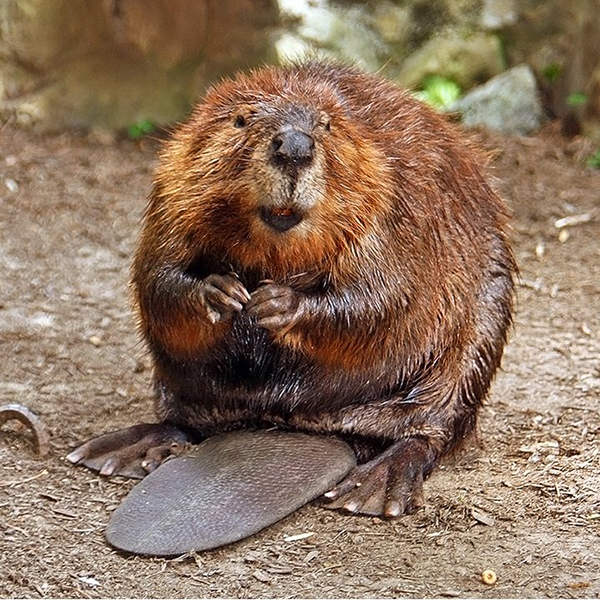
True beavers (Castor canadensis) are the largest of our North American rodents. They can grow to over 3 feet in length and can weigh over 60 pounds. This well-known, semi-aquatic rodent is common in lakes, creeks, and rivers throughout the Northwest (Figure 14).
Beavers are accomplished engineers and famous for their well-built dams and beaver lodges. Dams and lodges are not always present where beavers are living (beavers will also tunnel into stream banks), but the damage inflicted on trees and shrubs by the beaver’s huge incisor teeth is a positive sign that these animals are around. Beaver dams are beneficial to wildlife and the overall ecosystem due to positive hydrologic effects, but they can flood a considerable area and cannot always be tolerated. Where dams are causing problems, the water level can sometimes be altered by flow devices to keep flooding within reasonable limits. Installation of flow control devices (or removal of dams, which is generally a waste of time) requires a Hydraulic Project Permit from the WDFW. The WDFW can also provide information on design and installation of flow devices. Beavers Northwest is an organization dedicated to helping people live with beavers.
Management and Control
If beavers are damaging trees or landscape shrubs, there are several ways plants can be protected.
Barriers. Trunks of large trees and shrubs can be loosely wrapped with multiple layers of chicken wire, hardware cloth, or galvanized wire fencing at least 3-feet high. Be sure you monitor the trees as they grow or leave room for the plants to expand. Protect more slender trees with large-diameter plastic pipe: split 3-foot lengths of plastic pipe and fit them around the trunks. Use light-colored pipe because dark-colored plastic may cause overheating and damage young trees.
Large plantings can be protected with a variety of fencing. Four-foot field fencing, installed so that the bottom is tight against the ground, works well as does a 2-strand electric fence with the strands stretched at 8 and 12 inches off the ground.
Repellents. Repellents can be helpful in reducing beaver damage, especially if the animals are new to the area. Repellents are seldom 100% effective. Commercially available repellents containing egg solids or dried blood have shown some success but must be reapplied often.
Protective paint can be made by mixing 2/3 cups masonry sand with a quart of latex paint, which can then be applied to tree trunks. White paint can also help prevent sunburn of young bark during winter.
Removal or Lethal Control. If beavers must be removed, it is best to contact your local WDFW office to locate a professional wildlife control operator. Note: State wildlife offices do not provide animal removal services. In some cases, you may be allowed to shoot the offending animals, but removal is seldom a permanent solution as good habitats are usually repopulated by migrating beavers within a couple years.
Deer and Elk
Several species of deer and elk occur in Washington. They are usually highly valued as game animals and watchable wildlife, but in garden or orchard situations, they can cause a great deal of damage to a wide variety of plants.
Members of the deer family feed on many kinds of woody and herbaceous plants. Most serious damage occurs when they browse woody landscape plants, fruit trees, and crops. Members of the deer family lack upper incisors, so their browsing damage leaves ragged tips. Rabbits and rodents, on the other hand, leave clean cuts with their sharp incisor teeth.
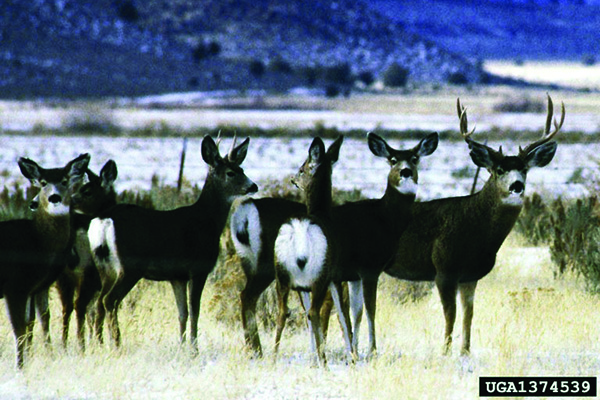
In general, black-tailed deer (Odocoileus hemionus columbianus) live on the west side of the Cascades and mule deer (O. h. hemionus) are found on the east side (Figure 15), but there is some hybridization in the Cascades. White-tailed deer (O. virginianus idahoensis) also live in most of eastern Washington and dominate habitats in northeastern Washington. An endangered subspecies, the Columbian white-tailed deer (O. v. leucurus) lives along the lower Columbia River. White-tailed deer are easily identified by their brown and white bushy tails, which are used as alarm signals. Mule deer have smaller tails with black markings. All of these species will occasionally hybridize.
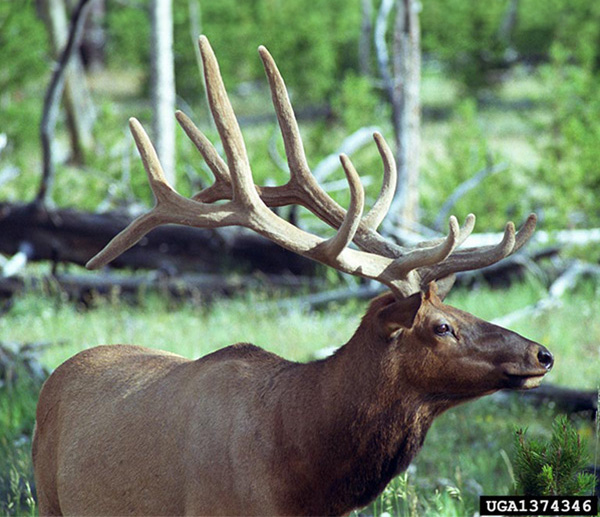
Two subspecies of elk (Figure 16) also occur in Washington. The Rocky Mountain elk (Cervus canadensis nelsoni) is found in many eastside areas. The Roosevelt elk (C. canadensis roosevelti) lives west of the Cascade crest. Moose (Alces alces) are found in a few places in eastern Washington, but they are very rarely a problem.
Management and Control
Feeding and population pressure will dictate how aggressive your management methods must be. The more animals there are in an area, the more food they require and the more appetizing your garden or landscape will look to them.
Barriers. Deer and elk damage is most effectively controlled by fencing off vulnerable plants. Where feeding pressure is light, simple electric fences baited with peanut butter may be adequate. (The peanut butter bait entices animals to lick the wire, thus getting a shock which teaches them to stay away.) In areas where damage is common, expensive 8-foot, woven wire or high-tension electric fencing may be needed. It is very important that fences be flagged or otherwise visible, at least for the first several months, so that animals see them and don’t accidentally stampede through them.
If browsing damage is occurring on just a few scattered plants, individual fences made with welded wire mesh can be placed around each one. Plastic mesh tubes or netting is effective for protecting young seedlings. The lush, tender leaders of young conifers can be protected by fastening simple conical caps over the growing tips until the leaders grow out of browsing range.
Repellents. If fences are not practical, repellent products may help reduce damage. Commercial deer repellents made from animal material, such as dried egg solids and dried blood, are usually most effective, but other repellents also work quite well if feeding pressure is not high. Repellents must be reapplied periodically, especially after heavy rain. Be sure to read and follow all label directions. Repellents work best if they are applied before serious damage takes place. If animals habitually feed in the area already or if populations are high, repellents are less effective. Repellents are problematic in that they must be repeatedly deployed or they will not work.
Frightening devices can also be effective. Motion sensor sprinklers or lights can protect small areas and, like most scare devices, work best if they are moved often. Combining strategies, such as using repellents in combination with frightening devices, is more effective than relying on a single method.
Cultural Controls. Replacing susceptible plants with less tasty varieties is another option. There are many lists of landscape plants that are somewhat resistant to deer and elk damage to varying degrees. Note that even some of these “deer proof” plants may be browsed if feeding pressure is high. You can also try planting extra plants and accept that some plant mortality is inevitably.
Lethal Control. If damage is serious and your land is in an area where hunting is allowed, you might consider opening your land to responsible hunters. Reducing the local population will reduce feeding damage but ultimately will not cure the problem as most animals will be replaced by new ones.
Bats
Bats are unique and amazing animals. They are the world’s only true flying mammal and are beneficial to farmers and gardeners due to their eating habits. Bats eat problem insects, such as mosquitos and other flying insects, and in tropical areas, some species help with pollination and seed dispersal. However, as a result of loss of natural habitat, bats sometimes cause problems when they inhabit attics and wall voids. While roosting bats don’t usually cause any structural damage, homeowners often dislike the mess and the noises they can make. Large colonies deposit quantities of guano (feces), and some may carry ectoparasites and therefore may represent a health hazard. Furthermore, the occasional rabid bat can transmit rabies if it happens to bite another mammal before dying of the disease itself. For this reason, people should never handle a live bat with bare hands, especially if it is fluttering on the ground or otherwise acting abnormally. Children, especially, should be warned. If you are bitten or scratched, or if you find a bat in a room with a child or sleeping adult, capture the animal with the head intact and contact your local health authorities. Also be sure your dogs and cats are vaccinated against rabies on a regular basis.
There are at least 15 species of bats in Washington, but the little brown bat (Myotis lucifugus) is the one that usually causes problems in buildings. These animals are typically highly colonial, and colonies may include several hundred individuals. The young bats are born in June or July, one per female, and can live at least 30 years.
The way to prevent a bat problem in a building is to close all possible entry points. The smaller bat species can enter cracks as narrow as 3/8-inch wide, so older structures may be impossible to bat proof. Bat Conservation International (opens in new window) and Bats Northwest (opens in new window) have good information on how to deal with bats in buildings. Bats are generally not a problem.
Bat Proofing
Before proceeding with a bat proofing program, you must first evict any bats present. To begin, spend some time on warm evenings investigating where the bats are coming out. There may be several entry points. Next, hang ¼-inch mesh or smaller bird netting or screen loosely over the entrances. Fasten it to the wall on the top and sides (duct tape works well for this) and leave the bottom loose a foot or so below the opening. Bats will be able to fly out (or rather, fall out and fly away) but will not be able to get back in. In places where netting will not work, one-way bat tubes can be made from plastic pipe, a few inches in diameter, and taped over openings so they hang vertically downward. To prevent young, flightless bats from dying inside the house, do your bat proofing before May or after August. Consider putting up bat houses nearby to give the animals a place to go. This may help prevent them from looking for other ways back into the building.
It may take up to three or four days for all the bats to leave the building. After they are out, close any large openings in the building with wood, sheet metal, or small-mesh screening (¼-inch or smaller). Caulk small cracks and gaps in walls and roofs. Other possible fillers include copper or stainless steel wool, galvanized window screening, or expanding foam insulation. Be sure the foam has time to dry before bats become active so they won’t get stuck in it. After evicting the resident bats, remove the guano and use it for fertilizing the garden. Mask any lingering indoor odors with aerosol deodorants or odor-killing disinfectants.
Birds
Numerous bird species can cause problems in yards and gardens. Some cause aesthetic or economic damage by their roosting, nesting, or feeding habits. Some of the most common problem birds include crows, robins, woodpeckers or sapsuckers, starlings, non-native pigeons (European rock doves), house (“English”) sparrows, and geese. Many species of birds are protected by state or federal law, so managing them can present special problems. For instance, robins are federally protected. Any permit to lethally control these species would need to be issued from the US Fish and Wildlife Service and would likely only be issued in very extreme cases.
Management and Control
Some bird species leave large quantities of feces in areas where they roost or nest. Bird droppings are not just unsightly but can damage painted surfaces, machinery, and animal feed; they can also present possible disease hazards to humans, pets, and livestock.
Barriers. Birds that cause problems with their roosting habits can be discouraged by obstructing the roost site. A variety of barriers are often effective. Ledges can be protected with solid, 45-degree barriers of wood or sheet metal, or with wire or plastic “porcupine wires.” Tightly stretched wire or heavy monofilament arranged a couple of inches above the roost site can also prevent birds from using ledges and roofs as roosts.
Wire or plastic barriers, bird netting, screens, and other devices can help prevent unwanted nests in buildings. Once nesting has begun for the season, it is illegal to disturb the nests of native species, so prevention is the best route. For any birds, though, you can remove all old nests and then screen or seal any vulnerable openings well before nesting season. Plastic bird netting is not strong enough to keep out starlings, so use something sturdier for these pests.
Deterrents. Crows can be a serious nuisance if there is a communal roost near houses. Hundreds or even thousands of crows may use such roosts daily and create an unbearable racket when they gather. Accumulations of droppings and possible associated diseases can also be a problem. A combination of scare devices, netting, and continued harassment may encourage them to relocate, but persistence is essential. Thinning up to half of the limbs of the roost trees can also discourage roosting. Lethal control (shooting) may be used if large numbers of crows create a nuisance or destroy crops, but even that may not solve the problem. Check with the WDFW before attempting any lethal control.
Scare devices, such as Mylar strips, balloons, motion detectors, or hanging aluminum pie pans, are often used to limit damage. One method to repel house-attacking woodpeckers in particular is to hang three-foot-long mylar strips or bird netting from the eaves so it dangles a few inches from the side of the structure.

Preventing Tree and Crop Damage
A few species of woodpeckers, called sapsuckers, harvest sap from thin-barked trees. They peck small holes into the trunks in neat, horizontal rows (Figure 17), and the sap is periodically licked up. Gardeners usually see the tell-tale horizontal rows of “sap wells” in the bark and often think the trees are being attacked by beetles. These sap wells seldom cause permanent injury, but the scars are unsightly (or fascinating, depending on your point of view). Hummingbirds will also sip the sap from these wells in the early spring. If scarring is severe, trees can be protected by loosely wrapping the affected areas with ¼-inch galvanized hardware cloth, mesh netting, or burlap, or by using a combination of scare devices.
A few bird species can damage a variety of tree fruit and berry crops, most commonly including cherries, strawberries, blueberries, apples, sweet corn, grapes, and hazelnuts.
To reduce damage:
- Plastic bird netting is a very useful tool for protecting low-growing berry bushes and dwarf fruit trees. The netting must be closed around the trunk or reach the ground to prevent birds from attacking from below.
- Netting or cages can be used to protect strawberries, sweet corn, and other crops. Corn plants must sometimes be covered from the moment they are seeded until they are at least eight inches tall, and then again when the ears start to ripen.
- A variety of scare devices, including old-fashioned scarecrows, hanging reflective strips, flags, and balloons, can reduce damage. To be most effective, these devices must be moved often to prevent desensitization.
- Sonic devices that broadcast alarm calls are effective for the particular species making the call. These units are mostly for commercial use, as they are expensive and very loud. Other sonic devices have not been proven effective.
- Trapping may be used for control of non-native birds (e.g., English sparrows, starlings, and domestic pigeons). Trapping is labor intensive and usually not effective. Trapping may be able reduce local populations to an acceptable level if there are only small numbers of pigeons or English sparrows present. Specific kinds of cage traps must be used, and captured pest species must be euthanized. Native birds must be released.
Many birds, including some game birds such as pheasant, turkey, quail, and grouse, cause damage in vegetable gardens when they stop by for a dust bath. While these visitors may help manage invertebrate pests in the garden, dust baths can cause damage. Birds roll around in dry, bare soil as part of their grooming to rid themselves of mites and lice. Bathing birds wallow in the dirt, creating dust bowls, uprooting small plants, and throwing enough dirt to cover surrounding vegetation. After bathing, birds often linger to peck, snack on, and ruin nearby fruit and vegetables, such as tomatoes. Discourage dust bathing by covering as much of the bare garden soil as possible—a thick layer of grass clippings or straw mulch works well. Before adding a mulch layer, review Chapter 19: Weeds and Weed Management and Chapter 6: Composting for information on avoiding weed seed or herbicide contamination from clippings or straw. In areas of high abundance, turkeys can be particularly problematic and will require diligent efforts at fencing and harassment.
Dogs and Cats
Free-roaming pets can sometimes cause physical or aesthetic damage to landscape and crop plantings. Not only is it unsightly to have the neighbor’s dog defecate on the lawn but pathogens and parasites can be spread in that way. Likewise, free-roaming cats defecating in gardens can present health hazards. Cats will also sometimes damage thin-barked trees with their claws.
Management and Control
As with many animal problems, “good fences make good neighbors.” A well-fenced yard or garden will prevent most domestic pet conflicts. A tall chain link or solid board fence will keep out most dogs, but cats may climb or hurdle such a barrier. A single strand of electrified fence wire along the top (if allowed in your municipality) may further deter an acrobatic cat.
If a fence is not practical, a motion detector-type sprinkler (Scare Crow) can be effective for protecting small areas, or the offending animals may be harassed by spraying them with a garden hose or “giant soaker” squirt gun when they trespass.
Deter cats that use your garden as a toilet by putting down a layer of chicken wire, pegging it down securely, and covering it with a thin layer of mulch.
Finally, various commercially available dog and cat repellents, labeled for home use, can offer some protection.
Further Reading
Antonelli, A.L., C. Black, T.L. Whitworth, C.R. Foss, C.A. Ramsay, and D.A. Suomi. 2014. Pest Management Study Manual for Pest Control Operators (opens in new window). Washington State University Extension Publication MISC0096. Washington State University.
Bats Northwest. 2020. Bats Northwest Home (opens in new window).
DeCalesta, D.S., K. Asman, and N. Allen. 2003. Controlling Pocket Gopher Damage to Conifer Seedlings (links to PDF document). Oregon State University Extension Publication EC1255. Oregon State University.
Ghidiu, G., and G. Vasvary. 1992. Ultrasonic and Subsonic Pest Control Devices (opens in new window). Rutgers Cooperative Extension Publication FS609. Rutgers University.
Gunn, D., R. Hirnyck, G. Shewmaker, S. Takatori, and L. Ellis. Meadow Voles and Pocket Gophers: Management in Lawns, Gardens, and Crops (links to PDF document). Pacific Northwest Extension Publication PNW627. University of Idaho.
Holtfreter, R, and J.H. Creighton. 2004. Non-lethal Methods for Controlling Deer Damage. Washington State University Extension Publication EB1976E. Washington State University.
Hygnstrom, S.E., R.M. Timm, and G.E. Larson, eds. 1994. Prevention and Control of Wildlife Damage (opens in new window). University of Nebraska-Lincoln.
Link, R. 2004. Living with Wildlife in the Pacific Northwest (opens in new window). Seattle: University of Washington Press.
MacMillan, P., and A.J. Detweiler. 2008. Deer-Resistant Plants for Central Oregon (links to PDF document). Oregon State University Cooperative Extension Publication. Oregon State University.
Olson, S., K. Lamson, M. Omeg, B. Tuck, S. Kerr, and E. Hammond. 2012. Attracting Birds of Prey for Rodent Control (opens in new window). Oregon State University Extension Publication EC1641. Oregon State University.
Pehling, D. 2010. Dave’s Favorite Vertebrate Management Links (opens in new window). Washington State University.
Pehling, D. 2014. Mole Management in Washington Backyards (opens in new window). Washington State University Extension Publication FS146E. Washington State University.
Pehling, D. 2014. Pests: Vole Management in Home Backyards and Gardens (links to PDF document). Washington State University Extension Publication FS094E. Washington State University.
Pehling, D. 2016. Rabbit and Hare Management in Washington Home Yards and Gardens. Washington State University Extension Publication FS231E. Washington State University.
WDFW (Washington Department of Fish and Wildlife). 2005. Living with Wildlife, Trapping Wildlife (links to PDF document).
WDFW (Washington Department of Fish and Wildlife). 2022. Living with Wildlife (opens in new window).
WDFW (Washington Department of Fish and Wildlife). 2022. Priority Habitats and Species (PHS) (opens in new window).