Climate Change
and Gardening
Katie Doonan, Extension Coordinator, Tree Fruit Research and Extension Center, Washington State University
Chad Kruger, Director, WSU Tree Fruit Research and Extension Center (TFREC) and Center for Sustaining Agriculture & Natural Resources (CSANR)
Introduction
We hear about climate change almost daily, but usually in reference to an abstract or intangible future. While the future effects of climate change will be extensive, shifts within current climates and weather patterns already demand action. The weather and climate dictate many of your choices in gardening, especially in what to plant and how to grow it. Since a plant must endure the conditions of the environment around it, your job is to make the environment as hospitable as possible for the conditions you expect to see. As experienced gardeners with years of practice in evaluating plant success and adjusting inputs to new information, you already have many of the skills needed to adapt to climate change challenges. This chapter will prepare you for projected impacts over the next years, give you a lens to evaluate your garden and region under climate change, and outline further action to take in mitigating impacts.
As a reminder and disclaimer: climate science is constantly evolving and prone to change. These recommendations are based on the currently available science and modeling. Available scientific studies are limited and may only address certain regions of the state but can still be helpful resources to draw from in your area. While this chapter provides general guidance and background for Washington State climate considerations, be sure to also reference local resources and talk to your Extension office for the most specific and up-to-date information.
“Climate is what you expect.
Weather is what you get.”
—Amy Snover, Director of UW Climate Impacts Group
Climate Change Factors for Plant Growth
To understand how climate change affects plant growth and your garden, it is important to have a basic understanding of your region and the climate factors that will be most prominent with changing conditions.
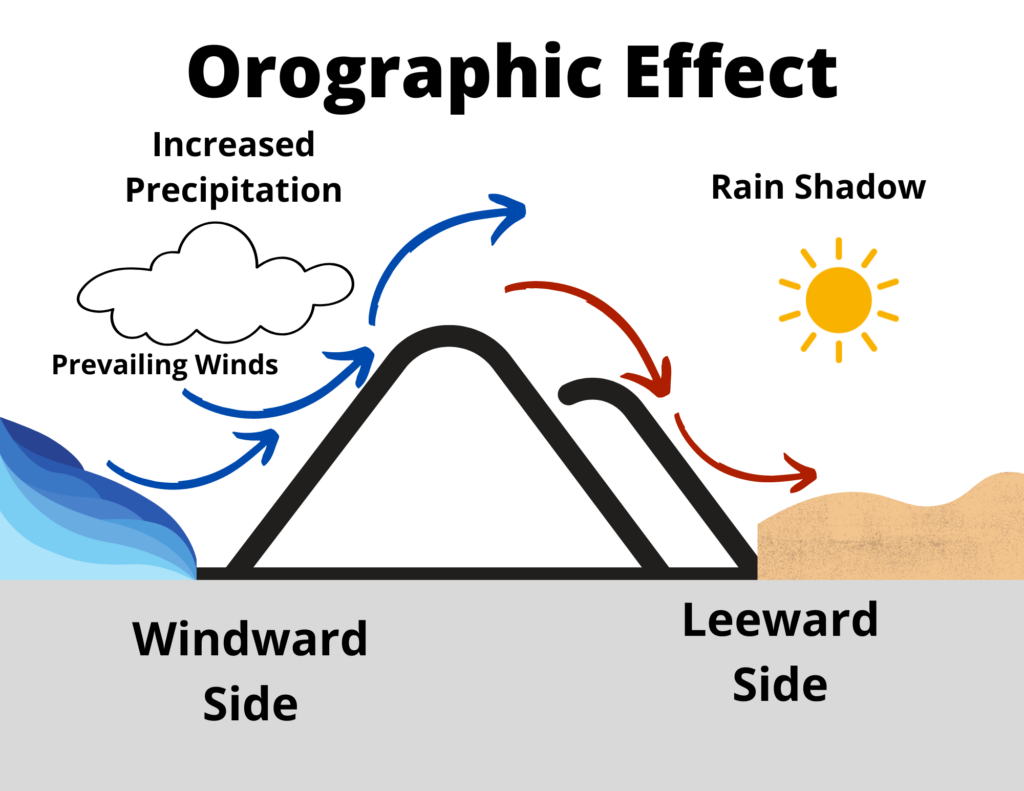
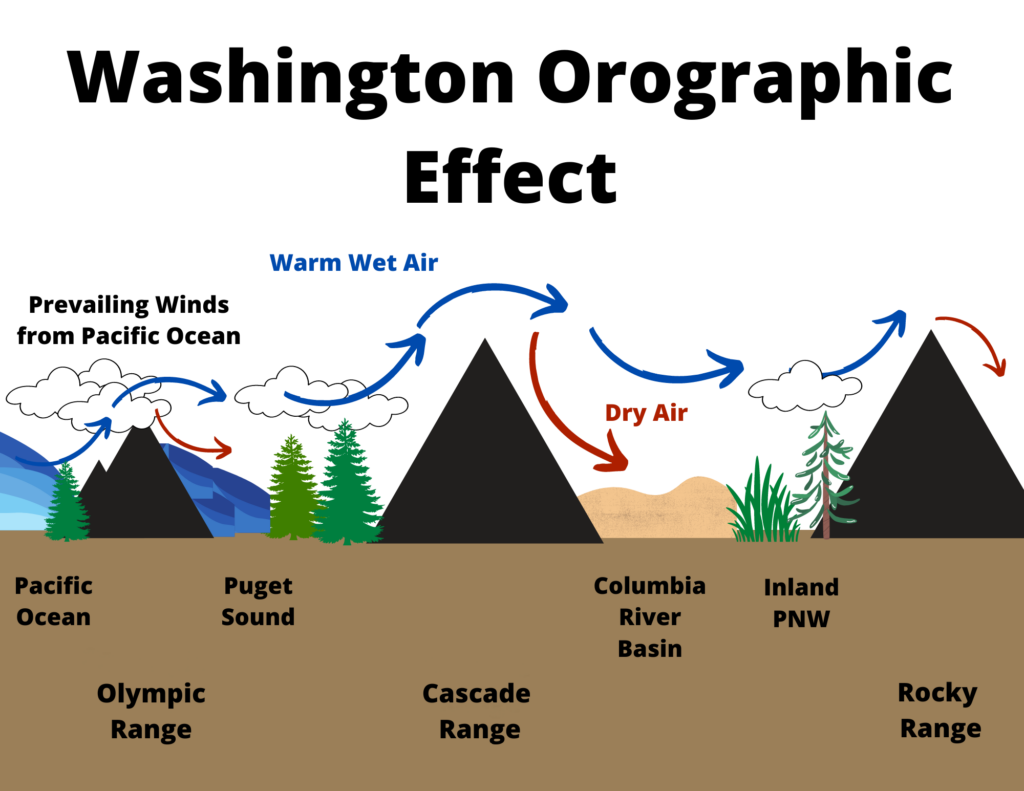
The Pacific Northwest (PNW) enjoys a Mediterranean climate, with warm, dry summers and cool, wet winters—geographic features do influence the intensity of this pattern though. The region’s climate is dominated by two major geographic features: the Pacific Ocean to the west and the Cascade Mountain Range that splits the region into the western coastal areas and the eastern interior. The Pacific Ocean influences the temperature of the coastal lowlands, moderating both the summertime high temperatures and wintertime low temperatures that would otherwise be expected at these relatively northern latitudes. Further, the Pacific Ocean circulation interaction with the atmosphere creates the region’s wet winter–dry summer cycle. The Cascade Mountains (and similarly the coastal mountain ranges such as the Olympics in the western portion of Washington) create a significant “rain shadow” effect, shown in Figure 1 and Figure 2, causing moisture laden weather systems moving in from the Pacific Ocean to drop most of their precipitation over the western portion of the region, leaving the east slopes of the Cascades and much of the interior PNW quite dry. A similar effect is observed with the influence of the Rocky Mountain Range, as the western front experiences significantly more moisture than the rain shadow of the east.
Though winter precipitation generally occurs in abundance, all areas of the PNW region experience a soil moisture deficit during the summer growing season. Even the coastal rain forests can experience several weeks of deficit when soil moisture levels get low enough to create plant stress, but the deficit is greatest in the immediate rain shadow of the Cascades where potential evapotranspiration often exceeds available water by five to ten times. The eastern front of the Cascades (and, to a lesser extent, the Olympics) relies on increased water storage as that region receives less overall rainfall. Because of this natural growing season moisture deficit, native vegetation evolved for this climatic regime and is tuned toward plants that are successful living and reproducing primarily from stored soil moisture. Humans more recently adapted to this PNW climate regime in part by harnessing the significant reservoir of water stored in the winter as mountain snowpack, which then melts and runs off down streams and rivers slowly to serve our water needs throughout the long, dry summers.
PNW Temperature
When you think of climate change, rising temperatures are often the first thing that comes to mind. The majority of human-generated climate change is attributed to increasing emissions of greenhouse gasses, including carbon dioxide, methane, and nitrous oxide. Similar to a greenhouse that traps light energy with an insulating agent like glass and turns light energy to heat, these gasses act as insulation within the atmosphere. More radiant heat from light energy becomes trapped and is projected back to the Earth’s surface as shown in Figure 3. As these gasses continue to accumulate with human-driven activities, the temperature gradually rises and contributes to consequent changes in weather and hydrologic cycles.
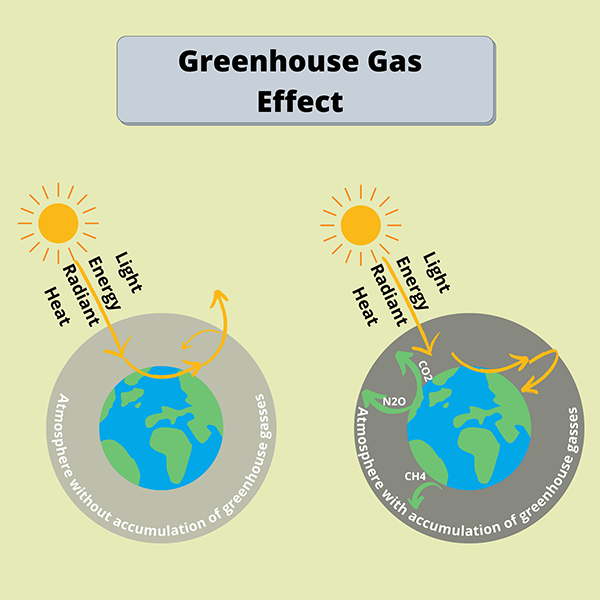
Figure credit: Katie Doonan.
As it currently stands, the average annual temperature has already risen by almost 2°F since 1900 due to human attributed warming. By using complex climate modeling systems (discussed further in the Climate Modeling sidebar), climate scientists have high confidence that temperatures in the Pacific Northwest (PNW) will continue to rise, but questions remains how much they will rise and over what length of time. For gardeners, it is important to understand that the projected warming ranges from 2°F to 8°F by 2050 for the PNW, which is more than double the historical warming trend. Studies often present projected warming as average annual temperatures across a set of modeled climate scenarios (e.g., 4°F), but it is also important for gardeners to note that warming is projected to increase within all seasons in the PNW. While a few degrees may not sound like it would make a difference in your day-to-day weather, the range of potential change in the PNW has potentially significant long-term impacts. In the Cascades, as shown in the Natural Variation vs. Climate Change section, just a few degrees make up the difference between sufficient mountain snowpack and a snow drought for the year. This presents problems on both the eastern and western fronts, with late-season drought and early-season flooding becoming more prevalent. The more the temperature shifts, the more uncertainty exists within the environment.
Natural Variation vs. Climate Change
Natural variability (otherwise known as interannual climate variability) is a large influence in short-term climate, especially with the buffering effect of the Pacific Ocean in the PNW. The PNW’s climate experiences two major influences—the El Niño Southern Oscillation (opens in new window) (ENSO) and the Pacific Decadal Oscillation (opens in new window) (PDO). ENSO, which is correlated with sea surface temperatures in the Central Pacific, is more noticeable as the cycle shifts quite frequently and can significantly impact the mountain snowpack, water availability, and flooding. El Niño usually brings warmer, drier winters and La Niña usually brings cooler, wetter winters. There is a third ENSO phase, neutral, (neither El Niño nor La Niña) that also occurs but is mentioned less often. The ENSO cycle has a profound effect on the PNW hydrologic cycle because winter average temperatures at critical elevations in PNW mountains hover close to the freezing point. A few degrees above average temperature can dramatically change the winter snowpack. Neutral ENSO years are less predictable and have included high and low snowpack years for the PNW. The PDO cycles over a longer period, with warm cycles and cool phases impacting inland climates.
El Niño and Warm Phase PDO: PNW typically experiences warmer and drier winters.
La Niña and Cool Phase PDO: PNW typically experiences cooler and wetter winters.
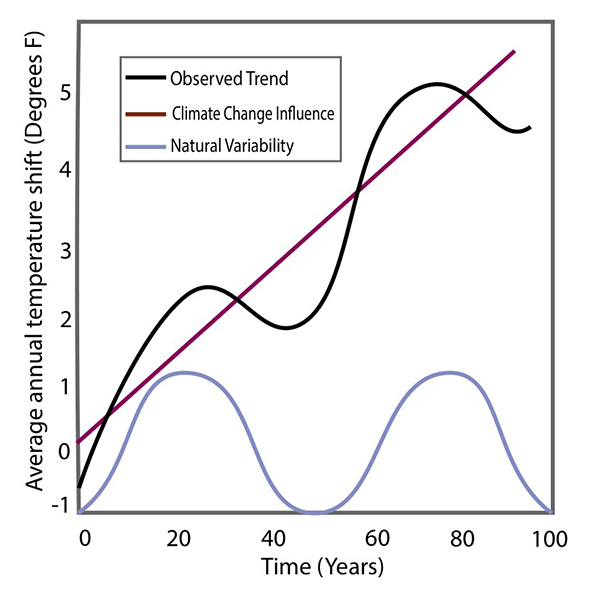
How do scientists tell the difference between temperature fluctuations due to climate change and those due to natural variability? As Figure 4 depicts, the climate change and natural cycles interact over time, with climate change increasing the base temperature threshold. Though it may feel cooler outside due to a natural cycle, climate change presents an upward trajectory for the base annual temperatures. Natural variability is felt over the short-term, while climate change is a long-term intensification.
The changing temperatures due to climate change increase instability and intensity of weather events, with increased temperatures often leading to unstable storm systems. The instance of heat waves and droughts will likely increase with the changing climate, especially within the growing season. As we discuss later in the chapter, heat waves can be detrimental to plant growth, especially at key points in development. For food producing plants, this can lead to reduced yield or no yield and the aesthetic value of ornamental plants may be greatly reduced. These factors, and the interaction between them, can increase the amount of uncertainty a gardener will face during the gardening season and force new management strategies to be considered.
Now that you are familiar with the Pacific Northwest’s climate history and trajectory, we can discuss how these factors may impact future gardens and landscapes.
Temperature and Plant Growth
Temperature influences plant growth by changing the rates at which plant biological functions occur. Many plant biological functions occur as chemical reactions, for which increased temperature will generally speed the rate of reactions. Lower temperature will typically decrease the rate of reaction. For example, the rate of photosynthesis increases in proportion to the increase in temperature until it reached the heat stress threshold temperature. Temperature’s relationship to growth guides many of the following interconnected processes and is a major factor in determining the impact of climate change on gardens.
Phenology
Plants have key phenological (opens in new window) stages within their development, where the plant relies on the environment to provide a signal to enter a different developmental stage (e.g., bloom) by changing the rate of their biological processes. These phenological stages may occur at different points in the year, last longer, or grow shorter under future climate change due to environmental signal change (e.g., growing degree days). A range of online forums exist for gardeners and people interested in changing phenology to participate in citizen science and record, share, and learn from data on shifting phenological stages throughout regions and even across the country.
Vernalization
Some common garden plants, especially flowering plants, require vernalization (opens in new window). Vernalization is a required cooling period for a bulb, seed, or tree to undergo over the winter to trigger germination or bloom in the spring. Examples of this include tulips, daffodils, apple trees, and some biennials such as carrots. In a similar fashion to growing degree days, vernalization requires a certain number of days under a threshold temperature to accumulate chilling hours in order to develop. The threshold and number of days required are different for each specific plant. Rising winter temperatures may decrease the number of chilling hours available to a plant, which would functionally reduce spring germination.
Climate Modeling
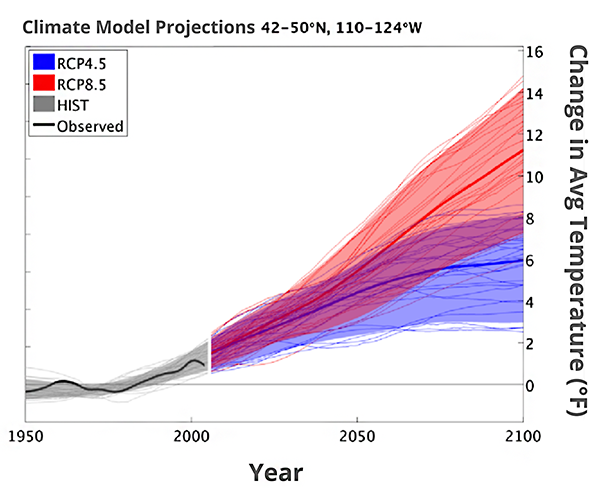
In order to assess how increased emissions will affect the environment, climate scientists utilize sophisticated climate models. These models calculate the impact of various climatic factors according to a set of prescribed “what-if” scenarios based on future projections of atmospheric greenhouse gases known as Representative Concentration Pathways (RCPs). While these models are a simplification of global or regional climate systems, they are quite sophisticated and account for many key variables that enable them to be used to guide decisions for policy and management, and even in creating resources for farming and gardening. Climate models show us that while there is a great deal of uncertainty in how high atmospheric carbon dioxide concentrations and temperatures may get, there is consensus amongst models that we will deal with increased temperatures.
All Global Climate Models (GCMs) used in the Intergovernmental Panel on Climate Change’s (IPCC) 5th Climate Model Intercomparison Project (CMIP5) anticipate warming temperatures in the PNW for all RCPs over the next few decades as shown in Figure 5. The only difference is how much warming they project. For RCPs 4.5 (moderate warming pathways) and 8.5 (more extreme warming pathways) the projected warming ranges from 2°F to 8°F by midcentury. That is significant—especially given the discussion above regarding ENSO where a few degrees of warming can result in the difference between adequate or insufficient mountain snowpack, instances of significant spring flooding, and even severity of summer wildfires.
In addition to warming in average annual temperatures, the CMIP5 projections indicate that the PNW is likely to see warming in all seasons of the year, but again with a very broad distribution of potential amounts of warming even by midcentury.
To overcome the limitation of vernalization in warmer climates, many gardeners rely on artificial vernalization. For plants that require a longer cooling period than your natural climate provides, you may refrigerate the seeds or bulbs to simulate winter chill conditions. The length and temperature vary by species, but this can be a valuable tool to overcome vernalization challenges in your favorite species as winters shorten.
Growing Degree Days
Growing degree days (GDD) are a way to assess the available growing season for a plant. Degree days measure the number of days throughout a season that the temperature is above a certain threshold necessary for plants to grow (accumulate biomass) or transition into a new phenological stage. The base temperature threshold is generally dependent on plant type. In counting GDD for corn, for example, we use a base temperature of 50°F. For each day that the average temperature is at or above 50°F, corn growth can occur, and a degree day can be counted. However, more degree days are allotted to warmer days, as there is more heat accumulation. If the temperature is below 50°F, the calculation would be negative, so no degree days are given.
Example Growing Degree Day Calculation:
Average Daily Temperature (F) – 50 = # of Growing Degree Days
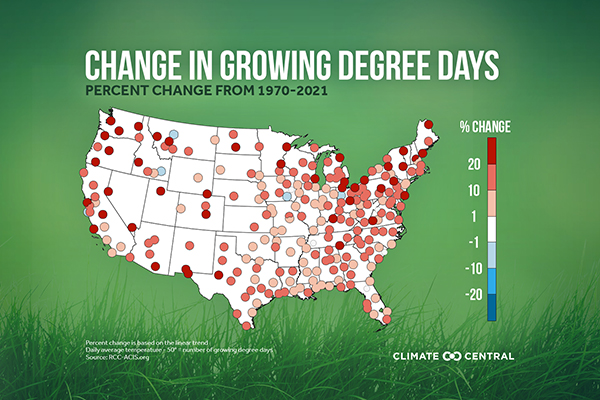
Increasing temperatures may shift the start of the growing season earlier, but also increase the rate of GDD accumulation, leading to the changes shown in Figure 6. This enables plants to start growing sooner but also to reach maturity more quickly, functionally shortening the actual growing season. Determinate plants, like determinate tomatoes, may see the end of their growing season much sooner than previous years. The length of time for all the fruit to ripen may also diminish, leaving a shorter and quicker harvest of tomatoes. For indeterminate plants, however, you may see a longer period of growth and harvest because they can produce fruit indefinitely throughout the (extended) growing season.
Warming temperatures may also increase the number of degree days allotted throughout a growing season, lengthening the potential growing season for some crops that can take advantage of a longer window to grow. The faster rate of GDD accumulation and higher threshold temperatures may subject plants to more heat stress throughout the season. While increasing GDD is generally beneficial for the northern latitudes in plant growth, the increased number of GDDs also benefits weed and insect pests. As garden plants accelerate growth, so will weeds, insects, and other pests—discussed in more detail later in this chapter.
Extended Growing Season
An extended growing season may be a potential benefit of climate change, but it is not without drawbacks. For much of the northern latitudes that have cooler temperatures and longer frost potential in the winter, the warming may allow for growing season extension. Unlike the southern latitudes that are already on the verge of heat stress where warmer temperatures may act as a growth inhibitor, the northern latitudes will see an earlier frost-free period and more suitable growing temperatures. This allows gardeners in the northern latitudes to plant annuals, including vegetables, earlier in the season with less fear of frost damage. As northern latitudes become more temperate, there may be an increase in the survival and success of temperate fruits and vegetables such as melons and beans. However, a greater risk of frost damage occurs with perennial plants flowering before the last of the hard frosts. If frost damage occurs, there can be reduced productivity for that entire growing season.
One major drawback to an extended season with increased temperatures is the impact on fruit and vegetable quality. The increased temperatures allow for crops to grow faster, which means they reach maturity sooner. While this allows for early harvest, the rate of maturation may be suboptimal for the timing of ripening or for the ripening mechanisms within the fruit. The more time a crop is allowed to grow and develop, the more time they have to accumulate sugars and form organic compounds, including flavor compounds and nutritional macromolecules. In some cases, the flavor profile of the fruit is also affected by temperature signals. Late maturing apple varieties, for example, set sugar best after the first freeze. If they hit the degree day accumulation too early, they do not develop the same flavor profile that they would if their degree day accumulation occurred after the first freeze. In order to compensate for the rapid development to maturity, it may be necessary to switch seed or stock to a slower maturing variety.
Many gardeners rely on transplanting vegetables, especially those that may have a longer growth period than the region’s outdoor growing season allows. Starting seeds inside gives these plants a head start in growth for the season. This also gives your garden plant a head start against weeds and insect pests, as your plants may surpass their vulnerable damage period by the time they are planted. Transplanting may become an increasingly important way of maintaining high quality by allowing for a longer growth period and maintaining a competitive edge against weeds and pests.
Heat Stress
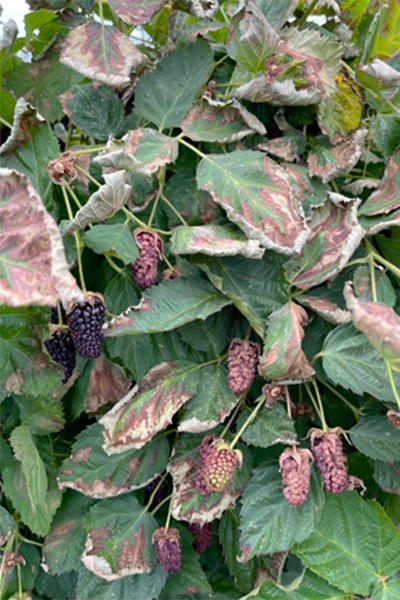
Heat stress affects garden plants when the temperature rises above the plant’s optimum growing temperature, especially at those key, temperature-driven stages of phenological development. In tomatoes, heat stress may cause a host of problems, including wilting, leaf curling and senescence (such as that shown in Figure 7), delayed fruit set, early ripening, and decreased fruit growth. These issues all contribute to decreased yield of the tomato fruit and reduced overall health of the plant. Heat stress is typically a problem in regions where summer temperatures reach from 95°F to 105°F but may become an issue for some shrubs and trees at approximately 85°F.
Right plant, right place is key when planning gardens for your region, especially if you have a risk of heat stress. As climate change impacts are being felt across the state, rising temperatures may move your planting zone into a heat stress threshold that did not occur previously. Planning for heat stress and planting heat tolerant plants will be especially important if you are on the edge of those temperature ranges, especially if you are planting long term perennials such as trees and shrubs.
PNW Precipitation
Climate model (CMIP5) projections for precipitation in the PNW are more mixed than the temperature projections, with the average of the projections indicating a slight increase in total precipitation and an intensification of our existing precipitation pattern (wetter in our wet winters, drier in our dry summers). When considering the current magnitude of precipitation deficit during the active plant growing season, functionally speaking, the projected changes to growing season precipitation make this a relatively minor consideration for future climate in the PNW. When you consider how dry our current summers already are, a little bit drier doesn’t really change much.
However, in a striking departure from historical conditions, the increasing temperatures lead to a greater proportion of winter precipitation falling as rainfall rather than snowfall, mainly in low-elevation and snow-dependent areas. Snowmelt is also projected to occur earlier, especially in these low-elevation regions. Together, these two factors contribute to lower overall snowpack and earlier spring runoff in our rivers. Spring and summer snowpack runoff is the major contributor to streams, rivers, reservoir, and even aquifer recharge. Without it, we will have less water to meet both out-of-stream water needs (including for agriculture, residential, and lawn/garden uses) and in-stream needs for fish, hydropower, and recreational use. With sudden river and reservoir influxes rather than the historically gradual inflows, the likelihood of springtime flooding dramatically increases, which is an especially relevant issue for western Washington population bases.
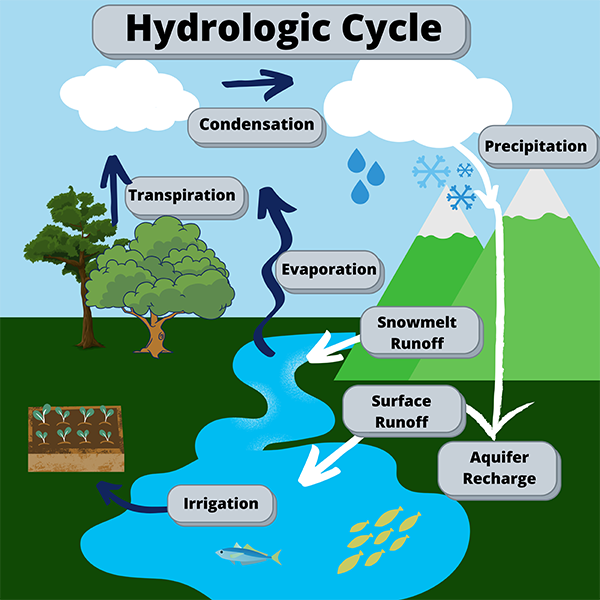
Even in areas where forecasts indicate that annual precipitation will likely increase due to climate change, changes in seasonal water distribution is concerning for water demand later in the dry summer season. Generally, as temperatures continue to rise, there is a greater potential for evaporation of water from the soil surface and for the atmosphere to hold more water. Plant water stress increases with less water available to access within the soil. Meanwhile, increased moisture holding capacity in the atmosphere may lead to more extreme precipitation events. Instead of soil infiltration, intense precipitation events are more likely to cause pooling, runoff, and erosion. The promotion of soil health and water conscious practices like mulching will become even more important to capture precipitation when it occurs and maintain soil moisture throughout the growing season.
PNW Water Supply
Perhaps the best understood impact of climate change in the PNW is the forecasted changes to the hydrologic cycle (Figure 8). While it is obvious that precipitation is key to the water cycle, in practical reality for the PNW it is temperature that usually plays the critical role in determining whether we have adequate supplies of water during the long, dry summer period. This is because engineered water storage in the PNW is generally less than 30% of annual precipitation in most basins of the region. We are highly dependent on mountain snowpack as our largest natural reservoir which holds over precipitation from our wet winters until we need it during our dry summers. In the PNW, 4°F to 5°F in warming is a critical threshold where many of our mountain areas shift from snow-dominated to mixed- or rain-dominated watersheds.
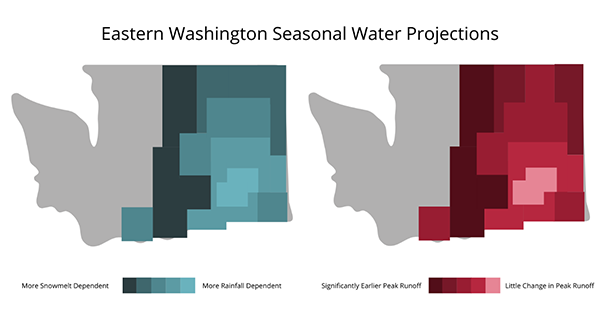
As Figure 9 depicts in eastern Washington, the projections indicate that we will see a shift in the annual hydrograph toward earlier snowmelt and subsequent runoff. Depending on the watershed, that could result in more frequent or more intense summer water supply shortages (times when supplies are inadequate to meet multiple competing uses), or, in western Washington, a trend toward earlier and more intense springtime flooding. Given that each watershed in the region has both a biophysical (e.g., water cycle) and sociopolitical (e.g., water rights) dimension, it’s very difficult to generalize how this might impact end-users of water in any given location in the region. In any case, summer and fall physical availability of water is likely to be more constrained (both in frequency and magnitude) in future years throughout the region, and attentiveness to the local projections and impacts on water supply as it impacts your garden and the nurseries that you source material from needs to be considered.
Nutrient Availability
“Nutrients” include two major facets of gardening—what you have or add to the soil for plant growth (inputs), and the nutritional makeup of the product you harvest (outputs). In case you haven’t guessed, climate change can influence both facets by changing the environmental availability of nutrients and how the plants incorporate them to a nutritional product.
PNW Fire and Climate
Climate change’s effect on wildfire trends is fairly intuitive—as regions become warmer and drier, the potential for wildfires and smoke problems become increasingly prevalent. The summer months, the typical garden growing season, are especially susceptible to increased fire risk. For more information on how to prepare for greater wildfire potential, see Chapter 24: Fire-Resistant Landscaping for the Home and Community.
CO2 Fertilization
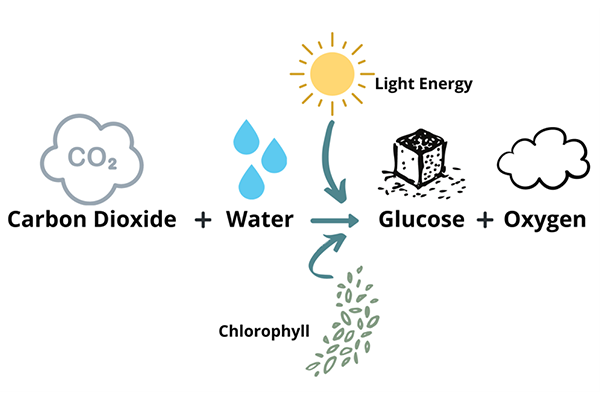
Plants “breathe in” carbon dioxide and convert it to plant tissue through photosynthesis (Figure 10). Theoretically, the more carbon dioxide a plant can bring in, the more it can grow by enabling more efficient use of water and nutrients. However, carbon dioxide is also the main greenhouse gas contributing to the increasing average annual temperature and the host of challenges that brings.
The saying “the chain is only as strong as its weakest link” also applies to plant growth. The law of the minimum within horticulture states that plants can only grow to their most limiting factor—whether that is water, nutrients, or light. If you have a nitrogen deficiency in your soil, the plant will only grow to the point that nitrogen availability will support it, even if you provide adequate water, light, and other nutrients. In some cases, carbon dioxide (CO2) is the limiting factor. However, the abundance of CO2 in the atmosphere due to climate change provides a “carbon dioxide fertilizer” phenomenon, where the plant can continually take up carbon dioxide and use that to create biomass.
In many cases, elevated levels of atmospheric CO2 may be sufficient to offset the yield losses from heat stress—at least under moderate climate change projections (e.g., midcentury). Even if elevated CO2 does not entirely offset the negatives of climate change, it will help mitigate the more detrimental effects of warmer temperatures in many situations.
Carbon dioxide is the primary form of carbon that plants use to accumulate biomass. Through photosynthesis, plants take in carbon dioxide from the atmosphere and convert the CO2 into sugar (carbohydrates). These sugars drive plant growth and can be made into tissues, creating more plant biomass. Thus, excess carbon in the atmosphere acts as a fertilizer, as there is more available carbon for the plant to accumulate into biomass.
In an environment of adequate water, soil nutrients, and sunlight, the plant can use the excess CO2 in the atmosphere to accumulate more carbon and grow. However, in many situations the CO2 can only provide fertilization until another nutrient runs out.
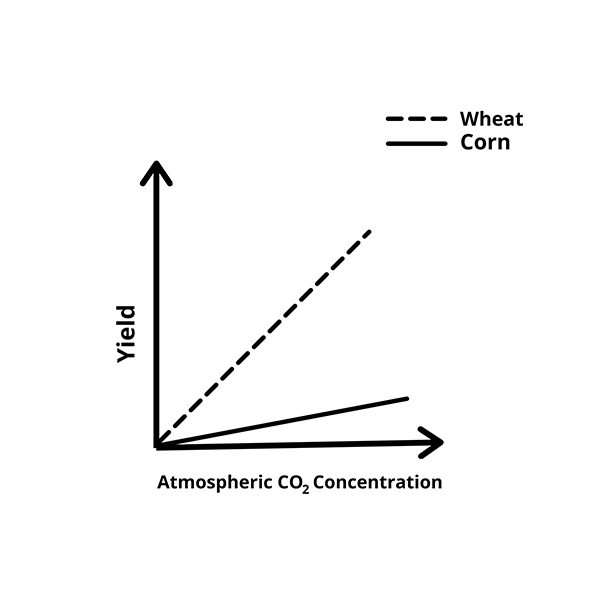
Increased CO2 will affect some plants more than others depending on their photosynthesis pathway. Plants can have different photosynthesis pathways, including C3 plants and C4 plants. C4 plants, like corn, are able to store carbon dioxide and can keep their stomata closed in the heat of the day. This allows them to retain more water, as transpiration occurs when the stomata are open. C3 plants, like wheat, need to have their stomata open in order to let CO2 in during the day, but that lets water out for transpiration at the same time. The capacity to leave stomates closed during the heat of the day contributes to drought tolerance, as less water is being lost through evapotranspiration, which means they also require less water uptake. C4 plants are considered “warm season” crops because they can still thrive in high temperatures, while C3 plants are “cool season” crops, as growth is hindered by high temperatures. As shown in the graph (Figure 11), the cool crops will show more of a fertilization effect with elevated CO2 because they will have more readily available CO2 when it is present at higher concentrations. C4 crops will not be affected as much because they can already store as much CO2 as they need, and a greater concentration will not improve that capacity as much.
Future Garden Fertility
The general trend for inputs under climate change is that while carbon dioxide becomes more abundant, other nutrients may not be as available. With the increase in CO2 fertilization and an increased season length, many nutrients in the soil may be taken up by the plant faster than they historically have. As plant growth increases in northern latitudes, there may need to be an increase in fertility inputs, whether from fertilizer or organic materials like compost.
Though there may be a need for increased fertility within your garden, the warmer temperatures and longer season may also increase the speed of the decomposition process within the soil. This means that the breakdown of organic materials will happen faster, so the nutrients from your compost are more quickly available but will also need to be replaced at a higher rate than historically. Even traditional fertilizers may act faster than previously seen, as they are broken down by biological processes at higher rates with warmer temperatures. While these considerations may offset some of the higher plant uptake, soil testing and fertility management will provide a clearer picture of your garden environment and how you can support it.
The outputs, or nutritional products you harvest, are dependent on a host of physiological processes that can be influenced by climate change factors. The growing season is increasing, but the length to maturity (harvestable product) is decreasing for many common garden crops. This means that even though there is more time available, the plants are using less of it to accumulate nutrients and develop flavors. There has also been a correlation to lower nutrient density with increased CO2 uptake, though the mechanism by which this happens is still in question.
Biotic Stressors
Gardens are ecosystems—they are a place for many organisms, even those you did not plant, to live and interact. Some of these organisms directly compete with your plants for resources, while some organisms use your plants as their means of survival. In order to maintain a thriving garden, these organisms can be managed to minimize the damage to your plants. Climate change can be a direct stressor itself, while also acting as a “risk multiplier” for current pest and disease issues.
This section will give you a frame of reference for understanding climate impacts on biotic stressors, which are currently less explored than hydrological and horticultural projections. Furthermore, many stressors are extremely region specific. Your neighbors, local Extension, and the resources listed in the Further Reading section will give you the most up-to-date information on pest pressure and changes in your area.
“A weed is a plant not only in
the wrong place, but intends to stay”
—Sara Stein
Weeds
We’ve all seen that weeds will find a foothold in any conditions—whether we tolerate them there or not. All the characteristics that make a weed especially “weedy” contribute to their success under climate change—they can adapt quickly, acquire resources competitively, and are flexible for which years they can be successful and which years they might need to stay dormant.
Weeds can produce significant amounts of seeds that can stay viable for years in the soil weed seed bank. These seeds then germinate and develop when the right soil, moisture, and temperature conditions exist. Increased spring precipitation and runoff events, as well as the warmer spring temperatures that climate change brings, may enable some weeds to germinate and advance at an earlier point in the growing season. The effect is two-fold though, as some weed species will find conditions under climate change less conducive to growth. While the composition of the weeds in your garden may change, the weed intensity is believed to increase for the northern latitudes. Research is ongoing regarding the changing weed ecology and biology under climate change, though for the foreseeable future interannual climate variability is likely to be the primary contributing climatic factor to successful or unsuccessful weed management. Good weed management practices are as important as they always have been, including strategies that focus on understanding weed biology and ecology in order to eliminate existing weeds, disrupt the weed life cycle, and reduce the introduction of new weed seeds to your garden.
Insect Pests
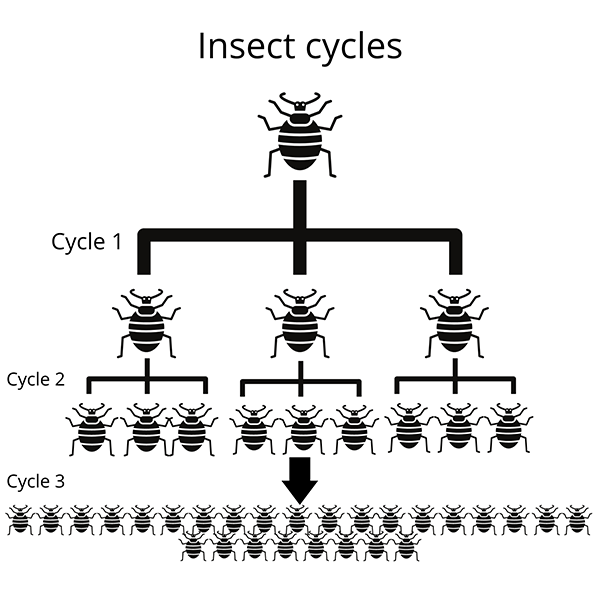
Insect pests follow many of the same principles as weeds in that they will adapt to changing conditions in order to survive. Generally speaking, temperature (degree day accumulation) and length of the freeze-free season are the biggest influences in the success of insect pests, though there are some additional factors (e.g., diapause) that may mitigate some of the influence of temperature. Most insects go dormant over the winter months, where they essentially pause their metabolism until the temperatures become warm enough to speed up their metabolism again. Earlier spring warming enables insects to start their life cycles earlier and more rapid heat accumulation enables faster life cycles. A faster life cycle coupled with a longer freeze-free season means more total generations of insects are produced per growing season, with a larger insect load overall (Figure 12).
Plant Diseases
Plant diseases do not necessarily follow the “warmer means more” trend that we see in weeds and insect pests. This is because the conditions necessary for pathogens to cause disease come from a combination of factors including climate (e.g., temperature and humidity thresholds), the organism itself, and the environment. Disease incidence and severity is often “event driven” (e.g., precipitation during bloom), and events are generally more uncertain in climate projections. Specific pathogens we currently manage may be more or less favored under future climate, and we may see new pathogens that are able to find a foothold in a warmer PNW.
Abiotic stress from drought and excessive heat may create symptoms similar to a pathogenic infection or enhance the opportunity for pathogens to cause disease. However, like weeds, interannual climate variability along with the traditional causes of disease are likely a more significant imminent factor in affecting disease incidence and severity in PNW gardens. While researchers work to better understand the potential impacts of climate change on pathogens and disease in the PNW, they recommend a focus on good integrated disease management strategies that include prevention, avoidance, monitoring, and suppressing disease.
Plant Production Shifts
In the big picture, commercial plant production in the PNW is generally protected from the more detrimental impacts of climate change that are forecasted for much of the rest of the world. The reason is that as a relatively high latitude region, we are already on the northern end of the production range for many of the plants that we grow. If the seasons become warmer (more like southern latitudes), most of the plants we produce commercially are not likely to be threatened. As just described, the biggest challenge is likely to be maintaining an adequate supply of supplemental water to support plant production during the long, dry summer.
Most of the PNW region-specific research assessments of climate impacts on plants have focused on commercial food crops or forest species, but this research is still instructive for those seeking to understand impacts to the broader array of garden plant choices. In the next sections, we will present the most up-to-date research on forecasted climate impacts on food crops and tree species as a means for thinking about how other garden plants may be impacted.
Annual Vegetables
Tomatoes
Tomatoes are both a common commercial crop and one of the most common garden crops, but they are also highly sensitive to changes within both the climate and the immediate environment. Commercial production of tomatoes in the PNW is limited due to insufficient degree day accumulation to compete with tomato yields from commercial varieties produced in warmer locations. Because tomatoes have been cultivated within even the earliest North American gardens, there are hundreds of varieties to choose from. These varieties are all suited to different conditions, including heat or cold tolerance, disease resistance, and specific environment (greenhouse, transplants, etc.). Their specificity makes it easier to grow the right type of tomato for your environment, but also undergo challenges from growing the wrong type. Staying updated on your region’s characteristics and relevant tomato varieties will help you to choose the correct variety for each growing season and lessen the effects of climate change.
Tomatoes are typically transplanted rather than direct seeded to extend the growing season (especially in regions with late spring frost) and provide extra protection for the tomato starts. If your growing season allows or you have access to a greenhouse, this can be a great time to experiment with succession plantings. Staggering both start dates and transplanting dates provides the most confidence in maintaining a successful crop, as you have multiple successions of your tomato plants that can compete with weeds and pests. This also provides a safeguard on later season stressors, as you should have successions that will be outside of the most susceptible growth stage.
The CO2 effect on tomatoes has conflicting results reported in the scientific literature. On one hand, tomatoes are extremely receptive to CO2 fertilization and have significant yield gains. Most often, the yield increase is due to increased biomass accumulation from more effective photosynthesis. These yield gains are assuming that there is sufficient water, nutrient availability, and no other environmental pressures on the system. However, elevated CO2 has been shown to have a photoinhibitory (opens in new window) effect on young and developing tomato plants, where the capacity for photosynthesis is diminished.
Young tomato plants’ growth may be stunted from the reduced capacity for photosynthesis, and the growth and yield later into the season may follow suit.
Tomato quality is highly dependent upon the environment as well as the specific variety. As with the CO2 effect, climate change’s impact on tomato quality is conflicting. Ozone, like carbon dioxide, is a major greenhouse gas when it is in the lower atmosphere and ambient air, and levels are expected to increase with rising emissions. Tomatoes can respond to the elevated ozone levels, but it can affect both their growth habits and the final product quality. Increased ozone contributed to leaf damage, chlorosis (the yellowing of plants due to reduced chlorophyll or lack of chlorophyll), and reduced sugar content within the tomato fruit. Increased temperatures under climate change may also contribute to reduced fruit quality. The temperature increase generally speeds the fruits’ time to maturity and faster fruit ripening. This leaves the plant less time to spend storing sugars and nutrients within the fruit. Many of these issues will be manageable with proper variety selection and planting timing, but variety choice must be flexible to keep up with ongoing climate concerns.
Potatoes
Warming temperatures can be harmful to potatoes in two major ways throughout their growth cycle. As we discussed earlier, increased temperature and degree day accumulation contributes to a plant reaching maturity faster, and in the potato’s case, having the aboveground foliage die (or senesce) faster. In potatoes, the aboveground leaves photosynthesize and manufacture starches and sugars, which are subsequently translocated to the belowground tubers. The aboveground portion must die or be killed for the tubers to detach and become harvestable. While it may seem like this could be a good thing to have potatoes grow faster, the faster the leaves die, the less starches will be translocated to the tubers. This results in both smaller and lower quality tubers. Although generally unwanted, some producers can manipulate this growth cycle to grow small fingerling potatoes—which speaks to the adaptability of growers, even under ever-changing circumstances.
The other major form of disturbance to potato production is through plant stress in high temperatures, especially during the tuber bulking portion of the growing season, generally beginning in early July in central Washington. Starch storage within the potato plant is essentially luxury production—in good conditions, the plant is able to produce more carbohydrates than it needs to survive, so it can store them as starches within the tubers. However, in times of high heat, the potato plant increases respiration and focuses on survival rather than planning for the future. With climate change, there is a much higher risk of the potato being under high temperatures and heat stress, which reduces yield and tuber quality.
While the PNW should not experience the major potato season disruption expected in more southern latitudes, there is still concern over the shorter optimum growing season and water availability. There is ongoing research into whether planting later-maturing varieties or a delay in planting date will offset the maturation issues, but it is not currently a major concern within the northern latitudes. However, potatoes provide a good illustration of the ways in which climate change can specifically affect common garden plants’ biological processes.
Perennial Trees
Perennials, plants that grow over multiple seasons, have a unique set of circumstances to consider under climate change. Unlike annuals that are only subject to the environment during the growing season (apart from the stored water issue), perennials must endure the conditions throughout the calendar year and experience year-to-year impacts that affect health and productivity. Annuals are able to complete their growth cycle usually within one growing season—often less than 90 days. Perennials, however, have stages of development throughout the year and may be detrimentally impacted if climatic conditions experienced at any time are outside of the optimal conditions for the plant. For more information on tree growth and maintenance, see Chapter 12: Trees and Woody Landscape Plants and Chapter 13: Backyard Forest Stewardship.
Flowering Trees
Many perennial fruits have specific chilling hours required in order to develop buds or flowers in spring. In tree fruit, the tree requires enough chilling units to end bud dormancy, allowing the tree to bud, bloom, and bear fruit once the temperature rises. The increase in winter temperatures may mean insufficient cold accumulation for spring development and summer fruit growth. The bloom period is essential in many plants and is a key developmental stage in flowering trees but may be subject to modification under climate change.
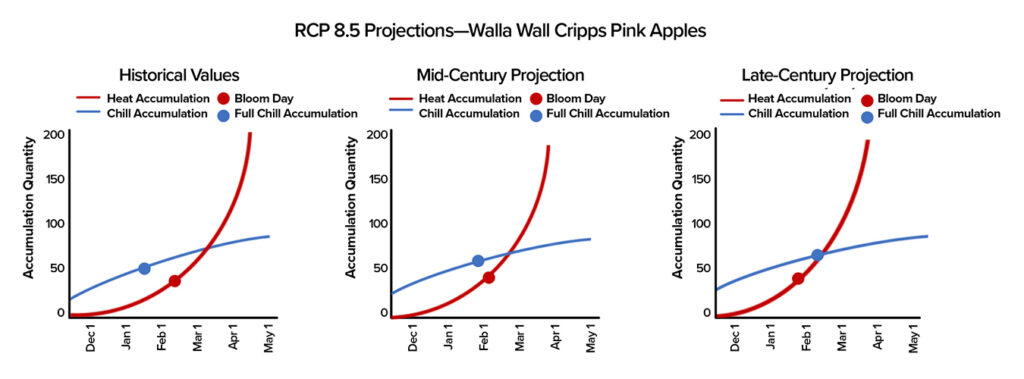
As shown in Figure 13, the “bloom day” and the chilling potential threshold are converging to the same point under projected climate change. This space between the red and blue line points is the available bloom period, which is gradually decreasing. If the points on the line do cross, there will be no available bloom period and trees will not be productive. The bloom period is an essential point for pollinators to enter the system and provide pollination. With a decreasing bloom period, there is less time for pollinators and fewer trees will be pollinated, with the potential for less overall productivity and yield. The projections for the bloom day and cold accumulation convergence vary greatly under the two different models, with the high-impact 8.5 model showing a higher likelihood of convergence in the PNW in the next century, while the midrange impact model shows a lower likelihood of convergence this century. This issue is already a challenge for more southern regions.
The rise in temperatures and greater uncertainty with extreme weather events also contribute to challenges for perennials, especially in fruit trees. The increased risk for heat waves and drought in the peak growing season may contribute to decreased fruit set and overall fruit load. Fruit set, the point after pollination when the flowers become fruit, is dependent on the efficacy of pollination and temperature thresholds. If the temperature exceeds the threshold for a long enough period, there will be reduced overall fruit set or no fruit set. While there are many concerns for perennials under climate change, the adaptation of the plant itself and through varietal breeding or plant selection will help to mitigate many of these phenological issues and may play a bigger role than we can currently account for.
Ornamental and Landscape Trees
Trees, whether native to your landscape or planted, can add both ecological and ornamental value to your garden. As with flowering trees, ornamental trees are perennials and subject to the climatic conditions year-round. When determining the degree to which trees respond to changes in climate, especially precipitation and temperature, scientists look at three major factors: sensitivity, exposure, and adaptability. Understanding these factors can also help you to choose trees for your landscape and conceptualize how climate change may affect the trees already in your landscape.
Sensitivity is a measure of how responsive a tree is to changes in its environment, especially those that may restrict growth and development. Generalist species, or those that have adapted to many environments, are usually less sensitive to specific changes in their surroundings because they have strategies for surviving in many different environments. Specialists, as the name implies, live in more niche habitats that may have more specific requirements.
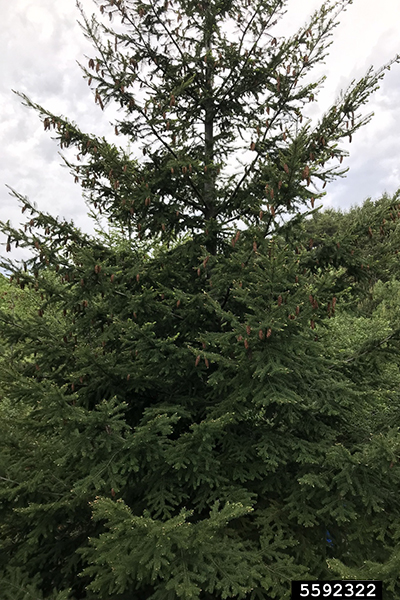
While they have figured out how to thrive in unique environments, they do not have as many strategies in place to overcome changes in the climate. Douglas-fir (Figure 14) is a great example of a generalist species in the PNW.
Exposure evaluates how likely a tree’s environment is going to change with climate impacts. A specialist’s environment is much more likely to change than a generalist’s because a specialist usually only has a certain niche environment. Because temperature and precipitation are expected to shift in most areas of the PNW, this may shift the specialists’ environment enough that they are not suited for their surroundings. Whitebark pine, for example, is a subalpine tree that is suited for a certain elevation, and the conditions of that elevation may change before whitebark pines can become established at a different elevation in the future that shares the climatic conditions of the current location.
Adaptability assesses how well a tree can overcome the changes to its environment and continue to thrive. Generalists are usually more adaptable than specialists, which is why they are suited to a variety of environments rather than just one. Though both bigleaf maples and noble fir are native to the PNW, bigleaf maples are adapted to mountain ranges throughout the Pacific states of the US, while true noble firs only reside in the Cascades and small populations in the surrounding foothills. The bigleaf maple is much more adaptable than the noble fir, so it can exist in more environments.
A Gardening Response to Climate Change
The two keys to preparing for climate change within your garden are planning and observing. Gardening provides ample opportunity for experimentation and adaptation. Throughout this section, we will outline practical ways in which you can plan for a changing climate, but also ways to test how plants respond to the climate in your region.

Planning
Variety Selection and Plant Hardiness Zones
Plants have specific climatic requirements, especially in terms of temperature and precipitation. Plant Hardiness Zones (Figure 15) were developed to give an overview of regions throughout the United States and their suitability for specific plants. Each zone is assigned a group number that is based on the average extreme minimum winter temperature. The zones can be a great tool in determining, at a basic level, whether your selected plant is likely to survive in a given area. For example, an avocado tree may thrive in the warm Zone 11 but would not survive outdoors in Zone 3. In Washington, zones vary from a cold Zone 4 in the northeastern region to Zone 9 in the more temperate Puget Sound region. However, zones do not account for microclimates well, such as high elevation versus low elevation, and you may need to account for those factors in your region.
Different varieties of a certain plant may be more tolerant to cold, and that is generally indicated by lower zone hardiness numbers. The zone designation is helpful as a simple overview of which plants may thrive in minimum temperature ranges, but it is certainly not foolproof. With the increase in temperatures seen in climate change, zones are trending warmer throughout the years, but it remains possible well into future climate projections to have a historically cold year. In order to keep your garden plants thriving, it may be prudent to check your zone designation periodically to help decide which plants and which varieties of plants to grow in your garden. Check out How to Determine Your Garden Microclimate listed in the Further Reading section for more ways to determine your garden’s microclimate throughout the years.
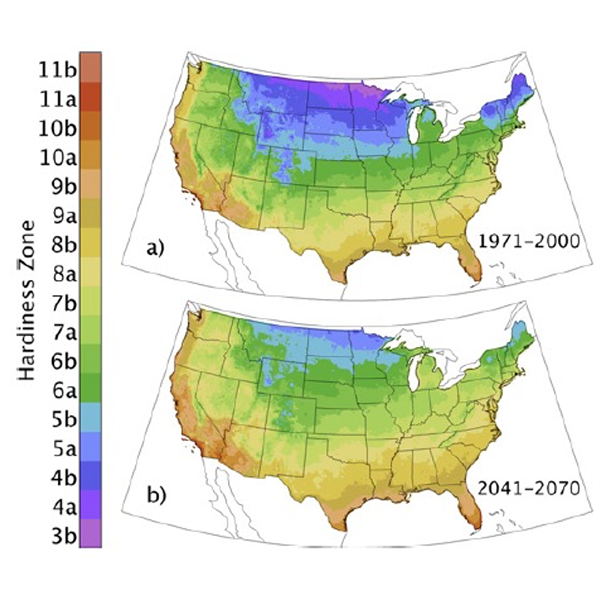
Because the Plant Hardiness Zones are based on the extreme winter low temperature, they are more indicative of perennial plants’ success rather than annuals’. Planning for long-term perennials, such as fruit trees, lavender plants, and landscape trees requires more forethought into the changing environment and conditions. Within zone shift projections (Figure 16), there is some discussion of whether the zone is the best marker for environmental stability for certain species. Some species are better able to withstand the extreme winter temperature thresholds and may not be affected by the slight shift in temperatures. Other species may be more vulnerable to these minimum temperatures and zone assignments may shift.
Many plant species have a range of zones in which their optimal conditions are met for most of the year, and the extreme winter temperatures will not restrict their survival. For perennials, it will be important to not only check their current zone but research the species’ individual needs and see if your zone is on the cusp of the perennials’ prime growing area. If so, it may be prudent to choose a variety that is situated in the middle of zones, with more room to move on either side. Testing the growth of plants as zones shift will be a strong area for your own experimentation, and will provide valuable insight for yourself, neighbors, and citizen science projects dedicated to this information (see the Further Reading section for more information).
Production Decisions
Beyond planning the varieties and species of plants within your garden, you can ease the impact of climate change by changing production decisions. Production decisions include your planting date, whether to stagger plantings, transplant decisions, and so on.
Planting Date
Climate change, especially with increasing temperatures, may change the effective growing season in your region. Planting date is generally reliant on the last frost-free date, as many annuals are sensitive to frost damage if planted too early. Increasing winter temperatures, especially nighttime minimums, may move the last frost-free date earlier in the year. Moving the planting date earlier not only allows for a longer overall growing season but it may provide new opportunities for crops with a greater length to maturity.
Staggered Plantings
Staggering planting dates is a great way to safeguard against potential climate change losses. In direct seeding, this may look like seeding one-third of your potatoes May 1, one-third on May 14, and one-third June 1. The same theory applies to transplants, except you essentially plant twice. While it may be more work up-front to stagger seeding and then stagger transplanting, you may recoup a competitive advantage against weeds and insect pests or abiotic stress. Staggering plantings into successions provides three major benefits. In terms of climate change, staggered plantings prevent all your crops being sensitive to the same climate stressors at the same time. If one succession is harmed by the temperatures at a certain point in its development, the next succession will most likely miss that same stressor. This also helps protect your crops against pest damage, as you will likely have multiple successions that are not at a sensitive stage of development for pest damage. Beyond climate considerations, the other major benefit is that harvest or flowering becomes more extended, allowing you to enjoy a more consistent supply of vegetables or color throughout the season.
Site Planning
During the growing season, protecting crops against heat stress may become a bigger consideration in historically temperate regions. Means of protection are highly dependent on which crop species you are growing and your garden orientation. Shading, whether using shade cloth, buildings, or trees, can be a useful tool in protecting crops during the hottest parts of the day and the growing season. If you are just establishing your garden, taking the shading of permanent structures, like housing, into account can assist in cooling your garden. By planning to have your most heat sensitive plants shaded during the hottest part of the day, you can reduce the transpiration and water loss that often contributes to heat stress. For example, you may be able to plant your garden on the east side of your house so that it receives morning sun but is shaded from the harsher afternoon sun. Alternately, planting multi-storied gardens can have the same effect.
Water Management
Another form of protection against heat stress is good irrigation management. While water supply may become less available throughout the growing season, irrigation can be a useful tool in managing plant transpiration and water loss. Plants must take in carbon dioxide through their stomata on sunny days in order to facilitate photosynthesis, but open stomata lead to increased transpiration and water loss. Irrigation allows the plants to take up water at the same time as transpiration, so it is cooling the plant but not leaving the plant without water. In greenhouses, evaporative cooling systems are used to pump air through wet filters to cool the air with humidity, but this strategy may not be feasible if there are water limitations or in outdoor situations.
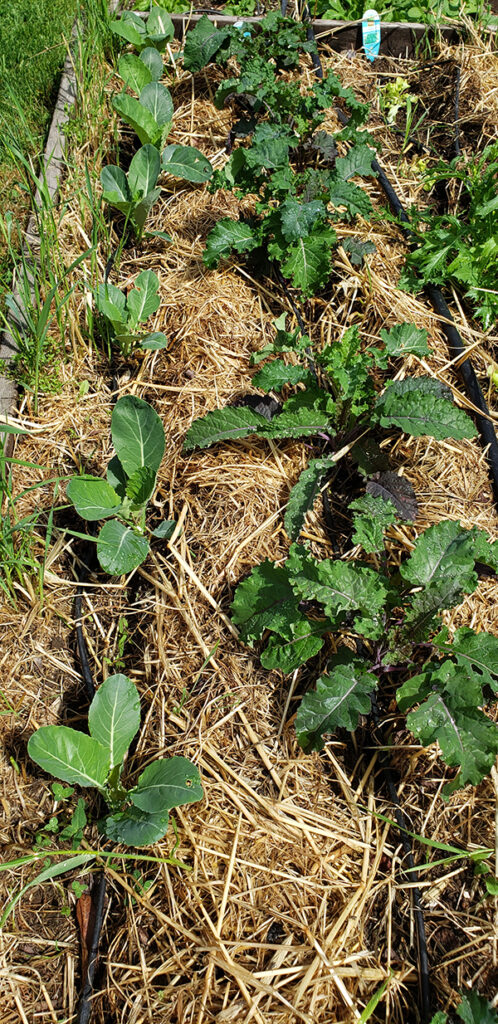
Protecting the soil moisture in your garden also helps to protect your plants against heat stress. Exposed soil is subject to water evaporation at a high rate during the summer, especially with increased temperatures. The easiest way to maintain soil moisture in a garden setting is by using mulch (Figure 17). Mulching comes in a variety of methods, from bark and compost to layers of fabrics or plastics. The primary goal of mulching is to keep the soil covered and therefore less susceptible to soil moisture loss. If soil moisture remains high, plants will not be subjected to water shortage under high temperatures and will be less likely to show signs of heat stress.
More information on irrigation management and mulching in warm and drought-prone environments can be found in Chapter 25: Waterwise Landscaping.
Input Decisions
Deciding what to use in your garden can be just as essential as what you plant when it comes to climate change mitigation and adaptation. Individual choices, though seemingly nominal in the scale of climate change, can add up to a significant impact. Common garden inputs that may have climate friendlier alternatives include potting soil, fertilizers, pesticides, and mechanized equipment. Peat moss, for example, is a large carbon sink that can be harvested for use in potting soils and in turn is unavailable to sequester carbon. Utilizing local alternatives can help maintain peat and protect that resource. Each garden input will have trade-offs in production capacity, availability, and sustainability, but limiting unnecessary outside inputs and researching potentially sustainable alternatives can provide another path forward in climate stability and resilience.
Ecosystem Management
Pollinators
Pollinators are an essential part of the garden environment, especially for perennial and blooming species. As with plants, many insects are suited to certain environments and temperatures. Climate change poses a risk in changing the environment enough that either the insect pollinators are not suited for the environment, or the native host plants that encourage proliferation of these insects may become scarcer, or that the timing of pollination need differs from the phenological stage of the host plants in the future. In large agricultural regions, many of the pollinators are dependent on the crops that major producers cultivate. If an area near your house that traditionally produced tree fruit (generally pollinated by bees) moved to tree nuts (generally pollinated by wind) and you have tree fruits, you may lose some of your pollinators to habitat loss. While changing temperature thresholds for insect pollinators is not realistic, you may be able to also create native plant habitats to encourage pollinator proliferation in your area.
Native Plants and Habitats
Native plants and natural ecosystems are subject to the effects of climate change year-round. The higher elevations are more prone to disturbance than the lower elevations, especially in terms of habitat suitability for trees, plants, and wildlife. As the temperatures warm, the suitable environment moves upslope, which generally affects the more niche habitats that cannot adapt as quickly. In low elevations, climate change effects follow a similar pattern to the garden environment, where warming temperatures and changing precipitation may slightly change the composition of native plants, especially if they have sensitive developmental milestones.
Observing
We often trust that we remember our observations throughout the years—especially when it comes to whether plants were thriving at a certain point in time in years past. However, our memories are often biased toward the more extraordinary examples. Recordkeeping, in its many different forms, allows you to make sound decisions based on accurate information and keep improving your gardening environment. Installing a weather station enables you to correlate your garden records with actual weather data from your site. Low-cost weather station technology has dramatically improved in recent years, and it’s very attainable for many home gardeners. In addition, there may be options for linking your weather station to a network (such as the WSU AgWeatherNet) in the near future, to improve local forecasting potential.
Seed and Variety Inventory
Keeping track of the seeds and starts that you use each year lets you see how they grow in your garden and whether they are suited to your region. As the climate changes, you may notice that seed varieties you have used for years start to perform worse and you may need to adjust to new seed varieties that are more drought, heat, or pest tolerant.
Harvest Records
While not as simple as keeping seed records, harvest records are a great indicator of your seed variety’s performance and overall garden health. This can be as in-depth as you make it, whether it is as specific as counting the vegetables from each crop or just how many harvests you got from one plant. We would recommend that you consider a small set of representative samples from your garden that you can assess each year. Whichever method you choose, providing consistent data collection throughout the years will provide extremely useful information for you and other potential gardeners in your area.
Photo Points
The prevalence of smartphones with cameras today makes picture points a convenient and useful option for recordkeeping. By taking pictures of your garden and crops from the same point throughout the growing season and throughout the years, you have a record of observations that are not subjective to your description or memory. This is especially valuable if you are recording key phenological stages. Consider using separate photo points based on both calendar days (e.g., May 1, May 15, June 1) and phenological stages (budding, flowering, etc.) of key garden plants.
Ways to promote native pollinators from
the Xerces Society for Invertebrate Conservation:
- Plant a variety of flowering plants that bloom throughout both the growing season and autumn.
- Plant native bunch grasses for pollinator habitat.
- Plant trees to help reduce temperatures, provide habitat, and increase carbon sequestration.
Benefits of Planting and Maintaining Native Plants:
- Adapted to your environment.
- Less resource inputs (e.g., fertilizers).
- Provides habitat for native insects and birds.
- Increases garden biodiversity.
Weather
One of the key things to record when talking about climate change? The weather! Keeping records of general weather trends for that growing season, as well as any major weather events, will help you assess impacts throughout the years. Some apps and computer programs will have weather records built in, but taking notes for yourself will make planning for future years that much easier. If you’d like to go one step further and participate in WSU research, check out AgWeatherNet’s private weather station program, where your weather station’s data will be compiled into Washington State’s data for accurate reporting, improved forecasting, and a greater understanding of Washington weather change.
Recordkeeping
Many of the principles we’ve discussed of garden planning for climate change can be facilitated by planning spreadsheets and apps. While these apps are subject to change throughout the years, they can provide valuable guidance on recording your garden measurements, as well as a way to maintain strong garden records. Planning spreadsheets and apps allow for customization of your garden plan and future priorities based on previous years’ observations. While the technology may be an additional tool to success in recordkeeping for your garden, the most important factor is recordkeeping. Whether that is an app, spreadsheet, or an old notebook, having something to look back on and make decisions from will be crucial in furthering your garden’s success in the future.
Acting
Reduce Food Waste
Food waste is a significant contributor to greenhouse emissions, both in landfill emissions and in the waste transportation and processing. As gardeners, you are already reducing the transportation impact, but there are a number of ways to further reduce potential food waste from your garden. Less waste not only means less emissions but also maximizing the useful outputs from your hard work.
Food waste reduction strategies:
- Stagger plantings to encourage smaller, more manageable harvests.
- Can and preserve excess fresh food to use throughout the year.
- Compost food, yard, and garden wastes (bonus amendment for future years too!).
- Donate excess produce to community members and food banks.
- Participate in gleaning.
Gleaning is the process of harvesting your extra produce and food products to donate to those in need. Local gleaning programs are often facilitated through your county Extension programs or conservation districts. Research if gleaning programs already exist in your area, or if there are other ways to encourage local participation.
Final Remarks
As a gardener, you have a unique position within the changing climate. Your garden may change from year to year, but you have the ability to respond to change within the environment—and even experiment along the way. You may be able to start testing the limits of your zone, as well as witness success and failure of plants that may not have grown in your region previously or have grown well before and are now failing to thrive. While experimentation may not be as feasible for perennial trees and other large investments in your garden, cheaper seeds and annuals are perfect to explore new options.
Finally, share your experiences. Creating a network of knowledge and records between gardeners in your area will be invaluable to creating successful climate change adapters. The increased availability of technology to facilitate information sharing will be hugely beneficial to the production and circulation of citizen science, as you can rapidly assess the incidence, distribution, and timing of key biotic factors in your region. Quick adaptation is the key to successful management of climate change at a garden scale, and having a network of real-time data will contribute to the overall success of regional gardening.
Acknowledgements
This work was supported by USDA-NIFA award no. 2017-68002-26789.
This work was also supported in part by Western SARE.
Further Reading
AgWeatherNet (opens in new window). Washington State University.
Allen, E., G. Yorgey, K. Rajagopalan, and C. Kruger. 2015. Modeling Environmental Change: A Guide to Understanding Results from Models That Explore Impacts of Climate Change on Regional Environmental Systems. Washington State University Extension Publication FS159E. Washington State University.
Alsamir, M., T. Mahmood, R. Trethowan, and N. Ahmad. 2021. An Overview of Heat Stress in Tomato (Solanum lycopersicum L.). Saudi Journal of Biological Sciences 28:1654–1663.
Bisbis, M., N. Gruda, and M. Blanke. 2018. Potential Impact of Climate Change on Vegetable Production and Product Quality—A Review. Journal of Cleaner Production 170:1602–1620.
Case, M., and J. Lawler. 2016. Relative Vulnerability to Climate Change of Trees in Western North America. Climatic Change 136:367–379.
Climate Toolkit for Museums, Gardens, and Zoos (opens in new window). 2024.
County Weed Boards. n.d.
Eekhout, J., J. Hunnink, W. Terink, and J. Vente. 2018. Why Increased Extreme Precipitation under Climate Change Negatively Affects Water Security. Hydrological and Earth System Sciences 22:5935–5946.
Frankson, R., K.E. Kunkel, S.M. Champion, D.R. Easterling, L.E. Stevens, K. Bumbaco, N. Bond, J. Casola, and W. Sweet. 2022. Washington State Climate Summary 2022. National Oceanic and Atmospheric Administration Technical Report NESDIS 150-WA.
Lawler, J., and M. Mathias. 2007. Climate Change and the Future of Biodiversity in Washington. Report prepared for the Washington Biodiversity Council.
Lobell, D.B., and C.B. Field. 2011. California Perennial Crops in a Changing Climate. Climatic Change 109:S317–S333.
McMoran, D., S. Hunter, and S. Buller. 2015. How to Determine Your Garden Microclimate (opens in new window). Washington State University Extension Publication FS181E. Washington State University.
National Gleaning Project—Find Gleaning and Food Recovery Programs (opens in new window). 2024.
NOAA National Centers for Environmental Information—State Summaries (opens in new window). n.d.
Pacific Northwest Citizen Science (opens in new window). n.d.
Project Budburst Citizen Science (opens in new window). 2021.
Stockle, C., R. Nelson, S. Higgins, J. Brunner, G. Grove, R. Boydston, M. Whiting, and C. Kruger. 2010. Assessment of Climate Change Impact on Eastern Washington Agriculture. Climatic Change 102:77–102.
University of Washington Climate Impacts Group (opens in new window). 2024.
USDA ARS (Agricultural Research Service) (opens in new window). 2012. Plant Hardiness Zones.
Washington State Noxious Weed Control Board (opens in new window). n.d.
WSU Extension Plant Pests and Disease Publications (opens in new window). 2024.
WSU Extension Publications Store (opens in new window). 2024.
WSU Pestsense (opens in new window). n.d.
Xerces Society for Invertebrate Conservation. 2021. Bring Back the Pollinators (opens in new window).
Xerces Society for Invertebrate Conservation (opens in new window). 2024.