Pruning Woody
Landscape Plants
Tim Kohlhauff, Urban Horticulture Coordinator, Washington State University Spokane County Extension
Introduction
Chapter 11: Herbaceous Landscape Plants described the many benefits woody plants provide at the landscape level, from providing environmental services and enhancing economic activity to improving the physical and mental health of people. To achieve and maintain these benefits, trees, shrubs, and vines need care, including access to light, water, and healthy soil, and control of pest organisms. In this way, woody plants are like any other plant.
Trees, shrubs, and vines differ from other plants in their maintenance needs, however, including the maintenance of their physical structure. In other words, landscape owners and managers need to manage the physical growth of woody plants to maximize the benefits they give us and minimize their potential to cause damage. This is usually done by pruning.
What is pruning? Most home gardeners understand the meaning of the word but have a personal interpretation, such as, “Pruning is that chore I do in the spring,” or maybe, “Pruning is how I control the plants in my yard,” or even, “Pruning is when I get to use my chainsaw!” For the sake of this chapter, it is important to establish a uniform definition of pruning.
In 2015, the Tree Care Industry Association (TCIA) brought together representatives from commercial, academic, and government agencies to write a set of pruning standards for the tree care industry. These standards define pruning as “The selective removal of plant parts to achieve defined objectives.” This means that pruners are selecting certain parts of the plant to remove. Pruning is not random or haphazard but planned and targeted. Pruning removes plant parts, which means that it is a deliberate wounding, but it is done to achieve a defined objective. The pruner, therefore, should have a plan before beginning the pruning work and then only remove what is needed to achieve the objective.
This chapter does not include pruning practices for fruit trees or small fruit, because the objectives and strategies for pruning those plants are different than for ornamentals. This chapter also does not address pruning herbaceous plants.
Appropriate Reasons to Prune Woody Plants
Successful pruning is done with a goal or objective in mind and a plan for achieving that objective. The person pruning should examine the plant from all sides and determine how to achieve the objective.
The objective of pruning should be to help achieve a purpose, minimize the potential for the plant to cause damage, and minimize the wounding to the plant. The section Pruning Strategies below details the different types of pruning work and discusses these objectives in more detail.
The Basics of Wound Response
Pruning can seem simple at first. If a shrub grows too large for the site, it is pruned to reduce its size; then it stays that way forever, right? If only it were so simple. Woody plants respond to injuries like pruning with different types of growth. This growth is both external and internal.
Canopy Growth
Plants will grow in a way that maximizes sunlight to leaves. Sunlight is needed for photosynthesis which creates the energy plants need to live and grow. When pruning removes a significant amount of leaf canopy (opens in new window), the plant responds by trying to replace what was lost. This growth of leaf and stem tissue occurs near the site of pruning.
Normal, unpruned branches grow primarily at the tips, from what is called the apical bud (opens in new window) (also known as the “terminal bud”). Lateral (opens in new window) branches (sometimes called “side shoots”) close to the terminal bud may also grow, but their growth is limited or suppressed. This is caused by plant hormones coming from the terminal bud. If the terminal bud is injured or removed, these chemical signals stop, and lateral branches begin to grow. The lateral buds (opens in new window) or branches closest to the pruning cut will generally exhibit the greatest growth.
Knowing that this growth will occur, the pruner can plan for it. Reduction cuts (opens in new window) that shorten a branch should be made back to a lateral branch or bud where future growth is acceptable. For example, a branch blocking a path might be pruned to a side branch growing in a different direction.
Compartmentalization
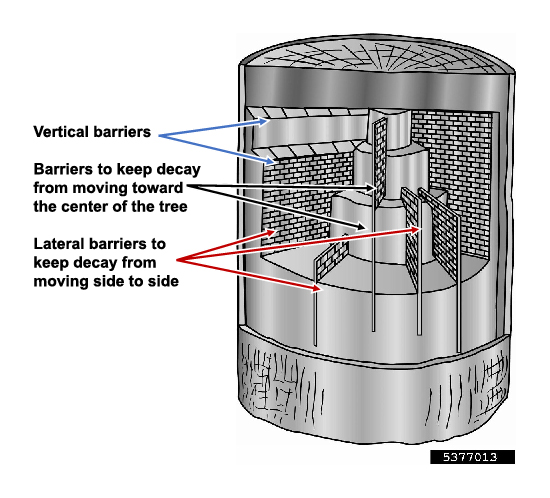
A second type of wound response also occurs after an injury. While the plant grows new shoots (opens in new window) externally, it will also attempt to compartmentalize the injury internally. The complete name for this type of wound response is “compartmentalization of decay in trees,” but it is called by the acronym, CODIT. Briefly, it is a process whereby a woody plant develops physical and chemical barriers to limit or prevent the spread of decay-causing microorganisms from the exposed face of the wound into the plant (Figure 1).
The term compartmentalizing is used to describe this process, because it is not healing in the sense that humans heal a wound. The barriers woody plants create do not completely enclose the wound, so sealing is not an accurate way to describe this process either.
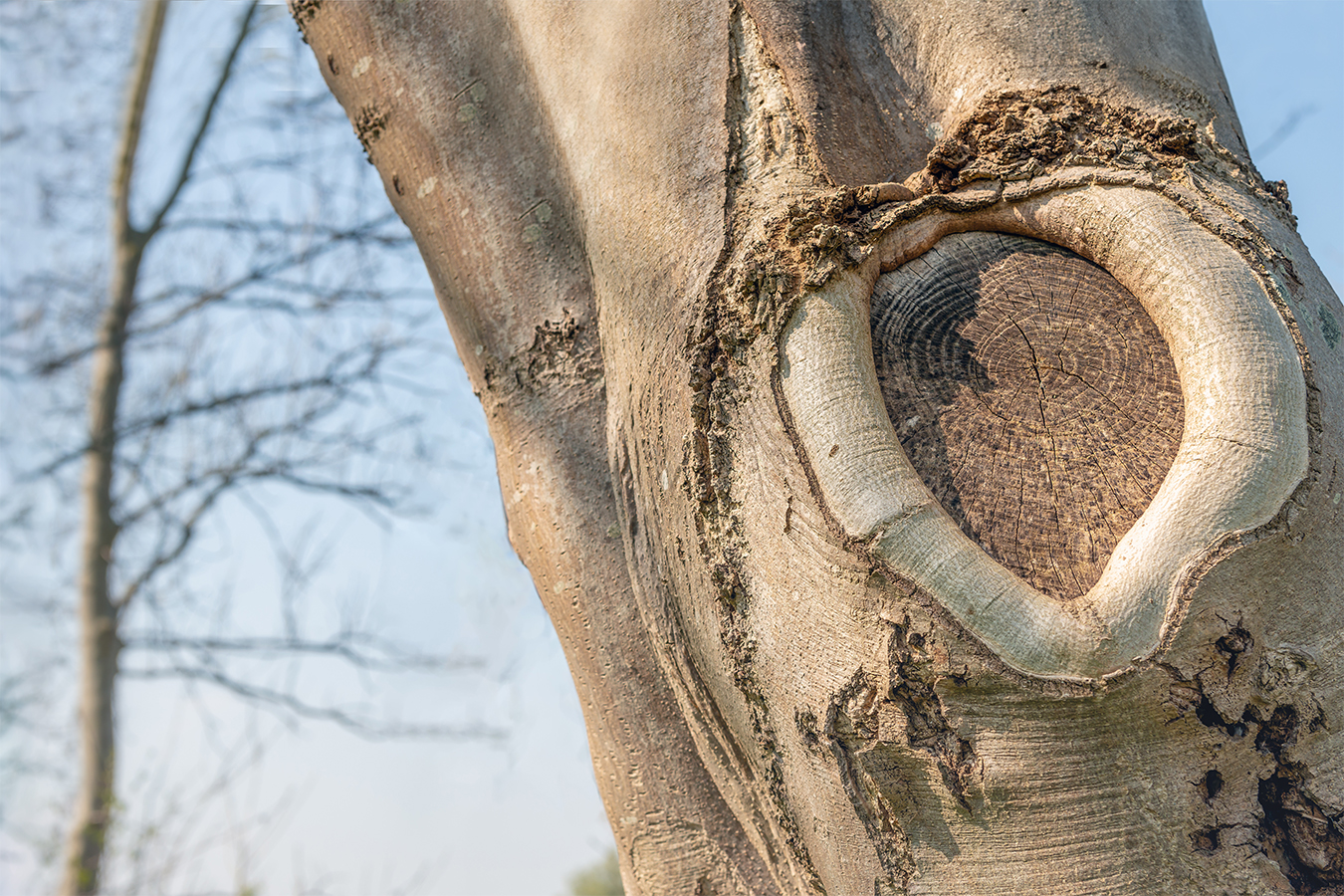
Most compartmentalization occurs under the bark, but gardeners may see the growth of wound wood (opens in new window) over the surface of the cut. Wound wood will appear around the external edge of the wound and grow toward the center. This tissue originates from the branch collar (opens in new window). If a pruning cut was made correctly, wound wood will appear doughnut-shaped (or bagel-shaped for the more health-conscious) around the edges of the cut (Figure 2).
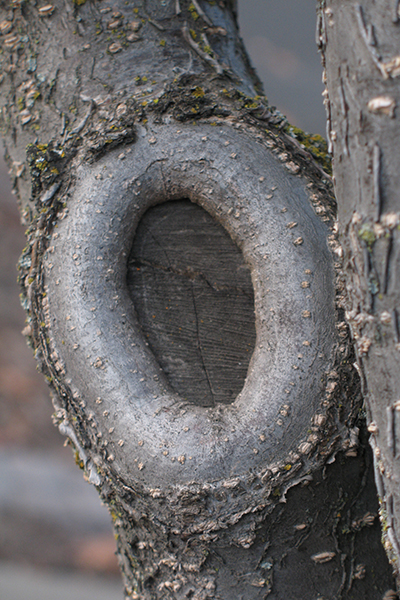
For this chapter, it is enough to know that the branch collar contains tissue that assists in wound compartmentalization. CODIT is more thoroughly described in the scientific literature listed in the Further Reading section for those interested in learning more about this fascinating process. Natural target pruning cuts performed correctly will not damage the branch collar or leave a stub of excess tissue.
Knowing about woody plant wound response is interesting, but does this knowledge influence pruning practices? Of course! It allows the pruner to plan for and direct future growth. Natural target pruning cuts improve the chances the plant will successfully compartmentalize the wound, limiting decay. Knowing about this wound response also allows the pruner to assess their cuts later, to see if they were made correctly.
Pruning Basics
Beginners usually have many questions about pruning, including Which branches to prune? How much to remove? and When to prune?
Types of Cuts
Removal cut (opens in new window) refers to when a whole branch is removed back to its point of origin, just outside the branch collar. Removal cuts are sometimes used to eliminate diseased tissue or get rid of undesirable growth, such epicormic shoots, often called water sprouts (opens in new window).
Reduction cut refers to the shortening of a branch back to a lateral or side branch. When making a reduction cut, it is important to prune back to an appropriately sized lateral branch. What makes it appropriate? The branch that remains after the reduction cut should be a minimum of one-third the diameter of the branch being removed. For example, a reduction cut to a branch one inch in diameter would be made just outside the branch collar of a lateral branch at least one-third of an inch in diameter or larger.
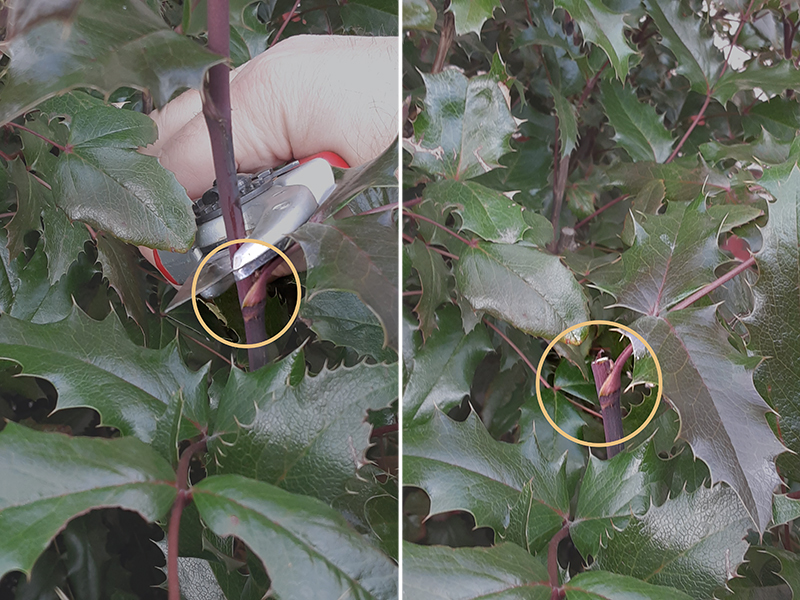
Some branches are so small that they do not have lateral branches. Those that are the diameter of a pencil or smaller likely do not have an identifiable branch collar. This is the case with many shrubs such as Oregon grape and hybrid tea roses. Reduction cuts to these small branches are made just above a node (opens in new window) where there is a bud for future growth (Figure 3).
Timing
Though it is important to consider when plants are pruned, how plants are pruned is usually more important.
The dormant season, after leaves have fallen in autumn and before bud break in the spring, is usually a good time to prune woody plants. Pests that might take advantage of pruning wounds are likely also dormant, and it is easier to see the structure of deciduous plants to know what to prune. However, extreme cold can damage newly exposed tissue, so late winter, after the worst of the cold has passed, is generally a better time to prune.
While spring and summer are good times to prune in general, this is the time when pests are active, so pruning wounds may make plants more susceptible. Home gardeners in areas that regularly experience extreme summer heat may want to avoid significant pruning work just before the hottest weather is expected. Exposing previously shaded parts of a tree or shrub to direct summer sun may cause sun scald injuries to foliage and stem tissue.
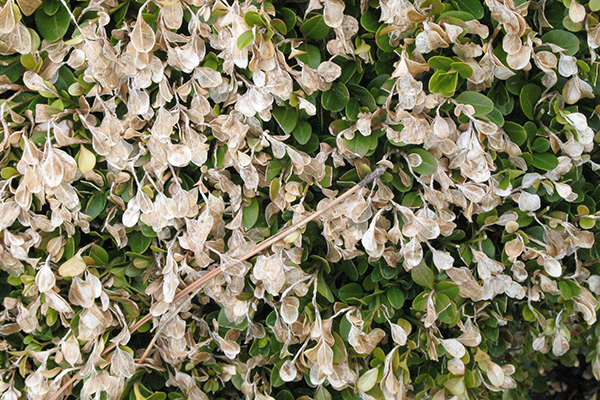
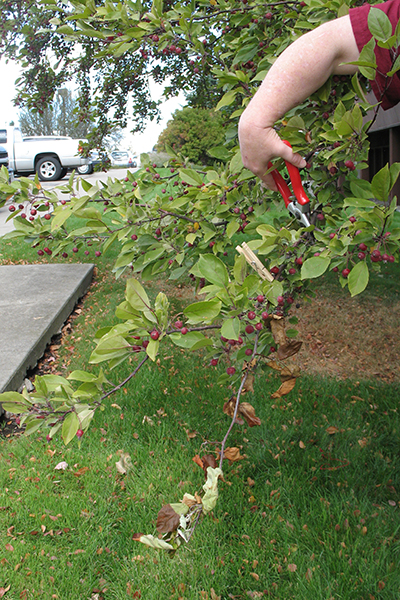
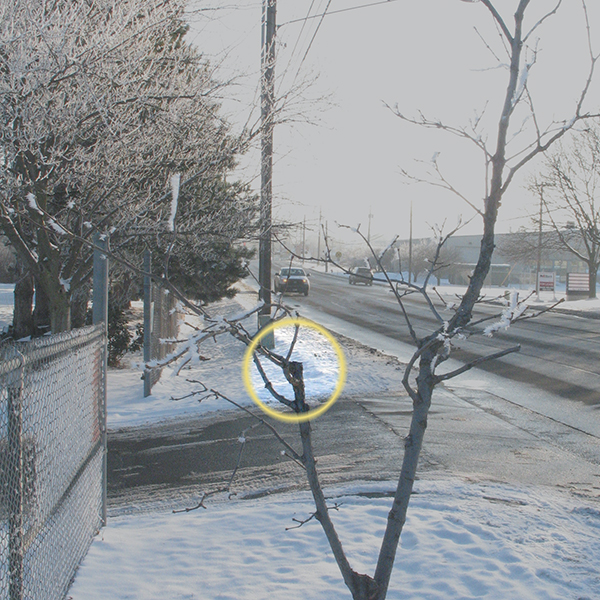
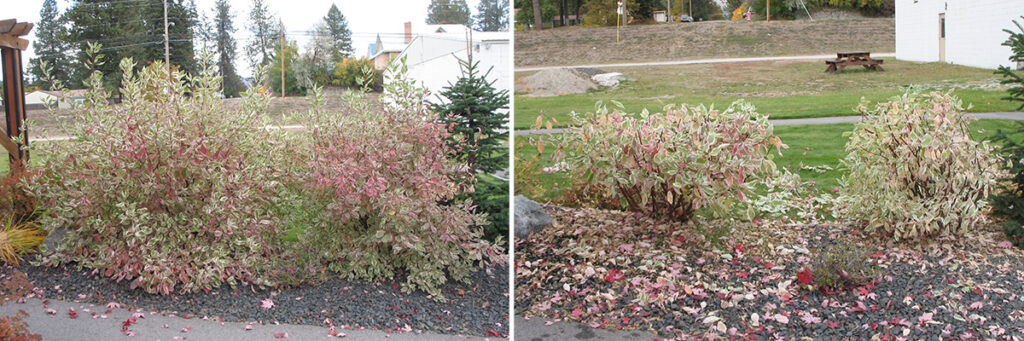
Pruning in late summer and early fall can cause plants to respond by growing new shoots. These shoots are unlikely to become cold hardy before winter temperatures arrive. This can result in plant damage that will require even more pruning to remove the damaged and dead shoots (Figure 4). Prune earlier in the summer or later in the fall to avoid this scenario.
If a tree or shrub is known to be susceptible to a serious pest insect or disease, pruning work should be timed to minimize the danger to the plant. For example, bronze birch borer is a pest of birch trees. The adult beetles are in flight searching for stressed trees from late April through mid-July and are attracted to fresh pruning cuts. By not pruning during that timeframe, homeowners may avoid a potentially lethal infestation of borer. To determine if a plant should not be pruned at certain times to avoid pests, gardeners can contact their local Extension office or check the WSU Hortsense (opens in new window) website for information on specific plants and associated pests.
If pruning is done primarily to remove deadwood or to remove less than 10% of live tissue, then timing should not be a concern. Deadwood can be removed at almost any time. The only time removing deadwood might cause a problem is during extreme heat or cold when removing large amounts of dead tissue would expose previously shaded or protected live tissue. Protected or shaded trunks, branches, and leaves may sustain sunburn or other temperature related injuries when suddenly exposed to extreme weather. Pruning during more moderate temperatures may avoid this.
Pruning Tolerance
Home gardeners frequently ask how much they can prune from their woody plants. The idea is that trees and shrubs can tolerate losing a certain amount of live canopy before the loss of tissue significantly interferes with their life processes. Gardeners do not want to cross this line and potentially kill their plant. Unfortunately, there is no uniform percentage that can be applied equally to all woody plants.
The most accurate rule is the following—take the least amount of live tissue that will accomplish the purpose of the pruning work. In other words, it is better to focus on how little needs to be pruned, rather than how much plants can tolerate.
Pruning can cause a problem when the pruning objective requires removing more live tissue than a plant can tolerate in a single season. Therefore, it is important for home gardeners to have some understanding of how much pruning plants can tolerate. Recently transplanted plants, plants in decline, or stressed plants may not tolerate losing much, if any, live canopy, while certain established shrubs and vines can tolerate losing 90% of their canopy (see section Renovation Pruning).
Pruning tolerance refers only to removal of live tissue. Dead tissue is not included in this calculation. In general, deadwood should be removed to prevent harboring of pests, or to remove the pests that killed the tissue. This can be done virtually any time.
Pruning tolerance is, at best, an approximation of how well a given plant will tolerate tissue loss and still thrive. With some exceptions, pruning tolerance ranges from zero percent to 25% of the live canopy of a tree. Shrubs and vines can have greater tolerance, with some types able to tolerate almost complete canopy removal, under the right circumstances (see section Renovation Pruning). There are multiple variables that adjust a plant’s pruning tolerance up or down (Table 1). A given plant may fall into several of the categories listed in Table 1 simultaneously. When this happens, it may require consultation with a certified arborist or certified landscape technician.
Table 1. Variables affecting pruning tolerance.| Variable | Impact on Pruning Tolerance |
|---|---|
| Plant age | Not applicable |
| Recently planted (1–3 years) | Minimal pruning only |
| Younger plant, but established | Higher pruning tolerance |
| Mature plant | Average pruning tolerance |
| Older plant (losing vigor) | Lower pruning tolerance |
| Plant condition | Not applicable |
| Plant health good | Average pruning tolerance |
| Plant health stressed/poor | Lower pruning tolerance |
| Large tree has defect assessed as a hazard by qualified arborist | Pruning tolerance irrelevant, safety is the priority |
| Large tree growing into utility lines | Pruning tolerance irrelevant, lines must be cleared |
| Plant species | Not applicable |
| Faster growth rate or high vigor | Higher pruning tolerance |
| Slower growth rate or low vigor | Lower pruning tolerance |
| Multiple stem growth habit shrub or vine | Higher pruning tolerance |
| Good wound compartmentalizer* | Average pruning tolerance |
| Poor wound compartmentalizer* | Lower tolerance/make small cuts |
| Growing conditions | Not applicable |
| Longer growing season | Higher pruning tolerance |
| Shorter growing season | Lower pruning tolerance |
| Plant needs met or exceeded | Average-to-higher pruning tolerance |
| Challenging environment for plant | Lower pruning tolerance |
*This factor is a consideration more for trees than shrubs
Natural Target Pruning Cuts
The goal of pruning woody plants is to maximize their useful life in the landscape but also to minimize wounding associated with cutting into living tissue. Therefore, an important skill to learn is how to make a proper pruning cut. What is a proper pruning cut? A proper cut removes the desired branch, leaving a smooth surface which is free of debris as well as ripped or torn tissue. To maximize the ability of the plant to compartmentalize the wound, the cut should also be made at the right location on the branch which is just outside the branch collar. The branch collar is the source of the wound wood (Figure 2) that will grow over the pruning cut. On smaller stems or twigs, the right location to cut is just above a node where there is a leaf or leaf bud (Figure 3). Pruning at the right location is called a natural target cut because it is where the plant has the best chance to compartmentalize the wound before decay begins.
The natural target is a location at the base of a branch near its attachment to the parent branch or stem. On small branches and twigs it may be a location just above a node where there is a leaf or leaf buds. Pruning cuts are made at these locations to leave specific tissue intact on the remaining branch or trunk. This tissue will help compartmentalize the wound after the cut, to reduce the chance of disease or decay organisms from entering the plant.
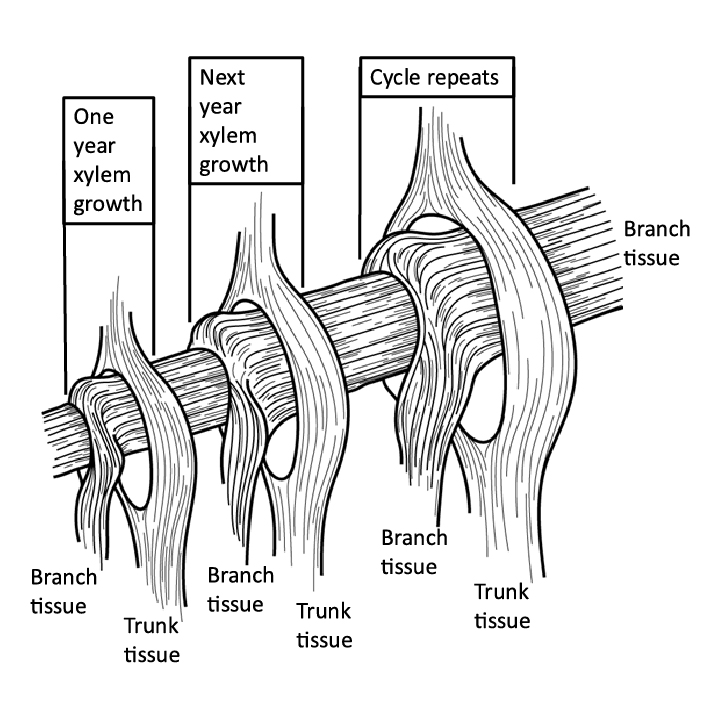
If a branch develops normally, it will form an attachment to the trunk, stem, or branch from which it originates. It does this by growing interlocking layers of xylem tissue where the two join. As a reminder, the xylem is the living tissue that conducts water and mineral nutrients from the roots to the canopy. New layers of xylem increase the girth or diameter of stems. In woody plants, xylem also provides structural support. It makes up the largest volume of tissue beneath the bark—most of what we consider “the woody part” of the plant.
Under normal conditions, a new layer of xylem begins growing under the bark, in the early part of the growing season; it begins at the tips of branches and moves downward toward the trunk and roots in a wave of new growth. Where branches join, first the smaller branch grows xylem, including a layer on the parent branch or stem (Figure 5). Later, the parent branch or trunk grows xylem tissue that wraps around the new smaller branch xylem.
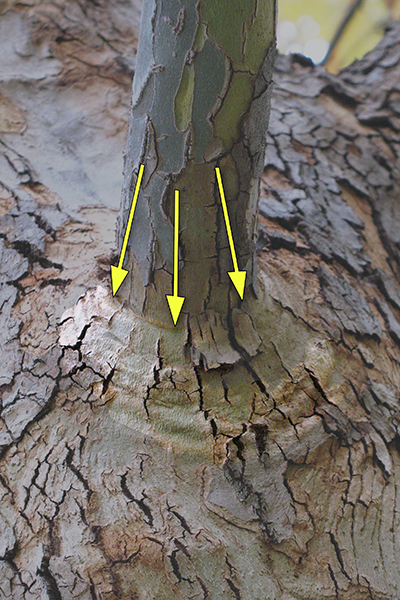
These overlapping layers of xylem create a raised collar of tissue around the base of the smaller branch under the bark. This is called the branch collar (opens in new window) (see Figure 6). As the branches grow, a ridge of bark tissue develops at their union on the parent branch or stem. This is called the branch bark ridge (opens in new window) (Figure 7), and it is often easier to see than the branch collar. A proper, or natural target, cut is made just outside the branch collar, on the side closer to the tip of the branch being removed. The best cut gets as close as possible to the branch collar, without cutting into it. Pruning cuts should never cross the branch bark ridge.
The branch collar is not always obvious from outside of the plant. They may not be very prominent on small branches, like those on shrubs or young trees. They can be hard to see on tree species with thick bark, such as elm (Ulmus) or pine (Pinus). If the branch attachment is not developing normally, there may not be a branch collar to see or feel. This is often the case when the two branches are approximately the same diameter. These are called codominant branches or stems.
Codominant branches and stems have a malformed attachment to each other that is weaker than normal. This weaker attachment is at higher risk of failure, meaning the two poorly attached branches might fall apart under stress. Pruning can sometimes be used to mitigate codominant branches or stems. This is addressed further in the section Pruning for Plant Structure.
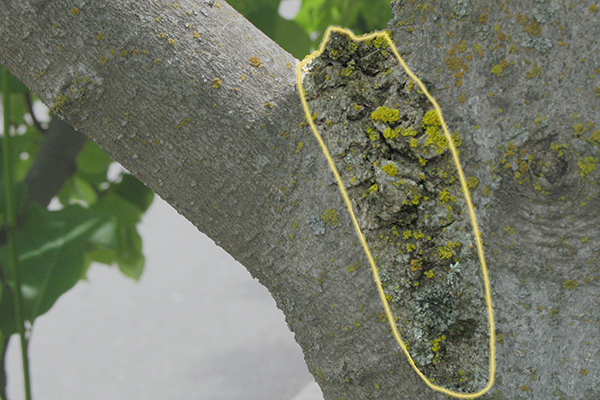
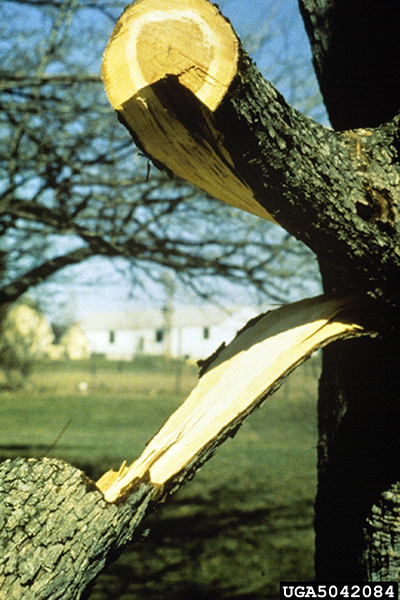
Large or heavy branches will frequently fall before a pruning cut completely severs them from the plant. If this happens, the falling limb can pull off tissue from the lower side of the branch, as seen in Figure 8. These tears can damage the branch collar and cause a larger wound on the plant that will be slow to compartmentalize—if it ever does. To prevent this type of injury, a three-cut method is used when removing a branch that is too large or heavy to hold in one hand.
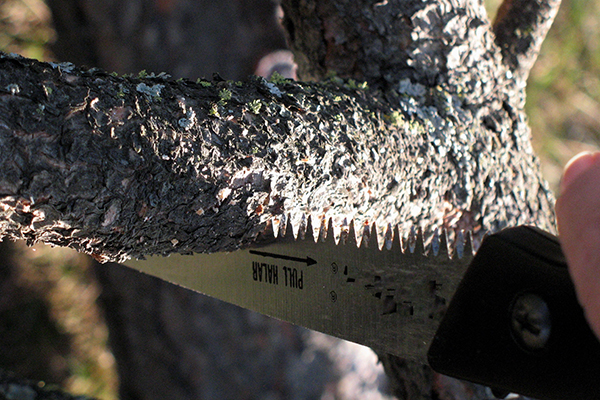
The first step in this three-cut method is called the undercut. The undercut is made several inches to a foot away from the branch union and only needs to cut approximately one quarter of the branch diameter (Figure 9). By cutting the underside of the branch, the pruner severs the tissue that might otherwise cause the bark to tear as seen in Figure 8.
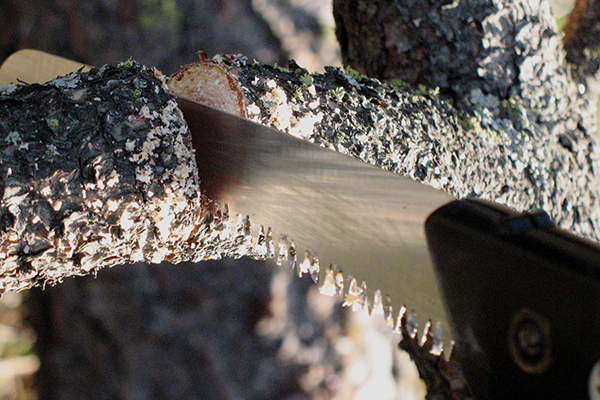
The second cut is called the through cut, and it is made from the top to the bottom of the branch, slightly farther out from the undercut. The through cut, sometimes called the top cut, removes most of the branch and leaves a stub. By relieving the weight of the branch, it makes the final and most important cut less likely to cause tearing. The through cut is seen in Figure 10.
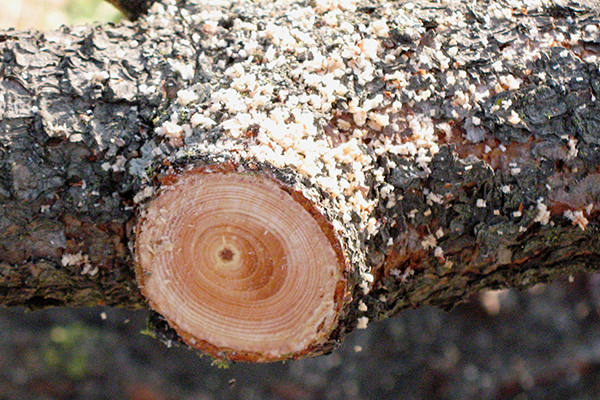
The final, or finish, cut is made just outside the branch collar at the natural target. Pruning at this location means avoiding the additional injury of removing collar tissue or leaving a stub that is slow to compartmentalize. The finish cut should leave a clean wound that is smooth and free of jagged edges as seen in Figure 11. This gives the tree its best chance to successfully compartmentalize the wound.
Improper Pruning Practices
Lack of knowledge, skill, or concern can lead to making improper pruning cuts that are prone to later problems. These problems include a loss of aesthetic value, stimulating a type of fast-growing but lower-quality growth called water sprouts, and poor wound compartmentalization. Wood decay in trees can also result from poor pruning practices, and this can significantly shorten the useful life of the tree.
Flush Cuts
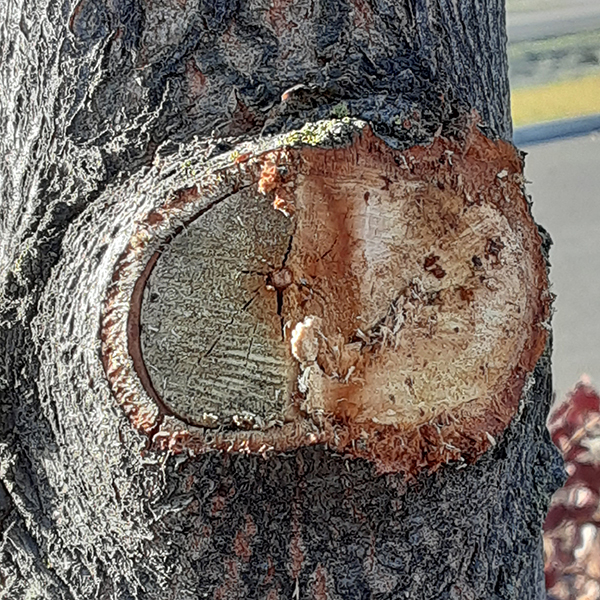
Cuts that remove some or all of the branch collar are called flush cuts. Flush cuts leave wounds that are much slower to compartmentalize, if they do at all (Figure 12). This slow compartmentalization makes these wounds more prone to decay.
Partially Missed Target Cut
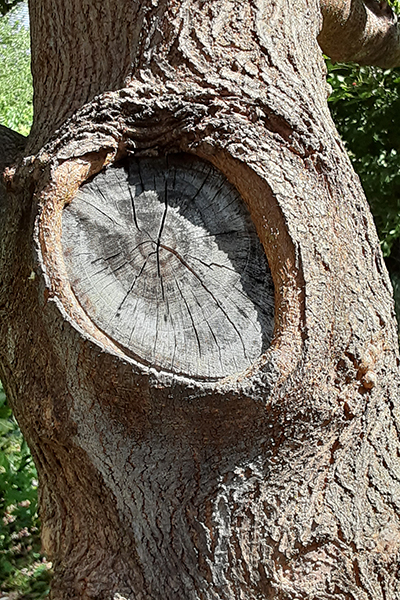
When wound wood appears as an incomplete circle or wound wood is absent, it suggests the pruning cut missed the natural target and removed branch collar tissue or left a stub where the wound wood is delayed (Figure 13).
Stub Cuts
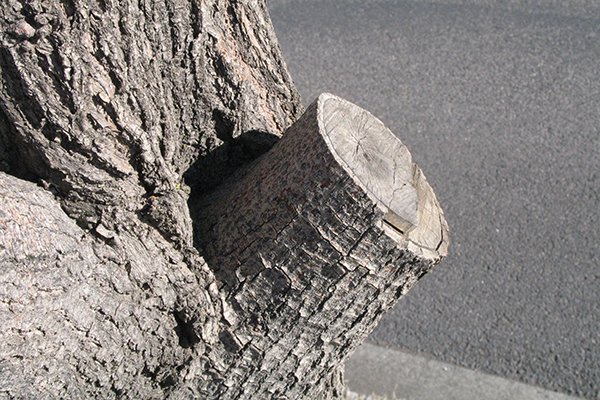
If a cut is made too far away from a branch collar or too far above a growing node on a twig, it is called a stub cut (opens in new window) because it leaves a stub of tissue (Figure 14). To compartmentalize, the wound wood tissue must grow up and over the stub which takes more time.
Topping
Plants are sometimes improperly pruned to be a random length, regardless of the natural target at an appropriately sized lateral branch. These types of cuts might be thought of as extreme stub cuts or reduction cuts gone wrong, but this practice is referred to as heading (opens in new window), also called topping (opens in new window) (Figure 15), and it is harmful to plants. The stubs left by topping are prone to wood decay which can be a safety hazard in large trees. Topping conifers often leads to multiple trunks that may also cause a structural issue on large trees. Deciduous plants that are topped usually respond with heavy growth of poorly attached water sprouts. Topping is not an appropriate pruning strategy.
Water Sprouts
If a branch is pruned heavily, it can trigger the growth of dormant buds (opens in new window) into fast-growing, mostly vertical shoots called water sprouts. While water sprouts do grow leaves for photosynthesis, they can be a problem in the long run. There may be many of them growing so closely they damage each other or adjacent branches. In addition, water sprouts are not as well attached to the parent branch as normal growth (Figure 16) and are more likely to fail under environmental stress, like wind, ice, or snow loads.
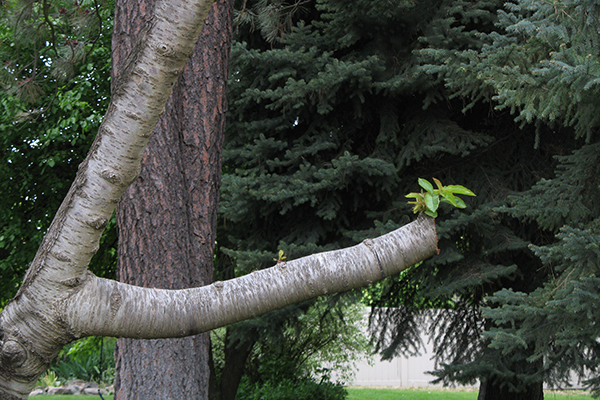
Water sprouts often develop in response to heading or topping cuts which leave large stubs of tissue outside the branch collar. Water sprouts can also be triggered when a branch or entire plant is over pruned, meaning too much of the live canopy is removed for a “normal” plant growth response.
The growth of water sprouts is a symptom of branch or plant stress, but does not always indicate stress from pruning. Water sprouts can be a response to serious pest damage or environmental injury, so gardeners should examine plants that suddenly produce atypical volumes of water sprouts.
Some plant species naturally develop more water sprouts than others. Arborists sometimes joke they can trigger water sprouts on hawthorns (Crataegus spp.) or crab apples (Malus spp.) just by walking past them with a sharp saw.
Prevent water sprouts from growing by making proper pruning cuts back to appropriate lateral branches. Minimize canopy loss by pruning only what is needed. Heavy water sprout growth is usually managed by selectively removing some and shortening others. Attempting to remove all water sprouts will trigger even more water sprout growth, creating a cycle of frustration for the pruner.
Overthinning
Overuse of removal cuts is sometimes called overthinning or lions-tailing because of the way the plant looks at the end (Figure 17). When too many interior branches of a plant are removed, it leaves most of the live tissue at the ends of branches. When branches are heaviest at their tips, it increases the risk of them breaking under stress. It also increases the chance of weather damage to the interior branches and trunk when they are suddenly exposed to direct sun, drying winds, and temperature extremes. When large trees are pruned this way, they are at elevated risk of failure during windstorms.
Wound Treatments
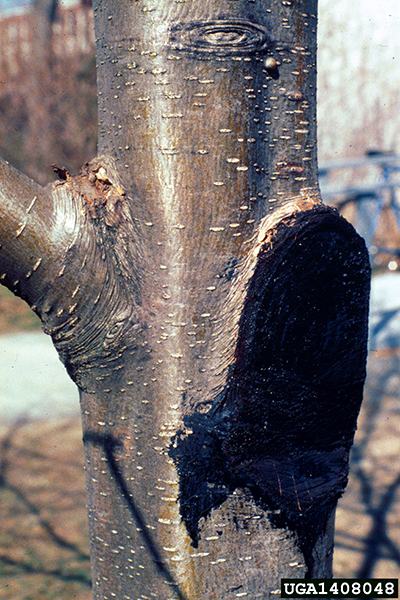
At one time, painting or tarring wounds
(Figure 18) was considered helpful to the tree, but more recent research has shown this practice to be largely unnecessary except in limited situations, such as preventing specific pest infestations. Products with petroleum, tar, or latex paint are—at best—unhelpful to the plant but can be phytotoxic or damaging.
Pruning Strategies
Trees, shrubs, and vines serve many roles in the landscape. Plants might be there to make the landscape more beautiful with flowers or fall color. They might be used as a privacy screen or to mark a property line. Some are planted to attract wildlife. Larger trees might be there to provide shade or a windbreak. Trees are often planted along streets for their environmental benefits to the community or because a mature tree adds value to a property.
Pruning objectives typically include:
- Maintaining or improving the health of the plant
- Minimizing the risk of injury or damage from a plant
- Assisting the plant in creating a sturdy structure—particularly important with large tree species
- Enhancing flowering or boosting fruit production
- Creating special visual effects
- Controlling size
Pruning for Plant Health
Removing unhealthy tissue is an example of a reactive pruning objective. For example, if a pest is identified on a woody plant, treatment options may include pruning to remove the pest organism(s). If pruning is chosen as the treatment, the gardener may then research the proper timing and techniques for effective pest control. Following those recommendations, they remove what is needed.
Pruning for plant health can also be preventative. Dead twigs and branches can become a harbor for pests that spread to live parts of the plant. By removing dead tissue, a pruner might prevent an existing problem from spreading.
In some cases, pruning live wood may be done to prevent a pest from establishing or to reduce the severity of pest damage. For example, removing the lower branches on some five-needle pines reduces the chances they will be infected with the lethal disease white pine blister rust. This fungus typically infects trees through needles close to the ground, but if the branches are removed, successful infection becomes less likely.
A different disease is found more commonly in home landscapes, as many plants, both woody and herbaceous, can be damaged by powdery mildew. Plants susceptible to powdery mildew are often pruned for more open canopies that reduce humidity and increase airflow and sunlight penetration. These plants are pruned to reduce the chances of powdery mildew infection.
Heavy infestations of certain scale insects or bacterial twig blights might be treated by removing affected tissue. If done properly, this can reduce or eliminate the pest population on the plant, but how is it done properly?
When pruning to remove diseased tissue, the parts of the plant showing symptoms consistent with a particular disease are assumed to be infected and are removed. “Symptoms” are a plant’s reactions to stress. However, disease-causing organisms may have spread beyond the area of visible plant symptoms. To remove the pest organisms from the plant, the person pruning might need to remove more than the area showing symptoms. In other words, they will remove all the damaged tissue and some that looks healthy (Figure 19) but may already be infected. The amount of healthy looking tissue to remove depends on the size of the plant and the disease causing the damage. Consult your local WSU Extension office for more specific information.
Pruning for Safety
If a tree, shrub, or vine causes an unsafe condition, then pruning may be the best solution. The objective is to remove only the part or parts of the plant causing the issue. Safety is the top priority, however, even if it requires removing an entire plant. This is done to protect nearby people and property.
Safety issues are sometimes obvious, such as a broken branch hanging over a sidewalk. There is a clear danger that the branch will fall, potentially landing on someone walking beneath it. Less obvious safety issues include tall shrubs obstructing the view of traffic at an intersection or dead vines creating fuel for a fire ignition. Pruning can mitigate a variety of safety issues but in some cases requires the assistance of a professional.
Utility Lines
Utility companies must maintain line clearance to continue electrical service and for safety reasons. Trees growing into power lines are pruned for a minimum of ten feet of line clearance (see Pruning to Control Size).
Note—A few diseases can be carried on pruning tools and may infect or reinfect a plant when the tool is used to make future cuts. In these cases, it is necessary to sterilize pruning tools between plants or even between pruning cuts. The Pacific Northwest Plant Disease Management Handbook (opens in new window). has specific recommendations for tool sterilization. Research shows not all diseases are spread via pruning tools; therefore, tool sterilization is not required between every cut for certain diseases. Disinfecting tools regularly limits the potential spread of pathogens but, depending on the disinfectant used, may be ineffective at quickly killing pathogens. Disinfectants like bleach can also cause corrosion of pruning tools, damage plant tissue, and cause irritation or injury if it contacts skin, eyes, or respiratory tissue through inhalation.
Safety Hazards
A property owner or manager needing help to determine whether a plant-related hazard exists should contact a certified arborist with a tree risk assessment qualification (TRAQ). These arborists take additional training and testing to help them identify unsafe conditions. Some use specialized tools to test for wood decay or other tree defects. A professional assessment will determine if a risk exists, the severity of the issue, and what might be done to mitigate it.
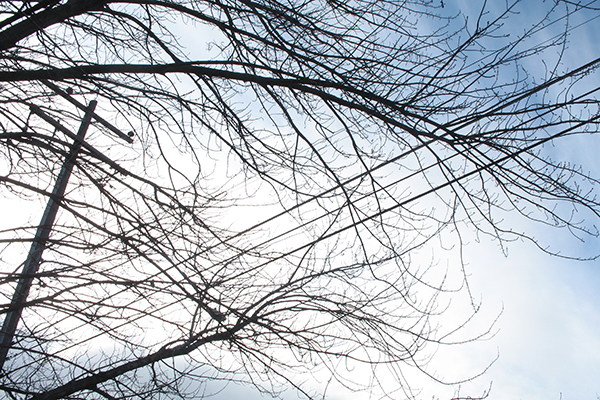
Figure 20. Branches near utility lines can be energized without physically touching the lines; homeowners should never attempt to prune branches within ten feet of a power line. Photo by Tim Kohlhauff.
Public Right-of-Way
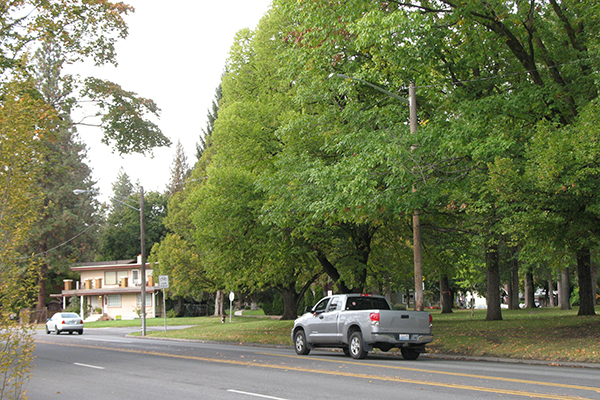
Plants in the public right-of-way may be governed by regulations not applicable to the rest of a property. Plants in these areas usually require pruning to maintain traffic clearance near roads or sidewalks (Figure 21). Home gardeners may be able to manage some plant maintenance, such as pruning to eliminate a tripping hazard along a sidewalk. Trees and shrubs in a right-of-way may require a special permit to prune. Consult the local urban forestry program or planning department to determine if a permit is required, what work property owners can perform, or if you need to hire a certified, licensed professional.
Risk of Mechanical Damage
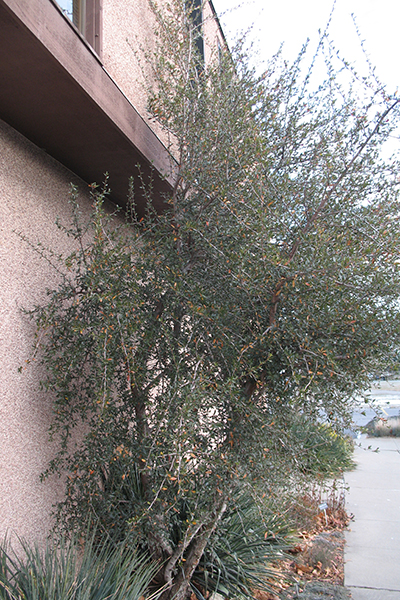
Woody plants growing against a house or fence can cause mechanical damage to the structure and should be pruned before they come in contact (Figure 22). They should be pruned back from pathways and doors for unobstructed travel. New plants should be installed far enough away from structures to prevent future contact.
Wildfire
Wildfire is a concern throughout Washington. While fire safety is more fully addressed in Chapter 24; Fire-Resistant Landscaping for the Home and Community, it is a pruning issue as well. Dead plants or plants with accumulations of dead branches can become fire hazards. This is a special concern when they are planted next to structures, so removal or pruning away from buildings should be a priority.
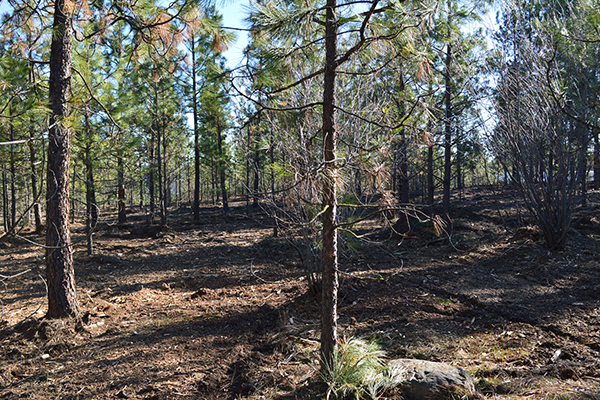
Tall trees should be limbed up 10 to 15 feet from the ground or three times the height of any adjacent shrubs to remove ladder fuel that can move fire into tree crowns (opens in new window). Crown fires are an especially severe and dangerous type of wildfire. Smaller trees that would not tolerate that much pruning can be limbed up over time, beginning with the lowest branches. Tree branches should be pruned for a minimum of 15-foot clearance from chimneys. Wildfire risk can also be reduced by thinning the woody understory (Figure 23) in forests adjacent to homes.
Pruning for Plant Structure
Structural pruning is important for larger species of trees, although smaller woody plants can benefit from it. The objective when pruning for good structure is to help the plant develop a form that resists the physical forces that act on it. These physical forces include things like the weight of the plant holding itself up against gravity, the impact of wind, or the extra weight of ice or snow building up on branches.
Research has determined that trees receiving structural pruning in their first 15–25 years have increased life spans, decreased long-term maintenance costs, and reduced risk of structural failures. Structural pruning on mature trees should be done by a certified arborist with the skill, knowledge, and physical ability for the job. Structural pruning on younger trees can be initiated by pruners with knowledge and training, but they may still want to consult an arborist because it is unlike other pruning tasks.
What is different about this type of work is that structural pruning is not accomplished all at once but over multiple years. Pruning to remove diseased branches or eliminate deadwood has a defined end; when the disease is gone or the deadwood removed, the task is accomplished. Structural pruning is more like training in that it is incremental. It gradually makes the plant more resilient to the physical forces of the environment by making lots of small cuts to redirect growth.
This chapter cannot cover all the specifics of structural pruning, but there are some basic guidelines to use when training young trees:
- Codominant leaders (opens in new window) and branches should be pruned to reduce or remove one of them.
- When removal is not appropriate, prune to slow the growth of all codominant leaders or branches but one.
- Plan and prune for adequate vertical space between main branches on the trunk.
- Plan and prune for radial space between main branches on the trunk so that the tree has branches on all sides.
Pruning Codominant Stems and Branches
The section Natural Target Pruning Cuts briefly addressed the concept of branch attachment formation resulting from the overlapping layers of branch xylem tissue and trunk xylem tissue. Normal attachments develop when the smaller branch grows new tissue, followed by tissue growth from the larger branch or trunk.
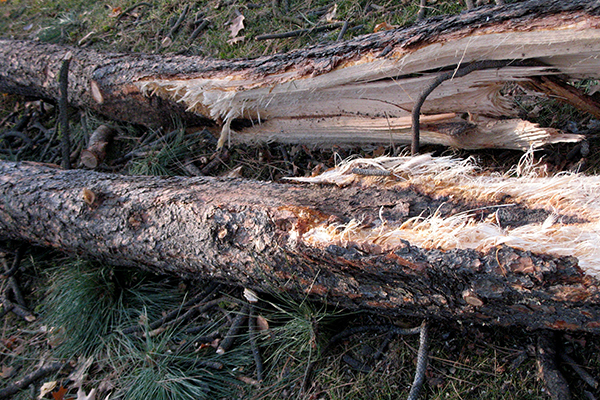
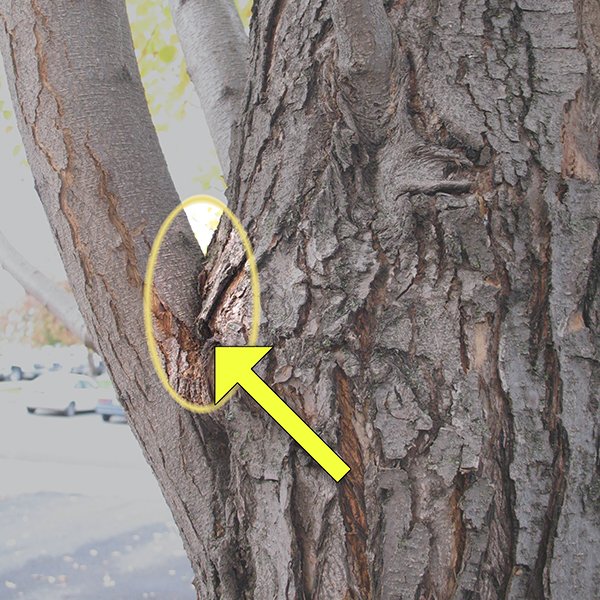
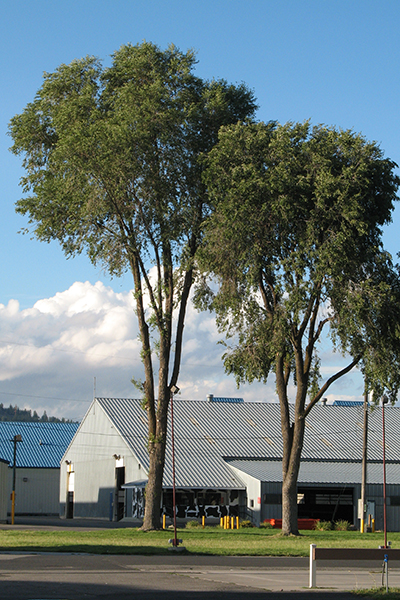
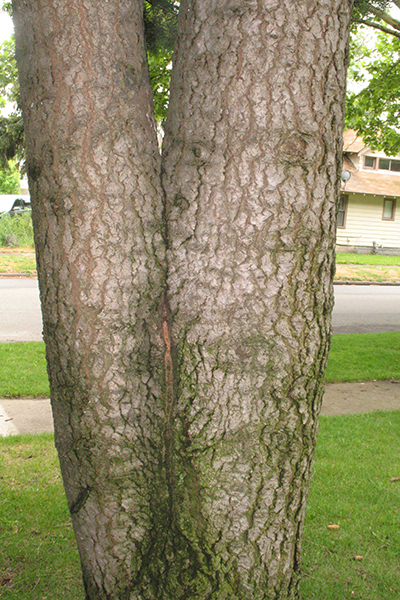
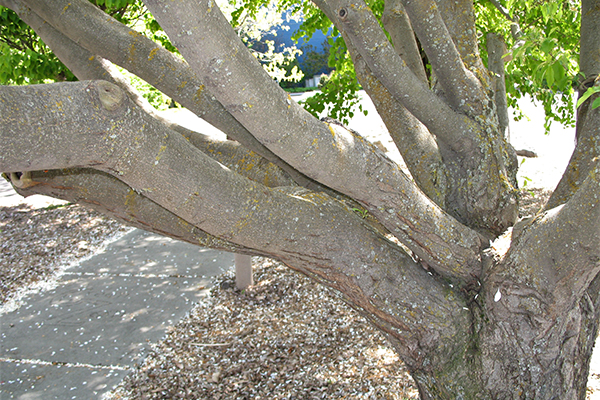
When branches are close to the same diameter, it is more likely that xylem tissue will not overlap. Instead of a branch bark ridge, there may be something that looks more like a valley; this is called a bark inclusion. The result is a weaker branch attachment that is more likely to fail under stress. An example of this weaker branch attachment is when a tree appears to have two trunks growing side by side (Figure 24). These are referred to as codominant leaders. If a codominant leader on a mature tree fails, it can cause severe damage and often leads to complete removal of the tree (Figure 25).
This type of failure can be prevented by pruning one of the codominant leaders when the tree is young. This results in a small wound rather than a complete tree failure. Depending on the situation, a small, codominant stem might be removed, or a reduction cut to shorten the length of one codominant stem can be made to slow its growth. The utility line-compatible tree in Figure 26 developed codominant trunks that were almost the same diameter and height. The one on the left was pruned back to a lateral branch to slow its growth and allow a better branch union to form.
Branch Spacing
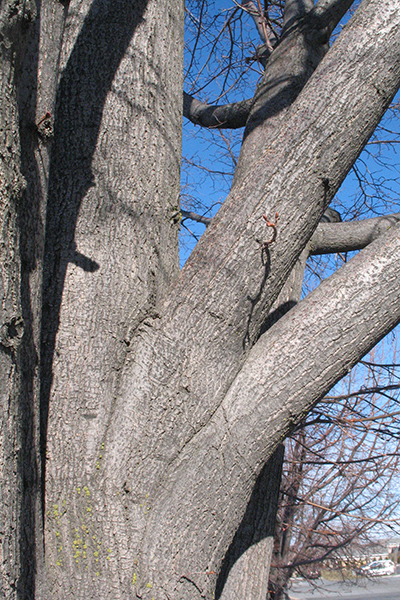
Branches growing too close together on the trunk of a tree can interfere with each other as they increase in size (Figure 27), causing improper branch attachment formation as well as mechanical damage from pressing against each other. Structural pruning addresses this issue by removing branches too close together while they are still small. Pruning is done to space branches vertically and radially (around the tree’s circumference). How can vertical branch spacing be done when the tree is always growing taller?
The key to vertical spacing is to start from the bottom of the canopy (opens in new window) and work upward. This means that after the tree has established in its planting site, the person pruning will identify the lowest permanent branch and other primary branches that will help form the structure of the tree. Choosing which branches to keep will be based on how much clearance is needed under the tree canopy; in some cases, the lowest permanent branch will not even appear for several years after the tree is planted. When determining the lowest permanent branch, the pruner should choose one that gives the clearance needed, and is healthy, growing vigorously, and free of any defects, such as cracks.
Once the lowest permanent limb is selected, any branches below it are considered temporary and will eventually be removed. The low branches on a tree help the main trunk to develop, so they may not be removed for several years and are rarely removed all at once. Depending on their number and size, some of these temporary branches might be removed while others are shortened to keep them from growing too large. Many of these temporary branches can be removed later, when the tree no longer depends on them for building a strong trunk.
Above the lowest permanent branch, pruning is done over a period of years to shorten or remove branches growing too close together on the trunk. How close is too close? This distance is based on the mature size of the tree, but large, deciduous, shade trees are pruned with 18-inch spacing as the long-term goal. On medium-sized trees, spacing is closer to 12 inches and even less for small trees. It is important to remember that this training is done over a period of 15–25 years, not in a single season.
Proper radial spacing means that branches should be growing out of all sides of a tree, as if they were spokes on a wheel where the trunk represents the wheel hub. Branches too close together can cause mechanical damage to each other from colliding and also interfere with normal formation of branch unions (Figure 28). In addition, a tree canopy that is lopsided may be less able to withstand stress from windstorms or heavy snowfall.
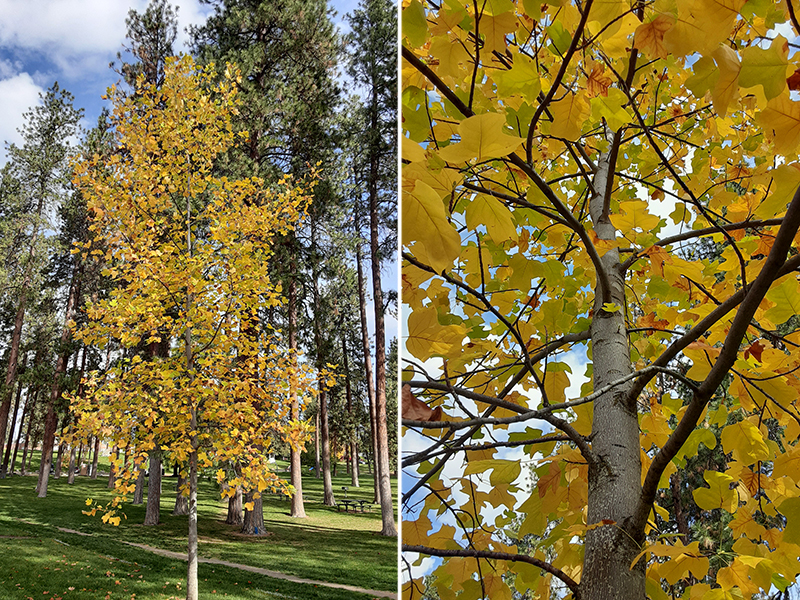
The tulip-poplar (Liriodendron tulipifera) in Figure 29 has been structurally pruned over an eight-year period. From a distance (top photo) it looks similar to any other tree, but the close-up in the bottom photo shows branches have been pruned for good spacing. There are no codominant leaders or branches.
Pruning to Enhance Flowering
Use proper pruning cuts for flowering woody plants, but recognize that specialized knowledge is required to enhance flowering. For example, it is important to know when the flower buds develop and when they bloom.
On some plants, flower buds develop during one year and then bloom the following year. Gardening literature sometimes call this “blooming on old wood.” Other plants bloom on “new wood.” This refers to plants that develop flower buds and bloom in the same year.
Most early to mid-spring blooming trees, shrubs, and vines develop flower buds in the summer of the previous year. Picture rhododendrons with the large flower buds growing at the tips of branches, clearly visible going into autumn. For plants like rhododendrons (Rhododendron spp.), forsythia (Forsythia spp.), lilacs (Syringa spp.), most fruit trees, and others, pruning in the dormant season will remove flower buds. If preserving flowers is a primary concern, then the best time to prune these plants is right after they finish blooming through early summer.
Plants that bloom on current season’s growth can be pruned through the dormant season without removing flower buds. This is because the flower buds have not yet developed. This includes plants like lavender (Lavandula spp.), elderberry (Sambucus spp.), potentilla (Potentilla), and rose of Sharon (Hibiscus syriacus), among many others. Pruning in the late spring and summer may remove flower buds, but if done early, the gardener will not notice a difference.
There are also plants like clematis (Clematis), hydrangea (Hydrangea), hypericum (Hypericum), spirea (Spiraea), and rose (Rosa) that bloom on the current season’s growth or previous season’s growth, depending on the species or cultivar. These groups of plants require identification before determining the best time to prune for enhanced flowering.
What impact, if any, does deadheading (opens in new window) have on flower production? For those unfamiliar with the term, deadheading is the practice of cutting off spent flowers before they produce seeds. The theory is that the plant redirects resources that would have been used in seed development for more flowers. Studies on roses and a rhododendron species suggest that deadheading does redirect resources into shoot development, which increases flowering in the long-term, but not in the same season. Deadheading did increase flowering of rhododendron in future years over unpruned, moderately pruned, and heavily pruned plants.
Pruning for Special Visual Effects
Pruning can be done to create or enhance the visual effects of certain trees, shrubs, and vines. In these cases, the aesthetic result of the pruning takes precedence over a strong structure or natural target cuts. These are labor-intensive techniques that require annual pruning to maintain. In some cases, pruning is done more than once a year.
Examples of types of pruning for special visual effects include:
- Hedge or screen
- Pollarding
- Espalier
- Topiary
- Bonsai
Hedges
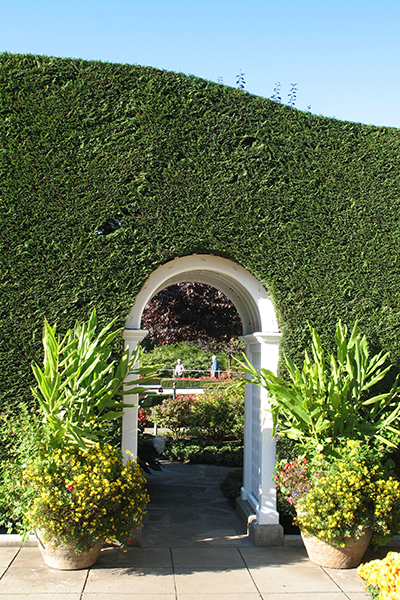
Hedges are created for several reasons that include marking a property boundary, providing a visual screen, or reducing noise. They can also act as a windbreak, or as a security barrier. To create a hedge, multiple trees or shrubs are planted in a line and allowed to grow together. Instead of pruning them individually, they are pruned as if they were all one plant to a predetermined size. Instead of natural target cuts, shears or hedge pruners are used to cut the tips of twigs into a flat plane (Figure 30).
Pollarding
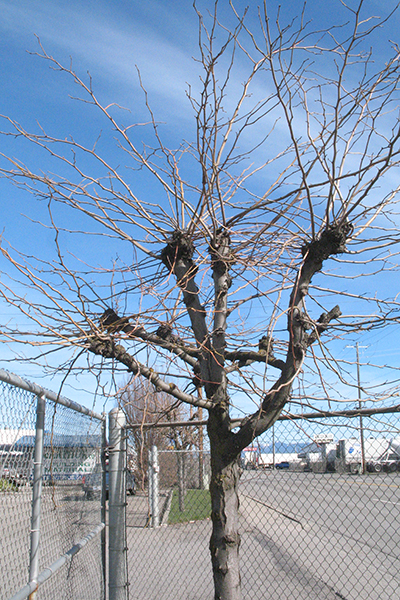
Pollarding is an old practice done to produce fodder for animals and, more recently, to maintain trees at a specific size. Usually performed on medium- and large-sized tree species, the plants are allowed to grow to a predetermined size. Pollarding begins when they are still young and more tolerant of heavy pruning. The major limbs on the tree are pruned back to a node, and then every year, new growth on each branch is pruned back to the same point (Figure 31). Over many years, the new growth coming from approximately the same spot on the branch causes that area to enlarge into a woody knob, sometimes called a pollard knuckle.
Pollarding is stressful, and not all tree species tolerate the regular removal of so much tissue. London planetree (Platanus × acerifolia) and willows (Salix) are examples of tolerant species. Most conifers will not survive pollarding. While it is a way to maintain a specific size, pollarding requires much more labor than would planting a smaller species.
Espalier
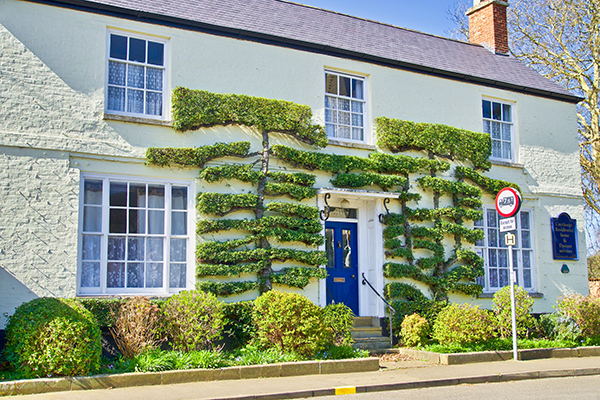
Another traditional pruning style is called espalier; it was originally performed on fruit trees growing in small spaces, although many tree, shrub, and even vine species have been found to be tolerant of this type of pruning. Like pollarding, espalier training begins on young plants, because mature plants are unlikely to survive the drastic tissue loss. The plant is usually attached to a structure for support and then pruned into a flat plane (Figure 32). As branches grow, they are tied to the structure to force them to grow in the desired direction, while other branches are pruned away to maintain the flat appearance. Traditionally, espaliered plants have been grown in shapes that look like fans, candelabras, or different types of lattices. Modern styles include serpentines, heart shapes, and asymmetrical patterns.
Topiary
Topiary is sometimes called “living sculpture,” as plants are sheared into various shapes (Figure 33). Some are simple geometric shapes like cubes or pyramids, but others are more complex animal forms or abstract patterns. Natural target cuts are not used; instead, pruning cuts are made entirely for the sake of appearance. Depending on the plant species and growing conditions, shearing must be done once, twice, or, in some cases, three times annually to maintain the shape.
Bonsai
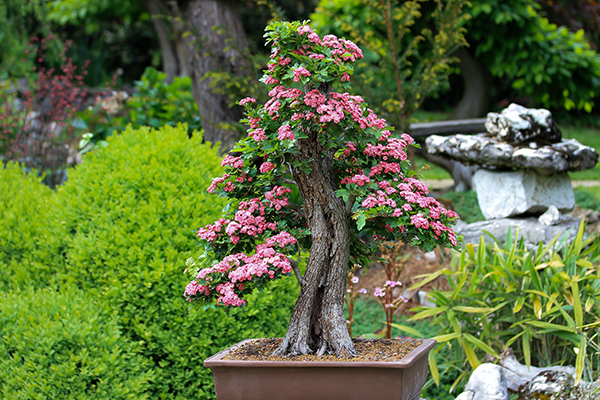
“Bonsai” is an umbrella term used to describe several different styles of plant care that originated in Asia. One or more trees or shrubs is grown in a container. They are pruned to remain very small but often to replicate the form and proportions of the mature plant (Figure 34). Branches are not the only part of the tree pruned in bonsai—roots, bark, and even individual leaves or needles are considered for removal.

Pruning to Control Size
Pruning to control size (Figure 35) is one of the most common pruning objectives but is often the result of choosing the wrong plant for the site. If a tree or shrub must be continually pruned to limit its size, it may be better to replace it with a smaller growing species than to keep spending time and labor on it.
When replacing a plant is not appropriate, it can be pruned to reduce size, which is called crown reduction. Branches are still pruned back to an appropriate lateral branch that is at least one-third the diameter of the branch to be removed. This is to ensure that the remaining branch will have enough size to continue growing and will compartmentalize the wound.
We know plants respond to pruning with new growth, so gardeners pruning for size reduction should take this into account. Pruning should remove more than needed to allow for future growth of the plant. The exact amount of extra tissue to remove depends on how fast the plant grows and how often it will be pruned. Established, fast-growing plants, such as willow (Salix), red-twig dogwood (Cornus alba, Cornus sericea), or arborvitae (Thuja), are pruned more aggressively, while dwarf cultivars of plants may need only light pruning to stay an acceptable size.
“Pruning cycle” is the term that refers to how often a plant will be pruned. Home gardeners typically prune on an annual cycle, although this is not true in every case. Annual pruning allows for less tissue removal because a plant will only grow so much in a year; therefore, less must be removed to maintain the desired size. Utility line clearance pruning, on the other hand, is done on a five- or even ten-year cycle. Drastic reductions are needed to keep lines clear for such a long period.
Renovation Pruning
Many shrubs and vines grow multiple stems from a common root system, rather than growing from a single or a few stems like a shade tree. This growth strategy allows them to recover from extreme tissue loss, such as that caused by browsing animals. For this reason, these types of shrubs and vines can tolerate a radical size reduction, commonly called “renovation pruning.”
In renovation pruning, 90–95% of a plant is removed at one time, leaving only 8 to 12 inches of the stems. Sometimes the process is spread out over a few years, taking one-quarter to one-third of the live canopy each time. This strategy is used when the plant has either become too large or overmature, meaning that it has lots of old growth that is no longer performing well. Renovation pruning is often considered when the alternative is to completely remove a plant. There is a risk that pruning this severely will itself kill a plant. Plants in decline or already dying back because of poor health are not typically pruned this way.
Renovation pruning is done in the late winter through early spring when the plant is dormant but after the coldest winter temperatures have passed so that newly exposed tissue will not be killed by cold. Moderate temperatures and rainier spring weather usually minimize stress and keep plants from drying out, which gives them the best chance of recovery. Pruning at this time also gives plants the whole growing season to recover.
Not all species can tolerate renovation pruning. Most conifers, for example, die if pruned this way. With the difference in growing conditions across Washington, plants that tolerate renovation in one place may not tolerate it in another. For example, a plant might tolerate renovation pruning west of the Cascades, but not east of the mountains because of the drier conditions. For more specific information, contact your local Extension office.
In general, healthy and established vines can tolerate renovation, but in some cases, they may not bloom for a year or more. Climbing roses, or any grafted plants, should not be pruned below the graft. Doing so will remove the desirable part of the plant and leave the root stock. Root stocks are not as ornamental, productive, or desirable as the scion plant. They are usually removed if the scion dies.
Shrubs that grow multiple stems from the soil, sometimes called canegrowing, are the most likely to tolerate renovation pruning. This is because they typically grow new stems from the root system. Examples of canegrowing shrubs are plants like red-twig dogwood (Cornus sericea, Cornus alba), lilac (Syringa spp.), or Oregon grape (Berberis or Mahonia).
Tools and Safety
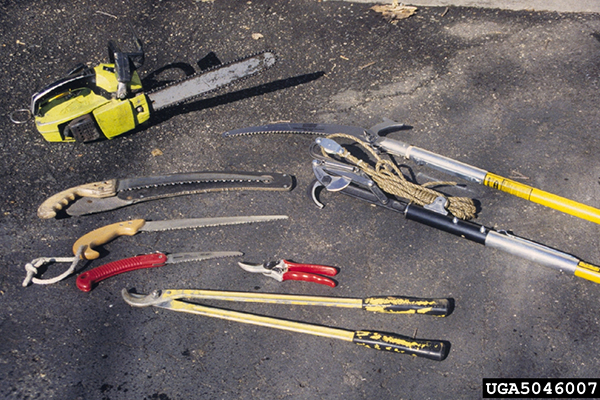
There are a wide variety of pruning tools for sale. In fact, there are so many different types of tools it can be confusing (Figure 36). There are two primary factors gardeners should consider when purchasing tools. First, they should ask themselves what type of pruning they will be doing, then they should purchase the right tools for that type of work. Secondly, they should shop for the right tools for that kind of work, paying special attention to ease of use and comfort when operating the tools. For example, hand pruners that open too wide to comfortably close with one hand may cause additional strain to operate. Additionally, manufacturers make specialized tools to meet special needs the gardener may have, such as left-handed tools or ratcheting pruners for gardeners with limited hand strength.
Most home pruning work can be accomplished with basic tools, including hand pruners and a hand saw. Other tools can be purchased if needed for specialized work.
Hand Pruners
Hand pruners are made to be held and used with one hand, so gardeners should shop for pruning tools that fit their hand to reduce the chance of muscle strain or blisters. There are pruners for different sized hands, for left-handed pruners, and even adaptive pruners for people with limited strength or dexterity.
There are two types of hand pruners—bypass and anvil types. Anvil pruners have a cutting blade that closes against an anvil or backstop, and these generally cost less than bypass pruners. Anvil pruners are more likely to crush or tear stems against the anvil, leading to poor-quality cuts. Bypass pruners cut using a scissor-like action that is more likely to make a clean cut, but they are more expensive.
Hand pruners typically cut woody stems up to one-half inch in diameter. Smaller hand pruners, designed for smaller hands, may not cut stems that large. Plant stems should fit deep into the jaws of the blades. If the branch does not fit into the pruners, or the tool must be twisted, or closed with two hands, it is a sign that the branch is too large. A different tool should be used to prevent damage to the plant.
Hand pruners and all tools should be kept in good condition. Cutting edges should be sharp and blades aligned to prevent poor-quality cuts that tear or pull plant tissue. Pitted surfaces provide space for dirt or pathogens to avoid disinfectants and transfer from plant to plant. Pruning tools should leave wounds that are free of ragged edges or debris.
Hand Saws
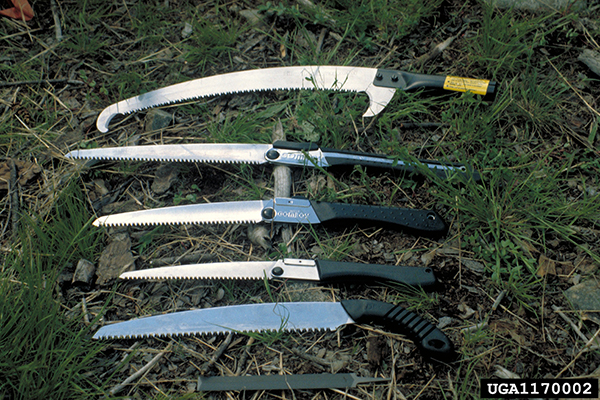
Hand saws also come in different configurations, including different lengths and widths, straight or curved blades, ergonomic handles, or saws that fold up for safer transport (Figure 37). Pruners should choose a saw that is comfortable to use and the right size to prune without damaging adjacent branches.
Pruning saws differ from carpenter saws in that the blade teeth are coarser, the blades are sturdier, and they cut on the pull-stroke. Branches larger than a half-inch usually call for a saw rather than hand pruners.
As with hand pruners, saw blades must be sharp to create clean, high-quality cuts. Dull blades should be sharpened or replaced to prevent excess damage to the plant. Incomplete cuts with torn or broken tissue should be cleaned up with hand pruners.
Other Tools
There are many other tools available to assist the home pruner with pruning chores, including loppers, hedge trimmers, chain saws, and a variety of blades on long poles. These may speed up pruning, but they do not always result in better pruning work. Hedge trimmers, for example, are designed to make multiple cuts along a flat plane, rather than natural target cuts. They are useful for shaping topiary, but not useful when pruning for plant health or good structure.
Worse, some of these tools increase the likelihood of injury to the operator. A 2013 study by the Consumer Product Safety Commission found 25,000 injuries from chainsaw use that required hospital care, 58% of which occurred at the operator’s home, which suggests these are not job-related injuries.
When to Call a Certified Arborist
Some jobs are too big for a homeowner to complete, so for the final section of this chapter, the guiding question is not how a plant should be pruned, but rather, “Who should do this pruning work?”
There are four major considerations that might tell homeowners or property managers when it is time to hire a certified arborist.
- Safety
- Ability
- Ownership
- Liability
Safety should be the number one priority in pruning work. For that reason, if part or all of a tree is growing within ten feet of a utility line, homeowners and property managers must not perform pruning work. A tree, shrub, or vine does not have to make contact with a utility line to be carrying potentially lethal energy. Only certified utility arborists, with proper training and using approved equipment, should prune in this situation.
If a pruning job requires climbing a tree, there are risks not only for the climber but also anyone (or anything) below the tree. This is not just a safety issue—liability for property or personal damages should be considered. Accidents can be extremely costly, especially if litigation is involved. Hiring a properly insured professional means that they assume the liability for the damage they might cause.
Climbing arborists perform a physically demanding job that also requires technical knowledge and safety training. Most homeowners and property managers do not have the physical ability or the proper equipment to climb safely. For this reason, they should hire certified arborists to prune large trees or when climbing is required.
Pruning does not have to involve climbing to require a professional. Hiring a certified arborist should be done any time the work to be done exceeds the pruner’s physical ability, technical skill, or knowledge of how to perform the work safely. Certified arborists are recommended when working on trees. Certified professional horticulturists and certified landscape technicians will have knowledge and experience pruning smaller woody plants like shrubs and vines.
Homeowners and property managers should not prune plants that do not belong to them or to the property they manage, unless they have been asked to do so or been given permission. This statement usually triggers the question, “What about my neighbor’s tree that hangs over the fence?” This question raises legal issues that go beyond the scope of this handbook. Ideally, neighbors will talk to each other and try to come to an agreeable solution. Property rights and tree-related legal issues should be referred to a qualified lawyer.
Ownership is not always as obvious as it might seem. Woody plants are often installed in rights-of-way that belong to a property owner but are regulated by a public agency. A local urban forestry program may have some jurisdiction over plants in rights-of-way, but it could also be a parks department, road department, or code enforcement. These agencies may require a permit to install, prune, or remove plants in a right-of-way such as a curb strip. Maintenance and costs associated with the plants might be the responsibility of the property owner; however, permits and regulations may be in place to protect the community’s interest in a healthy urban forest. Common regulations affecting trees in rights-of-way include pruning for traffic clearance, not removing healthy trees without cause, or hiring only certified arborists who can meet the agency’s pruning specifications.
Conclusion
Pruning woody plants is a necessary part of good stewardship. Well-maintained trees, shrubs, and vines provide benefits to the landowner and the whole community for much longer than those not given care. Pruning is a skill that is learned by doing, but it is informed by extensive research. Gardeners who study the body of pruning research are better able to minimize the impact of this intentional plant wounding. Proper pruning can improve plant health or reduce or eliminate a hazard. It can create a strong structure or simply improve visual appeal. Improper pruning can detract from ornamental value, create wounds that are slow to compartmentalize, shorten the life of a plant, or kill it outright.
Further Reading
Baryla, P., M. Kaplan, P. Kiczorowski, M. Krawiec, S. Wocior, and I. Wojcik. 2014. The Effect of Flower Removal on the Growth and Quality of Bushes of Two Rose (Rosa L.) Varieties (opens in new window). Acta Agrobotanica 67 (1): 33–38.
Chalker-Scott, L. 2013. How Plants Work. Portland: Timber Press.
Chalker-Scott, L. 2015 The Myth of the Cloroxed Clippers (links to PDF document). Horticultural Myths. Washington State University Extension.
Follett, M., C. Nock, C. Buteau, and C. Messier. 2016. Testing a New Approach to Quantify Growth Responses to Pruning among Three Temperate Tree Species (opens in new window). Arboriculture and Urban Forestry 43 (3): 133–145.
Gilman, E. 2012. An Illustrated Guide to Pruning, 3rd Edition. Clifton Park, NY: Delmar.
Gilman, E., and J. Grabosky. 2009. Growth Partitioning Three Years Following Structural Pruning of Quercus virginiana (opens in new window). Arboriculture & Urban Forestry (International Society of Arboriculture) 35 (6): 281–286.
Glawe, D., and G. Grove. 2009. Powdery Midew Diseases (opens in new window). In Pacific Northwest Plant Disease Management Handbook, J.W. Pscheidt and C.M. Ocamb, eds. Oregon State University.
Harris, R.W., J.R. Clark, and N. Matheny. 2003. Arboriculture: Integrated Management of Landscape Trees, Shrubs, and Vines, 4th edition. Pearson College Division.
Jacobi, W., P. Bovin, K. Burns, A. Crump, and B. Goodrich. 2017. Pruning Limber Pine to Reduce Impacts from White Pine Blister Rust in the Southern Rocky Mountains (opens in new window). Forest Science 63 (2): 218–224.
Kaur, N., ed. 2021. Pacific Northwest Pest Management Handbooks (opens in new window).
Kempter, G. 2015. ANSI A300 Pruning Standards—Part 1. Tree, Shrub, and Other Woody Plant Management. Tree Care Industry Association.
Kramer, E., and M.H. Borkowski. 2004. Wood Grain Patterns at Branch Junctions: Modeling and Implications. Trees Structure and Function 18. Springer.
Lecigne, B., S. Delagrange, and C. Messier. 2020. Determinants of Delayed Traumatic Tree Reiteration Growth: Levels of Branch Growth Control and Insights for Urban Tree Management, Modeling and Future Research (opens in new window). Urban Forestry & Urban Greening 47.
Lilly, S. 2010. Arborist’s Certification Study Guide. International Society of Arboriculture.
Mendes, R.J., N. Mariz-Ponte, C.V. Correia, M.C. Dias, M.L. De Sousa, F. Tavares, and C. Santos. 2020. Fire Blight Management: Physiological Assessment of Cultural Control by Pruning in Pear Orchards (opens in new window). Agriculture (Pol’nohosporarstvo) 66 (3): 128–136.
Miller, T., K. Kolosh, K. Fearn, and K. Porretta. 2015. Injury Facts. National Safety Council.
Ophardt, M., and S. Gray. 2015. Growing Roses in Washington State: Planting Roses (opens in new window). Washington State University Extension Publication FS166E. Washington State University.
Pavlis, M., J.B. Kane, J.R. Harris, and L. Seilar. 2008. The Effects of Pruning on Drag and Bending Moment of Shade Trees. Arboriculture and Urban Forestry 34 (4): 207–215.
Perrette, G., S. Delagrange, and C. Messier. 2020. Optimizing Reduction Pruning of Trees under Electrical Lines: The Influence of Intensity and Season of Pruning on Epicormic Branch Growth and Wound Compartmentalization (opens in new window). Arboriculture & Urban Forestry 46 (6): 432–449.
Petit, S., and C. Watkins. 2003. Pollarding Trees: Changing Attitudes to a Traditional Land Management Practice in Britain 1600–1900 (opens in new window). Rural History 14 (2): 157–176.
Pscheidt, J.W., and C.M. Ocamb, eds. 2021. Pacific Northwest Disease Management Handbook (opens in new window). Oregon State University Extension.
Purcell, L. 2015. Tree Pruning Essentials. Purdue University Extension. Purdue University.
Ryder, C., and G. Moore. 2013. The Arboriculture and Economic Benefits of Formative Pruning Street Trees. Arboriculture & Urban Forestry (International Society of Aboriculture) 39 (1).
Shigo, A. 1989. A New Tree Biology: Facts, Photos, and Philosophies on Trees and Their Problems and Proper Care. Shigo & Trees Assoc.
Shigo, A., and H. Marx. 1977. Compartmentalization of Decay in Trees. Agricultural Information Bulletin 405. US Forest Service.
Stephens, S., J. Moghaddas, C. Edminster, C. Fiedler, S. Haase, M. Harrington, J. Keeley, et al. 2009. Fire Treatment Effects on Vegetation Structure, Fuels, and Potential Fire Severity in Western U.S. Forests. Ecological Applications 19 (2).
Tuanrong, W. 2008. Effect of Pruning on Flowering Rhododendron simsii Palnch. Acta Horticulturae 769: 463–465.
Vogt, J., R. Hauer, and B. Fischer. 2015. The Costs of Maintaining and Not Maintaining the Urban Forest: A Review of Urban Forestry and Arboriculture Literature. Arboriculture & Urban Forestry (International Society of Arboriculture) 41 (6).
Wilson, B. 2000. Apical Control of Branch Growth and Angle in Woody Plants (opens in new window). American Journal of Botany 87 (5): 601–607.
Zobrist, K. 2011. Tree Topping: A Practice to Avoid (opens in new window). Washington State University Extension Publication FS061. Washington State University.