Berries and Small Fruits
Lisa Wasko DeVetter, Associate Professor of Horticulture, Washington State University
Gwen Hoheisel, Regional Extension Specialist, Washington State University
Blueberries
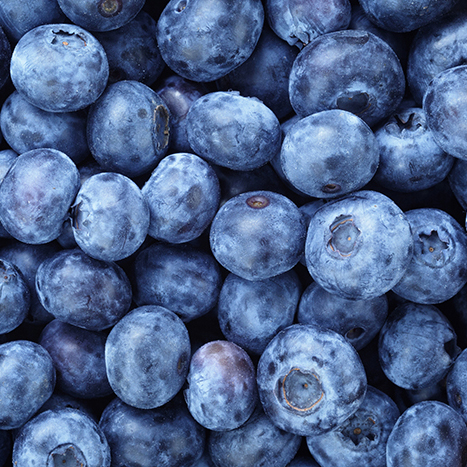
Many different species of plants are called “blueberries.” However, northern highbush blueberries (Vaccinium corymbosum) are an ideal fruit-producing and ornamental plant species for Pacific Northwest gardens.
Plants can grow to a height of five- to nine-feet tall, but this is largely dependent on cultivar. During the spring blooming period of late April to early May, plants usually produce abundant white to pinkish urn-shaped flower clusters, followed by a bountiful crop of tasty berries from June through mid-September, depending on the cultivar and growing environment. In autumn, some cultivars display yellow-to-scarlet foliage before the leaves fall. The fall foliage as well as wood color contributes to the year-round ornamental quality of blueberries.
As members of the plant family Ericaceae, blueberries share similar soil and climatic preferences as rhododendrons and azaleas. The plants thrive in areas of moderate summer temperatures and acidic soils. Cold hardiness is not a major factor, particularly in western regions of Washington State. Acclimated plants can survive midwinter temperatures as low as -1°F or even a few degrees lower, depending on cultivar and developmental stage. An open site with good air drainage reduces spring frost injury to growing flower buds and emerging blossoms. A growing season of 140 days is suitable for reliable fruit production. However, there are differences in timing of fruit production depending on whether a cultivar is early-, mid-, or late-fruiting. Environmental conditions particular to a growing season also influences harvest times.
Blueberry plants generally take four to six years from planting to become fully established, mature plants. Young plants should not be allowed to produce fruit for the first two years after planting, as early fruit production can come at the expense of developing a healthy root and shoot system. Flower buds should be removed by pruning to ensure no fruit develops. Once a bush is established, life expectancy can be unlimited. Young plants may bear 4 to 5 lb of fruit per plant, while mature plants six years or older can yield as much as 15 lb. In some cases, large and highly productive plants can produce 20 lb of fruit per plant or more.
Most blueberries are largely self-fertile, but planting at least two or more different cultivars near one another facilitates cross-pollination and can result in larger berry size. Insects like bumble bees, honey bees, and flies are required for pollination, with bumble bees being one of the more effective pollinators.
Cultivars
Cultivars vary in growth habit, timing of fruit production, yield potential, fruit quality, cold hardiness, and susceptibility to diseases and pests. These characteristics should be considered when selecting cultivars. The cultivars listed in Table 1 have performed very well in the Pacific Northwest. Home gardeners may wish to plant three or four different cultivars that have varying ripening periods to extend the harvest season.
Table 1. Blueberry cultivars.| Cultivar | Harvest period | Fruit characteristics | Plant characteristics |
|---|---|---|---|
| Earliblue | Early | Generally first to ripen; excellent dessert quality; large fruit size; medium yields | Vigorous, upright bush; avoid poorly drained soils |
| Spartan | Early | Very large, light blue; excellent dessert quality; medium to high yields | Vigorous, upright bush; prefers light, well-drained soils |
| Patriot | Early | Large fruit, firm, very good flavor; medium yields | Vigorous, moderately upright, short plant; tolerates heavy, wet soils and cold; susceptible to bacterial blight |
| Bluejay | Early to midseason | Medium size, light blue, mild, tart flavor; fruit can hang without losing quality; medium to high yields | Very vigorous, fast growing, tall; slightly spreading plant |
| Bluecrop | Midseason | Large, light-blue fruit; “classic” blueberry flavor; medium fresh fruit quality; medium to high yields | Very productive, vigorous bushes bear fruit over a one-month harvest season; easy to grow but needs proper pruning to remain consistently productive |
| Olympia | Midseason | Medium, dark fruit; thick skin; very sweet and aromatic; medium yields | Vigorous and spreading |
| Toro | Midseason | Very large fruit with excellent quality; high to very-high yield potential | Moderate vigor; spreading plant; does not tolerate heavy, wet soil |
| Berkeley | Midseason | Large to very-large fruit; mild flavor (sweet); medium blue color; susceptible to fruit rot; medium to very-high yields | Bush is open and spreading; performs best in light, well-drained soils |
| Liberty | Late | Medium-large size and slightly flat; good, aromatic flavor; can soften at high temperatures; high yield potential | Upright and vigorous; benefits from trellising; some sensitivity to cane diseases |
| Darrow | Late | Very large fruit size; tart; high yield potential | Vigorous, upright bush; sensitive to bacterial blight |
| Chandler | Late | Large, medium-to-dark-blue fruit; nice flavor with long ripening period; medium to high yields | Medium vigor with some spreading; can be susceptible to bacterial blight |
| Elliott | Very late | Medium-size berry; tart; can be susceptible to softening; high to medium-high yields | Moderately vigorous and erect; prune hard |
| Aurora | Very late | Medium-to-large size berry; tart; need to let fruit hang to fully ripen; high yield potential | Medium vigor with short and spreading growth habit |
Notes: More information on blueberry cultivars can be found in Blueberry Cultivars for the Pacific Northwest, listed in the Further Reading section.
Half-High (“Dwarf”) Blueberries
Half-high blueberries are crosses between northern highbush blueberry (V. corymbosum) and lowbush blueberry (V. angustifolium). Plant height averages are between 3 and 4 ft tall. In the Pacific Northwest, these plants have become desirable landscape plants that require only minimal care and produce edible fruit. Popular cultivars are Northland, Northcountry, Northblue, Northsky, and Chippewa. While the yield of these cultivars will never match that of standard highbush types due to their smaller size, these cultivars do have a place in the home garden.
Site Selection and Preparation
An acidic soil with a pH of 4.5 to 5.5 is one of the most important conditions for growing blueberries successfully. Plants often become yellow and stunted due to iron deficiency, which occurs when the soil pH is greater than 6.0. Other nutrients will also become limiting if blueberry is grown in soils outside of its desirable pH range. Preplant and regular testing of soil pH every few years can be helpful in monitoring soil pH changes to allow proactive decisions on adjusting pH. Particularly east of the Cascades where soils are more basic (pH of 7 to 9), it is critical to acidify the soil prior to planting and throughout the life of the plant. In general, conduct preplant soil tests 12 months before planting and use elemental sulfur to lower the soil pH. Apply sulfur at the rate of 2 to 5 lb per 100 square feet for heavier, high-clay soils and 1 to 3 lb per 100 square feet for lighter, sandy soils. Incorporate into the top 8 in. of the soil profile 12 months before expected planting to allow the soil to acidify. If soil pH rises after planting, consider using ammonium sulfate fertilizer to lower the soil pH. Reapplications of elemental sulfur on the surface of the soil should be done in late summer or early fall at a rate of 2 to 3 oz per plant if soil pH continues to rise. Although rare, lime can be used to raise soil pH if it falls below 4.0. More detailed information on acidifying soils can be found in Acidifying Soils for Crop Production: Inland Pacific Northwest, listed in the Further Reading section.
Prepare the planting site in the fall before planting in the spring. Eliminate all weed growth through cultivation. In areas west of the Cascades, use of a fall cover crop of winter wheat, rye, or barley (2 to 2.5 lb of seed per 1,000 square ft) reduces fall germination of weed seeds, protects the prepared site from erosion, and helps build up soil organic matter. East of the Cascades, the natural soil pH is often too high and will require pH modification after soil testing. Elimination of weeds and pH soil amendment should be conducted during the previous summer or fall to allow adequate time for the soil pH to stabilize before planting.
Soils low (<2%) in organic matter can benefit from the addition of organic matter. Amendments provide nutrients and can also increase soil water holding capacity, drainage, and aeration. Blueberry plant roots are relatively fine and shallow (12 to 18 in.), and prefer an open, porous soil with ample amounts of organic matter. Peat or Douglas-fir sawdust are the preferred sources of organic matter used at establishment. Manures and composts should be avoided, as the pH and salt level of these materials can be damaging to blueberry.
Among sources of organic matter, Douglas-fir sawdust is the most widely used. However, untreated and aged orchard wood chips can also be used. Do not use redwood tree sawdust or fresh cedar. Add 4 to 6 in. of sawdust or wood chips initially and mix into the soil. Reapplications of sawdust or woodchip organic matter can be applied as a mulch at a depth of 2 to 3 in. every two to three years. Alternatively, half a gallon of peat moss can be mixed with soil in a planting hole and will provide a good source of organic matter. If using peat moss, mulches can still be beneficial for weed management and can provide a good environment for blueberry root growth.
Blueberries do not demand as much soil depth for rooting as caneberries, grapes, and tree fruits, but gardeners should still select a site with at least 18 in. of free-draining soil. Raised beds also provide a suitable growing environment for blueberries. Raised beds can be created by mounding soil 9 to 18 in. high.
While blueberries will grow in partial sun, planting in full sun (sunlight three-quarters of the day or five to eight hours per day) promotes higher fruit yields and quality. However, if temperatures are frequently high, like those in eastern Washington, some partial shade prevents soil moisture loss and sunburn, and partial shade also keeps fruit from shriveling.
Establishment and Cultivation
Planting
Most blueberry bushes are planted in March or April as either two-year-old bareroot stock or as three-year-old and older container stock. Smaller stock is available and less expensive, but development of fruiting wood will take longer, and most home gardeners have better success with larger container stock. More expensive two- or three-year-old container stock may bear fruit the year it is planted, but this is discouraged because it can reduce fruit production in subsequent years (see the section Pruning, below). In a landscape setting, allow at least 3 to 5 ft between the plants and 5 to 6 ft between the rows, since plants become quite large at maturity. Dig a hole large enough to spread out the roots carefully at planting, and break up the root ball prior to covering with soil.
Fertilizing
Fertilizing should be done throughout the life of a blueberry plant to sustain growth and fruit production. Fertilizer rates will need to be adjusted for the age and size of the plant, with older and larger bushes generally requiring more fertilizer than younger, smaller bushes. In general, give established plants showing little or no shoot growth the maximum recommended amount of fertilizer in the spring. For vigorous plants with more than one foot of growth, fertilize less in the spring.
Nitrogen is considered a primary nutrient and should be applied annually. Blueberries are adapted to take up ammonium nitrogen, not nitrate nitrogen. Therefore, the source of nitrogen in a fertilizer will need to be evaluated to ensure it provides ammonium nitrogen. Ammonium sulfate, urea, and rhododendron or azalea fertilizers are good inorganic fertilizer options for blueberry. Organic fertilizer options include blood meal, feather meal, and soy protein hydrolysates. Animal-based manures and composts are discouraged due to their tendency to have high pH and salt levels. Yard debris compost may be used, but testing should be done to ensure pH and salt levels are not high. Liquid fertilizers may also be used, such as fish emulsion. However, fish is high in salt and should be diluted at a 1:10 ratio. Rotate use of potassium-containing fertilizers, as blueberries can be sensitive to high potassium levels. Table 2 gives recommended nitrogen rates for blueberries from planting to establishment. Use higher rates during years when fresh sawdust mulch has been applied.
Table 2. Total or actual nitrogen fertilizer rates for blueberry from planting through establishment to maturity.| Year | Nitrogen rate (oz/plant)* |
|---|---|
| 1 (planting) | 0.4–0.6 |
| 2 | 0.6–0.7 |
| 3 | 0.7–0.9 |
| 4 | 0.9–1.0 |
| 5 | 1.0–1.2 |
| 6 (established) | 1.2–1.5 |
| 7 | 1.5–1.8 |
| 8 (mature) | 1.5–2.0 |
*Refer to Growing Blueberries in Your Home Garden in the Further Reading section for more in-depth information on blueberry fertility.
Apply inorganic fertilizers at early bloom and again during late spring. Splitting the total inorganic fertilizer amount into two or three equal applications from late April through late June encourages efficient fertilizer uptake and decreases soil nutrient leaching. If using granular organic fertilizers, applications should also be split over time and made a month sooner than inorganic fertilizers so the nutrients can be released in time for plant uptake. Nitrogen in liquid fertilizer is readily available to the plant. Liquid nitrogen applications can be combined with granular applications to reach targeted total actual nitrogen rates. When applying liquid nitrogen, it is important to apply low levels frequently (every one to two weeks) to promote plant uptake.
For more information on choosing and using organic fertilizers and amendments, see Chapter 4: Plant Mineral Nutrition and Fertilizer.
For organic equivalents, see Table 4 in Chapter 4: Plant Mineral Nutrition and Fertilizers.
Use caution when fertilizing young, newly transplanted blueberries to avoid burning the developing root systems. Apply low levels of fertilizer and keep inorganic fertilizer away from the crown of the plants but within the dripline of the bushes. Apply extra nitrogen when you use sawdust mulches to prevent leaf yellowing and plant stunting due to nitrogen tie-up.
Remember to always follow the label if using any pesticides for crop protection against weeds, diseases, and insects. This includes organic pesticides. Follow all label re-entry and preharvest intervals (restricted-entry interval and preharvest interval, respectively).
Watering
Blueberries have a fine (i.e., thin) and shallow root system (12 to 18 in. deep). Supplemental watering from April or May to September may be required, with adjustments for rainfall and regional conditions. It is important to remember to continue irrigating after harvest, as blueberries form buds for the next season after harvest and drought stress can reduce yield potential for the next year. Drought symptoms include leaves with scorched or brown tips and margins, weak or thin shoots, and reduced fruit development and enlargement.
Aim to provide 1½ to 3 in. of water a week, subtracting rainfall contributions when appropriate. Irrigation should be done at regular intervals. Irrigate young plants more frequently due to their smaller root system. Be sure the entire root zone is wet after irrigating, but do not allow standing water to build up or the root zone to dry out between irrigations. Blueberries can be irrigated through a variety of means, but drip irrigation with two drip lines on both sides of the plant tends to be most effective. A drip system set on a timer can work especially well in keeping soil moist on a daily basis. Mulches reduce soil water evaporation, so irrigation amount and intensity can be reduced when using mulches.
Weed Control
Perennial weeds that spread, such as quackgrass (Elymus repens) and horsetail (Equisetum arvense), must be controlled prior to planting. After controlling perennial weeds prior to planting, add 2 in. of mulch each year to control the new germination and growth of annual, biennial, and perennial weeds. Douglas-fir sawdust can make a suitable mulch, as can untreated orchard wood chips and plastic landscape fabrics. Hand cultivate carefully within the dripline of the bushes to avoid severing shallow roots.
Bird Control
Many bird species forage on blueberry plants, either stripping plants of most of their fruit or pecking on berries to make them unfit for human consumption. Bird activity can also contaminate the fruit, creating a food safety concern. Bird netting is one way to reduce bird damage and can be applied by draping the netting over the bushes as the berries begin to turn blue. Visual bird scarers can also be used but must be moved frequently to prevent birds from getting desensitized to them. Some success may also be achieved by building nest boxes for predatory birds, like kestrels, barn owls, or falcons.
Pruning
Blueberries should be pruned every year to balance vegetative and fruiting growth. Pruning involves the selective removal or modification of laterals and whips. Laterals, or lateral shoots, grow from vegetative buds on one-year-old wood and emerge before whips. Whips are vigorous and arise from the crown or older wood near or above the crown. Fruit is produced mostly from fruiting buds found on one-year-old laterals. These fruiting buds are large, round, and near the lateral branch tip. Below fruiting buds are the smaller, scale-like vegetative buds that produce lateral shoots that support fruit development. As lateral shoots age, they form fruiting buds in late summer or early fall and thus provide the source for fruit production the following year.
Young plants need little pruning during their first one to three years in the ground. Flower buds should be pruned off to encourage the plant to develop a strong root and shoot system. After two to three years, young plants can be allowed to produce a small crop.
As the plants mature, prune out diseased or damaged wood. Also remove low, spreading branches near the ground, and head back branches that lack vigor to a strong, upright lateral. When the branch tips become twiggy, carefully thin them out with hand shears or a gloved hand. In general, lateral branches 6 to 12 in. long that have a pencil-sized diameter or greater and are more reddish in color tend to support the best fruit production.
On older bushes, production often declines as canes age, and they produce fewer fruit buds. To provide continual renewal wood of mixed ages and productivity, use loppers to remove canes with a basal diameter of more than 1 in. at the ground line and allow a new whip to replace it. If poor growth or fruit set occurs (less than four to five fruit buds per lateral), prune more aggressively to allow for regeneration and strengthening of the plant. Pruning should be done in the dormant season, ideally late November through February. Pruning during the fall, as opposed to the winter and spring, may delay acclimation to cold winter temperatures and reduce fruiting bud development.
Harvest and Storage
Harvest fruit approximately four to five days after the first berries turn blue so fruit size and sugar levels are maximized. From then on, continue harvesting at 7- to 14-day intervals, depending on air temperature, since all the berries in a cluster do not ripen at the same time. Use your thumb to gently roll berries from the fruiting cluster into the palm of your hand, then transfer them to a picking container. Fresh berries have a two- to four-week shelf life if they are kept in a refrigerator. To freeze blueberries, simply rinse them in water, then place in freezer in a single layer on a tray. When frozen, transfer to freezer containers.
Disease and Insect Problems
Diseases
Mummy berry (Monilinia vaccinii-corymbosi) is the most serious fungal disease of highbush blueberries but is largely present only in western Washington. It leaves affected fruit hard, white, and inedible. In late March, mummified fruit overwintering on the ground from the previous summer sprout small, brown, mushroom-like cups that release fungal spores. The spores infect emerging leaves or new flower clusters, leaving them blackened and withered. A second type of spore is then produced on these blighted tissues, and these spores spread to flower blossoms by insects, including pollinators. Infection and eventual colonization of developing fruit by this fungus leads to inedible berries. Infected berries appear normal until the onset of ripening, after which they then turn a tan to salmon color. Mature, infected fruits turn white, drop to the ground, and overwinter there, restarting the cycle. Manage mummy berry by repeatedly raking the soil or mulch layer beneath the plants in early March as leaf buds swell. Raking destroys the spore cups. Thick applications of mulch (>3 in.) can also reduce spore release.
Sanitation can also help with mummy berry management and can be implemented in small plantings. Remove infected berries from the plant before harvest and those that fall to the ground. However, some infected fruits may fall into grass alleyways and be difficult to locate. In larger plantings, fungicides can be sprayed on developing leaf and blossom tissues to protect them from the fungal spores, but sanitation alone can reduce mummy berry infection.
Botrytis blossom blight (caused by Botrytis cinerea) can also be a problem during a prolonged, wet spring. Gray fungal spores distinguish Botrytis infection from frost injury. If rains occur before harvest, Botrytis fruit rot can infect maturing berries. Reduce the incidence of this gray mold by keeping the plants well pruned to improve air circulation, which then dries the canopy. Drip irrigation instead of overhead irrigation can also reduce Botrytis incidence by reducing canopy wetness. In severe cases, apply protective fungicides during bloom and do not let the berries become overripe on the bushes.
Insects
Larvae of spotted wing drosophila (Drosophila suzukii; SWD) can infest blueberries. They tend to be more problematic in later fruiting cultivars and in western Washington, as SWD populations increase in moderate temperatures but cannot increase in temperatures exceeding 90°F. Especially true in eastern Washington, where higher temperatures exist for all midsummer months, choosing an early ripening cultivar can help reduce SWD infestations since the fruit will be gone when temperatures start to drop in the early fall. Frequent picking and subsequent cooling of harvested fruit can reduce the amount of eggs and impair larval development. Larvae complete their life cycle in berries dropped on the ground, so sanitation and picking up fallen fruit can reduce larval development. Reduction in populations has also been seen with the use of weed mat barriers placed above the soil. Exclusion netting (80-gram netting with a mesh size of 1.0 × 0.6 mm) can also be used to prevent SWD from accessing fruit. Lastly, insecticides can assist in SWD management.
Aphids (e.g., Ericaphis fimbriata, Myzus persicae) can reduce plant vigor and leave a buildup of sticky honeydew on the leaves and fruit. Aphids can also vector virus. Ladybird beetles are effective against aphids but may disperse from a home garden if an abundance of food (eggs and aphids) is not readily available. Organic and conventional insecticides can also be used to manage aphids and may need to be applied repeatedly (according to label instructions) in severe infestations. These insecticides may also reduce beneficial insect populations.
Cherry fruitworm (Grapholitha packardi) larvae destroy blueberries by feeding on the inside of the fruit. The ½-inch conspicuous pink worms are the progeny of small, dark-gray moths. The larvae burrow into and feed within berries, leaving frass and webbing. Often the damage is noted shortly before harvest. Apply appropriate insecticides at blossom drop and then two weeks later, if cherry fruitworm is a perennial problem.
A heavy infestation of lecanium scale (Lecanium spp.) stunts blueberry bushes and leaves them sticky and sooty with honeydew and mold. Prune out stems encrusted with high scale populations and apply dormant oil spray to the plants when the temperature is above freezing.
Root weevil (e.g., Otiorhynchus sulcatus) larvae can damage blueberries as well as other small fruits. The C-shaped, legless larvae are ⅕ – to ⅓-inch long and have white bodies and brown heads. They feed on the root systems and on the lower portion of the bush crown. Adult root weevils are rarely seen during the day. They feed on leaves in the evening, leaving the bush with characteristic leaf notching. While not harmful to the plant, the presence of notching is a good indication that larvae are present in the soil. No pesticides are available to home gardeners for use on larvae.
Raspberries
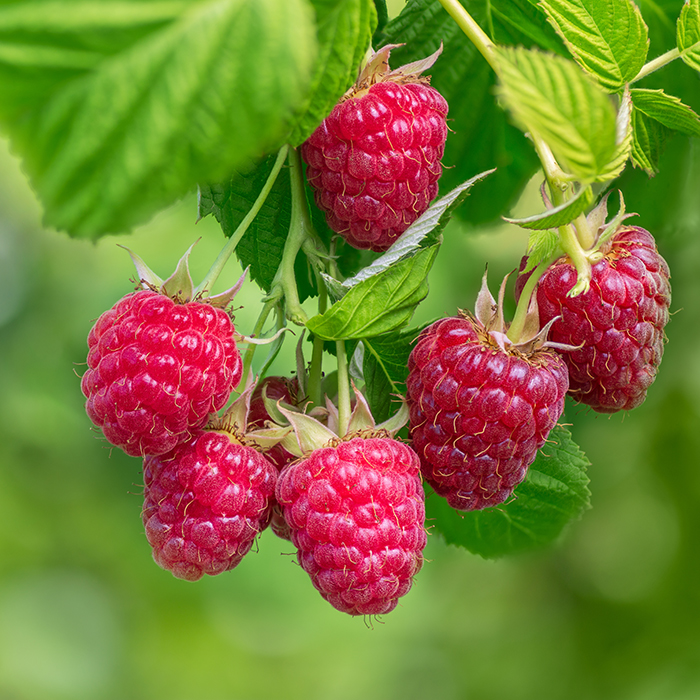
Red raspberries (Rubus idaeus) thrive in most areas of Washington but are particularly well adapted to western Washington. A raspberry planting may live and produce fruit for more than 30 years if it is planted in well-drained soil and cared for properly. In all locations, shelter raspberry plantings from winds to prevent desiccation of the canes during winter.
Since all raspberry flowers are considered self-fertile, no additional cultivar is needed for pollination. Pollen is transferred by bees and other insects that visit raspberry flowers. Flowers are generally easily pollinated because of their high nectar levels and flower shape that provides easy access to nectar and pollen. Spring frost injury is generally not a problem because flowers appear relatively late in the spring.
Cultivars
Two types of raspberries are available to the home gardener: summer-bearing and everbearing. Summer-bearing (floricane-bearing types, Table 3) form flower buds on first-year, vegetative canes, or primocanes (opens in new window), from late August to early September. These primocanes overwinter and become floricanes (opens in new window). Floricanes bloom and fruit the following spring and summer before dying. While the floricanes are fruiting, new primocanes emerge for the next year’s crop and continue the life of the planting. Summer-bearing raspberry canes are biennial, but the root system is perennial. Raspberry can be damaged or killed by root rot, but many of the Cascade series cultivars (for example, ‘Cascade Bounty,’ ‘Cascade Dawn,’ and ‘Cascade Premier’) from the Washington State University breeding program have tolerance or resistance to root rot.
Table 3. Summer-bearing (floricane) red raspberry cultivars.| Cultivar | Harvest season | Fruit characteristics | Plant characteristics |
|---|---|---|---|
| Prelude | Early | Small, dull, fresh market cultivar; early summer crop with potential for small primocane crop in late summer; low to medium yield potential | Moderate vigor; good tolerance to root rot; fairly cold hardy and may be suitable for eastern Washington |
| Willamette | Early | Dark, red fruit, low in sugar, tart flavor; processing cultivar; medium yield potential | Vigorous plants with numerous spines; adaptable to well-drained sites throughout western Washington and Oregon; avoid hot, dry climates east of the Cascades; susceptible to root rot |
| Killarney | Midseason | Medium size fruit, soft, can be dark red; fresh market berry; good flavor; medium yield potential | Moderate vigor and some root rot resistance; fairly cold hardy and may be suitable for eastern Washington |
| Meeker | Midseason, long | Higher in sugar; medium red; excellent flavor; leading commercial cultivar for processed raspberry; high yield potential | Fruit softens in fresh storage; not as winter-hardy; not suitable for wet, poorly drained sites; sensitive to root rot |
| Tulameen | Midseason, long | Standard fresh market flavor; excellent eating quality; large, bright berry; medium yield potential | Vigorous; very sensitive to root rot |
| Sumner | Later season, average | Fruit has bright color; lacks flavor and sugar; medium to high yield | Best performing cultivar for wetter sites; some winter hardiness for east of the Cascades |
*Notes: More information on raspberry cultivars can be found in Raspberry Cultivars for the Pacific Northwest in the Further Reading section.
The fall fruiting types are also known as everbearing or primocane fruiting (Table 4). These canes are still biennial, but timing of flower formation and fruit production differs. They bear fruit on the top half of first-year primocanes from early August through late September. If they overwinter, they can produce a second (“double”) crop on the lower half of the canes the following June through July. However, some commercial growers mow down fruited primocanes in the winter to avoid labor-intensive hand pruning and then skip the second crop. Overall, primocane-fruiting raspberry tends to be more winter-hardy than floricane raspberry and are a preferred option for eastern Washington. However, summer heat typical of eastern Washington may decrease fruit production and quality.
Table 4. Everbearing or primocane raspberry cultivars| Cultivar | Harvest season | Fruit characteristics | Plant characteristics |
|---|---|---|---|
| Autumn Bliss | Early | Larger and firmer than 'Heritage'; very nice flavor; low to medium yield potential | Canes short and sturdy, needing minimal support; good winter hardiness and resistance to root rot |
| Caroline | Early | Large, medium red, good flavor | Widely adapted and hardy; vigorous; high yield potential; susceptible to root rot |
| Summit | Early | Equal in size and firmness to 'Heritage'; difficult to pick under hot conditions; medium yield potential | Plants not as vigorous as 'Heritage'; has tolerance to root rot |
| Vintage | Early | Large, firm, bright red berry with good flavor; medium to high yield potential | Moderate vigor; somewhat sensitive to root rot; good hardiness |
| Fall Gold | Early | Yellow-fruited cultivar with mild, sweet fruit; medium yield potential | Bushes are only moderately vigorous; good winter hardiness |
| Polka | Late | Medium or large fruit, dark red, mild with good flavor; medium to high yield potential | Vigorous; low sensitivity to root rot; good hardiness |
| Heritage | Late | Medium-to-large fruit; bright color; mild-to-bland flavor; low-to-high yield potential | Vigorous canes need support; winter-hardy; fruiting season will be short in cold climates |
*Notes: More information on raspberry cultivars can be found in Raspberry Cultivars for the Pacific Northwest listed in the Further Reading section.
No single cultivar can be universally recommended. Cultivar selection should be balanced with fruit production goals, hardiness, soil characteristics, and potential for root rot. Yellow-fruited cultivars are best for consuming fresh. Jams made from yellow-fruited cultivars take on an unpleasant, greenish color. Floricane-bearing cultivars are usually vigorous, but they produce fruit with different flavors compared to primocane bearers. Overall, floricane-bearing raspberry is primarily used for processing, but ‘Tulameen’ is an example of a cultivar desired for fresh consumption. The earliest ripening cultivars usually produce mature fruit by the second week in June in southern parts of the state, and one or two weeks later in the northern parts of the state. The potential harvest season lasts four to six weeks. The earliest ripening primocane-fruiting types usually have fruit by the first week in August in the southern districts and can produce fruit until the start of the fall rains. In fact, later ripening, fall-fruiting types have had limited acceptance in the past because they bear late in the season. Yield per ten feet of row can range from 15 to 30 lb of fruit.
Black raspberries (Rubus occidentalis) ripen around the beginning of August. The most common cultivar is Munger (also known as Cumberland or Bristol) followed by Jewel, MacBlack, and Niwot. Black raspberry can suffer from viruses and diseases but make aromatic processed foods like jam. Black raspberries differ from blackberries in that, when picked, they do not retain the fruit receptacle, or “core” of the berry, with them and therefore are “hollow” like other raspberries.
Purple raspberries are a cross between red and black raspberries. ‘Brandywine’ and ‘Royalty’ are two examples of purple raspberries. Purple raspberries are vigorous, fruit are large and soft, and they usually fruit after floricane raspberry. Like black raspberries, they are more valued for processing over fresh consumption.
Site Selection and Preparation
Site Selection
Raspberries do best in well-drained, sandy loam soil at least 24 in. deep. Check the future planting site after a heavy rain in the winter for the presence of standing water. On sites that are slow to drain, install drain tile 24 in. deep or plant the raspberries on mounds of soil 9 to 12 in. high. Excessive soil moisture during late winter or when new roots are growing can weaken roots and encourage root rot development (see Diseases section, below).
Select a site that receives full sun all day long or approximately three-quarters of the day (five to eight hours per day). Plants grown in the shade remain small and produce tart fruit. Cultivate on either side of the rows to allow for primocane growth.
Soil Preparation
Plan to control weeds and build up the soil tilth a year before planting. Consider seeding a fall cover crop of winter wheat, cereal rye, or barley to the planting site to build up organic matter. Fall cover crop seeding rates range between 2 and 2½ lb of seed for every 1,000 square feet. Do not allow rye to head out the following spring before tilling it in and planting the raspberries. For raspberries, the ideal pH range is between 6.0 and 6.5. If the pH is less than 5.5, amend the soil with lime in the fall before spring planting.
Establishment and Cultivation
Planting
Dormant raspberry plants are usually available in nurseries from mid-January to March in western Washington and a month or two later in eastern Washington. Bareroot plants or tissue culture transplants in plastic cell containers are generally preferred for planting. Tissue culture transplants can be more difficult to transplant and may experience transplant shock after planting, but they usually recover. Do not use any planting stock that already has started to bud out appreciably, as it generally does not perform well. Purchase virus-free, certified nursery stock.
Caution: Sucker plants dug from an old, established planting during the winter when the plants are dormant often have viral diseases and their use is not recommended for new plantings.
The generally accepted planting distance for red raspberries in the Pacific Northwest is 18 to 30 in. between plants within the row, with rows spaced 8 to 10 ft apart. This “stool” or “hill” method of planting, which maintains canes as discrete plants, permits more ease in controlling weeds and excess primocane growth. Hand plant the row, then cut down the canes to a stem or “handle” of 3 to 4 buds above ground level. This practice encourages early development of basal shoots without promoting production of fruiting laterals during planting. In subsequent years, allow 8 to 15 primocanes to grow from each original stool or hill. Maintain the row at a width of 12 in.; remove excess primocanes using a hoe or rototiller. In the “English hedgerow” planting system, growers set out plants at 24- to 30-inch intervals but allow new primocanes to fill in the row to a width of 8 in. (Figure 3). Canes are also usually thinned out to 4 to 6 canes per linear foot. Higher densities of canes can create a dense canopy, making it more difficult to manage diseases and pests.
Fertilizing
Raspberry primocanes in the Pacific Northwest can grow an average of 8 to 9 ft during the spring and summer, with floricane raspberry reaching taller heights than primocane raspberry. Adjust fertilizer rates annually to achieve this amount of growth. Nitrogen is the primary nutrient that should be applied annually. Signs of nitrogen deficiency include older leaves at the base of the plant yellowing or turning pale green. A well-fertilized plant should have dark-green leaves.
Apply fertilizer in the late winter (March) as bud swell begins and primocanes emerge. Broadcast fertilizer over the entire row, band it along 1 foot on either side of the row, or apply fertilizer on a per-plant basis around the base of the plant. Take care not to get fertilizer on the plant as it may cause burning. West of the Cascades, apply ½ to 1 ounce of nitrogen using a balanced fertilizer of your choice (for example, 16-16-16) the year of planting. Increase this amount to 1 or 1½ oz of nitrogen per plant after the second year as the plants become established. Apply half this amount for black or purple raspberries, as they require less fertilizer. East of the Cascades, in areas of relatively high phosphorus and potassium, use only nitrogen. In all situations, splitting the total fertilizer amount into thirds, with one-third applied monthly from late March through late June, can encourage efficient fertilizer uptake. Many organic fertilizers work well in raspberry plantings as long as they are applied early to allow the nutrients to become available. Fertilizers with high salt content should be diluted with water. For example, dilute fish emulsion at a 1:10 ratio with water.
Watering
The raspberry plant is fairly deep rooted but can still suffer from a shortage of summer rainfall. Moisture is critical during fruit development and during the late August to September period, when flower buds form for the following year’s crop. Apply 1 to 1½ in. of water per week when rain does not fall. Overhead irrigation during the ripening stage can encourage fruit rot if the weather is cool and cloudy; consider using a trickle or soaker hose irrigation system.
Weed Control
Pull weeds by hand that appear later in the season or cultivate lightly, being careful not to damage roots. Landscape fabrics and plastic mulches can also work well in “stool” or “hill” systems, but holes must be wide enough to allow continued primocane growth. Organic mulches can also be used when applied 4 to 6 in. deep.
Trellising and Training
Raspberry canes lack sufficient strength to remain erect. Provide canes support by planting against a fence that they can be tied to or install a post and wire trellis support system. Erect the trellis the first summer the new plants are in the ground. If the newly planted canes grow vigorously the first summer, tie them to a wire support to ensure a crop the second year.
The first step in building a trellis involves placing secure, 6-inch-diameter end posts, preferably ones that have been treated with an environmentally safe wood preservative. Within the row, space 3-inch-diameter wooden posts every 25 to 30 ft, or place metal posts every 20 ft. Use 12-gauge or stronger wire to support a heavy fruit-laden canopy (Figure 3). A three-wire trellis is a widely accepted design. Place the top wire 4½ to 5 ft above the soil line, and set two detachable training wires 24 to 30 in. above the soil line. During the late summer, tie primocanes to the top wire, leaving the lower two wires on the ground. In the Scottish stool system, canes are gathered together in upright bundles and tied to the top wire with binder twine. For the English hedgerow system, canes are spaced and tied individually along the top wire.
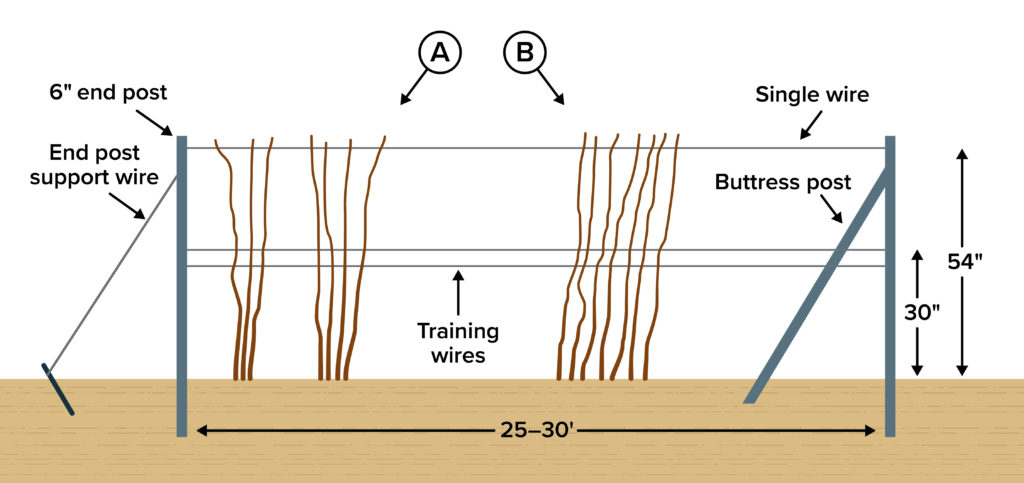
to grow continuously within the row. Original image by C.A. Brun.
The following spring, when new primocanes attain a height of 3 to 4 ft, bring up the training wires to collect the primocanes. Fasten the training wires to the intermediary posts, or hook them together with wire loops. Secure primocanes to the top wire with twine or metal loops of wire every 3 to 10 ft. In the late summer, repeat the renovation process.
Also acceptable is a four-wire trellis with two wires at 4½ to 5 ft and two training wires below. A four-wire, cross-arm trellis incorporates an 18- to 36-inch-wide wooden cross-arm attached at the top of each post within the row. During August, secure primocanes to these two top wires with twine. During the following spring, allow new primocanes to grow up through the center of the canopies to prevent them from interfering with fruit picking from the floricanes.
Pruning and Cane Vigor Control
For summer-bearing cultivars, prune out spent fruiting canes after harvest and leaf drop. This generally occurs October through February. These will be brown and appear dried. Retain 8 to 15 of the healthiest primocanes, which are green, and secure these to the top trellis. Leave primocanes long during the fall and early winter. Topping canes in early fall makes them more susceptible to cold injury. In late January or February, tie topped canes trained to either the Scottish stool or English hedgerow system to the uppermost trellis wire and then trim to 6 in. above that (4½ to 6 ft, depending on preference). You can also leave canes long and bow them over the top wire in a semicircle. Either method of pruning forces lateral branches to grow in the spring at a convenient picking height.
In commercial production of everbearing cultivars, pruning labor can be costly or scarce, and the fall crop on fall-fruiting cultivars is superior, so most growers advise cutting all canes to the ground in mid-October. However, this is optional in a home garden. Removing the entire cane in the winter will results in only a fall crop. Alternatively, removing the top half of the cane from everbearing cultivars after fruiting is over results in a summer crop the following June on the lower half of the cane from buds that have overwintered but not yet fruited. On vigorous plantings where cane growth is greater than 9 ft, the first flush of primocane growth can be removed by hoeing in the spring when growth is 7 to 8 in. high. New primocane growth follows shortly. This practice substantially increases yields, reduces fruit rot, and makes picking easier.
Harvest and Storage
Collect dry, firm fruit as it reaches the peak of color and sugar development. Avoid picking wet fruit, as it deteriorates soon after harvest. Berries will not ripen further in storage. Frequent harvesting greatly reduces the incidence of fruit rot disease and SWD infestations. A two- to three-day picking cycle is often done commercially to maximize fruit quality. Fresh berries have a shelf life of only two or three days in the refrigerator. Raspberries freeze well for later use and are good for making preserves.
Disease and Insect Problems
Diseases
Phytophthora root rot is caused by a fungal-like soil pathogen (Phytophthora rubi) and can be one of the most limiting factors in raspberry production. This soil pathogen is present in a diversity of soil types, but poorly drained sites with weakened roots are the most susceptible to root rot. Symptoms include wilting of primocanes in the spring. Leaf yellowing, bronzing, drying, and scorching can precede premature death of fruiting canes during harvest. Affected plants also have deteriorated root systems. Unhealthy root tissue is brick red in color, while healthy tissue is creamy white. Little can be done to control root rot in an established planting. Relocate the planting to well-drained soils, consider planting the raspberries on raised beds, berms, or in pots, or select a cultivar that has greater genetic tolerance or resistance to this pathogen.
Berries with fruit rot (Botrytis gray mold, caused by B. cinerea) appear water-soaked. During the latter stages of rot, tufts of gray fungal strands grow on the surface, covering the fruit. Promptly remove spent fruiting canes in August, and control excessive primocane growth as outlined under the Pruning and Cane Vigor Control section. In severe cases, fungicides may be used to manage Botrytis.
Several viral diseases infect raspberries. Symptoms include stunted plants, leaves that are small, yellowish, mottled, crinkled, or have bright veins, and berries that are small and crumbly. Raspberry bushy dwarf virus (RBDV) is a virus complex that is pollen-borne and is an important problem for commercial raspberry growers because it leads to crumbly fruit.
Be sure of the cause before taking action against any suspected virus issues, as poor pollination, drought, and soil boron deficiency may look like viral symptoms. Plant diagnostic labs can facilitate viral testing. Dig out virus-infected plants, and replace them with certified stock. Since the virus can spread to other parts of the plant before symptoms show, it is necessary to remove the entire plant, not just infected canes. Viruses like RBDV cannot live in the soil, but some can spread plant-to-plant through root grafting. Since viruses like RBDV require raspberry plants as a host to survive, growers may replant in the same area if all infected plants and roots have been removed, although it is recommended to wait at least one season before replanting.
Diseases such as anthracnose (Elsinoe necator), spur blight (Xenodidymella applanata), yellow rust (Phragmidium rubi-idaei), and crown gall (Agrobacterium tumefaciens and A. rubi) are occasional problems that affect the canes of raspberries. Anthracnose appears as small, purple spots with gray centers forming on new growth. Canes can become girdled and cracked. Spur blight results in brown or purple spots appearing at buds along infected canes; often these buds are killed, resulting in the absence of fruiting spurs the first 18 in. from the ground. Affected leaves display brown, wedge-shaped lesions. Field sanitation and properly applied fungicides, used at the green-tip stage of bud break in late winter, manage these two diseases. Yellow rust is a fungal disease that causes yellow pustules on the leaves, premature leaf fall, and reduced fruit yield. Cultural control includes removing infected leaves from the garden. Delayed dormant fungicides are also effective. A bacterial disease called crown gall causes rough outgrowths to appear on canes, crowns, and roots. Be careful when pruning affected plantings—accidentally wounding healthy plants encourages entrance of this pathogen. Dig out galled canes from the planting.
Insects
Spotted wing drosophila (SWD) is attracted to raspberry and can infest fruit. Larvae of SWD tend to be more problematic in later fruiting, primocane-bearing cultivars. Pick frequently and cool harvested fruit to reduce egg hatch and impede larval development. Larvae complete their life cycle in berries that have dropped on the ground, so picking up fallen fruit can reduce larval development. Exclusion netting can also be used to prevent SWD from accessing fruit. Lastly, properly timed insecticide applications can also assist in SWD management.
The crown borer (Pennisetia marginata) is another insect problem for raspberries. Clear-winged larvae tunnel to the basal portions of the canes and crowns, resulting in a gradual decline of the stand. A moth that looks like a black and yellow wasp produces the larvae. Digging out and removing infested canes helps control this pest.
Rose stem girdler (Agrilus cuprescens) is a relatively new pest of raspberries. Copper, metallic-colored female beetles lay eggs near the basal portions of primocanes. Cream-colored larvae emerge and feed below the bark, which can result in a gall-like swelling. To manage, prune out infested canes by cutting below galls and destroying.
Other minor insect pests include root weevil larvae that feed on the roots, leafrollers that roll leaves and feed on the fruit, and spider mites that cause speckled, bronzed leaves.
Blackberries
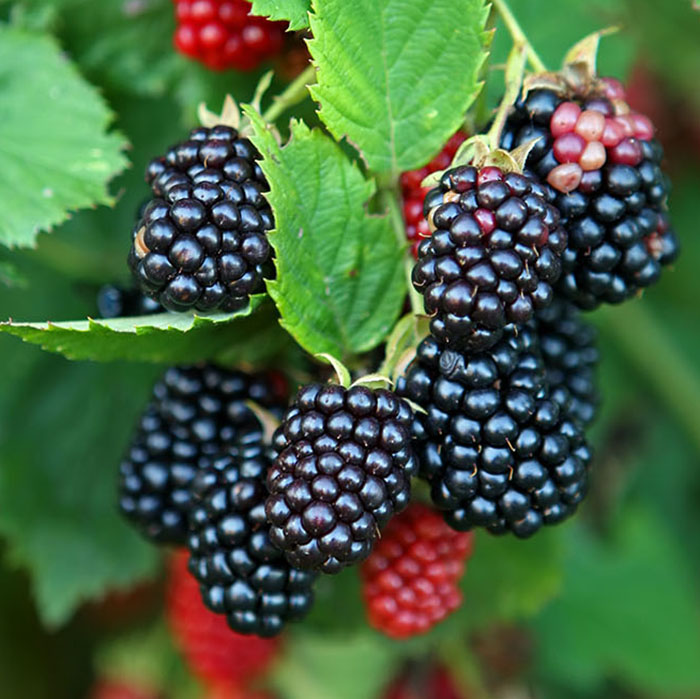
Blackberries and raspberries are members of the same genus, Rubus. However, unlike raspberries, blackberries retain the fruit receptacle, or core, of the berry with the fruit when harvested. As is the case with raspberry, blackberry flowers are self-fertile, eliminating the need for an additional pollinizer cultivar.
Similar to raspberry, blackberry includes floricane- and primocane-fruiting types. Blackberry also has different growth habits: trailing, erect, and semi-erect. Presence or absence of thorns depends on cultivar. Marionberry is an example of a trailing blackberry that fruits on second-year floricanes. Trailing blackberries are considered desirable for their high fruit quality and do best in areas west of the Cascades and south of Puget Sound. Even in mild areas, however, winter injury is a constant concern. Low temperatures starting at 5°F can cause freeze injury on canes, resulting in poor bud emergence in spring and a reduced crop. East of the Cascades, growers can keep vines of the trailing types on the ground and mulch them during the winter. However, high summer temperatures and low relative humidity often result in small yields and poor-quality fruit when grown east of the Cascades.
Cultivars
There are many blackberry cultivars and raspberry-blackberry hybrids (Table 5). In the Pacific Northwest, commercial growers favor trailing cultivars. Growth is vigorous. They can be trained by tying trailing canes to a post and wire trellis. These biennial plants form nonbearing primocanes the first year and fruiting floricanes the second year. Canes turn dry and brown and then die shortly after fruiting, at which point they should be cut just above the crown and removed. The earliest bearing cultivars generally produce fruit by the first week of July in southwest Washington; the latest cultivars bear fruit in late August. The fruit is considered high quality, juicy, and aromatic and is used for both fresh consumption and processing.
Cold-hardy, erect, thorny cultivars were developed using eastern blackberry species native to the United States and are more suited to eastern Washington. They may bear fruit on floricanes or primocanes, depending on the type. Erect, primocane-fruiting blackberry will fruit on the tip of primocanes or primocane branches and are also known as “everbearers.” Floricane-fruiting erect blackberry are also known as “summer-bearers.” Erect blackberry spreads from primocanes that emerge from roots and can form a natural hedge. Fruit tends to be seedier and less flavorful compared to trailing blackberry. Canes are also much stiffer and will stand erect with proper pruning techniques but generally require some trellising. Erect types are cold hardy enough for most of Washington.
Semi-erect, thornless cultivars produce vigorous, erect canes from the crown. They have the advantage of being thornless and have improved fruit quality compared to the erect, primocane-fruiting cultivars. Newer Pacific Northwest thornless blackberry cultivars are hardy to approximately 0°F.
A number of different raspberry-blackberry hybrids are available. Examples include Tayberry, Loganberry, Newberry, and Boysen. Management is similar to western trailing blackberry. Hybrids often are more suitable for processing than for eating fresh because of their unusual flavor, but they do provide novelty.
Site Selection and Preparation
Blackberries generally are more tolerant of varying soil conditions than red raspberries. For example, they can tolerate heavier soil textures. Even so, avoid planting sites that have standing water in the winter, or install tile drain at poor-draining sites before planting. Provide a shelterbelt around sites that receive considerable wind during the winter months to avoid cane damage. Prepare the planting site as you would for red raspberries, and consider planting on raised beds. Ensure that the planting site receives full sun exposure.
Establishment and Cultivation
Planting
Dormant blackberry planting stock is available for immediate planting in nurseries from mid-January to March in western Washington and a month or more later in eastern Washington. You also may obtain rooted cuttings from established plantings through a propagation method known as tip layering: bury the top 6 in. of primocanes during late summer. A root system and a new shoot will develop from the buried portion of the plant and be ready for transplanting in the spring. Perform this operation only with healthy, disease-free propagating stock that have no restrictions on plant propagation.
Planting distances vary according to blackberry type and the vigor of the cultivar. Set trailing types 3 to 5 ft apart in the row and semi-erect plants 4 to 5 ft apart. Rows should be 10 ft (trailing types) to 12 ft (semi-erect types) apart. Maintain plants in a stool or hill system for the life of the planting. Since relatively few primocanes arise as suckers from each of the stools or hills, retain all primocanes for later training.
Table 5. Northwest blackberry cultivars.| Cultivar | Harvest season | Fruit characteristics | Plant characteristics |
|---|---|---|---|
| Loganberry (raspberry-blackberry hybrid) | Early | Large, elongated, dusky-red berries; juicy and acidic; may be eaten fresh, frozen, or used in preserves; low to medium yield potential | Thorny canes of moderate vigor; needs winter protection in eastern Washington; susceptible to cane diseases |
| Marion (western trailing) | Mid-season | Large berries, good flavor; medium yield potential | Very vigorous and thorny; needs winter protection in many parts of Washington |
| Boysenberry (raspberry-blackberry hybrid) | Mid-season | Very large, reddish-black fruit; soft and sweet-tart in flavor; excellent fresh or frozen; high yield potential | Thorny, vigorous canes; hardy to approximately 10°F without winter protection |
| Tayberry (raspberry-blackberry hybrid) | Mid-season | Medium, glossy, red-purple fruit; tart and interesting flavor; fruit damaged easily by hot weather; low yield potential | Thornless; moderate vigor; difficult to pick; canes need winter protection in eastern Washington |
| Chester Thornless (semi-erect) | Late | Small to medium fruit; sensitive to sun damage; firm, round; very high yield potential | Vigorous and thornless canes; erect; winter-hardy in most of Washington |
*Notes: More information on blackberry cultivars can be found in Blackberry Cultivars for Oregon listed in the Further Reading section.
Erect (primocane- or floricane-fruiting) blackberries form new primocanes from the crown and root buds; therefore, they spread and are often grown in a hedgerow as they mature. Plant 2½ to 3 ft apart within a row and 10 ft between rows. Maintain a row width of about 12 in. through pruning or tillage of primocanes that grow outside of that width.
Fertilizing
Blackberry requires annual applications of nitrogen fertilizer, and signs of deficiency are similar to raspberry. Fertilizing blackberry is similar to raspberry. Fertilizers can be applied over the row, banded along 1 foot on both sides of the row, or around the base of plants. West of the Cascades, apply ½ to 1 ounce of nitrogen using a balanced fertilizer of your choice (for example, 16-16-16) the year of planting. Increase this amount to 1 or 1½ oz of nitrogen per plant after the second year as the plants become established. Use fertilizers only containing nitrogen east of the Cascade Range unless other nutrients are needed as indicated by a soil or plant tissue test. Apply one-third of the total targeted amount of nitrogen in late March, another one-third in late April, and the final third in late May through June. Many organic fertilizers work well for blackberry. Granular organic fertilizers should be applied in early March to allow the nutrients to become available. Liquid organic fertilizers can be combined with granular organic fertilizers. Liquid organic fertilizers should be diluted (e.g., dilute fish emulsion at a 1:10 ratio with water) and should be applied every one to two weeks in small amounts from late March through the end of June.
Trellising and Training
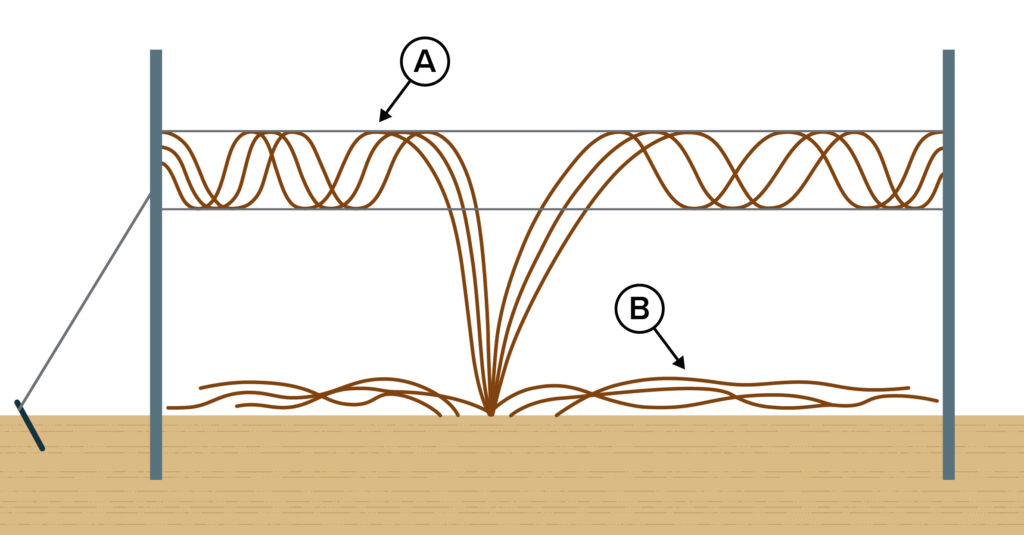
A single primocane can grow up to 20 ft in a single year, necessitating a training system to successfully grow trailing blackberries. One common trellis for trailing blackberry consists of end posts, wooden or metal intermediary posts spaced 25 to 30 ft apart, and two 12-gauge wires set 18 in. apart. Place the top wire 5 ft above the ground (Figure 5) and the bottom wire 42 in. above the ground. Allow new primocanes to trail along the ground within the row as they elongate during their first summer. These will overwinter and become a fruiting floricane the following year. In winter (November to March), train primocanes along the ground by separating them into two bundles and looping half of the primocanes in one direction and the other half the opposite direction. Wearing thick gloves to avoid irritation from the thorns, loop the primocanes around the upper and lower trellis wire, securing them using twine or ties. Some primocanes will likely be damaged. Wrap gently to avoid excessive plant injury. Another trellising option is to fan primocanes on multiple wires and tie them individually onto the trellis wire. Prune out spent floricanes from the previous season before training primocanes.
Primocane-erect blackberry
This section applies to primocane-erect blackberry, which is also known as everbearing erect blackberry. Erect blackberry can produce fruit on primocanes or floricanes depending on the type and management. Single cropping on primocanes is generally preferred because of easy pruning and overall greater yields. Single cropping management entails pruning or mowing back all canes to the ground in late winter, and allowing primocanes to emerge. To encourage fruit branches to form on primocanes, remove the top 6–12 in. of shoot growth in late spring or early summer. This practice is called “tipping.” Maintain a height of 3 ft. This will need to be done continuously because primocanes grow at different rates. These fruiting branches will produce a late summer crop of fruit that will continue until frost. Repeat this cycle the following spring by mowing or pruning out all canes to the ground. Throughout the season, suppress emerging primocanes and keep the row to a width of 12 in. A 2- or 4-wire trellis system with T-posts spaced 25 to 30 ft apart can be helpful for maintaining the row width by tucking growing primocanes within the wires by hand.
If double-cropping on overwintered floricanes, continue to keep row width at 12 in. and tip as described above. Prune in winter by removing dead fruiting tips from branches that produced fruit in the summer. Dead floricanes should also be removed. Below the pruned wood a floricane crop of blackberries will be produced in early summer. New primocanes that emerge that year will be the continued source of the late-summer or fall crop.
Floricane-erect and semi-erect
Manage floricane-erect and semi-erect blackberry similarly. After planting and one season of growth, “tip” or remove the tops of primocanes in late spring or early summer. The top 3 to 6 in. should be removed and height should be maintained to 3 to 4 ft for erect and 3 to 5 ft for semi-erects. Like primocane-erect blackberry, this should be done multiple times to account for different growth rates of canes. Fruit will be produced from tipped branches. Keep the row width 12 inches by removing emerging canes. Use a 2- or 4-wire trellis system with T-posts spaced 25 to 30 ft or a similar design, and tuck growing primocanes within the trellising wires by hand. In winter, remove fruited floricanes that are dead, and manage the recent growth of primocanes by removing dead or weak canes and reducing branch length to 1.5 to 2.5 ft and 2.5 to 4 ft in erect and semi-erect blackberries, respectively. These primocanes will be the source of fruit the following growing season. Vigorous canes may be tied to the trellis wire for extra support.
Disease and Insect Problems
Diseases
Blackberries share many of the same pathogens as red raspberries. However, Phytophthora root rot is often less problematic on blackberries. Fruit rot is often less severe as well, since blackberries mature during the drier portion of the summer. Fruit rot can be minimized by keeping the primocanes well separated through training, which promotes good air movement throughout the canopy. Harvesting regularly and keeping berries cool also minimizes fruit rot.
An important disease of trailing blackberries is “leaf and cane spot” (Sphaerulina westendorpii). This fungal disease causes 1/8 inch leaf spots that vary from light to dark brown and take on whitish centers with brown to red borders. In the spring, canes of some cultivars can develop irregular, elongated purple blotches that can develop into cankers, girdling the canes. To manage the disease, promptly remove spent floricanes, train primocanes in August, and apply fungicide in the spring and fall.
Insects and Insect-Like Problems
Redberry mite (Acalitus essigi) infestation can result in lack of uniform ripening. Infected fruit form bright red or hard, green drupelets that spoil fruit flavor. Microscopic mites overwinter in cane bud scales, the small leaf-like structure around a bud. To manage, apply delayed-dormant season oil-spray when floricane laterals are 2 to 6 in. long, and repeat in the fall with severe infestations.
SWD often infests blackberry. Frequent picking and subsequent cooling of harvested fruit can reduce egg hatching and larval development. Larvae complete their life cycle in berries dropped on the ground, so sanitation and picking up fallen fruit can reduce larvae development. SWD prefers cool, humid conditions; therefore, pruning for an open, aerated canopy may also reduce SWD pressure. Exclusion netting can also be used to prevent SWD from accessing fruit. Lastly, insecticides can also assist in SWD management.
Strawberries
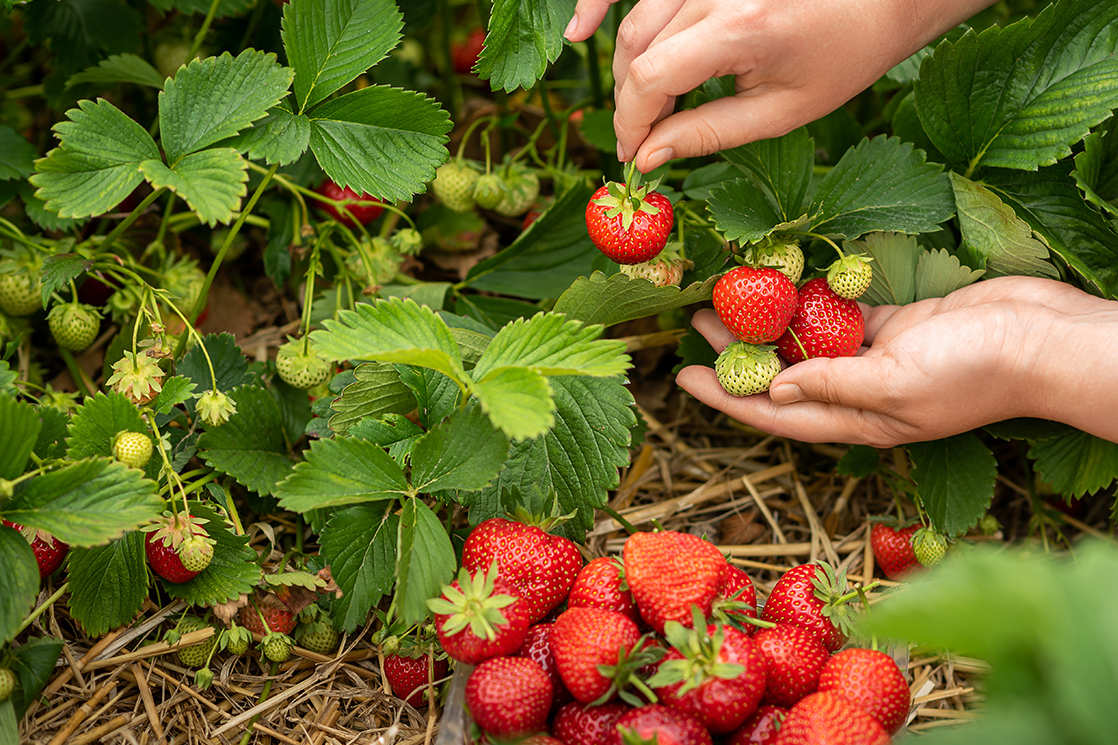
Strawberries (Fragaria × ananassa) are a favorite small fruit crop among many. Plants are considered perennial but may be grown as annuals depending on strawberry type and condition of the planting. There are three general types of strawberries, and careful selection among these types can provide a home gardener with an extended season of fruit production that can last from May through September or even October depending on weather conditions.
June-bearing strawberries are a popular type in the Pacific Northwest. These short-day plants form flower buds in late summer and fall that overwinter in the crown of the plant and produce spring flowers that lead to a late May, June, or July crop, depending on seasonal variation. Healthy June-bearing plants can be grown as perennials. A home gardener with a healthy strawberry planting who has exercised good weed management can expect a planting to last four to five years, sometimes longer. Fruit is also often highly aromatic and flavorful, making them ideal for fresh consumption and processing.
Everbearers are long-day plants with flower buds forming in the crown during the long days of summer and early fall. This leads to a small fall and early spring crop. Everbearers can be grown as annuals or perennials.
Lastly, day-neutrals (remontant; also sometimes referred to as “everbearers”) are a strawberry type that is not highly sensitive to day length when it comes to flower formation. Instead, temperature is a greater influencer of flower and fruit formation, with temperatures between 40 and 90°F being best. This can lead to a fruiting season that can last from May through October or even later in parts of western Washington. Use of low tunnels can further extend the fruiting season. Day-neutrals are highly productive due to their extended fruiting season, but yields can decline after one or two years of production. Therefore, many choose to grow day-neutrals as annuals.
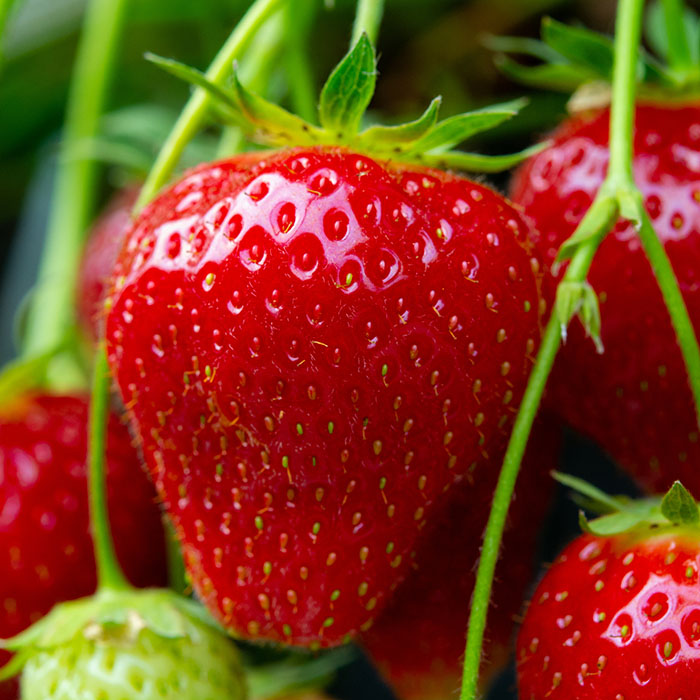
All strawberry plants consist of a crown, leaves, shallow root system, and stolons, also called “runners.” Runners are aboveground horizontal stems that allow plants to spread, producing clonal daughter plants. June-bearing strawberries produce many runners, while day-neutrals produce far fewer runners. Flowers emerge from the crown and produce fruit about 30 days after pollination. Strawberry is self-fertile, but insects aid in pollination. The strawberry fruit is technically not a true berry but is considered an “accessory fruit.” The true, botanical fruit actually consists of the “seeds” (called achenes). The sweet, red flesh is enlarged receptacle tissue derived from thickening of the flower stem.
Cultivars
There are many cultivars of strawberry plants due to breeding programs around the world that select for adaptability to local conditions. Cultivars bred in the Pacific Northwest are generally more adapted to regional conditions, with a few exceptions. Table 6 provides a list of June-bearing cultivars, and Table 7 lists both everbearers and day-neutrals. Home gardeners can be rewarded with a long season of strawberry production by selecting cultivars among these strawberry types.
Table 6. June-bearing strawberry cultivars for the Pacific Northwest| Cultivar | Harvest season | Fruit characteristics | Plant characteristics |
|---|---|---|---|
| Honeoye | Very early | Variable fruit size; flavorful; slightly acidic; good for processing or fresh consumption; low to medium yields | Vigorous; tends not to be as long-lived as other cultivars; prone to root rot; adapted to colder weather |
| Sweet Sunrise | Early | Medium to large fruit; good processed fruit quality; flavorful; high to very high yields | Vigorous; long-lived |
| Hood | Early | Popular due to flavor; fruit medium to large; can be uneven; excellent processing quality; low to medium yields | Very susceptible to viral diseases and fruit rot; plantings tend to be short-lived; plants can produce a lot of runners |
| Puget Reliance | Early to midseason | Large fruit; good flavor; good for processed and fresh use; high yield potential | Vigorous; durable with good planting longevity if well managed |
| Shuksan | Midseason | Medium or large fruit; best suited for fresh consumption but can be processed; excellent flavor; medium yield potential | Vigorous; durable with good planting longevity if well managed |
| Tillamook | Midseason | Large fruit size; pick fully ripe for maximum flavor; high yield potential | Very durable plant with medium vigor |
| Totem | Midseason | Medium to large fruit; good flavor for processing; medium to high yield potential | Good vigor and durability |
| Benton | Midseason to late | Medium-sized fruit; excellent eaten fresh or used in preserves but poor texture when frozen; medium yield potential | Vigorous; highly durable with potential for long-lived plants |
| Cavendish | Midseason | Large fruit; good flavor for fresh and processed use; high yield potential | Good durability; good resistance to red stele and verticillium diseases; hardy and adapted to cold weather |
| Rainier | Midseason to late | Large or medium fruit; excellent flavor; good for fresh or processed use; medium yield potential | Vigorous; average winter hardiness; plantings can be medium to long-lived |
| Puget Crimson | Late season | Large berries with good size | — |
*Notes: More information on strawberry cultivars can be found in Strawberry Cultivars for Western Oregon and Washington listed in the Further Reading section.
Table 7. Everbearing and day-neutral strawberry cultivars| Cultivar | Fruit characteristics | Plant characteristics |
|---|---|---|
| Quinault | Medium size and good flavor; low to medium yield potential | Everbearer: medium vigor; medium to short planting longevity |
| Albion | Most popular day-neutral for large fruit; good flavor; suited for fresh consumption; medium to high yield potential | Day-neutral: good flavor; medium to poor durability |
| Tristar | Small to medium fruit size; good to excellent flavor; suited for fresh consumption; low yield potential | Day-neutral: average vigor; medium to good durability; cold hardy |
| Tribute | Medium size fruit; good flavor fresh; low yield potential | Day-neutral: average vigor; medium to good durability; hardy in cold climates |
| Seascape | Large berries with good flavor; low to medium yield potential | Day-neutral: medium to good durability; sensitive to verticillium |
*Notes: More information on strawberry cultivars can be found in Strawberry Cultivars for Western Oregon and Washington listed in the Further Reading section.
Site Selection and Preparation
Strawberries require full sun and do best in well-drained soils that are slightly acidic (pH 5.6 to 6.5). Soils that are excessively wet can lead to poor root health and disease complexes. Plant on raised beds if drainage is a concern. Raised bed height should range between 6 to 10 inches. Avoid planting in frost-prone areas where spring freezing can occur to avoid flower damage. Strawberries share diseases with tomato, potato, and many other garden crops. Rotate as much as you can to avoid disease issues.
Strawberries compete poorly with weeds. Remove all perennial weeds before planting, and practice good weed management after planting through hand cultivation or mulching. Weed-free straw is a suitable mulch, especially for June-bearing strawberry. Black plastic mulch and landscape fabrics also work well as mulches. Both mulch types also prevent fruit from resting on the ground, which can encourage fruit rot. Mulching can increase slug pressure in western Washington, so consider extra slug protection when using mulches. Refer to How to Control Slugs in Your Garden, listed in the Further Reading section, for guidelines on slug management. Containers can also be used to grow strawberry. These dry out rapidly, so be sure to irrigate frequently.
Establishment and Cultivation
Planting
Certified virus-free planting stock is available from nurseries after the first of the year. Plants are often sold bare-root and should be kept cool until spring planting. Trim roots back to 4 to 5 in. before planting. Plant so the crown—the swollen growing region that gives rise to leaves and roots—is at soil level. Do not bury the crown too deep, as the roots will suffocate. Similarly, do not plant too shallow with the crown and roots exposed, as that will cause desiccation and poor rooting. Roots should not be bent when placed in planting holes. Plants may also be purchased as transplants sold in plastic cell containers. Plant as you would a normal transplant, but use caution not to bury too deep. Strawberry can also be planted in fall, but this is often not practiced due to lack of available planting material.
June-bearers are normally grown in a matted row system where plants are set 15 in. apart within the row, and rows are 36 to 42 in. apart. Runners are allowed to form and fill in the spaces until the row is 14 to 18 in. wide with what appears to be continuous plants. In this matted row system with runners and daughter plants, the individual plants are not distinguishable once established. For the first year, remove blossoms to allow a healthy root and shoot system to develop.
Everbearers and day-neutral cultivars often are grown in a hill system of individual plants. They seldom form runners, and therefore a matted row system typical of June-bearing plants cannot be formed. Space plants 12 to 15 in. apart. After planting, remove the first blossoms that appear at about six weeks to encourage strong leaf and root development. Afterward, retain flowers for fruit production. Runners may also be removed regularly which may promote yields because less resources are directed to runners at the expense of fruit development.
Fertilizing
Healthy strawberry plants produce dark-green leaves. Pale or yellow leaves is a sign of plant problems often related to nutrients. Nitrogen is an important nutrient that should be supplied at planting and annually thereafter. Most synthetic and organic fertilizers work well for strawberry. If using dry, organic sources, remember to apply them at least a month ahead of plant demand, because the nutrients need time to be released.
New plantings need an average of ½ to 1 oz of nitrogen per 10 feet of row. Split this rate into three applications to encourage efficient uptake, with the first third applied immediately before planting as a preplant fertilizer or shortly after planting (one to two weeks). Apply the second third a month after planting and the final third two months after planting.
After the first year, the planting is considered established. June-bearers should be fertilized after fruiting and during renovation (see below) as a single broadcast application over the length of the row. Irrigate immediately after. Rates of nitrogen will vary based on vigor and region, but ½ oz of nitrogen per 10 feet of row is a general guideline.
Everbearers and day-neutrals have longer fruiting seasons and require different fertilizer practices to sustain production. Apply 0.2 oz of nitrogen per 10 feet of row monthly from May through July. If growth is weak, apply an additional 0.1 to 0.2 oz in August and September.
These recommendations are for dry fertilizers. If using liquids, apply more frequently by splitting the rate into applications that occur one to two weeks, and dilute liquid fertilizers high in salt (for example, fish emulsion) at a 1:10 ratio or as suggested on the label. For all types, avoid getting the fertilizer on the plant to avoid fertilizer burn.
Watering
Irrigate throughout the growing season, even when plants are not producing fruit, as this will promote good flower and fruit bud development for sustained production. The goal is to provide 1 to 1½ in. of water per week during the growing season. Mulching can reduce water received through rainfall, so carefully monitor soil and plants to avoid underwatering. Mulches can also reduce soil water evaporation, so be careful not to apply too much water which can weaken the plant. Irrigate to a 2- to 6-inch soil depth. Drip systems work best, because they avoid getting water on foliage and fruit, which can reduce disease and increase irrigation efficiency. Take into consideration soil type, and irrigate more frequently on sandy soils compared to soils with high clay.
Weed Management
Weeds are important to manage, because strawberry competes poorly with weeds. Planting is the best time to manage weeds, especially perennial species. Mulching, light cultivation or hoeing, and hand pulling are all methods to manage weeds. Use care not to damage the shallow root system.
Renovation
Renovation should be done two weeks after fruiting and only in June-bearing plantings. Renovation rejuvenates the plants and entails mowing off the old leaves and narrowing the matted row to 10–12 in. through tillage or hand hoeing. When mowing, use care not to damage the crown, and leave about 2 in. of growth above the crown. Fertilize as described above and irrigate. New runners will form thereafter and sustain fruit production for years.
Harvest and Storage
Fruit is ready for harvesting when its entire surface area becomes bright red. Flavor in some cultivars develops further if allowed to ripen longer on the plant, so experiment with picking time to find what works best for your cultivars to maximize flavor. Pick strawberries with their green calyxes left on and handle carefully to reduce bruising. Cool fresh berries promptly (32°F to 45°F) to extend their shelf life. Clean and process fruit destined for the freezer or other preservation soon after harvest.
Disease and Insect Problems
Diseases
Root and crown rot can be a problem in poorly drained soils. Several different soil fungi and fungi-like organisms (e.g., Phytophthora cactorum, Pythium spp., Fusarium spp., Rhizoctonia spp.), some of which can survive in the soil for many years, are responsible for root and crown rots. Characteristic symptoms include leaf reddening and stunted and discolored root systems. No registered fungicides are available to home gardeners for the control of root rot. Remove infected plantings. Reestablish new beds on better-draining ground to avoid root rot, or consider container gardens.
Verticillium wilt (Verticillium dahliae) spreads by a soilborne pathogen, similar to the one that causes wilt and decline in tomatoes and potatoes. Older, outer leaves wilt, while newer, inner leaves remain green and erect. Eventually, wilt can kill the entire plant. Generally, do not plant strawberries in an area where tomatoes or potatoes have been grown previously. Some cultivars are tolerant or resistant to verticillium. In severe cases, container gardens can be used to avoid this soilborne disease.
Strawberries, like other small fruits, are highly susceptible to flower and fruit deterioration caused by Botrytis gray mold (caused by B. cinerea). Infected blossoms turn brown and wither, while infected fruit will have gray fungal growth. To control fruit rot, apply fungicidal sprays during early bloom, restrict overhead irrigation, maintain good air circulation through proper plant spacing, and harvest fruit frequently. Infected fruit must be removed from the garden to reduce reinfection. Tunnels can also be used to reduce wetness on strawberry from rainfall, dew, or fog, which can reduce botrytis incidence.
Viruses can greatly reduce planting longevity by leading to a loss in vigor. Leaves from virus-infected plants may become cupped, small, yellow, mottled, or streaked, depending on which virus has infected the plant. Remove and destroy infected plants and replace them with certified, virus-free plants.
Insects
Several species of root weevil (e.g., O. ovatus) can damage strawberry. Adult weevils notch leaf margins when they feed, but it is larval root feeding that causes the most damage. The semicircular notch is similar to the beneficial leafcutter bee. However adult root weevils leave a jagged edge around the notch they ate, as opposed to the smooth notch edge left by leafcutter bees. Symptoms include weakening plants. Adult root weevils can be managed by applying approved insecticides on strawberry and other nearby ornamental plants. In new plantings, cultivation before planting can reduce larvae survival, reducing overall populations.
SWD can be problematic in late-fruiting strawberry, particularly among everbearers and day-neutrals. Frequent picking, followed by cooling the harvested fruit, can reduce egg hatch and impede larval development. Larvae complete their life cycle in fruit dropped on the ground, so sanitation, including picking up fallen fruit, can reduce larvae development. Exclusion netting or tunnels can also be used to prevent SWD from accessing fruit. Lastly, insecticides can also assist in SWD management.
Controlling aphids (M. ascalonicus and Chaetosiphon fragaefolii) can reduce the incidence of viruses. Additionally, spider mite (e.g., twospotted spider mite, Tetranychus urticae) infestations, although infrequent, can result in leaf speckling and bronzing. A variety of organic and nonorganic controls are available. These pests also have a large number of generalist predators as well as specialized control, like predatory mites, that can manage populations.
Masses of foam on stems or fruit characterize spittlebug (Philaenus spumarius) infestations, but spittlebugs rarely cause high levels of damage. Spittlebugs are often controlled with a strong spray of water in the morning so leaves have a chance to dry during the day, because sitting moisture increases disease incidence.
Slugs feed on both leaves and fruit, especially during cool, moist weather. Slime trails accompany slug feeding damage. Refer to How to Control Slugs in Your Garden, listed in the Further Reading section, for slug management, and note that applying bait to foliage or fruit is not recommended.
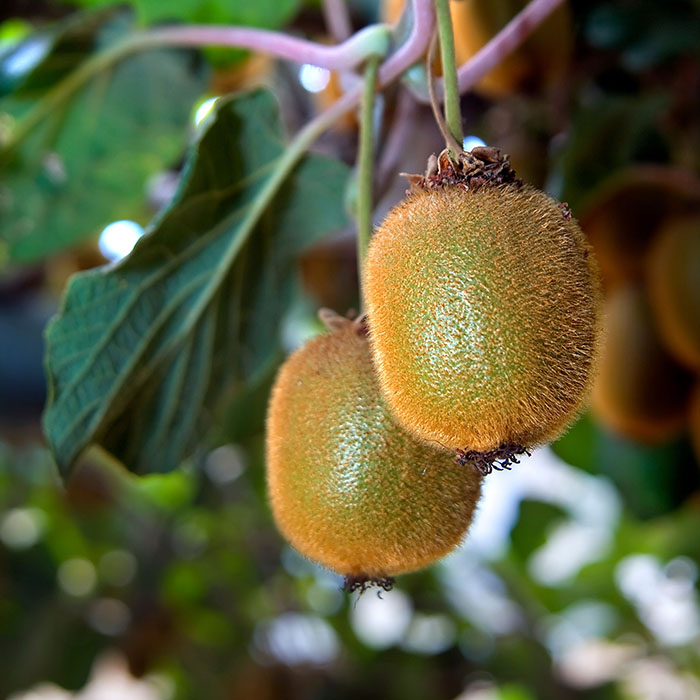
Kiwi
Kiwi includes several species and is native to China. Kiwis are a vine crop and produce berries that range in size, color, and texture. The species of kiwi commonly found in grocery stores (Actinidia deliciosa and A. chinensis) are not recommended for Washington due to problems associated with winter hardiness. However, hardy kiwi (A. arguta; also known as grape kiwi, babykiwi, kiwiberry, cocktail kiwi, etc.) are hardy to -25°F and can be grown successfully in Washington. Less commonly grown is Kolomikta or Arctic Beauty kiwi (A. kolomikta), which is hardy to -40°F and is grown for its ornamental foliage and aromatic fruit. Regardless of hardiness levels of hardy kiwi and Kolomikta, these species can still be susceptible to spring frosts that damage young shoots and flowers, causing yield loss. Furthermore, trunks of young vines can be sensitive to cold and can split.
Kiwi is a dioecious plant, meaning male and female flowers are produced on separate plants. For pollination, interplant male vines with the female fruit-producing vines. Pollen from one male vine can pollinate up to eight surrounding female vines. Male vines flower profusely but do not produce fruit. Vines do not begin to bear fruit until they have been in the ground for three to four years.
Cultivars
The recommended hardy kiwi female cultivars are Ananasnaja, Ken’s Red, and Geneva. Remember to plant male kiwi plants, commonly sold in nurseries as “male.” ‘Dumbarton Oaks’ and ‘Michigan’ may also provide pollen. ‘Issai’ is a self-fertile cultivar but tends to be less hardy, and fruit size is still larger when grown with a male pollinizer.
Establishment and Cultivation
Select a sunny, wind-protected, well-drained site for kiwi plantings. Protection from wind is helpful, as abrasion of fruit can lead to undesirable scarring. Kiwi plants are vigorous vines that produce a large canopy and amount of fruit. Erect a sturdy arbor or trellis to support the plants. A popular trellis for ease of harvest and pruning for the home gardener is a 5- to 6-foot-wide T-bar trellis made of treated posts set in concrete. Post height should be 6 ft tall. Space three to five 12-gauge horizontal wires at 1- to 1½-foot intervals at the top of the trellis, and space plants 15 to 20 ft apart within the trellis. A pergola with a solid overhead may also be used at similar spacing.
Hardy kiwi produces fruit on shoots from one-year-old wood. However, the first few years of growth should be dedicated to establishing a healthy root system and trunk. By the end of the first year, a vigorous shoot should be selected to be the trunk. Support the trunk with a stake, and head it back below the top wire. Heading back will encourage new shoots to grow the following year, and these will become cordons spanning the length of the top, middle wire. Cordons are permanent to semipermanent and produce laterals that bear fruit in future years. Cordons can be replaced if needed due to damage, making them semipermanent. In year two or three, select and maintain shoots produced along the cordon every 8 to 12 in., and secure to the outer trellis wires using twine or pruning tape. These shoots will become fruiting laterals, and by year three or four there should be 15 to 20 laterals per vine. Prune out additional laterals to avoid overcrowding.
By year three or four, the permanent structure of the vine should be developed. Annual pruning is needed to maintain production. For female plants, prune in winter by removing up to 70% of the wood per plant and maintain a balance of wood (canes) ranging from one to three years of age. Remember to keep laterals well spaced. Remember to prune out fruited wood (canes) and leave a replacement cane for future growth. Males are pruned differently. Because the goal of males is to produce pollen, only remove disease, damaged, or tangled wood during winter pruning. Allow the males to flower and then prune the same as female plants in June.
See Growing Kiwifruit: A Guide to Kiwiberries and Fuzzy Kiwifruit for Pacific Northwest Producers, listed in the Further Reading section, for more information on establishment and cultivation.
Harvest and Storage
In western Washington, kiwi harvest may span September to October. Harvest will occur earlier in eastern Washington. Firm fruit will store longer, but letting fruit hang and ripen on the vine will lead to maximum sugar and aroma. The fruit will also continue to ripen in the refrigerator once picked. Harvest the larger fruit first and leave the smaller ones to develop. It is possible to harvest kiwi four or more times per growing season. Soft, ripe fruit will store for 7 to 14 days in home refrigerators, while firmer fruit can be stored for up to 6 weeks.
Disease and Insect Problems
Botrytis and SWD can impact kiwi. Refer to the above sections on management. Some growers in western Washington have reported virus problems that lead to yellow mottling of leaves. This can be avoided by purchasing clean, virus-free plants.
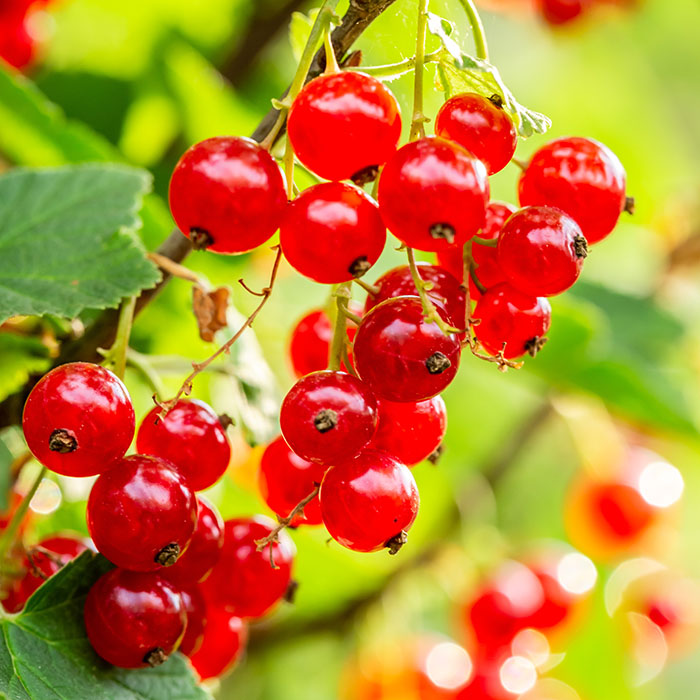
Currants and Gooseberries
Currants may be red, pink, white (Ribes rubrum), or black (R. nigrum). Both currants and gooseberries (Ribes uva-crispa [syn. Ribes grossularia]) are considered bush fruits and share similar management. Furthermore, both are primarily consumed processed. They are tolerant to many soil types and prefer soils with lower clay content and a pH of 5.5 to 7.0. However, drainage is still important and sites with saturated soil or standing water should be avoided. Currants and gooseberries can be grown in partial shade to full sun.
Currants and gooseberries are hardy in both western and eastern Washington. They produce unshowy flowers fairly early in the spring, so avoid frost-prone sites. Most are self-fertile and are pollinated by insects and wind. They require less water than blueberry and caneberry (raspberry and blackberry), but still require irrigation two to three times a week in the summer.
Currants are more erect than gooseberries and are thornless. Fruit are borne in grapelike clusters called “strigs” or racemes. Mature currants can attain a height of up to 6 ft and gooseberry plants can reach 5 to 7 ft at maturity. They generally have spiny, arching canes, and fruit are produced in clusters of one to three berries per stem. Sunlight enhances color development, but too much sun can cause damage.
Currants and gooseberries ripen from mid-June through July. Both currants and gooseberries ripen on two-year-old wood, but generally do not bear heavily for three to four years.
Widespread adoption of both fruits has been slow because of historical concern that they provide an alternate host for white pine blister rust (Cronartium ribicola), a disease that attacks five-needle pines, including western white pine (Pinus monticola) and eastern white pine (Pinus strobus). In the past, planting currants and gooseberries was illegal in some states because of the potential damage to pines. Restrictions in the United States were dropped in 1966 after researchers determined that many wild Ribes species also serve as alternative hosts. Furthermore, these fruits are not consumed fresh and usually require processing to become edible, which also limits adoption.
Cultivars
Recommended red currant cultivars are Red Lake, Perfection, and Wilder. A good white cultivar is White Imperial. Black currant cultivars include Consort and Crusader, both of which are considered rust resistant.
For gooseberries, consider Poorman (red), Pixwell (pink), Oregon Champion (green, thornless bushes), or Captivator (pink).
Establishment and Cultivation
Planting
Dormant stock is available for midwinter planting in January and February in western Washington, later in eastern Washington. Set plants 5 ft apart. A thick layer of mulch or well-rotted manure keeps roots surrounding the plants evenly moist during the dry summer months. The root systems are as shallow as those of blueberries.
Training
Grow gooseberries and currants as freestanding bushes, in hedgerows, or as fan-shaped bushes up against the side of a wall. The last method allows for easier picking when thorns are present. Diseases usually cause fewer problems because air can circulate through the foliage.
The objective in pruning freestanding bushes is to develop an open vase-shaped bush with equally spaced branches. In general, use more thinning cuts (removal of an entire branch back to the base) than heading cuts (shortening a branch). Failure to keep a bush pruned usually results in a brushy, unthrifty bush. The two-, three-, and four-year-old branches are the most productive; at maturity a healthy bush usually has no more than six to eight branches.
Harvest and Storage
Harvesting currants and gooseberries is a slow process, especially when gooseberry cultivars have thorns. Currants ripen over a two-week period. Once mature, however, they can remain on the bushes for a week without over-ripening. Harvest the entire strig using pruning shears, clippers, or scissors. Do not harvest berries individually, as the stem will be removed during processing.
Gooseberries mature over a four- to six-week period. Pick them individually when the fruit attain full size. Juice, preserve, or freeze the fruit.
Disease and Insect Problems
Diseases
The principal disease problem on both currants and gooseberries is powdery mildew (Podosphaera mors-uvae). The disease is characterized by a whitish, powdery growth that occurs on leaves, shoots, and fruit. During fruit maturation, heavily infested fruit take on a brown, rough coating that makes them unusable. Infection occurs during bloom. Any chemical treatments on fruit are not going to eliminate the mildew from the fruit. Instead, a mildew management plan that will benefit fruit the following season should be developed. Start by removing infected fruit and practice midwinter sanitation by removing infested fruit and disposing of leaves that fall to the ground. Prune to increase light penetration and air circulation, as humid conditions favor powdery mildew. In the spring, treat with a fungicide from prebloom to early fruit development.
Insects
Currant fruit flies (Euphranta canadensis), also known as gooseberry maggot, are one of the principal insect pests of currants and gooseberries. Currant fruit flies emerge as adults from the soil beneath the bushes in April and soon lay eggs in developing berries. Resulting white maggot larvae feed within the berries, causing them to turn red and drop from the bushes. Currant fruit fly can be managed with approved insecticides as well as some cultural controls, like floating row covers established after pollination but before fruit development.
Imported currant worm (Nematus ribesii) larvae can defoliate currant and gooseberry bushes in a matter of days if left unchecked. Larvae, ½-inch long, are green with distinctive black spots. Manage by removing infested leaves and then destroy the larvae. Badly infested canes should also be removed and destroyed.
Aphids (Cryptomyzus ribis), another main insect pest, can weaken currant and gooseberry plants, leaving the fruit with a sticky, undesirable coating that can be a host for sooty mold. Aphids have a large number of generalist predators but a variety of organic and nonorganic controls are also available.
Miscellaneous Small Fruits
A number of minor small fruit crops that have ornamental and food uses are suitable for the home garden.
Elderberry
The American elderberry (Sambucus canadensis) forms a moderately tall shrub (6 to 16 ft) that bears large, flat-topped flower clusters. These produce an abundant quantity of purplish-black berries approximately ¼-inch in diameter. Plants grow on soil types that range from very moist to fairly dry. It takes two to three years for full production (10 to 15 lb of fruit per bush). To promote good growth of elderberry bushes, every year prune any canes older than three years of age and leave a total of seven to nine canes on each bush.
Fruit grow principally on two-year-old canes, although smaller flower clusters occur on one-year-old canes. Fruit usually matures from late August to mid-September. For easiest harvesting, remove entire fruit clusters for later cluster stripping before processing.
Make berries into sauces or use for pies or tarts, juice and wine, either alone or in combination with other berries. In the past, tannin in the bark and roots was used for tanning and dyeing leather. A cousin of the common elderberry is the Pacific red elderberry (Sambucus callicarpa), a bush that bears bright-red berries. The bushes are attractive as ornamentals, but fruit are only edible to birds.
Juneberry/Serviceberry
Juneberry (Amelanchier alnifolia), also known as serviceberry, saskatoon, sarvisberry, and shadbush, is a widely distributed slender shrub that can be 6 to 15 ft tall at maturity. Plants are adapted to a wide range of soil types and pH and are very cold hardy. Drooping white flowers produce dark-purple, blueberry-like berries that mature in midsummer. Flowers are borne on two-year-old or older wood. Prune a mature bush so five to seven shoots remain.
In the past, North American Indians prized the fruit for making pemmican, a dry mixture of fruit, meat, and suet. Today, people eat the berries fresh, use them in preserves, and make them into wines. Fruit harvested at an early stage of maturity has a higher pectin content and are more suitable for preserves, while more mature fruit, having a higher sugar content, is better suited for wine. Juneberries have no serious insect or disease problems. Birds feeding on ripe berries can quickly strip the bushes, so bird management may be needed.
Evergreen Huckleberry
Evergreen huckleberry (Vaccinium ovatum) is an evergreen shrub that can grow to 2 to 3 ft tall in full sun and twice as tall in the shade. Berries are similar to blueberry and produce a white blossom that contributes to the plant’s ornamental quality. The fruit are used in preserves, and cut branches often are used in flower arrangements. Like other Vaccinium species, evergreen huckleberry needs acidic soil (pH 4.2 to 5.5). Fruit production can be limited, so large crops should not be expected.
Lingonberry
Lingonberry, also known as the mountain cranberry or foxberry (Vaccinium vitis-idaea) is a low-growing, winter-hardy, evergreen groundcover, producing new red growth that later turns a glossy green. Lingonberry is related to cranberry and blueberry and thus has similar soil requirements. Soils should be acidic (pH 4.2 to 5.5) and well-drained. It grows only to a height of 6 to 12 in., and yields are higher when planted with a pollinizer. Clusters of white, urn-shaped flowers produce bright red berries that mature in August and September. Berries may persist on the bushes throughout the winter. The berry’s flavor is tart to bitter when first picked, but their flavor improves when picked after the first frost. Fruit are highly regarded for use in preserves and syrups. Use them as substitutes for cranberry (Vaccinium macrocarpon).
Further Reading
WSU Extension Publications (opens in new window).
Bell, N., and A. Dreves. 2021. How to Control Slugs in Your Garden (opens in new window). Oregon State University Extension Publication EM 9155. Oregon State University.
Brun, C.A., L. DeVetter, and C. Benedict. 2016. Growing Small Fruits for the Home Garden (opens in new window). Washington State University Extension Publication EM103E. Washington State University.
Finn, C.E., and B.C. Strik. 2014. Blackberry Cultivars for Oregon (opens in new window). Oregon State University Extension Publication EC 1617. Oregon State University.
Finn, C.E., B.C. Strik, and P.P. Moore. 2014a. Blueberry Cultivars for the Pacific Northwest (opens in new window). Pacific Northwest Extension Publication PNW 656. Oregon State University.
Finn, C.E., B.C. Strik, and P.P. Moore. 2014b. Raspberry Cultivars for the Pacific Northwest (opens in new window). Pacific Northwest Extension Publication PNW 655. Oregon State University.
Finn, C.E., B.C. Strik, and P.P. Moore. 2014c. Strawberry Cultivars for Western Oregon and Washington (opens in new window). Oregon State University Extension Publication EC 1618. Oregon State University.
Horneck, D., D. Wysocki, B. Hopkins, J. Hart, and R. Stevens. 2007. Acidifying Soils for Crop Production: Inland Pacific Northwest (opens in new window). Pacific Northwest Extension Publication PNW 599-E. Oregon State University.
Moulton, G.A., and J. King. 2006. New Alternative Fruit Crops for Western Washington (links to PDF document). Washington State University Extension Publication EB2002. Washington State University.
Penhallegon, R. 2006. Lingonberry Production Guide for the Pacific Northwest (opens in new window). Pacific Northwest Extension Publication PNW 583-E. Oregon State University.
Strik, B., and A. Davis. 2021. Growing Kiwifruit: A Guide to Kiwiberries and Fuzzy Kiwifruit for Pacific Northwest Producers (opens in new window). Pacific Northwest Extension Publication PNW 507. Oregon State University.
Strik, B.C., E. Dixon, A.J. Detweiler, E. Chernoh, and N. Sanchez. 2020. Growing Strawberries in Your Home Garden (opens in new window). Oregon State University Extension Publication EC 1307. Oregon State University.
Strik, B., E. Dixon, A.J. Detweiler, and N. Sanchez. 2020. Growing Blackberries in Your Home Garden (opens in new window). Oregon State University Extension Publication EC 1303. Oregon State University.
Strik, B.C., E. Dixon, A.J. Detweiler, and N. Sanchez. 2020. Growing Blueberries in Your Home Garden (opens in new window). Oregon State University Extension Publication EC 1304. Oregon State University.
Strik, B., E. Dixon, A.J. Detweiler, and N. Sanchez. 2020. Growing Raspberries in Your Home Garden (opens in new window). Oregon State University Extension Publication EC 1306. Oregon State University.