Plant Nomenclature
and Identification
Paula Dinius, Urban Horticulturist, Chelan County Extension, Washington State University
Introduction
The primary purpose of this chapter is to acquaint you with methods of identifying plants and plant materials commonly used for landscape purposes. While most of the principles in plant identification may be botanical in nature, the ultimate objective is to determine the genus and species (opens in new window) of the plant in question. Once you have identified a plant, then you can determine its characteristics—its cultural requirements, ultimate size, flowering and fruiting requirements, propagation methods, and hardiness. When you know the genus and species of a plant, you can also identify pathological problems and make diagnoses more easily, efficiently, and with more certainty. You will find that many insect and disease problems are fairly host-specific; that is, they will attack only certain species (sometimes only certain individuals within a species), a certain genus, or only a few genera within a family.
There are many complexities in learning how to identify plants—it requires attention to detail. Scientific plant names are not only hard to pronounce but very difficult to spell. Further, the terms used to describe the morphological characteristics of plant parts are part of a whole new language. And the use of plant keys to determine the identity of an unknown plant can at times be frustrating.
In spite of the difficulties, there is a good degree of satisfaction derived from being able to identify plants, especially the less common ones.
Listed below are some things to know which will greatly help in identifying plants.
- Plant names: family, genus, species, variety (opens in new window) or cultivar, common name(s).
- Leaves: arrangement, type, shape, margin, color, other distinguishing characteristics.
- Buds: location, type, form.
- Flowers: type, color, season of bloom.
Study Tips
The best methods for studying a subject will vary with the individual. The initial step is to learn the principles involved in plant identification.
- Say the genus and species names together many times. Some people benefit by writing the plant names many times together to remember them and get the spelling correct.
- Visit internet sites where you can listen to the proper pronunciation of the botanical Latin name. An example is the Missouri Botanical Garden Plant Finder website (opens in new window).
- Spend a little time each day reviewing plant information. The names and characteristics should become more familiar with repetition.
- Spend some time just looking at the plants; this makes it a lot easier to identify them.
- Try to learn the meaning of the botanical terms; this will make plant identification much easier. For example, macrophyllum = large leaf; tomentosum = densely woolly; sinensis and chinensis = from China; and douglasii = named for David Douglas.
- Visit arboreta, nurseries, garden centers, and local WSU Extension Master Gardener demonstration gardens. Plants in these locations are usually labeled correctly. Get an idea of different growth habits, varieties, and what is available.
- Cultivate friends who are knowledgeable on the subject.
Nomenclature
Nomenclature is the naming of things. In botany, derivation of plant names is related to taxonomy—each plant’s botanical name includes the name of the genus it belongs to.
The International Code of Nomenclature for Algae, Fungi, and Plants, revised 2018 and listed in the Further Reading section, is published by the International Association for Plant Taxonomy (opens in new window) and contains the rules and recommendations for official botanical names for plants.
Scientific name =
botanical name =
Latin binomial =
Genus species
Scientific Names
Genus, species, and any cultivar or botanical variety (opens in new window) name make up the botanical name of a plant. The genus (or generic name) is derived from a Latinized noun and is capitalized. The species name (or specific epithet) is usually a Latin or Greek adjective that describes or further identifies the particular plant of that genus and is not capitalized. A botanical variety, which is also usually a Latinized or Greek descriptive term, may follow the species name and is also not capitalized. All three names are italicized, or if not italicized, they are underlined to denote it as a botanical name.
Use lower case for species and variety.
Examples:
Kalmia latifolia is the species (mountain laurel).
Kalmia latifolia alba is the botanical variety (white flowered mountain laurel).
Kalmia latifolia ‘Carousel’ is the cultivated variety (opens in new window), selected through breeding.
Pseudotsuga menziesii is the species (Douglas-fir).
Pseudotsuga menziesii glauca is the botanical variety (blue Douglas-fir).
Pseudotsuga menziesii ‘Pendula’ is the weeping form of the Douglas-fir.
Genus, species, and varietal names
must be italicized in writing, or
underlined if italics are not possible.
Cultivar names are no longer Latinized but are usually in the language of the country of origin. They are not italicized but are set off either by single quotes or preceded by the abbreviation “cv.”
Examples:
Japanese maple ‘Sango Kaku’ (Japanese), known as coral bark Japanese maple in the United States.
Willow-leaf cotoneaster ‘Herbst Feuer’ (German), literally “autumn fire.”
Red maple ‘October Glory’ (United States).
Hybrids (opens in new window) are denoted by a “×” (cross) before the species name. Interspecific hybrids are a cross between two different species within the same genus. For instance, Forsythia × intermedia (border forsythia) is the result of a cross between Forsythia suspensa (weeping forsythia) and Forsythia viridissima (greenstem forsythia).
If a new hybrid cross has been given a name it may just have a genus בcultivar’ name, as in the case of Rhododendron × ‘PJM’; if it has not been given a cultivar name, it would be written Rhododendron atlanticum × periclymenoides.
An intergeneric or bigeneric hybrid is a cross between two genera, so in its name the × is put before the genus. The new genus name is a combination of the genus names of the two parents.
Examples:
×Cuprocyparis leylandii (formerly ×Cupressocyparis leylandii) commonly known as the Leyland cypress. This is Hesperocyparis macrocarpa (formerly Cupressus macrocarpa) crossed with Xanthocyparis nootkatensis (formerly Chamaecyparis nootkatensis).
Berberis x Aquisargentii, is the result of many crosses between Mahonia and Berberis.
+Laburnocytisus adamii is the result of a grafted hybrid: Laburnum anagyroides and Chamaecytisus purpureus (Cytisus purpureus). This intergeneric hybrid occurs above the graft union. A grafted hybrid is when a typical graft is made between root stock and scion but the root stock and scion actually begin to share a mixture of parental tissue. It is quite rare but has been reproduced with a tomato and black nightshade. Notice the “+” before the generic name, it indicates special hybrid status.
Botanical names do sometimes change. When a person discovers or originates a new plant, that person gets to give the plant its botanical name by publishing the description and name of the plant in a scholarly journal. These journals range from very popular and widely read to rather obscure. If a plant is found and named in a journal that is not widely read, it may not be immediately noticed. That same plant may be “rediscovered” by someone else at a later date, given a different name, and that name published in a very popular, widely read journal. The second name may become the accepted name. But by botanical rules, the first name is the valid name. If someone goes back in the literature and finds the original botanical name, the plant name should revert to that original botanical name as outlined in the International Code of Nomenclature for Algae, Fungi, and Plants, which is listed in the Further Reading section.
An interesting example is our native Douglas-fir. First discovered by Archibald Menzies in 1792, it was named Pinus taxifolia. Later, they learned that it had been misidentified. Pinus taxifolia had already been attributed to another plant and therefore was an illegitimate name. Furthermore, Douglas-fir is not in the Pinus genus nor is it in the fir genera. It was recognized as a distinct and separate species and provided a new genus, Pseudotsuga, with taxifolia as the specific epithet (literally “false hemlock” + foliage like a yew). Following Menzies discovery, Meriwether Lewis collected samples during the Lewis and Clark Expedition in 1805–06, unaware that the Douglas-fir had already been discovered and described a few years previously. Then, in 1826, David Douglas brought back samples of the tree and named it after himself—Pseudotsuga douglasii. When the ICN discovered the misnaming, the name was changed once again and is currently Pseudotsuga menziesii (named after its initial discoverer Archibald Menzies).
Common names do not translate from one language into another. This includes American English to British English and vice versa.
Examples:
Tilia species
German—lindens, as in “Unter den Linden”
American English—lindens
English—lime trees
Sorbus aucuparia
German—Vogelbeere, literally “bird berry”
American English—European mountain ash
English—rowan
Botanical names have also changed due to the introduction of DNA sequencing. Now with this extensive database, plants can be genetically compared and plant evolutionary relationships better understood. Names are being changed to reflect this new knowledge, like with Monterey cypress, Leyland cypress, and Alaska cedar.
Common Names
Standard botanical names are accepted worldwide. In comparison, common names are regional, vernacular, and confusing. The same common name may refer to many different plants, and conversely, the same plant may be known by many different common names.
Some species do not have a common name and are usually called by their generic name. For example, Idesia polycarpa (a medium-sized, relatively rare, desirable landscape tree) is commonly just called idesia. Other popular plants that are known by their generic name include aster, coleus, forsythia, hibiscus, impatiens, iris, pachysandra, rhododendron, salvia, sedum, verbena, and viburnum.
Diagnostic Plant Morphology
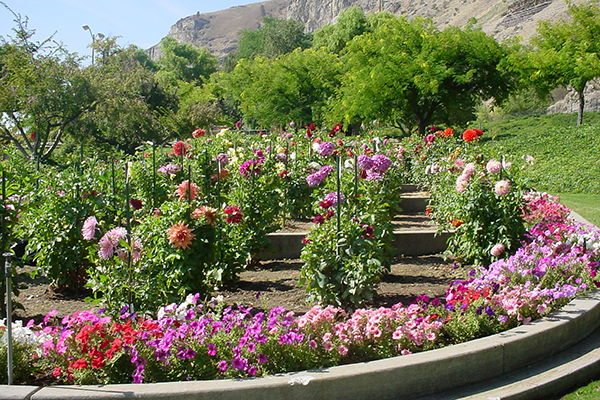
Botanists use visible plant characteristics that can be described, measured, and compared to assess a plant for identification and classification purposes. There are many diagnostic characteristics, including such features as plant habit and form (Figure 1), leaf form and arrangements of leaves on a stem (Figures 3 and 4), flower types, flower forms and inflorescence types (Figure 5), and stem shape. Sometimes a certain characteristic is diagnostic for a plant family, such as square stems in the mint family.
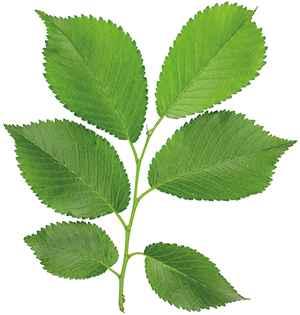
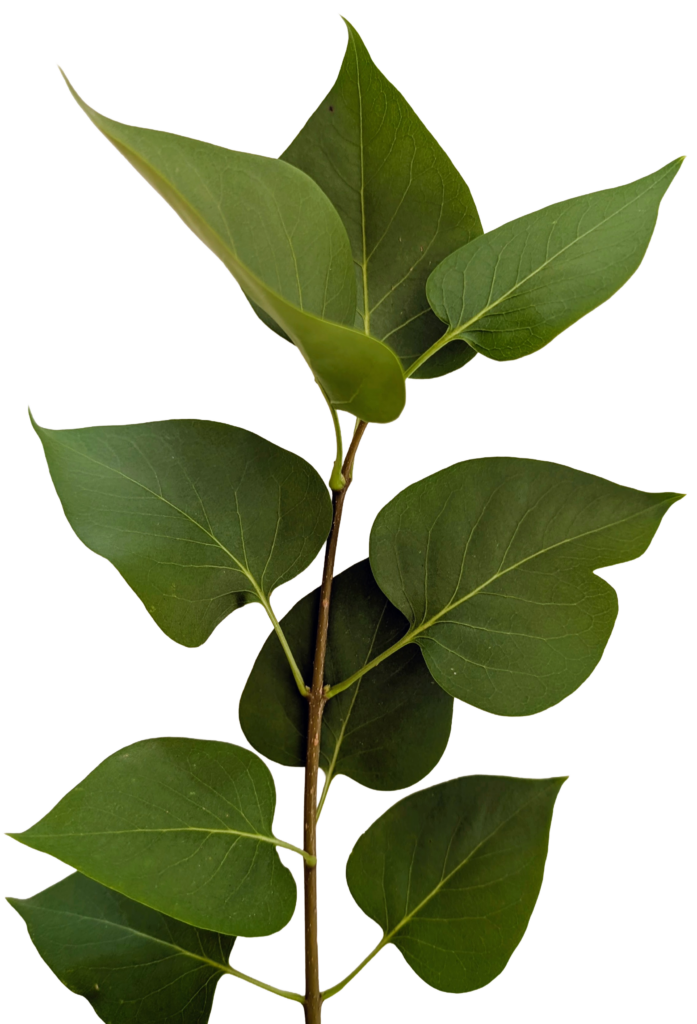
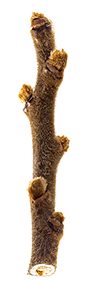
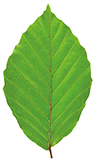
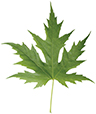
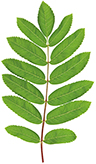
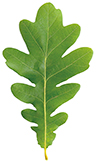
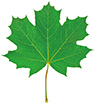
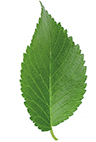
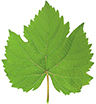
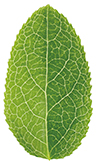
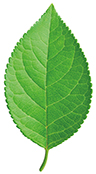
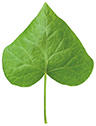
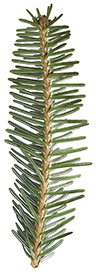
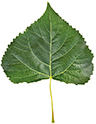
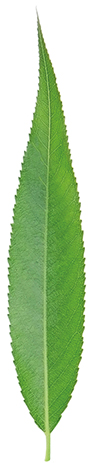
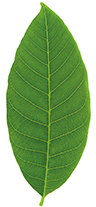
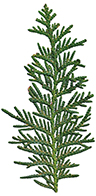
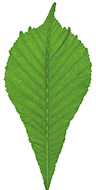
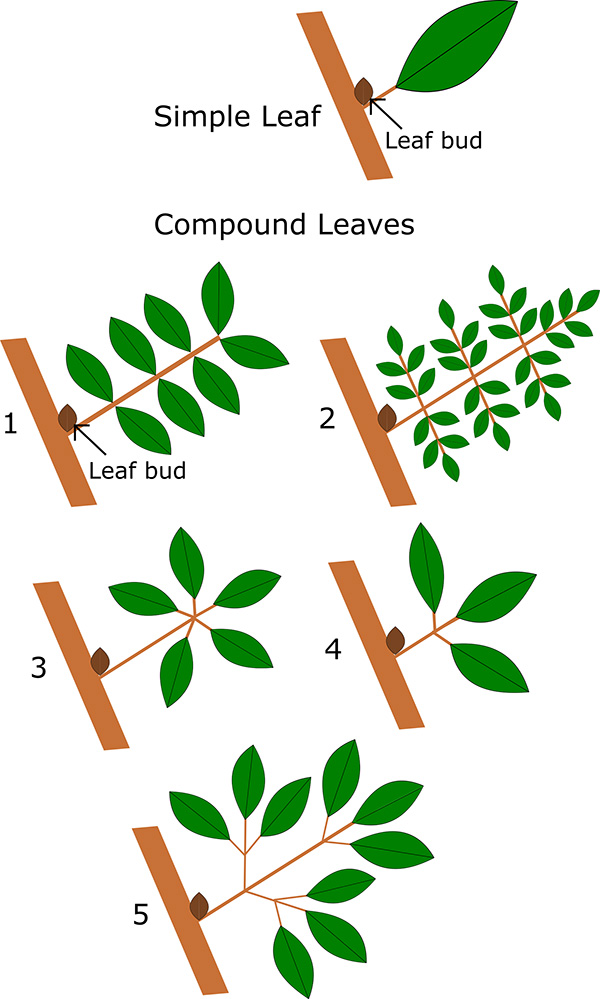
Plant habit and form is the shape, height, width, and branch architecture of the plant. As seen in Figure 1 and Figure 2, plants can range from tall and erect to low and creeping. Leaf form is the overall shape of the leaves, including lobes, margins, apex, and base; leaf attachment is the pattern in which the leaf is attached to the stem; and bud shape can range from pointed to rounded with or without bud scales covering the immature tissue as seen in Figure 3. Leaves can be identified as “simple,” which means that the leaf is single, or “compound,” where the leaf blade is divided into leaflets. To determine whether a leaf is compound or simple, look at where the leaf attaches to the stem. At this point you will see a leaf bud in the leaf axil. Figure 4 shows different forms of compound leaves and a simple leaf for comparison.
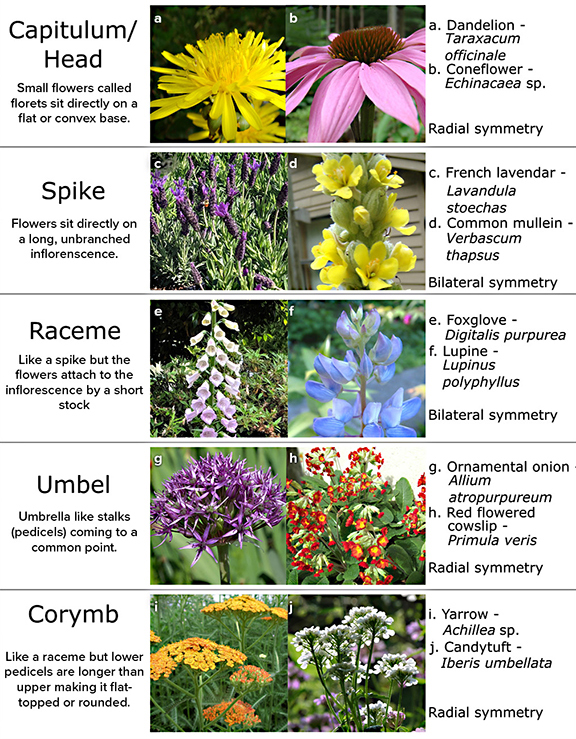
Flowers like daisies have radial symmetry and are called actinomorphic. Flowers like snapdragons have bilateral symmetry and are called zygomorphic. There are other forms, but these are the most common. A single flower on a stem or multiple flowers on a stem singularly or in clusters, in various patterns, is called the inflorescence. Figure 5 shows some common inflorescence types.

What’s in a Name?
“Cedar” is a common name used across several genera.
Thuja plicata, known variously as western red cedar and giant arborvitae.
Xanthocyparis (a.k.a. Chamaecyparis) nootkatensis, known variously as Alaska cedar and yellow cedar.
Chamaecyparis lawsoniana known as Port Orford cedar and Lawson’s falsecypress.
Chamaecyparis thyoides, Atlantic white cedar.
Cedrus spp., commonly known as true cedars: atlas cedar, deodar cedar, cedar of Lebanon, etc.
Cryptomeria japonica, known as Japanese cedar.
Juniperus virginiana, eastern red cedar.
Juniperus scopulorum, western red cedar. (Notice the same common name as Thuja plicata, which actually is an arborvitae not a juniper.) This is also known as Rocky Mountain cedar and Rocky Mountain juniper.
“Ironwood” and “hornbeam” are common names used for several species of trees. Below are two different plants with the same common name. Each plant also has different regional names:
- Ostrya virginiana over its range is known variously as ironwood and hornbeam.
- Carpinus caroliniana over its range is known as ironwood and hornbeam, but also as blue beech (no relation to true beech).
Figure 3. Distinguishing leaf characteristics and terms. Illustrations by Gerald Steffen.
Leaf Arrangement
Bud Scales

Margins
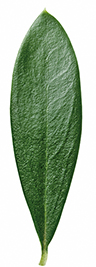
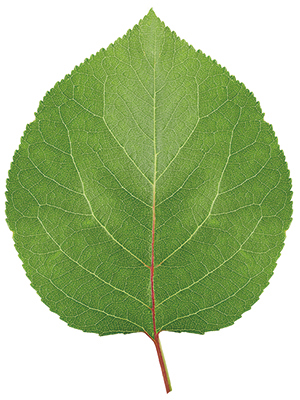
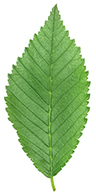


Form
Lobes
Base
Apex
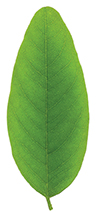

Shape
Sample of Inflorescence Types
Identification Keys
Plant identification keys are tools for identifying an unknown plant. There are several types of identification keys. For instance, a random access key asks numerous, specific questions about the plant in question and presents a list of possible answers. An example of a dichotomous key for identifying trees can be found online at the Burke Museum of Natural History and Culture (opens in new window) at the University of Washington.
Probably the most common type of identification key is the dichotomous key, which offers two contradictory descriptive statements, called leads. To correctly use a dichotomous key, you must choose one of the two options (both cannot be true of the specimen in question). These contradictory sets are called couplets.
Each couplet starts with the same characteristic of the plant, such as leaves, inflorescences, flowers, buds, fruit, or some other morphological characteristic. The user must choose which lead fits the plant in question. The user must then consider the next couplet, then the next, and so on, until the plant is keyed out. Keys and their couplets may be either numbered or lettered. An example of a dichotomous key for identifying trees can be found online at Oregon State University’s Common Trees of the Pacific Northwest website (opens in new window).
There are keys that require access to all parts of the plant—flower, fruit, leaves, etc. Other keys use only limited plant parts, such as stem, leaf, and buds. It is important to be aware that all types of keys have limitations, and identification should be confirmed using multiple reliable sources.
There are also plant identification apps available to download onto a smart phone. By taking a picture of the plant in question the image recognition software is able to identify it. App users are encouraged to check their work by using an identification key or other reliable sources when identifying unknown plants. West Virginia University’s article “Plant and Flower Apps (opens in new window)” explains more about using apps and various options.
An Identification Key
This is a very simple key used to distinguish eight broadleaf evergreen plants.
1. Leaves opposite
2. Leaves mostly less than 1 5/8 inch
3. Leaf margins toothed
4. Leaf margins spiny toothed (dentate)
Osmanthus delavayi, Delavey’s osmanthus
4. Leaf margins crenate
Euonymus fortunei, creeping euonymus
3. Leaf margins entire
Buxus sempervirens, boxwood
2. Leaves more than 1 5/8 inch
Viburnum davidii, David viburnum
1. Leaves alternate
5. Leaves mostly less than 2 3/8 inch
6. Stems armed (thorny)
Pyracantha sp., firethorn
6. Stems not armed
7. Leaves oblanceolate
Pieris japonica, Japanese andromeda
7. Leaves ovate
Vaccinium ovatum, evergreen huckleberry
5. Leaves greater than 2 3/8 inch
8. Leaves ovate
Prunus lusitanica, Portuguese laurel
8. Leaves obovate
Prunus laurocerasus, cherry (English) laurel
Further Reading
WSU Extension Publications (opens in new window)
Albers, J.J. 2021. Growing Conifers. The Complete Illustrated Gardening and Landscaping Guide. New Society Publishers.
Bailey, L.H., and E.Z. Bailey. 1976. Hortus Third: A Concise Dictionary of Plants Cultivated in the United States and Canada. Macmillan Publishing Company.
Bienz, D.R. 1993. The Why and How of Home Horticulture. W.H. Freeman and Co.
Brickel, C., and J.D. Zuk, eds. 2004. The American Horticultural Society A–Z Encyclopedia of Garden Plants. Revised edition. DK Publishing.
Brun, C., C. Daniels, and T. Kohlhauff. 2016. A Guide to Washington State’s Urban Tree Canopy (opens in new window). Washington State University Extension Publication EM107E. Washington State University.
Brun, C., and P. Dinius. 2015. Selecting Plants for Screens and Hedges (opens in new window).
Washington State University Extension Publication EM089E. Washington State University.
Burke Museum of Natural History and Culture (opens in new window). 2021.
Random Access Identification Key. University of Washington.
Capon, B. 2010. Botany for Gardeners. 3rd edition. Timber Press.
Coombs, C.J. 1992. Trees. DK Publishing.
Dirr, M.A. 1998. Manual of Woody Landscape Plants. 5th edition. Stipes Publishing Co.
DiTomaso, J.M., and E.A. Healy. 2007. Weeds of California and Other Western States.
University of California Agriculture and Natural Resources.
Elpel, T.J. 2013. Botany in a Day. Hops Press LLC.
Harris, J.G., and M. Harris. 2000. Plant Identification Terminology. 2nd edition.
Spring Lake Publishing.
Hermann, R.K. 1982. The Genus Pseudotsuga: Historical Record and Nomenclature.
Oregon State University Forestry Research Laboratory.
Hitchcock, C.L., and A. Cronquist. 1973. Flora of the Pacific Northwest.
University of Washington Press.
Integrated Taxonomic Information System Report (opens in new window). n.d.
International Code of Nomenclature for Algae, Fungi, and Plants (opens in new window). 2018.
International Association for Plant Taxonomy.
International Dendrology Society (opens in new window). n.d. Trees and Shrubs Online.
Jensen, E., D. Zahler, B. Patterson, and B. Littlefield. 2010. Common Trees of the Pacific Northwest: Dichotomous Key (opens in new window). Oregon State University.
Kruessmann, G. (1986) 1978. Cultivated Broad-Leaved Trees and Shrubs. Translated. Timber Press.
Kruessmann, G. 2009. Manual of Cultivated Conifers. Timber Press.
Mabberley, D.J. 2008. Mabberley’s Plant-Book. 3rd edition. Cambridge University Press.
National Audubon Society. 2021. Trees of North America. Knopf Publisher.
North Carolina State University Extension Gardener Plant Toolbox (opens in new window). n.d.
Phillips, R., and M. Rix. 2008. Perennials: The Definitive Reference with Over 2,500 Photographs. Firefly Books.
Ritter, M. 2023. Why Plant Names Change (opens in new window). Pacific Horticulture.
Royal Botanical Gardens Kew Plants of the World Online (opens in new window). n.d. Chamaecytisus purpureus (Scop.)
Still, S.M. 1994. Manual of Herbaceous Ornamental Plants. 4th edition. Stipes Publishing.
US Department of Agriculture (opens in new window). Plant Database. 2021.
Vertrees, J.D., and P. Gregory. 2010. Japanese Maples: The Complete Guide to Selection and Cultivation. 4th edition. Timber Press.