Trees and Woody Landscape Plants
Tim Kohlhauff, Urban Horticulture Coordinator, Washington State University Spokane County Extension
Introduction
Trees, shrubs, and vines are called woody plants to separate them from herbaceous plants. Herbaceous plants die back to the ground or die completely at the end of the growing season, while the above-ground parts of woody plants enter dormancy but stay alive. With the ability to retain live tissue above-ground even during harsh conditions, these plants gained the ability to grow tall and thus gained a competitive advantage over other plants. Today this ability to grow taller than herbaceous plants allows them to occupy special roles in our landscapes.
Woody plants provide many benefits to the home landscape. When grouped together, they also provide benefits to whole communities. To maintain and maximize these benefits, many communities in Washington have urban forestry programs or departments just to manage these plants. Woody plants require slightly different care than other types of plants.
This chapter will cover the benefits of trees, shrubs, and vines to landscapes and communities; stress the importance of proper tree selection, installation, and care; and it will introduce the concept of tree risk and the safety issues involved with woody plants, including instructions on how to hire a professional arborist. Further information on pruning is covered in Chapter 23: Pruning Woody Landscape Plants.
Benefits of Woody Plants
Most residents understand that woody plants provide benefits to the landscape. They are planted to provide shade, for beauty, and to provide a connection to nature even in urban areas. Research has found that woody plants also have benefits for the surrounding environment, as well as social, economic, and health benefits for the community.
Benefits in the Landscape
At the level of the home landscape, trees and shrubs can provide many benefits in addition to beauty. They can create privacy, mark a property line, or reduce noise. Environmentally, woody plants provide habitat, cover, and sometimes food for wildlife, including beneficial insects. Pollinators are attracted to flowers and may also find space to reproduce or shelter over the winter.
There are also economic benefits. For example, a mature shade tree in the front yard adds 2%–15% to the selling price of the home. Trees and shrubs placed properly around a home can reduce heating and cooling bills.
Deciduous shade trees planted on the south or west side of a home can provide enough shade to reduce energy used for air conditioning.
Winter heating bills can be lowered by planting a dense windbreak of trees upwind of the house. Conifers are usually chosen because they retain leaves and provide a denser barrier; however, they also contain oils and terpenes which are flammable. Broadleaf evergreens such as rhododendrons, Oregon grape (Mahonia), and others are preferable because they are less flammable. Shrubs around the foundation of the home can provide an insulating layer of unmoving air which helps the building retain heat. It is important to make sure the canopy of the shrubs stays at least five feet away from the structure. This will keep the plant from becoming a pathway for insects or wood decaying organisms to the structure.
Community Benefits
Woody plants do not just benefit single family residences. Studies have shown that trees, shrubs, and landscaped areas have positive impacts in community landscapes. Trees planted in the rights-of-way along arterials slow traffic and improve traffic safety.
Community impacts of course go beyond improved traffic safety. People with a variety of health conditions benefit from spending time in public green spaces like parks and forests. This time spent with plants benefits children with ADHD and senior citizens experiencing dementia. Tall trees block ultraviolet radiation, which at high levels has been linked to cataracts and skin cancer in humans. A research study reported adults who simply viewed trees through a window had reduced blood pressure versus those in a windowless room. A different study showed that neighborhoods in London with more street trees had fewer residents using antidepressant medication even when controlling for other factors such as age, income, and health issues. This is only a short list of health benefits that come from interacting with natural landscapes.
Economically, research shows shoppers are willing to travel a greater distance, stay longer, and spend more money in shopping districts that have well-maintained trees. Commercial offices that are shaded by trees or have well-maintained landscapes can charge higher rent, and housing developments that retain existing trees through development sell new homes faster and for more money.
Environmental Benefits
Perhaps the most important benefits of trees and shrubs are the environmental services they provide, especially in urban areas. In fact, these benefits are so important that they are planned, maintained, and used by communities as a type of infrastructure (opens in new window), similar to roads or sewers. This use of plant and soil systems in the form of green spaces, parks, natural areas, and the urban forest is sometimes referred to as green infrastructure (opens in new window). This is opposed to traditional or gray infrastructure like roads, sewers, and electrical systems.
Urban heat island (opens in new window) is the term used to describe how urban areas have an average temperature that is two to seven degrees Fahrenheit (F) higher than adjacent rural areas. This is caused by the absorption and retention of heat by infrastructure like roads and buildings. Human activities like manufacturing and heating and cooling structures also increase the temperature. Infrastructure like asphalt pavement and roofing can be 60–90 degrees Fahrenheit hotter than the surrounding air temperature, and these higher temperatures degrade infrastructure faster. Planting street trees that shade asphalt extends its useful life and reduces maintenance costs up to 58% over a 30-year period compared to unshaded streets.
Just as a single shade tree can reduce cooling costs for a homeowner, the trees, shrubs, and green spaces in an urban area can help provide cooling benefits to a community. Shade reduces the amount of sunlight that heats the ground or pavement. Plants also release water vapor which has a net cooling effect on the surrounding area. The combination of these two functions can reduce temperatures four to six degrees Fahrenheit.
Cities, even smaller ones, can face issues with stormwater runoff, which can cause flooding, washing pollutants into surface water and riparian (opens in new window) areas. This can cause harm to the environment as well as human health. Trees, shrubs, and rain gardens can reduce this damage by capturing runoff in several ways.
Stormwater management is a problem for Washington cities large and small. Precipitation falling on hardscapes like asphalt and concrete moves directly into stormwater systems. If too much water enters the system in a short amount of time, the system can be overwhelmed, which can lead to flooding or polluted runoff entering lakes and streams. Plant canopies can help manage this problem. The water that lands on leaves and branches is delayed from entering stormwater systems, decreasing the volume of water over a longer time period.
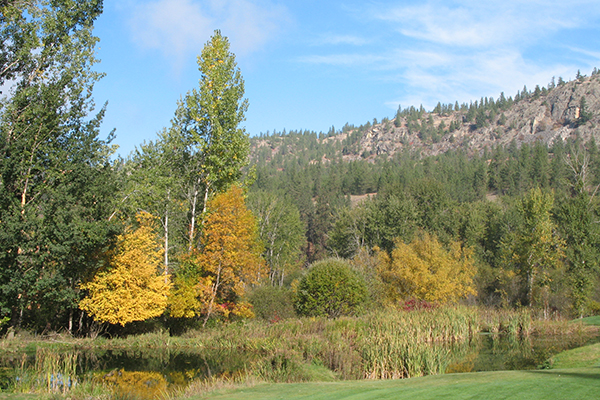
Plant roots, and to a lesser extent soil organic matter, will absorb water, thereby either reducing the volume of runoff or slowing it down, which will reduce surges of water during rain events. Plants can also capture pollutants in runoff, which keeps them from moving into surface water (see Figure 1). Fast-growing trees such as willow and poplar are so reliable in their ability to capture certain pollutants that they are used to catch, store, or extract some pollutants from groundwater, surface water, and contaminated soils.
The Environmental Protection Agency (EPA) conducted an economic analysis of a long-range plan for stormwater management for the city of Lancaster, Pennsylvania, as an example. It compared the costs and potential benefits of the city’s plan for combining green and gray infrastructure versus gray infrastructure alone. The analysis found the combined plan could save $120 million in capital costs and $660,000 annually in pumping and treating wastewater. Energy savings, air quality improvement, and other benefits were projected at over $4 million annually.
Air Pollution
Trees and shrubs also filter or intercept airborne pollutants. Most research has been directed at trees because their height and large canopy volume make them more effective at filtering pollutants. Other types of plants can also filter pollutants but on a limited scale. The impact plants have varies by the type of pollutant. There are many different types of air pollution, but this discussion will be limited to gaseous pollutants, the “greenhouse gas,” carbon dioxide (CO2), and airborne particulates.
Sulfur dioxide, nitrogen dioxide, and ozone are the gaseous pollutants that are taken into plants through the pores (stomata) in their leaves. Once inside, these gases at high levels can cause injury to the leaves. At lower levels they might be trapped, or in some cases even used for growth, as is the case for nitrogen dioxide.
Carbon dioxide (CO2) is a greenhouse gas included here because of its relationship to climate change. Plants benefit the environment through carbon sequestration and carbon storage (opens in new window). While a complete explanation of sequestration and storage is beyond the scope of this chapter, a basic explanation is needed because of the role plants play.
Plants capture, or sequester (opens in new window), CO2 during photosynthesis and convert it to carbohydrates to power basic life functions. Carbohydrates are used for root growth and so much of the sequestered carbon is moved to the roots. Some of the carbon enters the soil as root exudates. These exudates are used by soil microorganisms but also exist in the soil, doing things like building soil structure by aggregating soil particles.
Sequestered carbon also becomes plant tissues, like leaves, roots, and stems. The carbon used for plant tissue is stored until the plant dies and decomposes. Woody plants store more carbon because of their size, and they store it for longer because they do not die back to the ground annually as herbaceous plants do. Plant tissue eventually dies and breaks down through decomposition. Some of the carbon that was stored in plant tissue returns to the atmosphere as carbon dioxide; and some remains in the soil as organic matter.
While woody plants can capture carbon dioxide, more planting is only part of the answer to carbon emissions. Woody plants alone cannot keep up.
One study estimated that planting 100 million trees (10 million per year for 10 years) in the US would capture less than 1% of the carbon emitted over the projected 50-year life of those trees.
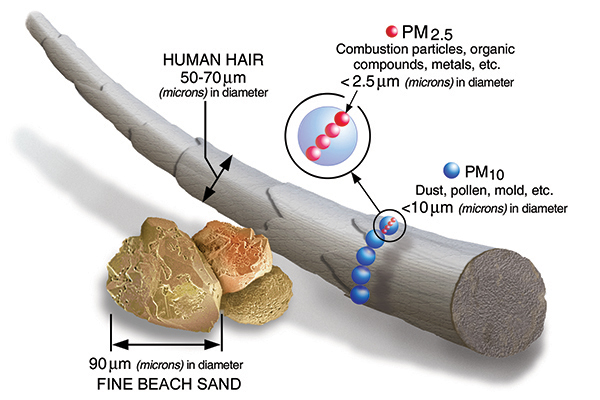
A final type of air pollution is particulate matter, often abbreviated as PM. Just as the name implies, these are particles small enough to easily become airborne (see Figure 2). Unfortunately, they are small enough to be inhaled and can impact human health. Airborne particles come from different sources, for example, manufacturing plants, farm fields (fine dust), or fire (smoke).
Research shows trees can filter some of these pollutants. As particulate matter blows into the tree canopy, some of it is intercepted by the leaves, twigs, and bark. A study estimated that trees in Washington intercepted approximately 535,500 tons of gaseous and particulate air pollution in 2010. Across the US, the same study estimated that for the same year 17,370,300 tons of pollutants were intercepted, which reduced health care costs to Americans by an estimated $6.8 billion and may have saved up to 850 lives.
With all those benefits, it is no wonder that Washington residents are interested in planting trees and shrubs. Unfortunately, many of these plants do not survive to maturity for a variety of reasons. By using research-based information, you can improve these mortality outcomes, beginning with proper plant selection.
Woody Plant Selection
Trees, shrubs, and vines are planted to last more than one season in the landscape, and they can take several years to mature before producing benefits to the landscape. To maximize their useful life and maintain the benefits of mature plants, it is important to select a species that will do well in the conditions found at the site, rather than attempting to modify the site to fit the plant. Given their expense, it makes sense to invest some time selecting the right plant for the site, but how is “the right plant” determined?
There are several factors to consider, but most of them can be grouped under these questions:
- What type of plant(s) will thrive (or at least survive) under the existing and expected site conditions?
- What is the intended function of the plant in the landscape?
The term plant function may sound strange in terms of selection, but it is not new to most gardeners. We plant vegetables and fruit to produce food. We plant flowers for beauty or perhaps to support pollinators. Turf grass is planted as a ground cover, a surface for outdoor activity, or to limit erosion. Woody plants are also installed for the benefits they provide.
Woody plants might be added for a number of landscape functions. Many are planted for primarily aesthetic functions, such as flowering, adding structure to the garden, or highlighting a view. They may also be planted for environmental benefits, such as reducing noise or providing cover or food for wildlife. There are likely multiple plant species that can provide a desired landscape function, but for a plant to survive, it should be well suited to the conditions of the site.
Site evaluation might be the least fun part of the selection process, but it is by far the most important. Conditions can vary even within a home landscape. Gardeners cannot expect a plant to thrive on a site that does not meet its basic needs.
Site evaluations should include:
- Climate zone
- Microclimates and exposure
- Soil conditions
- Available water and soil drainage
- Built environment (infrastructure)
Climate
Even protected by bark, woody plants are subject to damage by extreme cold or extreme heat. The USDA cold hardiness map is the most used method of defining climate zones in the US, so it is a logical starting place to determine what species are appropriate for a landscape. The USDA system does not include important climate data such as summer maximum temperatures, average annual precipitation, or prevailing wind direction. This information can be critical to the success of woody plants, so they need to be included in a site evaluation.
Our climate is changing and because woody plants are expected to live many years, it is important to consider the future climate zone at a planting site. To the extent possible, plants should be chosen that will survive future conditions. It is impossible to know future conditions with certainty. However, most climate change models predict a warmer future. In general, plants with greater heat tolerance and drought resistance are recommended.
Within any given climate zone, there are variations in conditions that impact plants. These are called microclimates because the variation might be found in a very small area. In Washington for example, north-facing slopes might offer protection from the wind and have more moderate temperature extremes. The tops of south facing slopes, on the other hand, are usually more exposed to sun and wind and might require more heat and drought tolerant plants. At the bottom of slopes, cold air settles, and this can create what are called frost pockets. The cold temperatures found in frost pockets may occur even after adjacent areas have warmed. These late frosts can damage young, thin barked, or early blooming plants.
Some have taken the term microclimate a step further and used it to define the variations within a very small area like a home landscape. For example, structures provide shelter from high winds but also cast shade. One part of the landscape may be hotter or drier because of reflected light or adjacent hardscapes that absorb and retain heat. A proper site survey will include all these types of information.
Exposure
Gardeners typically know if a site is sunny or shady, but it is important to know how much sun a planting site will have. Woody plants generally prefer full sun conditions, but some tolerate shade, particularly those that are understory plants in their native environments. Nursery tags include the light requirements of a plant, but it is a good idea to research this information prior to purchase.
Wind exposure is also important to consider. Plants in windy areas may struggle as more air movement dries out leaves and exposes soil more quickly. Younger plants with small root systems may require more irrigation to get established because of this drying effect. Plants that are borderline cold hardy in an area may be more likely to struggle if they are also exposed to drying winds.
Soil Conditions
Soil is one of the most important factors that determines the success or failure of woody plants. Site evaluations must include soil conditions. A great starting point for soil information is the Natural Resource Conservation Service (NRCS) Web Soil Survey. This website contains information on soil across the country. Users can search by address or by outlining an area on a map and then receive data on the soil in that area. While it is not able to give the specific information that a soil test would, it does give general information such as elevation, average annual precipitation, and soil taxonomy. This is a valuable tool for gathering information about a site.
If a landowner wants to know more about their soil or has reason to suspect a problem, then soil testing can help. Basic tests can determine the pH, nutrient deficiencies, and levels of organic matter in the soil. These tests also report soil texture, which is the mixture of sand, silt, and clay particles present. Knowing the soil texture gives important information about water and nutrient holding capacity, the potential for drainage or compaction issues, and other information that will influence plant selection. Testing is not always necessary, but it is beneficial, as all these conditions have an impact on the success or failure of the plants installed there.
Water holding capacity and drainage should be recorded on a site assessment, since both drought stress and poor or slow drainage will influence plant selection. Gardeners in urban areas should remember that most urban soils have been disturbed by construction. Soil compaction is very common, and this can inhibit root growth as well as slow drainage.
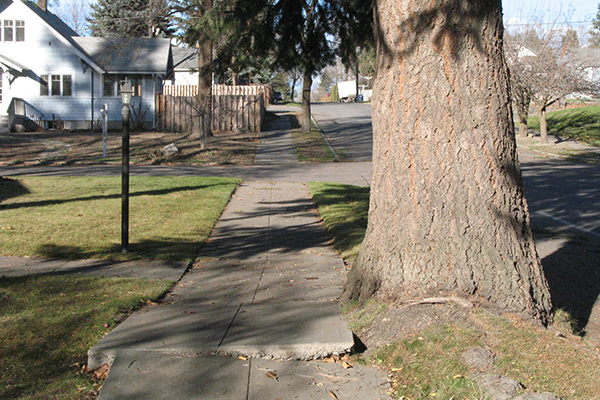
Soil volume is more frequently an issue for trees in urban sites, such as a downtown core, where infrastructure severely limits root growth. It can be a consideration in home landscapes as well. For example, narrow strips between streets and sidewalks are not suitable for planting some large tree species (see Figure 3). Roots can spread twice the width of the tree canopy or more, so plan accordingly.
Available Water
Whenever possible, species should be selected that can grow without supplemental irrigation after they establish. This conserves limited water resources, reduces the expense of providing water, and limits the potential for drought stress to the plant. In some areas, including much of eastern Washington, the benefit of having trees, shrubs, and vines outweighs the cost of providing irrigation, especially if drought tolerant species are selected. The available water to the planting site should be included in the site survey even if irrigation will be provided.
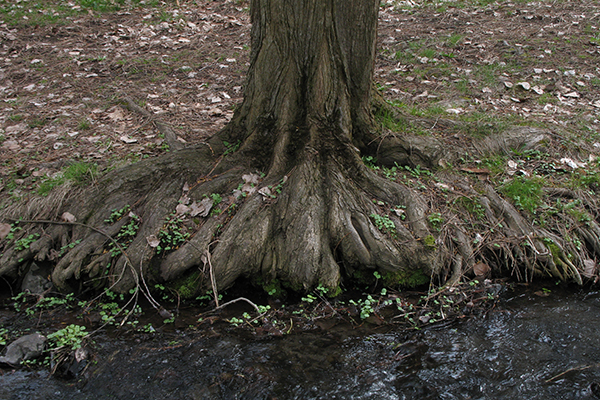
Some woody plants are adapted to especially wet or dry sites. Wetter sites might include those near surface water, with slow soil drainage, or low points where water accumulates, as seen in Figure 4. Not all plants can tolerate these wetter-than-average soil conditions.
Drought tolerant plants are recommended for most of eastern Washington; however, drought tolerant is a relative term. Some plants labeled drought tolerant in the nursery trade require regular irrigation east of the Cascades.
Lists of plants tolerant of specific site issues such as wet or dry soils are available through many university Extension or urban forestry programs. Double-check that resource information pertains to your specific regional area.
Infrastructure
Plants must coexist with the infrastructure at a planting site. While this is obvious in urban areas, it is true even in rural communities. Plants that avoid damaging structures, utilities, roads, and other hardscapes should be chosen. They should also be chosen with an eye to the increasing risk of wildfire in Washington.
Wildfire is an issue that can affect all Washingtonians. Traditionally more of a risk in the drier climate east of the Cascades, changing weather patterns mean western Washington is also vulnerable. Landscape design and plant selection should include fire-risk awareness as a factor in planning. For more information on this topic, read Chapter 24: Fire-Resistant Landscaping for the Home and Community; contact your local Master Gardener Program; or consult the state of Washington’s Department of Natural Resources Wildfire Prevention website.
At maturity, plants should fit into the available space at the planting site. If they have to be pruned more than once a year, or regularly require large, disfiguring cuts, then gardeners may want to consider a different plant in that space. Mature plants should not touch buildings, grow into utility lines, or obstruct clear views at intersections. By selecting the right species, gardeners can prevent damage to structures, obstructed views, and disruptions to utility service.
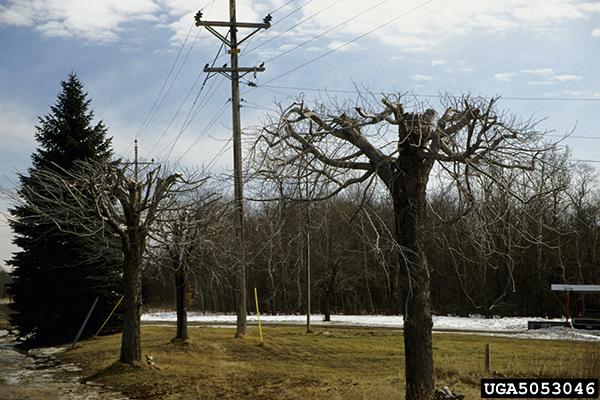
How many times have gardeners driven past scenes like the one in Figure 5? While some may blame utility arborists for these disturbing scenes, these tree workers are in fact maintaining the required clearance. Ten feet of clearance in all directions from the lines is required for safety. Utilities recommend smaller species with a mature height of 25 feet or less if planting near distribution lines, the most common type near homes. High energy transmission lines have different regulations, so contact your local utility for specific requirements. Most utilities, urban forestry programs, and WSU Extension offices will have recommendations for utility-compatible trees.
No site evaluation is complete without listing all of the surrounding infrastructure that may limit the available space for a plant. Structures like buildings and fences are obvious, but plant roots are also a consideration, so site evaluations should include underground utilities that might be impacted, such as sewer pipes, electrical or gas lines, septic drain fields, sidewalks, and foundations, among others.
While clearance needs vary depending on the depth of the utility and size of the plant, avoid planting directly above utility lines and to five feet of either side with anything but plants with small root systems, such as perennial flowers or ground covers. Five feet away from the utility line is considered the absolute minimum for shrubs and trees. Medium and larger tree species should be installed a minimum of fifteen feet away from directly above an underground utility. This will limit the chance of roots interfering with the utility but also damage to the root system, should the line ever need to be excavated.
Rights-of-way are those areas adjacent to roads or utilities that someone may own but agencies must legally have access to. Homeowners may be encouraged to plant trees in the parking strip or boulevard strip adjacent to their house; however, local governments may have regulations about planting in rights-of-way. They should be contacted before choosing a plant species.
If a city has an urban forestry department, this is often the best place to start. Tree management might instead be part of a different department, like planning, road, or parks. It may take a few calls, but it is important to find out what rules may exist. These regulations typically exist to make sure intersections have clear visibility, plants do not interfere with pedestrian or vehicular traffic, and that residents avoid planting invasive or unwanted species.
Community of Plants
Woody plants installed in the landscape will join a community of existing plants. It is worth considering the impact of those existing plants on a new tree or shrub, and the impact of a new plant on the landscape.
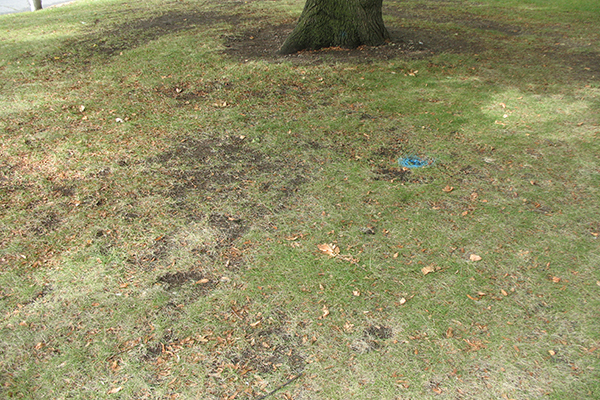
Without adequate space between them, plants will compete for sunlight, water, root space, and soil nutrients. This competition potentially weakens both plants; however, there are often winners and losers. Established, healthy plants have larger root systems and carbohydrate reserves that usually give them the initial advantage over recent transplants. In the longer term, the advantage often goes to the larger or more vigorous species. For example, a tree planted in a lawn may initially struggle as its smaller root system competes with hundreds of grass plants. As the tree grows, however, the grass now shaded by tree leaves will struggle to stay alive (see Figure 6).
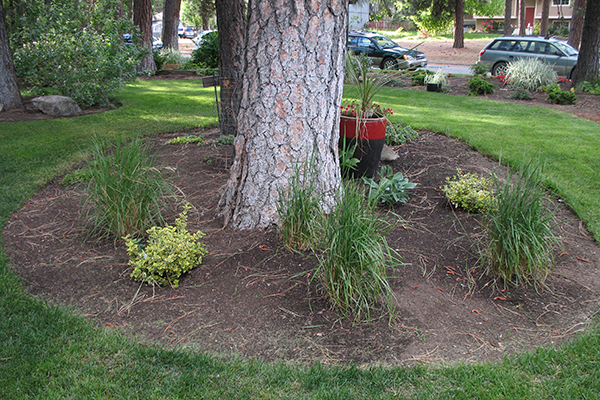
Giving plants adequate space to grow, both above- and below-ground, reduces competition for resources. Most ornamental plants require very different maintenance than turf grass, so keeping the two separate reduces conflict between them. This can be done by grouping ornamentals in a planting bed away from turf (see Figure 7) or by creating a ring of mulch around a tree where no turf grows. This separation reduces competition, and the defined boundary also creates a more aesthetically pleasing look by removing struggling, thin, or patchy stands of grass too close to a tree.
In addition to plant competition, it is also important to consider pests and diseases in the landscape when selecting a new tree, shrub, or vine. Why choose a plant that will be damaged or even killed by pests? Contacting your local Master Gardener Program or WSU Extension office is one way to find out about pests of concern in the local area. Certified or consulting arborists are usually familiar with these pests too.
New woody plants can be damaged by local pests but can also become a breeding ground for them if they are not maintained. These unmanaged, pest-infested plants can impact neighboring landscapes, crops, or natural areas. For example, fire blight (Erwinia amylovora) is a bacterial disease that can cause severe damage to apple and pear trees. The disease does not just affect the fruiting varieties of these trees but also varieties of crab apple, flowering pear, and other plants in the rose family. In areas of Washington where tree fruits are grown commercially, homeowners can limit the spread of this disease by choosing alternative species of trees to plant, thus reducing the potential damage to their neighbors’ orchards. Fire blight is only one example of a pest that can spread easily and cause damage far beyond a single host plant or landscape.
All plant species are likely to have at least minor pest or disease problems. Many pests can be tolerated if populations are low and may be managed by beneficial insects without needing additional intervention. Gardeners should keep in mind that proper selection can minimize the impact of pest organisms on the new plant and the surrounding area.
It is very important to avoid invasive species. They can overwhelm a home landscape and create an expensive and high maintenance problem that takes years to control. The worst offenders will spread beyond a single landscape and start appearing on adjacent properties. They might spread via seeds that are windblown or fruit eaten by wildlife. Once established, they can outcompete and displace native plants, creating long-term damage to ecosystems.
Before purchasing a new type of plant for the home landscape, gardeners should research whether it is invasive. This research can be done through WSU Master Gardeners, local or state weed boards, or the Washington Invasive Species Council.
Native Plants
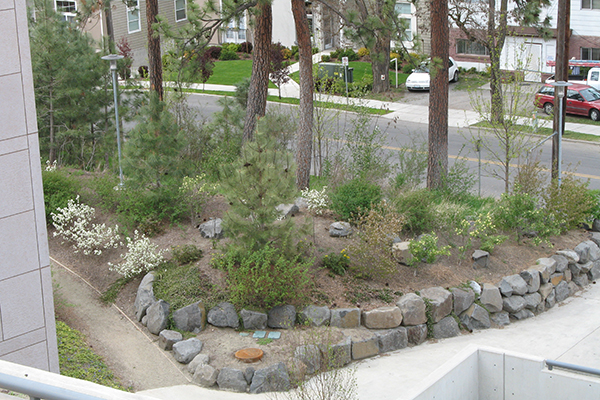
Use of native species is encouraged, because they are adapted to the climatic conditions of an area, including the temperature extremes and average precipitation. In some cases, planting native species conserves them, as development diminishes their traditional growing areas. Use of native plants also gives a landscape a sense of place or identity (see Figure 8), setting it apart from generic designs that use the same species no matter what the location.
Research tells us that native plants are valuable and should be conserved, but natives are not always the best choice for the home landscape. The typical home garden is very different from the environments where native plants thrive. The soil around most houses has been regraded, compacted, and is usually missing the original topsoil. Gardeners often add fertilizers and pesticides, which natives may not tolerate. Other plants may outcompete natives for resources. In short, not every home landscape is managed in a way that allows native plants to succeed.
An argument made in favor of native species is that they are already adapted to the pests in the area and therefore require less pest management. Healthy native plants do have some resistance to native pests; however, they are not resistant to the increasing number of pests from other parts of the world.
Emerald ash borer (Agrilus planipennis) is an insect native to Asia, and native ash trees there have coevolved with them and developed some resistance. When emerald ash borer was transported to North America, it found ash species with no resistance, and since 2002, it has killed millions of native ash—sometimes whole forests of ash—including those in home landscapes. Even in areas of the US where these trees are native, ash (Fraxinus) trees are no longer recommended for planting, because emerald ash borer will most likely kill them well before they reach maturity.
In June of 2022, emerald ash borer was discovered in Forest Grove, Oregon, but previously had not been found west of Colorado. The pest is expected to decimate ash populations in the Northwest as it has in other parts of the country. This includes the native Oregon ash (Fraxinus latifolia) found west of the Cascades in valleys and riparian habitats from the southern end of Puget Sound south through Oregon and into California.
The most pest resilient landscape is actually the one that has a diversity of plant material in it. Most pests damage a limited number of plant types. Plant diversity is therefore a net benefit to landscapes. In fact, a 2017 study of landscapes with commercial pest management found that fewer insect management treatments (chemical and nonchemical) were required on properties with greater diversity of woody plant species.
Native plants are sometimes thought to better support native wildlife, including pollinators. This is true in some specific cases, but not in general. A review of 120 articles on the subject found that the appearance of native wildlife was less connected to native versus non-native plants than assumed. Native wildlife is more likely to appear where there are available nesting or shelter sites, a water source, or, in the case of pollinators, season-long availability of flowers.
Certainly, there are good reasons to use native plants in home landscapes. Wherever they are appropriate, their use should be encouraged. They are a good choice, but not always the correct choice.
Buying Quality Trees, Shrubs, and Vines
Proper site evaluation takes some effort on the part of the gardener, so with that investment of time and labor, it does not make sense to buy a poor-quality plant. Deeply discounted nursery stock is not a bargain if it is discounted because of poor health, structure, or vigor. Purchasing quality plants allows gardeners to avoid problems that may cost more to fix than was saved in the initial purchase.
How can gardeners assess the quality of nursery stock? The first step is to know the different types of stock that are available. Most woody plants are sold as bare-root, balled and wrapped, or containerized.
Bare-root woody plants usually start as field-grown plants, but when harvested for sale, the soil is removed from the roots. The plants are stored in temperatures cool enough to keep them dormant and in a moisture-retaining medium, such as sawdust, to keep them from drying. They are typically shipped before the growing season, which allows buyers to plant them before they come out of dormancy or desiccate and die.
The advantage of bare root plants is that without soil, they weigh less and are therefore cheaper to ship. This reduces the cost to buyers. The entire plant is visible, so it is easier to see potential defects, damage, or disease (see Figure 9). Research suggests that bare-root stock establishes more quickly in the final planting site than other forms of nursery stock. A key to proper planting is to make sure the root flare at the base of the trunk is at grade level. In the case of bare-root stock, it is easy to identify the root flare to make sure it is planted at the right height.
There are some disadvantages to bare-root stock as well. Most of the root system is lost when the plant is harvested, and this leaves the plant very vulnerable to drying. If plants are not stored or transported correctly, they will not survive. They also must be planted before they come out of dormancy, which leaves a very short window of time when bare-root stock is available. Deciduous shade trees and fruit trees are commonly sold bare-root, as are some deciduous shrubs; however, not all plant species can be sold bare-root, including most evergreens. There is also a size limit to bare-root stock. Bare-root trees with larger than a two-inch trunk diameter at the base are less likely to survive.
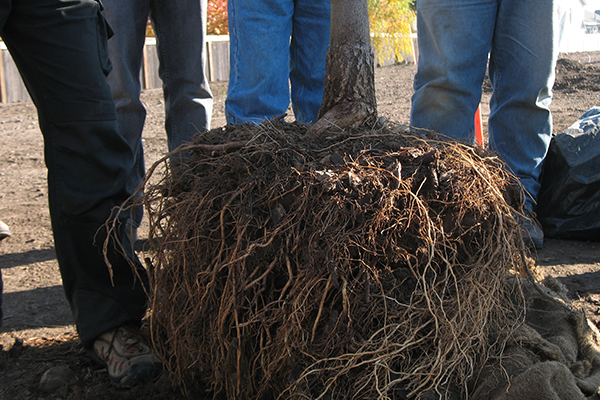
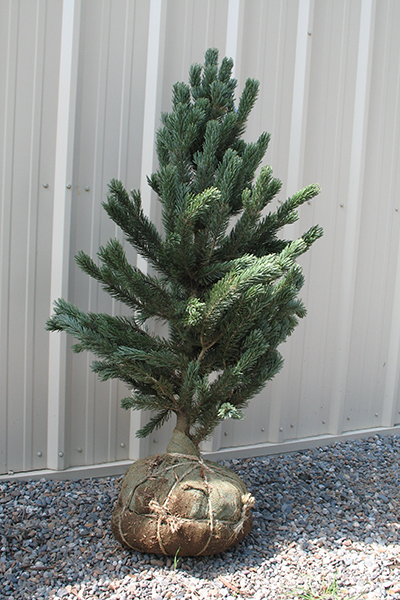
Balled and wrapped stock is like bare-root in that plants are field grown, but the soil is left around the roots at harvest (see Figure 10). This stock used to be called balled and burlapped (B&B) because the root ball was wrapped in burlap to keep it secure. Burlap is not always used in modern production, so the name has been changed. However, the term “B&B” is still in use. It is uncommon to find shrubs or vines available in this form, but it is common for trees.
With soil around the roots, this type of nursery stock is less likely to dry and does not have to be planted before breaking dormancy. If the roots are kept moist, balled and wrapped stock can be sold throughout the growing season. The soil also provides some protection against mechanical damage during shipping.
Balled and wrapped stock has disadvantages as well. Root defects, such as kinked, malformed, or broken roots, are hidden by soil. The trunk flare may be buried in the soil and may not be visible when the trees are wrapped.
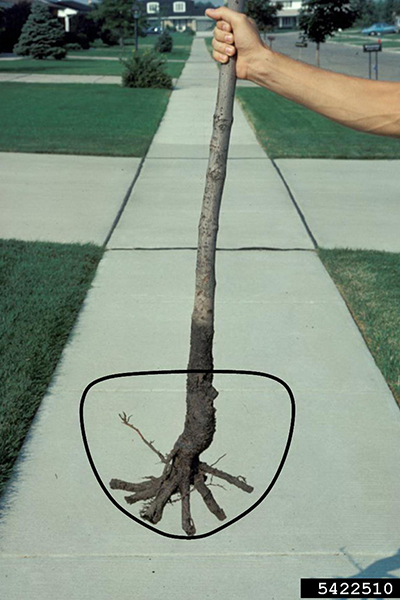
Trees and treelike shrubs flare out at the base of their trunk where the root system begins. This flare should be at grade level when the plant is installed. However, B&B trees frequently have soil above the root flare. This causes stress to the plant and, if not corrected at installation, can lead to poor growth and premature death of the plant. Unless the wrap is at least partially removed, this condition cannot be seen. Worse, if soil was mounded against the trunk prior to harvest, the tree may lose too much of the root system during digging to survive (see Figure 11).
Most retail plants are sold in containers. A container can be made of virtually any material, from plastic pots to wooden crates to compressed peat or coir. Containerized plants may have been field grown and then put into containers after harvest, or they may have been grown entirely in containers, transplanted into larger and larger sized containers as needed until they are sold.
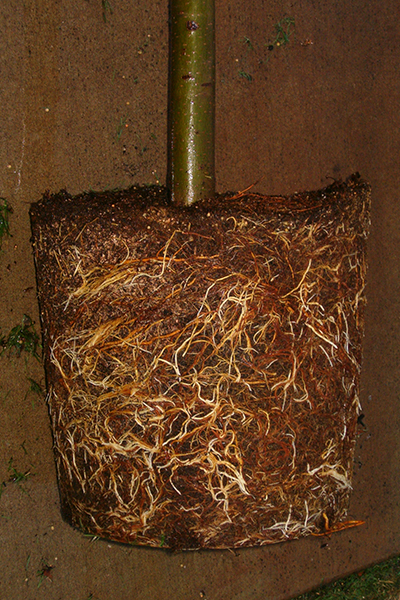
Containerized plants do not dry out as quickly as either bare-root or B&B stock. The containers add extra protection for the roots during shipping, and larger containers can allow for larger trees to be planted. If properly managed, containerized plants will have a larger root system than bare-root or B&B plants, which routinely lose 90% or more of their roots when harvested for sale.
Plants in containers are more expensive than other forms, but their primary disadvantage is the impact of the containers on their root system. Root defects are hidden by the media in the container. More commonly, plants are left too long in pots, and the roots begin to grow along the inside edge of the container instead of out from the trunk (see Figure 12). If left unaddressed, these circling roots become larger and more difficult to correct and the plants become pot-bound. These roots need to be straightened or cut back at planting; otherwise, they may not grow outward from the trunk as they should. This may cause problems such as poor establishment (opens in new window) in the landscape; insufficient support and anchorage; stem-girdling (opens in new window) roots which may eventually kill the plant or cause a structural failure, like falling over in a windstorm.
In addition to knowing the advantages and disadvantages of different types of nursery stock, the savvy gardener should look for additional red flags when shopping for woody plants.
Quality plants will be completely free of insects and disease as well as obvious signs of poor treatment, such as mechanical damage to stems and branches, poor pruning cuts, or dry soil around the roots. Gardeners should reject plants that appear stunted, deformed, or off-color. Note: some plants have been bred for small size, unusual leaf color, or twisted branching, so check the tag for more information.
The main stem or trunk should be in the center of the root ball, and the root flare at the base of the trunk should be visible at the top of the soil or planting media. The plant should have branches on all sides with some space between them on the trunk. (Exceptions to this rule are specialty items such as topiary, espalier, or bonsai plants.)
Speaking of nursery tags, remember that they are written to give the shopper important information, but they must also be very general. Growers do not know where the plant may end up, so shoppers should research how plants perform under local conditions. For example, the ideal growing conditions in many places west of the Cascades result in plants that grow larger than is listed on the tag. The harsher conditions east of the Cascades may result in a plant that is smaller than the tag says.
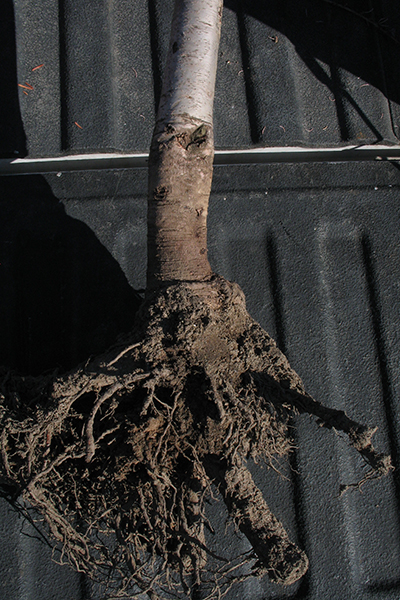
An adequately sized root system is key to the long-term success of any plant. In the case of trees, the root ball should be 12 inches in diameter for every inch of trunk diameter, as measured 6 inches above the root flare. For shrubs and vines, the size is based on the species, the growth habit, and the height of the stock. While there is no easy rule for shrubs, as there is for trees, the larger the root system, the better. Oversized plants stuffed into small containers are unlikely to thrive (see Figure 13).
Poor-quality plants are unlikely to succeed in the home landscape, so gardeners should be selective in their purchases and only buy plants which meet standards for quality. This is the first step in a tree, shrub, or vine that thrives instead of one that merely survives.
Installation
“Never dig a $1.00 hole to plant a $100.00 tree!” This is a quote attributed to any number of teachers, supervisors, and business owners. It is a memorable way to say that how someone installs a plant can help it succeed or doom it to failure.
Call before you dig. To avoid striking any underground utilities, gardeners should call 811 or submit an online request a minimum of two business days before they plan to dig. It is true most utilities are buried well below the level of the average planting hole; however, this is not always the case. The author of this chapter can attest to having their neighborhood evacuated after a homeowner, who did not call 811, struck a gas line while installing an underground sprinkler system.
After calling 811 the various agencies will come out and mark the location of things like water, gas, power, or any other underground utility that is managed by an agency. These locates are not foolproof however, as some underground lines may not show up, or the markings missed. In addition, agencies marking utilities will not mark the location of home irrigation or electrical conduit.
Timing
There are better and worse times of year to install woody plants. These times vary, depending on the location in Washington. West of the Cascades, or in places where the soil rarely freezes over the winter, autumn is an excellent time to plant, as the winter precipitation will keep the roots well-watered. It is best to avoid planting when freezing temperatures might damage roots during the brief period they are exposed.
In areas where the soil freezes over the winter, late season planting begins after summer heat has ended but before the soil freezes. Depending on the area and the season, this may start as early as September and end as late as November.
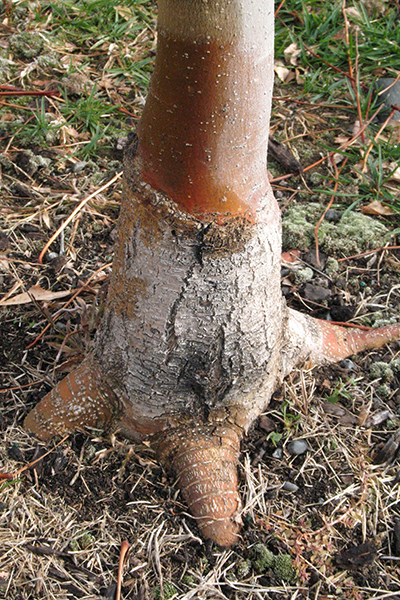
Another planting window occurs in late winter through early spring. It starts when the soil thaws and is dry enough to work without causing compaction. Installation should take place as early in the season as possible to allow the root system time to start establishing before the heat of summer. Avoid planting just before or during the hottest times of the year when the stress of the heat and the stress of transplanting may prove too much for the plant.
Planting
Dig a hole only as deep as the distance from the bottom of the root ball to the root flare. This may mean having to do some work to expose the root flare if it was covered by soil. If this is necessary, it should be done as gently as possible before planting using hand tools or water. The root flare should end up at grade level, as seen in Figure 14. At the same time, the root ball should be inspected to make sure roots are radiating outward from the trunk, straightening them as necessary. Broken roots should be pruned and removed.
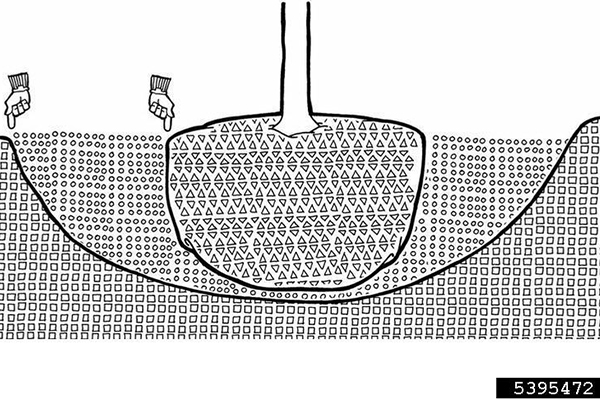
The planting hole should only be as deep as needed. If it is too deep, add fill in the bottom of the hole and tamp it down to make sure the tree does not sink as the soil settles. The planting hole needs to be two to three times wider than the root ball with the sides of the planting hole gently sloping down the bottom (see Figure 15).
Before placing the plant in the hole, remove any labels, twine, or tags. If left on the plant, these may girdle the trunk, branches, or roots.
Depending on the size of the plant, it may be easier to remove a container before moving it into the hole. The container can be left to protect the roots until after the plant has been moved into the hole, but make sure it is removed before backfilling the soil. Containers must be removed from plants to allow roots to grow.
Gently move the plant into the hole, lifting it by the root ball rather than the trunk. Trees can be very heavy, so plan ahead; it may take more than one person to move it without injuring the plant—or the gardener! Once the plant is in the hole, double-check that the root flare is at grade level or slightly higher, but not below grade. Remove any twine that is wrapped around the trunk or roots of the plant, as this may cause problems later.
There is some disagreement about removing the root wrapping or wire basket on balled and wrapped plants. In some cases, the root ball falls apart after removing the wrap, further damaging the already small root system. Some nurseries advise customers that removing the wrap will void any warranty on the plant.
On the other hand, treated burlap and synthetic wrapping may not break down quickly enough to allow roots to grow as they should. In dry soils, even untreated burlap may not break down. Leaving these materials on the plant can cause poor growth, girdling roots, or plant failure.
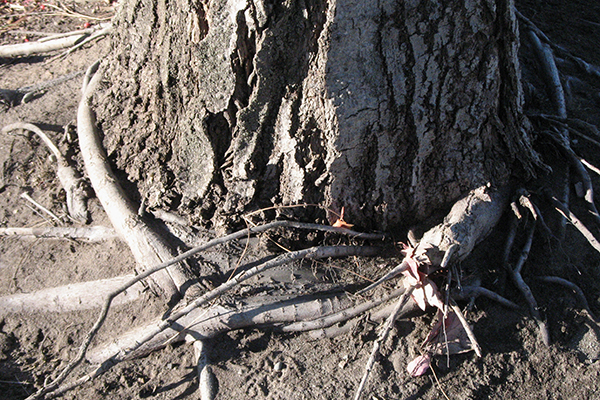
It is generally advised to remove as much of the wrap and basket as possible to allow normal root growth. It also allows the gardener to see the root system and correct any defects. If there are any circling or girdling roots, they should be straightened or cut to prevent further damage. Research reports circling roots (Figure 16) can lead to plant health problems as well as poor anchorage of trees as much as 30 years after planting.
The trunk should be as vertical as possible; this may require looking at the plant from multiple angles and shifting soil in the planting hole to make sure it is straight and not at an angle. As the hole is backfilled and watered in, the plant may shift, so it should be checked more than once.
A summary of research into soil amendments and fertilizers applied at planting found no clear benefit to using them, so backfill the planting hole with unamended native soil and do not add any fertilizer. Most woody plants do not need to be fertilized unless a soil test reports a nutrient deficiency. If fertilizer is required, it should be applied at the soil surface, rather than in the backfill, because some fertilizers will damage roots if they make direct contact.
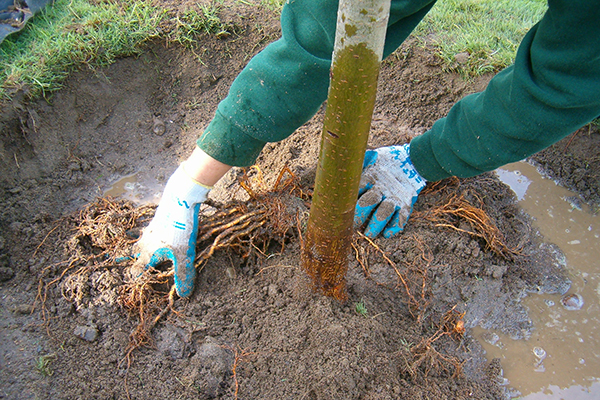
Using a hose on low volume, water the soil as the hole is backfilled. This will help prevent drying and prevent large air pockets from developing around the roots. Keep watering the soil to saturate it while backfilling the hole, but also be careful not to overwater. Most woody plant species do not tolerate standing in water for extended periods (see Figure 17).
Stomping on the soil around the plant can inhibit root growth and establishment. If there is extra soil after filling the hole, it can be mounded up in a low circle around the edge of the planting hole. This will create a water retaining basin to assist in keeping the soil around the roots moist. Skip this step if drainage or excess water is a problem at the planting site.
It is critical for the plant to receive enough water through the establishment period. Most new woody plants will need irrigation weekly unless rain is sufficient. Plants east of the Cascades may need irrigation more often, especially during hot weather.
The best way to know if a plant needs water is to check the soil. If the soil below the mulch is dry, then it is time to water. The volume of water needed varies by the soil type, size of root system, and plant species, but the goal is to make sure water gets to the entire root system. When irrigating, a garden hose set on a low volume does a good job of deep watering, but it should be monitored to prevent overwatering. Standing water and runoff are signs the soil is saturated, and many species are intolerant of these conditions, especially if done repeatedly or for an extended period.
Staking
Staking should not be necessary for most woody plants when planted properly. The small size of most shrubs and vines at planting means they do not have enough mass above-ground to be in danger of toppling. If vines are to be trained on an arbor or trellis, install these before planting to avoid root damage.
Research shows staking can be beneficial for some trees, including those that are bare-root, planted on windy sites, or planted in areas with unstable soil. Trees are sometimes staked in high-traffic areas to reduce the chances of mechanical damage from landscape equipment or from vandalism.
The benefits of staking are reduced the longer the stakes remain in place. This is because movement of the trunk in the wind triggers root growth and trunk taper (opens in new window) to stabilize and anchor the plant. If plants are staked so tightly that they do not move, this signal is not sent. Roots are slower to grow and properly anchor the tree. The trunk is also slower to develop the strength it needs to resist wind and other physical forces.
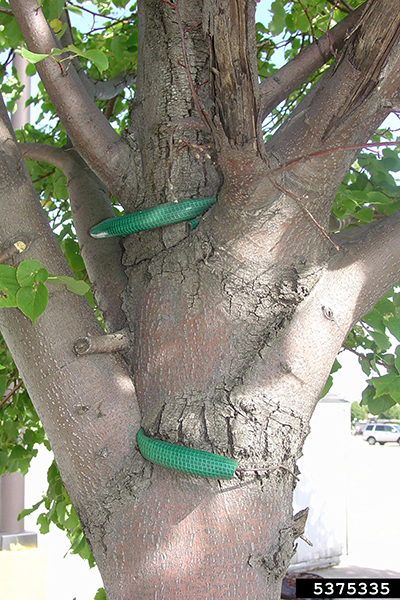
If stakes are left on more than a year, it can slow root growth or may lead to slow or asymmetrical trunk growth. If not removed, stake ties around the trunk can begin to cause wilting, trunk girdling, stunted growth, and even death (see Figure 18).
Mulching
Mulching is a good practice whether installing new plants or caring for mature ones. After installing new plants, spread a two to four inch layer of mulch on top of the planting hole. This layer of mulch over the root zone will protect roots from temperature extremes, keep the soil from drying quickly, and reduce damage from lawn maintenance. If organic mulch material is used, it will also add nutrients into the soil while improving soil structure and health. When using fine-textured mulches such as compost or ground up bark, keep the mulch closer to two to three inches deep. A thin mulch layer is also a good practice where excess water is a concern; the deeper the mulch, the slower water evaporates from the soil surface. Coarse mulch materials, such as arborist wood chips or river rock, can be spread three to four inches deep, because the coarser texture interferes less with soil water evaporation and the soil to air exchange.
When mulching mature trees, it is not necessary to add more every year. Instead, check the depth of the mulch and add more only as needed to maintain a two to four inch depth. Raking will even out the depth and even make it look newer.
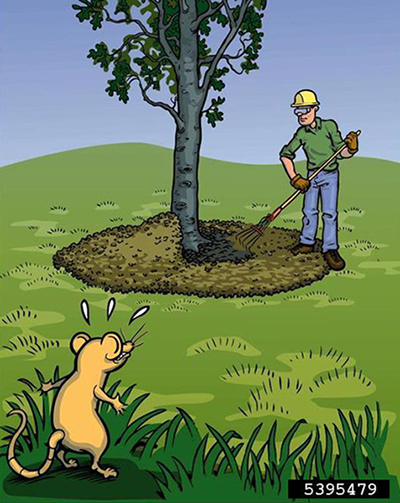
Keep mulch a few inches away from the trunk of the plant. Mulch piled against the trunk may provide a home for insect or rodent pests. Spread the mulch out to the drip line of the plant or farther if practical (see Figure 19).
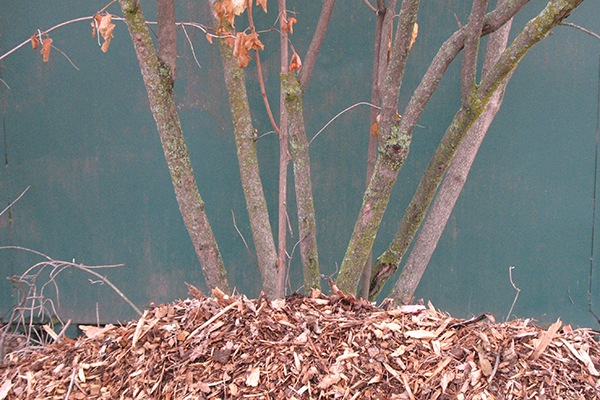
In general, organic mulches, such as compost, bark, wood chips, and pine straw (needles), are better to use, because they break down and add nutrients to the soil. As with anything, too much of a good thing can be damaging. Mountainous piles of mulch (see Figure 20) inhibit needed gas exchange with the soil, slow the infiltration of water, and stunt plants.
There are many types of inorganic mulches which work well in special situations. Homeowners in areas where wildland fire is a danger are advised to use rock mulch around structures rather than flammable mulches like pine needles.
Some inorganic mulches come with big drawbacks. Rock mulches absorb and retain heat, which stresses plants in areas with hot, dry summers. Rubber mulches made from recycled tires have been found to release toxins into the soil. They also burn hotter and produce higher flames than organic mulches.
Adding organic mulch around woody plants simulates forest conditions and helps to build healthy soil. While inorganic mulches may not build soil, they can still protect roots from temperature extremes and slow the loss of water. The keys to success are to use the right materials for the situation, in the right amounts, and to put them in the right place.
Woody Plant Care
Younger woody plants usually require more care and maintenance than mature trees. They have fewer stored sugars, thinner bark, and go through radical environmental changes from the time they are harvested through the time they become established in the landscape. Due to these factors, it is especially important to care for woody plants in the first two to five years they are in the landscape.
Mature plants also need care. Plants reach maturity at different rates. Shrubs and vines may be considered mature as soon as three to four years after planting, while larger shade tree species may take 10 or more years to mature. The needs of mature plants are somewhat different from younger plants, and those needs vary by species, environment, and plant health. Maintenance considerations for mature trees and shrubs include:
- Access to water
- Need for fertilizer (or soil nutrients)
- Landscape maintenance
- Landscape construction
Access to Water
Water is critical during the establishment period of woody landscape plants. Water needs can vary based on environmental conditions and soil types, but most woody plants will need supplemental irrigation for at least the first one to three years. Trees usually need irrigation for a minimum of two to three years, but if larger stock is planted (trunks more than two inches in diameter) that number may increase. Trees may have lost up to 90% of their root system moving from the growing field to the final planting site, so more frequent watering is needed to keep roots alive.
The goal of this supplemental irrigation for young plants is to keep the soil around the roots evenly moist without becoming too wet or too dry. Looking at soil is not a reliable method to determine whether a plant needs water. Gardeners should feel the soil around the roots. Simply assessing the dryness of the top mulch is not sufficient for determining soil moisture. It is okay if the top of the soil dries slightly, but it should not be allowed to dry more than one-half inch to one inch deep.
Irrigate less often but for longer periods when watering woody plants. The goal is to make sure the whole root system gets water, rather than just the roots closest to the surface. There are a variety of tools that can be used, including drip irrigation, soaker systems, commercial water bags, or a garden hose set to a low volume. The best choice depends on the budget of the gardener and the conditions of the planting site.
Lawn sprinklers are designed for wide coverage rather than deep watering, so they are usually not sufficient for newly installed woody plants.
Water conservation is a critical issue in Washington. It is important that, whenever possible, gardeners choose ornamental plants that can survive on minimal or no supplemental irrigation after they establish. While new plants need irrigation in the first few years, with proper plant selection, this can be slowly reduced at the end of the establishment period and eventually discontinued.
Any plant may need extra water during the hottest part of the season or during extreme heat events, so gardeners might have to provide water even after establishment. If plants with high water requirements, such as willows (Salix spp.), are installed and they are only receiving moderate levels of precipitation, they may need ongoing irrigation to stay healthy. In the drier climate of eastern Washington, most non-native woody plants need irrigation even at maturity.
Need for Fertilizer (or Soil Nutrients)
Fertilizing ornamental woody plants is usually unnecessary, especially if they are surrounded by a mulch of organic material such as arborist wood chips. Unlike crop plants which are fertilized to maximize yield at harvest, ornamental plants are only fertilized when a nutrient is lacking and that deficiency is interfering with healthy growth.
Some gardeners apply fertilizer when they see symptoms of nutrient deficiency; however, some symptoms of nutrient deficiency, such as yellow leaves, may also be caused by other conditions, like drought, overwatering, or aphids. Soil pH may make some nutrients less available to plants, so fertilizer alone may not help.
Gardeners should not add fertilizer unless a soil test indicates a nutrient deficiency. A more successful strategy is to do a soil test before planting and then choose plants adapted to the conditions at the site.
Landscape Maintenance
Woody plants require maintenance over their life. In addition to possible irrigation and soil fertility needs, they are likely to need pruning (see Chapter 23: Pruning Woody Landscape Plants). They may require some form of pest management and although it is rare, they may need to be assessed for the risk of damage to their surrounding environment.
It is also true that the maintenance of other plants in the landscape may impact trees, shrubs, and vines. Lawn maintenance practices can be particularly damaging to woody plants. The most common forms of injury from lawn maintenance are mechanical damage and harm from chemicals.
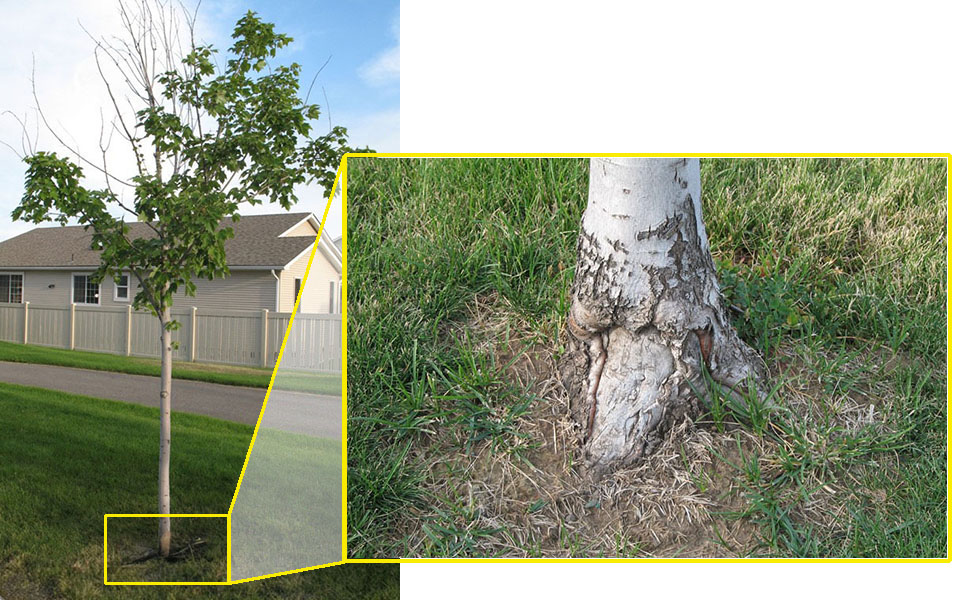
String trimmers are power tools used to cut weeds and grass. The cutting line is not made of string but hardened nylon capable of cutting through grass, weeds, and, unfortunately, bark. When using string trimmers on grass and weeds growing right next to a tree’s trunk, be careful not to cut through the bark. The bark protects the vascular tissue the tree needs to survive. Mature trees with thick bark are more resistant, but younger trees, vines, and shrubs do not have these layers of protection. With repeated injuries over time, small trees and shrubs can be killed by string trimmer injuries like those shown in Figure 21. Similar injuries can be caused by lawn mower collisions that scrape bark and vascular tissue off the trunks or surface roots of woody plants. The resulting wounds can also be an entryway for wood-decaying organisms.
Herbicides can also damage woody plants. Many products specifically direct the user not to apply over the root zone of desirable trees and shrubs; however, the gardener may not realize tree roots spread well outside the leaf canopy, or drip line, of a tree. A tree’s root system can spread twice as wide as the canopy, and these roots are capable of absorbing herbicides.
Damage can be caused by not following the label rate for application, making a mistake in application, unexpected rain or irrigation washing the product off target, using the wrong product, or accidentally spraying root shoots, sometimes called root suckers (opens in new window), of a woody plant that pop up in a lawn. Weed and feed products intended to fertilize lawn and kill weeds cannot tell the difference between a weed and an ornamental plant. They may not kill an ornamental outright but can still cause severe damage. With repeated exposure to herbicides, damage to the plant can become more serious and potentially lethal.
Landscape Construction
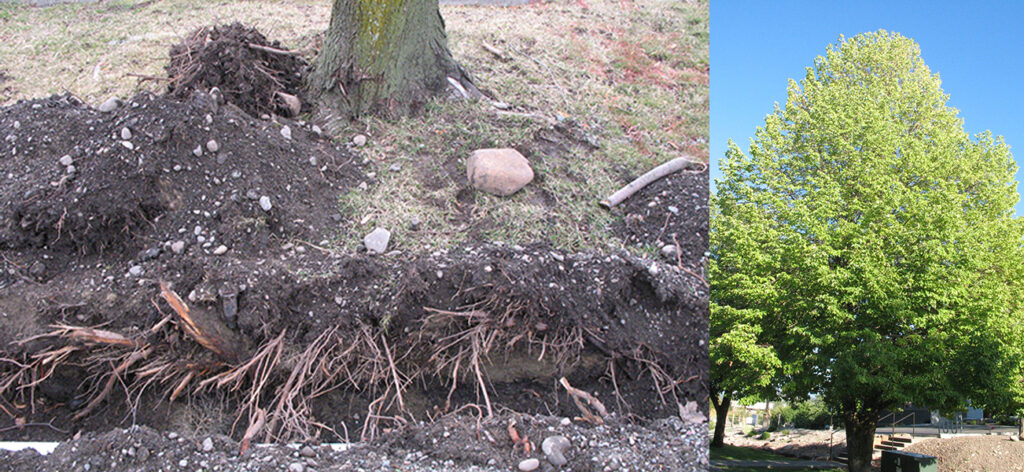
Digging or trenching in the root zone of a plant will damage roots, and woody plants with their wider root systems are at greater risk. Symptoms of this kind of damage may take more than a year to appear in the canopy. Figure 22 shows dozens of larger roots that have been severed during the installation of a new irrigation system just a few feet from the trunk of a mature (40 foot tall) linden. With the loss of so many roots all at once, the tree experienced severe dieback in the upper canopy and was removed approximately two years later.
Smaller planting holes dug a distance away from a trunk will likely not cause extensive damage. For example, planting an annual or perennial outside the canopy of a shrub does not usually cause noticeable harm, but caution is advised when digging in root zones. Preventing root damage is always a better option than trying to save a severely injured plant. This is why experienced, ISA certified arborists (opens in new window) are often hired when construction will be near trees that the property owner wants to save. They will suggest and possibly provide tree protection strategies, such as pruning limbs out of the way of equipment, fencing off areas near trees, or tunneling under tree root systems instead of trenching.
What if past construction damaged trees or shrubs still in the landscape? Homeowners in new housing developments are not always aware of the injuries that occurred during construction. While developers try to leave some of the existing trees in place, the process of construction can be very damaging.
Perhaps most importantly, soils post-development are dramatically changed to allow for urban infrastructure. Organic and topsoil layers are usually removed during construction, as they do not have the stability required to support buildings and roads. This removes most of the beneficial life in the soil as well as plant available nutrients.
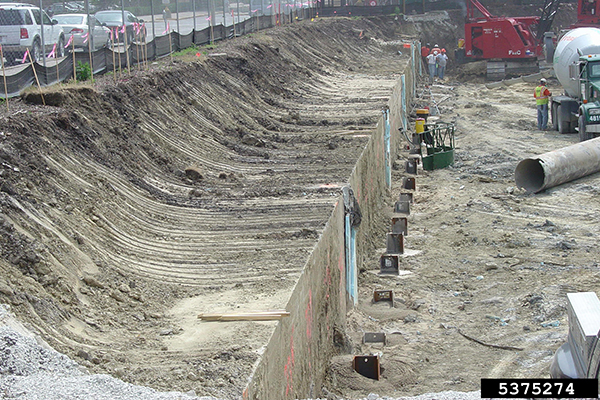
Grade changes also require removing or adding soil to a site (see Figure 23). If soil fill is required for construction, it is usually brought in from another site, and the interface between different soil types can limit plant root growth as well as water drainage.
Soil is also heavily compacted during development. Compaction is often done deliberately to create stable foundations for construction, but soil compaction can also be incidental, resulting from heavy machinery driving over soil. This compaction is very difficult to reverse, and it reduces pore spaces belowground that normally hold the water and air the plant needs. Compaction slows water infiltration and percolation, reduces air exchange, and reduces the physical space for roots to grow. None of this is seen by the homeowner, however, so it can be difficult to know how a soil’s history might impact future planting. Soil damage may only show up as symptoms in preexisting plants or poor growth in plants installed later.
Gardeners should take steps to protect their plants from this type of damage when planning construction in their landscape. Consulting with an ISA certified arborist, a Registered Consulting Arborist (RCA) (opens in new window), or a certified landscape technician can be helpful.
Trees and Safety
Woody plants offer many benefits to the homeowner and the community, but there are also risks associated with them, particularly with tall trees. With their height and mass, they have greater potential to cause damage should some part or all of them fail. Homeowners are legally responsible for maintaining safe conditions on their property, and this includes plants.
This section introduces the concept of risks associated with woody plants but in no way prepares readers to assess risk. If a risk assessment is required, a property owner should contact a certified arborist with a Tree Risk Assessment Qualification (TRAQ) (opens in new window) or a Registered Consulting Arborist.
Professional risk assessment is a complex task, but it can be introduced by looking at three factors that are examined when completing a tree risk assessment. These factors are (1) the presence or absence of a defect in the plant, (2) the presence or absence of a target that might be damaged, and (3) the external forces or stress that might influence whether a failure occurs.
Defects
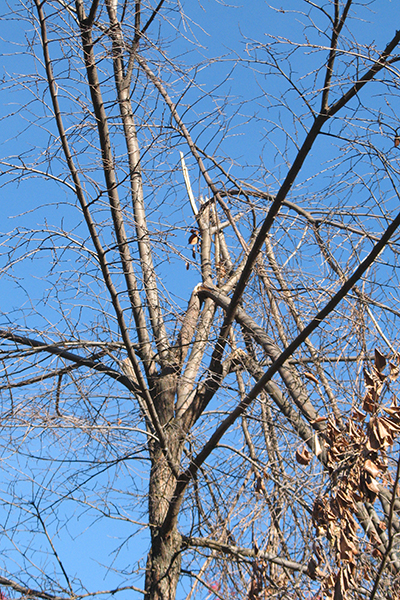
A defect is something that weakens the structure of the tree, even if it does not impact the health of it. In other words, part or all of the tree is more likely to fail under certain conditions. A defect might be easily seen, such as a broken branch or dead wood in the canopy. It might also be hidden, such as root damage or decay underground, or wood decay below the bark.
It is not practical to list every possible defect, but some of the more common ones to be aware of include:
- Cracks or breaks in branches or trunks (see Figure 24)
- Large volume of dead or dying branches
- Lack of trunk taper (does not get wider near the base) or reverse taper (trunk gets narrower at ground level)
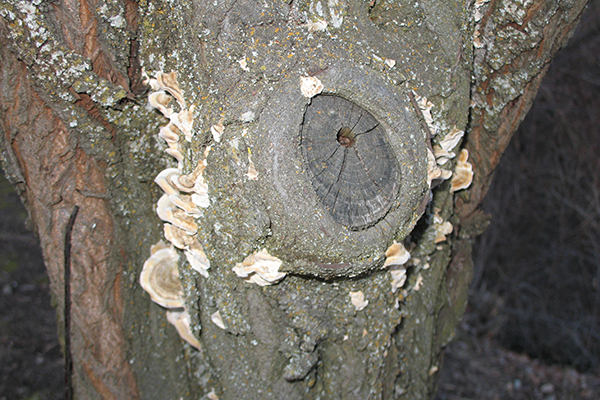
- Fungal growths growing out of branches, trunk, or root zones (see Figure 25)
- Construction, trenching, or change of soil grade within the drip line (under the canopy) of the tree
- Plant foliage obscuring visibility of traffic signs or signals, or clear views at intersections
- Cracks, heaving, or movement of soil near the tree
- Death or removal of adjacent mature trees
Target
Target is the word used to describe anything that might be injured or damaged by a plant failure. Targets include people and animals that might be injured, structures or personal property that might be damaged, and infrastructure like sidewalks, utility lines, underground pipes, or traffic signals.
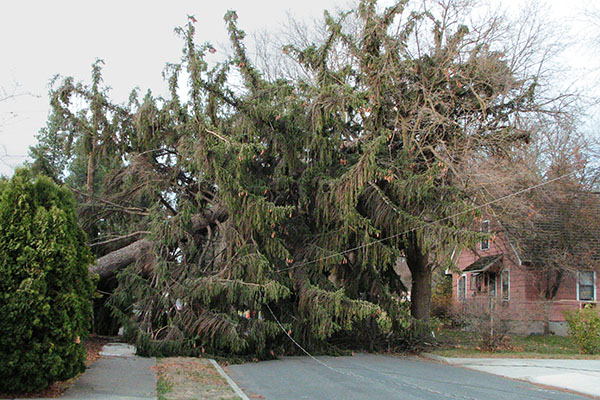
If there were two identical broken branches on two trees, but one was in the forest and the other in the city, a tree risk assessment would give different reports for each tree. Unless the tree in the forest was adjacent to a campground, trail, or other gathering place, it would likely be rated as minimal risk, because there is minimal likelihood of damage from the falling branch. The risk rating would go up for the same tree in a city because a falling branch might hit a person or car, obstruct a road, fall on a roof, or knock out power (see Figure 26).
Stress
Last on the list of factors is stress on the plant. Arborists may also refer to this as “load.” Stress factors can be an incident such as an ice storm or high winds. Stress can also be long-term or chronic. If roots are severed by trenching close to a tree, the stress does not end when the trench is covered. It continues to compromise tree stability long after any evidence of the damage is gone.
Any plant might fail under extreme stress, such as that caused by tornado, unprecedented snowfall, or a lightning strike. Tree risk assessors instead consider the likely stressors of the location under normal conditions. Instead of a tornado, would the plant fail during a windstorm typical of those in the area? What about a windstorm on the more severe end of the typical range? In a snowy winter region, would the plant fail during usual snow accumulations?
Assessment
Tree risk assessments are a special service provided by some arborists. These assessments come in different forms depending on the needs of the tree owner and the situation. An arborist, even one untrained in risk assessment, will note obvious defects, such as large, dead, or broken branches, and call attention to them when discussing work with the tree owner or property manager. While a prework discussion between arborist and client is not considered a formal risk assessment, it does identify a defect and a potential treatment.
In some cases, a tree owner needs more specific information about their tree and potential risk. In these cases, tree owners should hire an arborist with a Tree Risk Assessment Qualification (TRAQ). These arborists have advanced education and skills to evaluate trees. They can provide basic or advanced assessments, depending on the need (and the budget) of the tree owner or manager.
If a basic inspection finds indications of a defect, or an arborist has reported a possible hazard, tree owners may want a more formal tree risk assessment. In this case, the tree assessor will complete a more thorough investigation of the tree. They may use special tools to assist them. They typically check for decay in the trunk and evaluate the severity of any other tree defects. They may remove soil at the base of the tree to check for girdling roots or signs of root rot.
A tree risk assessment will come with a report estimating the level of risk along with potential plans to mitigate plant defects. All trees carry at least some risk, so findings will categorize tree risk on a scale from low to extreme. If the risk is low, the assessment may suggest only continued monitoring for signs of changes. If the risk is higher, reports might also include action plans such as pruning, installing mechanical supports, or in some cases, removal.
Note: Tree owners should be wary of anyone providing an unsolicited risk assessment, particularly if it is presented as an imminent threat. There are unethical workers who use these tactics to scare homeowners into paying for costly tree work that may be unnecessary at best, and at worst, lead to unneeded tree removal. Before agreeing to have a tree removed, tree owners should seek a second opinion from a qualified arborist, preferably one who has a Tree Risk Assessment Qualification (TRAQ). TRAQ is a credential that can be verified by the tree owner through the International Society of Arboriculture.
Treatment of Damaged Trees
Pruning
Pruning is a way to remove defects such as broken branches or dead limbs from a tree. Plants obstructing views of traffic signs, signals, or intersections can be pruned to open up visibility. Large limbs with a less-serious defect can sometimes be shortened to reduce their weight, which might in turn reduce risk. Consult Chapter 23: Pruning Woody Landscape Plants for more information.
Mechanical Support
In some cases, an arborist may recommend the installation of mechanical supports, including cabling or braces. This is sometimes recommended when the tree owner does not want to remove a tree, but a defect cannot be addressed through pruning. Mechanical support is almost always recommended in tandem with pruning. Mechanical supports can be costly to install and, because they are permanent, they require annual inspection to make sure they are not weakening, in need of adjustment, or causing damage to the tree. They cannot prevent a failure, but they can make it less likely.
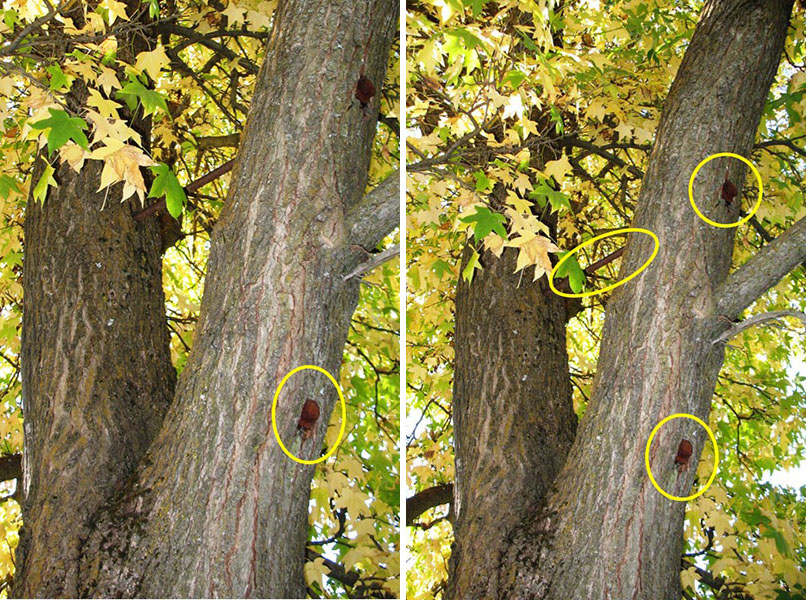
Figure 27 shows a poorly developed branch union between two codominant trunks. With that weaker union, the two stems had greater potential to pull apart under stress. Removing one of the trunks was not a viable option, so large metal bolts called braces were installed to connect the two trunks above the weak branch union. The attachments were designed to reduce the stress on the defective union and is a permanent part of the tree.
Closer to the top of the two codominant trunks, a metal cable was attached to further strengthen the poorly formed union. The cable allows for some movement in the wind, but was installed to prevent the trunks from moving so far apart that the union splits.
Mechanical tree supports do not remove the defect from a tree, but if installed correctly, they add support and reduce the risk of a failure.
Removal
Plant removal is the last choice for most gardeners for obvious reasons. In addition to time, labor, and the aesthetic loss to a landscape, large tree removal requires hiring professionals with the training, tools, and insurance to manage the job. The International Society of Arboriculture recommends that woody plants be considered for removal if they are:
- Dead, dying, or present a level of risk that exceeds the owner’s risk tolerance
- Causing harm to structures or other plants and the situation cannot be managed in another way (such as through pruning or pest management)
- Going to be replaced with a more appropriate species for the site
Even a dead tree can still serve a purpose in the landscape. In native forests, dead trees or “snags” are sometimes called “wildlife trees” because they can provide a home to a wide variety of insects, birds, small mammals, and fungi. In some cases, a dead tree can be reduced in size but left in place to create a home for wildlife, even in home landscapes. Certified arborists can discuss this option with homeowners, and the Washington Department of Fish & Wildlife has more information on the benefits of wildlife trees. While snags serve an important role in forests, they also serve a crucial role in urban landscapes, where habitat loss and fragmentation is a growing concern.
Removing a large tree has the potential to cause injury or damage. This type of work should be left to professional arborists.
Hiring a Professional
Most gardeners have a strong DIY streak. It can be hard to know when to hire a professional, but when it comes to woody plants, there are four factors that can influence this decision:
- Safety
- Ownership
- Liability
- Ability
If a gardener cannot safely perform tree or shrub maintenance, then they should hire a professional. If a job requires climbing, then an arborist should be hired, preferably a Certified Tree Worker: Climber Specialist. These are arborists who have passed a certification test that includes knowledge of safe work practices and demonstration of skill proficiency.
If a tree is within ten feet of utility lines, then gardeners must not perform pruning or removal work. Depending on the type of utility line and its proximity to the tree, pruning should be done by a certified utility arborist who is trained and equipped to work around electrical hazards. In some cases, when electrical lines can be temporarily disconnected, or de-energized by the utility, a certified arborist may be able to complete the job.
Most gardeners would never think of pruning a plant that did not belong to them. However, ownership can sometimes be a confusing issue. Trees planted in a boulevard or parking strip may belong to the homeowner but may also be regulated by a local government through an urban forestry program.
Common regulations governing street trees dictate where trees and shrubs can be planted, include lists of acceptable species, restrict who can perform pruning work, and state the conditions under which a tree can be removed. If unsure of street tree regulations, homeowners can check with the public agency responsible for public trees in their area. This could be an urban forestry department but might also be the road department, parks department, or code enforcement.
Working on tall trees carries with it the potential for injury to the tree worker as well as anyone below the tree. Beyond that, there is the risk of damage to structures and personal property near the tree. If work is to be done on a tree close to a house, a street, or other area where people might be present, then a certified arborist who is properly insured should be hired to perform the work. They will have the knowledge and safety training to manage the risks and perform the work as safely as possible. Commercial arborists should carry liability insurance in case of an accident; uninsured arborists should never be hired, as the damage they cause may become the responsibility of the homeowner.
Finally, gardeners should be realistic about their own abilities. Tasks like planting, pruning, and removal can be strenuous, and not everyone has the strength, stamina, balance, dexterity, or vision to do this. Some gardeners may be physically capable of tasks like pruning but may not have the knowledge or skill to do it themselves. Unskilled work can cause serious damage to the health and structure of a tree, and this can lead to its premature death or the need to remove it.
When hiring a professional arborist, homeowners should check for the following:
- Certification by the International Society of Arboriculture, or status as a Registered Consulting Arborist
- Current business license
- Proof of liability insurance
- If applying pesticides, a current Washington State pesticide applicator’s license
- List of references
Further Reading
Akbari, H. 2005. Energy Saving Potentials and Air Quality Benefits of Urban Heat Island Mitigation.
Appleton, B.L., C.M. Cannella, P.E. Wiseman, and A. Alvey. 2008. Tree Stabilization: Current Products and Practices. Arboriculture & Urban Forestry 34(1):54–58.
Avista Vegetation Management. 2015. The Right Tree in the Right Place (opens in new window). Avista Utilities.
Bennett, M., S. Fitzgerald, A. Jones, and K. Baylog. 2017. A Defensible Space and Fuel Reduction Guide for Homeowners and Landowners (opens in new window). Oregon State University Extension Service Publication EM 9184. Oregon State University.
Brun, C., C. Daniels, and T. Kohlhauff. 2016. A Guide to Washington State’s Urban Tree Canopy. Washington State University Extension Publication EM107. Washington State University.
Brun, C., and P. Dinius. 2015. Selecting Plants for Screens and Hedges. Washington State University Extension Publication EM089E. Washington State University.
Chalker-Scott, L. 2015. Nonnative, Noninvasive Woody Species Can Enhance Urban Landscape Biodiversity (opens in new window). Arboriculture and Urban Forestry. International Society of Arboriculture.
Chalker-Scott, L. (Revised) 2021. Rubber Mulch Use in Home Gardens and Landscapes. Washington State University Extension Publication FS163E. Washington State University.
Department of Energy. 1995. Landscaping for Energy Efficiency (link to PDF document).
Department of Transportation. 2014. Right of Way Manual. City of Seattle. Seattle, Washington.
Donovan, G., and D. Butry. 2009. The Value of Shade: Estimating the Effect of Urban Trees on Summertime Electricity Use. Energy and Buildings 41(6):662–668.
EPA (US Environmental Protection Agency). 2012. A Citizen’s Guide to Phytoremediation (opens in new window).
EPA (US Environmental Protection Agency). 2014. The Economic Benefits of Green Infrastructure: A Case Study of Lancaster, PA (link to PDF document).
EPA (US Environmental Protection Agency). 2016. Heat Island Impacts (opens in new window).
EPA (US Environmental Protection Agency). 2021. Particulate Matter (PM) Basics (opens in new window).
Ewing, R., and E. Dumbaugh. 2009. The Built Environment and Traffic Safety. Journal of Planning Literature 23(4):347–367. DOI:10.1177/0885412209335553.
Gilman, E. 1990 Tree Root Growth and Development. I. Form, Spread, Depth, and Periodicity (opens in new window). Journal of Environmental Horticulture.
Gilman, E. 2004. Effects of Amendments, Soil Additives, and Irrigation on Tree Survival and Growth. Journal of Arboriculture 30(5). International Society of Arboriculture.
Gilman, E. 2020. Bare Root Trees (opens in new window). University of Florida Environmental Horticulture.
Gilman, E., M. Paz, and C. Harchick. 2016. Impact of Nursery Root Pruning and Tree Orientation at Planting on Growth and Anchorage. Arboriculture & Urban Forestry 42(3). International Society of Arboriculture.
Hardie, I., and C. Nickerson. (Revised) 2004. The Effect of a Forest Conservation Regulation on the Value of Subdivisions in Maryland (opens in new window). Department of Agricultural and Resource Economics, University of Maryland.
Harris, T. 2014. Nitrogen Dioxide in the Urban Forest: Exposure and Uptake (opens in new window). University of Massachusetts/Amherst.
Harris, J., and N. Bassuk. 1993. Tree Planting Fundamentals (opens in new window). Journal of Arboriculture 19(2).
Hartig, T., G.W. Evans, L.D. Jamner, D.S. Davis, and T. Gärling. 2003. Tracking Restoration in Natural and Urban Field Settings (opens in new window). Journal of Environmental Psychology 23(2):109–123.
Hilbert, D., L. Roman, A. Koeser, J. Vogt, and N. van Doorn. 2019. Urban Tree Mortality: A Literature Review (link to PDF document). Arboriculture & Urban Forestry 45(5).
International Society of Arboriculture. 2021. Buying High-Quality Trees (link to PDF document).
International Society of Arboriculture. 2021. Mature Tree Care (link to PDF document).
Johnston, M., S. Nail, and S. James. 2012. ‘Natives versus Aliens’: The Relevance of the Debate to Urban Forest Management in Britain (opens in new window). In Trees, People, and the Built Environment, M. Johnston and G. Percival, eds., 181–191. Proceedings of the Urban Trees Research Conference, April 13–14, 2011, Birmingham, UK.
Kell, D. 2012. Large-Scale Sequestration of Atmospheric Carbon via Plant Roots in Natural and Agricultural Ecosystems: Why and How (opens in new window). Philosophical Transactions of the Royal Society Biological Sciences.
Klein, R., R. Hauer, A. Koeser, and B. Bleicher. 2019. Impacts of Wire Basket Retention and Removal on Fraxinus americana ‘Autumn Purple’ Growth Nine Years after Transplanting (opens in new window). Arboriculture & Urban Forestry 1–31.
Labrosse, K., R. Corry, and Y. Zheng. 2011. Effects of Tree Stabilization Systems on Tree Health and Implications for Planting Specifications. Arboriculture and Urban Forestry 37(5). International Society of Arboriculture.
Laverne, R.J., and K. Winson-Geideman. 2003. The Influence of Trees and Landscaping on Rental Rates at Office Buildings. Journal of Arboriculture 29(5):281–290.
Lilly, S., C. Bassett, J. Komen, and L. Purcell. 2022. Arborists’ Certification Study Guide, 4th edition. International Society of Arboriculture.
McPherson, E., and J. Muchnick. 2005. Effects of Street Tree Shade on Asphalt Concrete Pavement Performance (link to PDF document). Journal of Arboriculture 31.
Miller, R. 2014. Small Trees for Small Places: 100 Tree Species for Use Adjacent to Power Lines (link to PDF document). Pacific Power.
Nowak, D., S. Hirabayashi, A. Bodine, and E. Greenfield. 2014. Tree and Forest Effects on Air Quality and Human Health in the United States (opens in new window). Environmental Pollution 193.
Ophardt, M., and R. Hummel. 2011. Planting Trees and Shrubs in the Landscape (opens in new window). Washington State University Extension Publication FS047E. Washington State University.
Petter, J., P. Ries, A. D’Antonio, and R. Contreras. 2020. Tree Selection of Tree City USA Cities in the Pacific Northwest. Arboriculture & Urban Forestry 46(5).
Puget Sound Energy Vegetation Management. 2014. Vegetation Management. 1224. Puget Sound Energy.
Puget Sound Energy Vegetation Management. 2014. Energy Landscaping: For Your Home. 1225. Puget Sound Energy.
Quarles, S., and E. Smith. 2004. The Combustibility of Landscape Mulches. University of Nevada Extension Publication P-11-04. University of Nevada.
Quinn, W., ed. 2014. American Standard for Nursery Stock (link to PDF document). American Horticulture Industry Association.
Seattle City Light. 2023. Safe Tree Planting and Landscaping Tips (opens in new window). City of Seattle.
Steenberg, J.W.N., A.A. Millward, D.J. Nowak, and P.J. Robinson. 2017. A Conceptual Framework of Urban Forest Ecosystem Vulnerability (opens in new window). Environmental Reviews 25(1):115–126.
Taylor, M., B. Wheeler, M. White, T. Economou, and N. Osborne. 2015. Urban Street Tree Density and Antidepressant Prescription Rates—A Cross-sectional Study in London, UK (opens in new window). Landscape and Urban Planning 136.
Vegetation Management Department. 2014. Energy Landscaping for Your Home. Puget Sound Energy.
Water Infrastructure Improvement Act (link to PDF document). 2019. Public Law 115–436, 115th Congress (2017–2019).
Wolf, K. 2005. Business District Streetscapes, Trees, and Consumer Response. Journal of Forestry 103(8):396–400.
Wolf, K. 2018. Green Cities: Good Health (opens in new window). University of Washington.