Plant Problem Diagnosis
Jenny Glass, Extension Educator, Puyallup Plant & Insect Diagnostic Laboratory, Washington State University
Carrie Foss, Extension Urban IPM Coordinator, Puyallup Research and Extension Center, Washington State University
Laurel Moulton, Extension Educator, Clallam County Extension, Washington State University
Introduction
Do the following questions and comments sound familiar?
“Why are my raspberry plants dying?”
“Can you tell me why the inner needles on my spruce tree look so brown?”
“This cherry has been beautiful for years but this spring it suddenly died right after the leaves emerged.”
“Why has my Japanese maple never given me beautiful fall color?”
“What is eating holes in the leaves of my rose bushes?”
“I planted two rows of beans in my garden this spring and only three plants came up.”
You likely have a list of your own questions, or you want to learn more about how to promote healthy plant growth in your garden and landscape, as well as how to avoid having your plants become damaged and diseased. One key to managing and preventing plant problems is diagnosis of plant problems. Diagnosing plant problems can be both a challenge and a joy; the overall experience will mostly depend on how you approach learning about and working on plant problem diagnosis.
Preparing to Diagnose
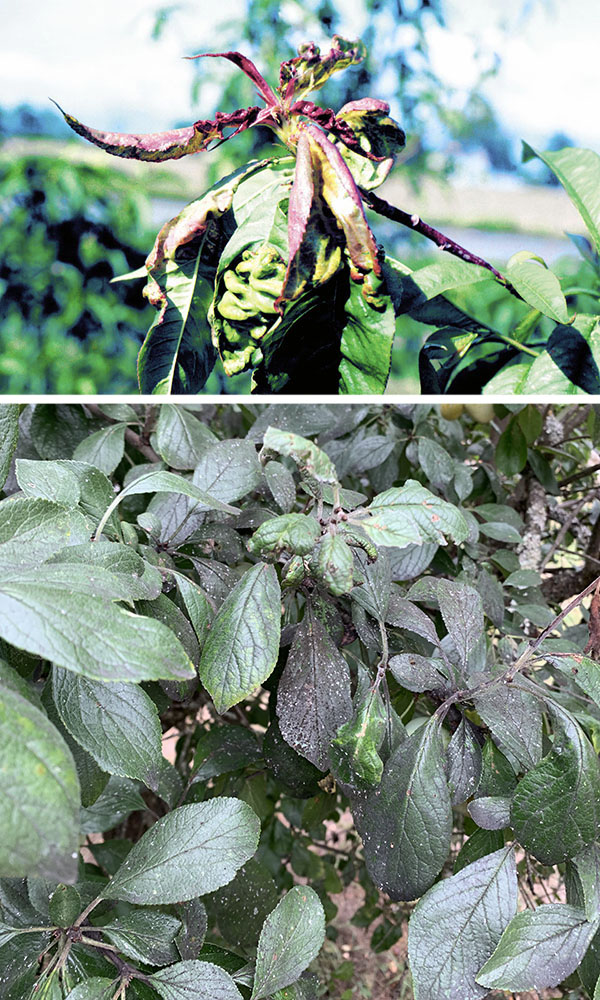
An accurate determination of the origin of the problem is essential for choosing the optimal plant problem management strategy. Knowing how to manage the problem and what strategies are likely to be the most effective will help you make decisions and will save you time and money. For example, if you were trying to manage leaf curl, fungicide applications may be appropriate to suppress the problem of a Taphrina deformans fungus-induced peach leaf curl but would not be effective or appropriate if the leaf curl was the result of a plum tree response to infestation of leaf curl plum aphids (Figure 1). Similarly, pruning out damaged plant tissue or removal of crop debris helps reduce populations of pest or pathogens on a plant but would not be an effective deterrent of damage caused by winter injury. So, it is important to take the time to thoroughly investigate the development and underlying causes of any problem before taking steps to alleviate the issue.
Vocabulary
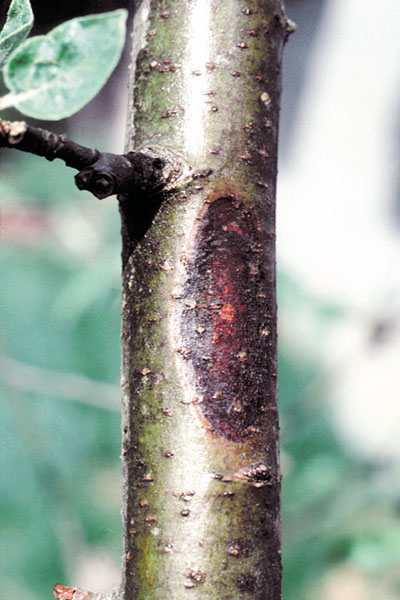
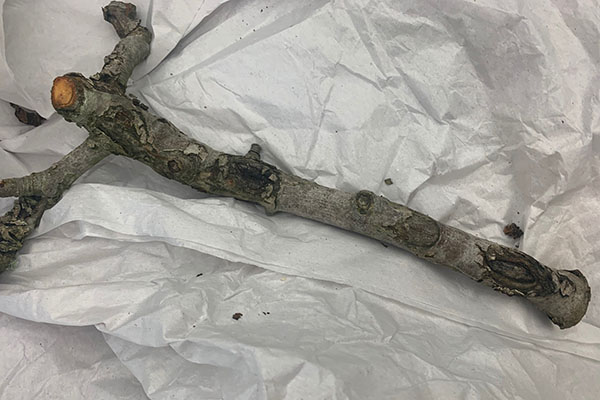
Plant pathology uses a variety of terms to cover the array of plant problems that occur. For example, damage to a leaf may be called a spot, a blotch, blight, or wilt, while damage to a stem is often referred to as a canker or blight (opens in new window). Sometimes special nomenclature is also used. The term “anthracnose,” for example, is used for diseases caused by a certain group of fungi, but the symptoms can be variable depending on the host involved: dogwood anthracnose causes a blight of the bracts, leaves, and small twigs; maple anthracnose and oak anthracnose refer to foliar blights plus stem and twig cankers; while apple anthracnose refers to a disease of the branches (Figure 2) and a “bull’s-eye rot” of fruit, not a foliar infection at all.
Most plant symptoms can be broken into three main damage categories:
- necrosis (opens in new window), the death of tissue (Figure 3)
- color change, such the yellowing of tissue, known as chlorosis (opens in new window) (Figure 4)
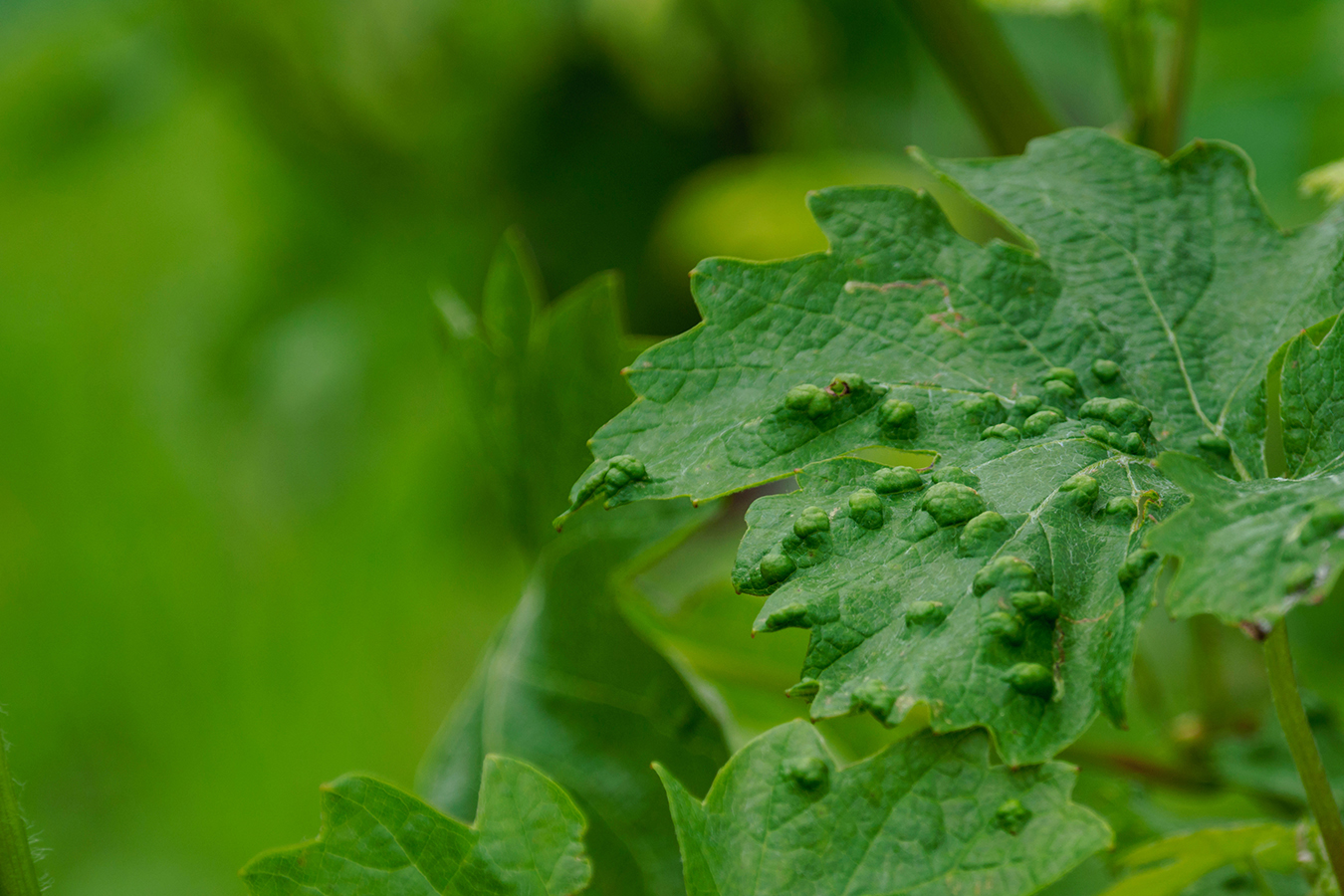
- tissue malformation, such as stunting, distortion, galls (Figure 5), leaf roll, witches’ broom, etc.
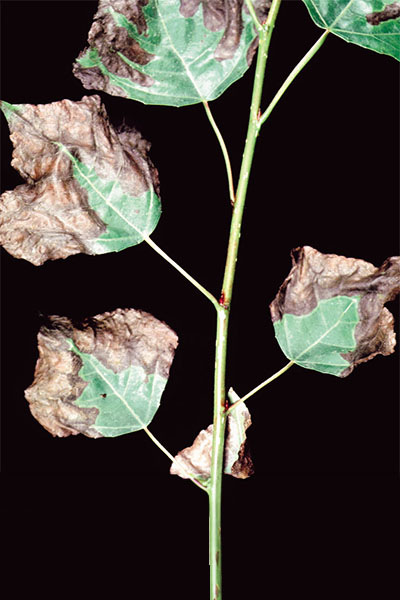
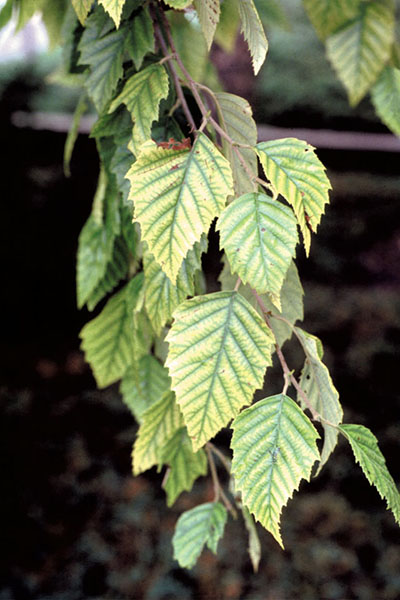
A pathogen is a living entity that causes disease or harms the plant. Pathogens that attack plants include fungi, oomycetes, bacteria, viruses, or nematodes. The vast majority of fungi, oomycetes, bacteria, and nematodes are free-living or beneficial, and these do not adversely affect the health of plants—pathogenic species, capable of causing plant damage, only comprise a small subset of these overall groups.
Pathogenic organisms gain food from their host plant in the form of living or dead plant tissue. Pathogens that are parasites obtain nutrition directly from the cells of a living host. Powdery mildew fungi, common in our landscapes, are parasites: they infect living epidermal cells and gain nutrition from them. Other parasitic pathogens include rust fungi, viral diseases, and plant-pathogenic nematodes. Some pathogens live as saprophytes (opens in new window), gaining nutrition from dead organic matter. Many of the saprophytic pathogens produce chemicals that break down plant tissue to create a food source for the pathogen. Most of the stem cankers, canopy blights, leaf spots, and root rots are examples of diseases caused by saprophytic pathogens.
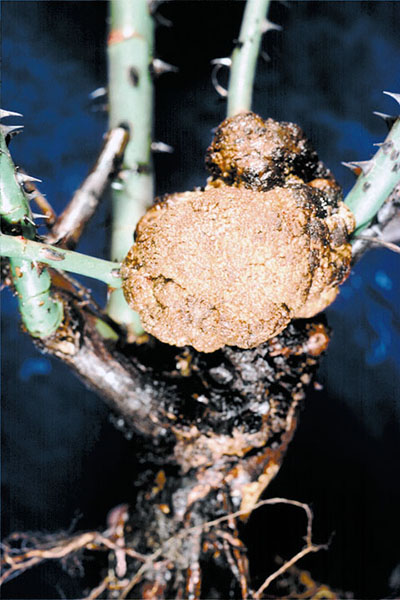
A host plant (opens in new window) is a plant on which a particular disease can develop. For example, rose is one of the many hosts of the bacterial disease crown gall (Rhizobium radiobacter, formerly known as Agrobacterium tumefaciens), as are apple, blackberry, cottonwood, euonymus, honeysuckle, poplar, pyracantha, turnip, and myriad other species (Figure 6). The host range (opens in new window) includes all plants and cultivars or varieties of a plant where a particular disease can develop. When a particular disease cannot infect a plant, we call that plant a nonhost (opens in new window). True fir trees are nonhosts of the crown gall pathogen (however, Douglas-fir is not a “true” fir, and the pathogen Agrobacterium pseudotsugae will cause galling on that species). This knowledge is helpful for eliminating suspects during a diagnosis and is also key to plant disease avoidance—one of the most effective plant disease management strategies.
Other plant-related terms include resistance (opens in new window), susceptibility (opens in new window), and tolerance (opens in new window). If a plant has features that prevent or impede development of a particular disease, we refer to that plant as a resistant plant. Resistance to a disease or insect may be conferred by genetic traits, such as the lack of certain chemical receptors or the ability to produce protective secondary metabolites; by physical traits, such as the presence of thick hairs on leaves; or by phenological traits, such as bloom time. If a disease can only infect a species of plant through a floral structure, a variety of that plant may be considered resistant to the disease if its bloom time does not coincide with environmental conditions favoring disease development. For example, many varieties of crabapples carry genetic resistance to apple scab. They do not develop symptoms, although the leaves may be covered in apple scab fungal spores. Susceptible plants are those that can become readily infected by a particular pathogen. Sometimes resistance and susceptibility is more a continuum in situations where plants have been weakened by abiotic stresses. For example, a shade-loving plant planted in full sun may be more damaged by a particular disease problem than it would be if it were grown under optimal conditions. When a particular pathogen cannot infect a plant at all, that plant is said to be immune to that problem. A plant is said to be tolerant when it can endure adverse conditions, chemical injury, or infection by a disease without serious damage or loss in yield.
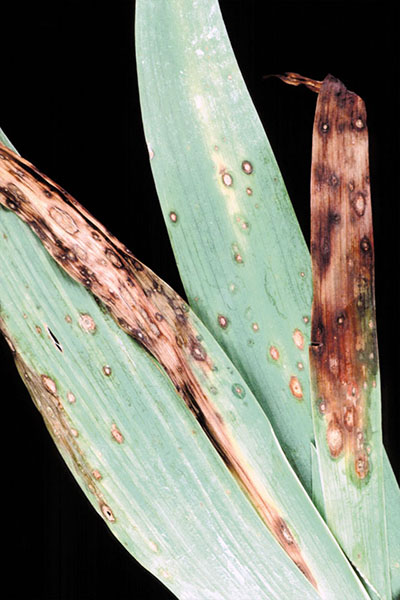
Problems appearing on plants are referred to as symptoms (opens in new window) (the damage occurring on the plant) or signs (opens in new window) (evidence of the organism responsible for doing the damage). Many types of symptoms exist, including necrosis, chlorosis, spots (Figure 7), wilting, distortion, galls, cankers, and stippling-feeding damage. What particular symptoms look like can depend on many factors, including the plant species affected, the stage of development, the severity of the problem, and the underlying health of the affected plant.
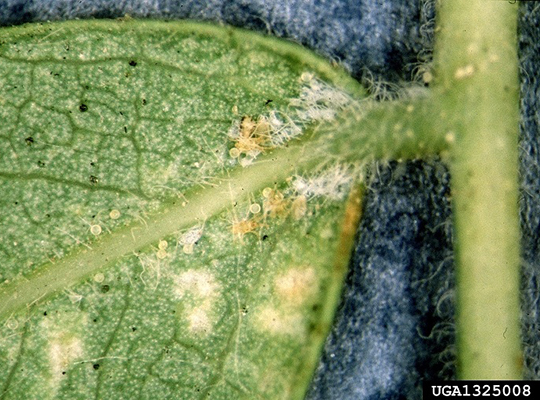
Signs, by contrast, are the visible physical presence or evidence on the plant of the actual living organism responsible for causing the symptoms of plant damage. Signs on damaged plants, visible to gardeners, can include fungal mycelium, spores en masse and fungal fruiting bodies (sometimes more accurately described as sporulation structures), or the presence of an insect or mite pest. Signs also can be some part of the organism or something produced by the pest or pathogen (Figure 8). For insects and mites, signs might include eggs, webbing, frass (opens in new window) (fecal material), or shed exoskeletons (also referred to as cast skins or exuvia). Fungi are the pathogens most likely observable as signs, such as with a mass of spores from a fungal rust pustule or the mycelial growth of powdery mildew covering a leaf surface. With the use of a simple hand lens or another source of magnification, such as an app that uses the camera on a mobile phone, diagnosticians can often identify additional fungal signs, such as the olive-colored coating of spores that overlays an apple scab infection on fruit or leaves. The other pathogen groups—bacteria, oomycetes, viruses, and nematodes—are typically too small or too obscure to present any real likelihood of seeing signs without extensive additional effort, such as the use of a microscope. Failure to observe signs of a pathogen or pest should not eliminate these for consideration as the origin of the plant problem.
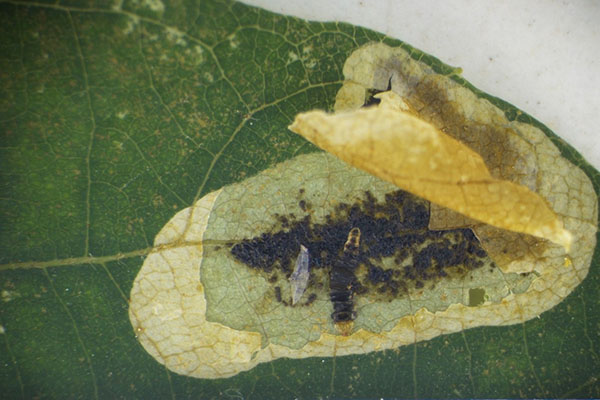
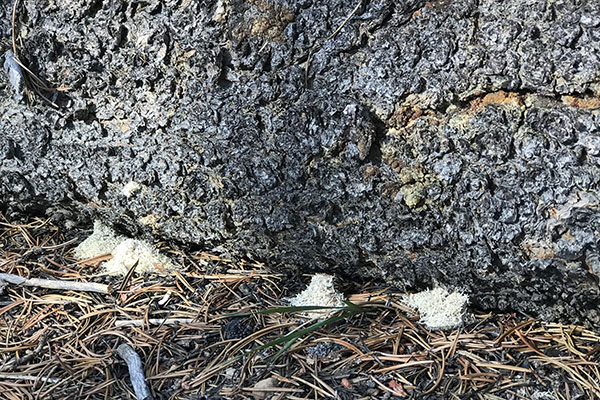
Signs are typically diagnostic for the cause of the problem while symptoms may or may not be as illuminating. Symptoms typically alert us that the plant is experiencing a problem. For example, a wilted plant suggests that the plant is in trouble because not enough water is reaching the leaves and branches but does not indicate why the water is insufficient. Does the wilting mean that too little water has been provided to the plant? Does the wilting suggest that while enough water is available, the plant cannot use it? What might have happened to the plant tissues, such as roots or stems, to prevent water absorption? The sidebar below presents a matrix of possible problems and their causes that may contribute to plant wilting. These reasons are not mutually exclusive—more than one can occur to the same plant at the same time, and some can contribute to further problems that compound the symptoms. For instance, landscape rhododendrons will often wilt and die when growing in saturated soils, conditions under which the Phytophthora root rot pathogens can thrive. The pathogen Phytophthora destroys the fine feeder roots that absorb water, resulting in a “drought stress” appearance to the plant even though water is not a limited resource in the soil.
Insufficient Water to the Plant Canopy
Matrix of possible reasons for plant wilting. As with many plant problems,
there are many possible causes—all of which may be the result of yet
other problems and conditions.
1. Drought
- Can be brought on by insufficient rain or a broken or inadequate irrigation system.
- Wrong Environment: Due to gardener error or plant label error.
2. Stem or twig damage
- Girdling: This occurs when the plant experiences too small or strangling mechanical support (such as twine, wire, or a label left on the plant). It can also result from too tight an insect barrier or from gnawing animals and insects.
- Pathogenic infection: This damage may come from fungi, oomycetes, or bacteria.
- Kinked or broken stem or twig: This can result from ice or snow load,
animal activity, or sun scald.
3. Root damage
- Temperature extremes: Often caused by freezing.
- Burns from high salt concentrations: This can happen due to high native soil salinity, saline irrigation water, excessive fertilization, or urine from large animals.
- Improper transplanting: Frequently due to gardener error or the use of dull tools.
- Mechanical activity: Examples include trenching for construction, soil compaction from traffic, or gnawing animals and insects.
- Chemical applications: Misuse of chemicals can damage roots.
4. Poor root growth
- Low oxygen in the soil: Results from saturated soil or compacted soil.
5. Root death
- Pathogenic infections: Involving fungi, oomycetes, bacteria, or nematodes.
| Overarching cause | Resulting from | Brought on by | Due to |
|---|---|---|---|
| Insufficient water to the plant canopy | Drought | Insufficient rain | |
| Broken or inadequate irrigation system | |||
| Plant in wrong environment | Gardener error; plant label error | ||
| Stem or twig damage | Girdling | Too small or strangling mechanical support for the plant (twine, wire, or label left on the plant); too tight an insect barrier; gnawing animals/insects |
|
| Pathogenic infection | Fungi, oomycetes, bacteria | ||
| Kinked or broken stem or twig | Ice or snow load; animal activity, sun scald | ||
| Root damage | Temperature extremes | Freezing | |
| Burns from high salt concentrations | High native soil salinity; saline irrigation water; excessive fertilization; urine from large animals |
||
| Improper transplanting | Gardener error; dull tools | ||
| Mechanical activity | Trenching for construction; compaction from traffic; gnawing animals/insects | ||
| Chemical applications | Misuse | ||
| Poor root growth | Low oxygen in the soil | Saturated soil; compacted soil | |
| Root death | Pathogenic infection | Fungi, oomycetes, bacteria, nematodes |
Table 1 describes possible causes of plant wilting that all relate to insufficient water reaching the plant canopy. This condition may result from drought, which can be caused by insufficient rain, a broken or inadequate irrigation system, or planting a species in the wrong environment due to gardener or labeling error. It may also result from stem or twig damage, including girdling caused by tight supports, wires, labels, insect barriers, or gnawing animals or insects; pathogenic infections from fungi, oomycetes, or bacteria; or stems and twigs that are kinked or broken due to ice or snow load, animal activity, or sun scald. Another major source is root damage, which can be caused by temperature extremes such as freezing, burns from high salt concentrations due to naturally saline soil, saline irrigation water, excessive fertilization, or urine from large animals, improper transplanting caused by gardener error or dull tools, mechanical activity such as construction trenching, soil compaction from traffic, or gnawing animals or insects, and misuse of chemical applications. Wilting may also occur from poor root growth due to low oxygen in the soil caused by saturated or compacted soil, or from root death caused by pathogenic infections including fungi, oomycetes, bacteria, or nematodes.
Resources for Plant Problem Diagnosis
Your personal gardening experiences and those of your gardening colleagues are some of the best sources of gardening information, both about the individual plants grown in the Northwest, as well as the problems that develop on these plants. You can gain additional expertise by building a good horticultural and diagnostic reference library.
Reference materials will help you get an idea of what conditions promote healthy growth of plants and what conditions result in the development of problems. Most gardeners have their favorite horticultural references. Many excellent plant diagnostic resources exist, including the publications Landscape Plant Problems and the Pacific Northwest Plant Disease, Insect and Weed Management Handbooks. University Extension publications are research-based and offer invaluable problem-specific reference information. Recent developments in artificial intelligence and digital diagnostic capacity have also added plant and plant problem identification tools and apps that can be accessed via smart phones or computers.
Internet websites can help you gather additional information about a particular problem or help to find ideas for the various likely types of damage that occur on a particular plant. But remember, distinguishing the gems from the junk on the internet can be difficult. For more effective use of internet search engines, use the Latin names of plants and diseases rather than the common names. For example, try a search using the correctly spelled “Phytophthora ramorum” rather than “Sudden Oak Death,” and do not even think of searching for the dahlia leaf disease “white smut” by anything but its Latin name Entyloma. You may also find it handy to add some qualifier words, such as “Extension,” “Research,” or “University” to your search, because these words often help to eliminate links to websites of dubious worth. And always remember to consider how credible and up-to-date the information found on a particular website is likely to be. For example, many plant disease and insect management bulletins provide excellent details about an issue and provide valuable research-based management strategies but may not have been updated to include recent advances in biological control options or pesticide chemistry.
Here are just a couple of the university websites that gardeners might find helpful:
- WSU Hortsense (opens in new window) was prepared by the WSU Urban IPM team especially for use by home gardeners in Washington State. This website provides numerous fact sheets on common landscape problems, with information covering both cultural management options and, if applicable, registered chemical management options. This site is updated yearly.
- The Pacific Northwest Plant Disease, Insect and Weed Management Handbooks (opens in new window) are a resource originally created for farmers. Entries often label chemical management options available to home gardeners (H) and those that are registered for use on organic (O, or “OMRI approved”) and conventional farms. This site is updated yearly.
Diagnostic Tools
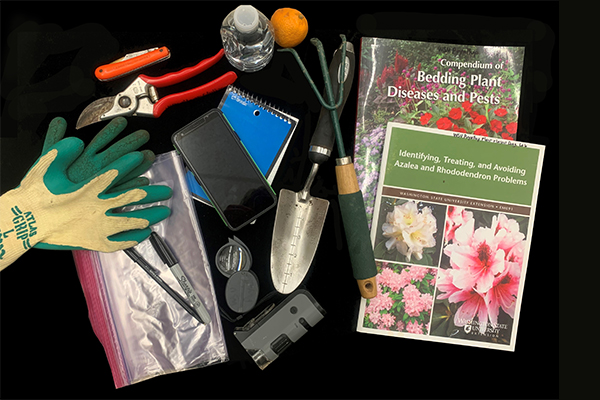
The right tools will improve your diagnostic experience and ability. A sharp knife can be used to make cuts into woody plants in order to determine where the plant tissue is alive and where it is dead. Pruners are handy for gathering samples or for cutting a large sample down to a useable size. Shovels may be necessary when trying to excavate around the root system to check for problems. Clean bags, vials, or other containers will help to keep a sample intact. A smart phone may come in handy for taking photos and notes or looking things up while in the field. Useful apps are available for measurement, plant identification, and magnification. Magnification is a must, since most of the readily observable signs of plant damage, including insects, mites, and fungal fruiting bodies, are quite small. Learn to use a magnifying loupe, hand lens, or phone magnifier (Figure 9). Whichever you use, it should provide at least five times the magnification of the unaided eye. You will want to practice using magnifying tools by examining a printed page first. Once you are proficient at bringing the small dot of an i into focus, you will feel more confident when using your hand lens or magnifying app to search for a spider mite scampering across a leaf, or to look for tiny, black fungal fruiting bodies growing at the center of a necrotic leaf spot.
Diagnostic Tools
- Sharp knife
- Pruners
- Shovel
- Clean containers or bags
- Magnifying loupe or hand lens
(5× to 10×) - Smart phone
Steps for Diagnosing
Diagnosis requires information—both in the form of samples to examine and in the form of facts. Here is how to collect each.
Sampling
You will need to carefully examine a damaged plant to determine the cause of the problem. If observation of the actual plant is not possible—for example, while assisting people on the telephone or when a photo provided by email or text is inadequate for diagnostic purposes—ask for a sufficient and representative sample of the problem to be submitted for examination.
First, if the problem is showing more than one type of damage—leaf chlorosis plus stunting, for example—then the sample you need should include tissue showing the entire range of symptoms. Second, the sample should contain tissue from the transition area between the healthy and damaged tissue because pathogenic disease organisms and insect pests will often be found at the margin of the damage moving into healthy tissue. Third, the sample should also include root material or observations about the condition of the soil, the roots, and the main stem or trunk at the soil line because many aboveground problems, such as branch death and leaf wilt, actually result from root problems, not from problems originating at the tissues actually showing the damage. Fourth, additional investigation of a healthy plant, or of nondamaged tissue from the plant, may also provide a useful comparison necessary to diagnose the cause of the problem, especially when you are unfamiliar with a particular plant species. Poor quality samples, including dry, dead plant corpses, oozing, slimy tissue, or smelly, rotten samples, are rarely useful for diagnosis—they are simply too far gone.
Sleuthing
Since the plant cannot talk to you and tell you what is wrong, gather information from observation of the damaged plant, Try not to make too many assumptions when starting a plant problem diagnosis. Information to learn includes a thorough background history of the plant, its growth and care, as well as details on the development and spread of the problem. Learn about the condition of other plants in the landscape, the distributions of symptoms on a plant or within a landscape, and development of the problem over time. These characteristics often give clues as to whether the problem is caused by a living organism or by an abiotic stressor. Following are sluething techniques that may help illuminate a plant problem situation and pinpoint the causes of the problem.
Know the history of this plant in the landscape. Understanding the history helps to gain a general picture of the damaged plant and its environment—the plant’s age and its size, the age and size of the landscape that it is part of, how it was planted, where the plant is growing and the conditions it experiences, and what landscape practices might be influencing its growth.
Know the development of the problem in the landscape. Understanding when a problem develops, what plants are affected, what plants are not showing the problem, and if the damage appears to be spreading over the landscape or getting worse with time are all factors that will be clues as to whether the problem is likely to have an abiotic or biotic origin and may help pinpoint that origin. In general, problems caused by living organisms (biotic origin) show a random distribution on a plant or within a landscape, often develop slowly over time, and may get progressively worse—particularly if the environment is conducive for growth of the pathogen or pest population. In contrast, problems caused by abiotic factors often show very uniform patterns of damage. For example, if all the old leaves on a plant are yellow, this might suggest nitrogen deficiency. Abiotic damage caused by a single event (for example, hail injury) typically shows a distinct start and stop time to the plant problem.
Know the weed management practices. Understanding information about the use of herbicides provides important clues about whether or not plant damage might be associated with their use. Note that many herbicides function as plant hormone mimics so symptoms of distorted plant growth, including twisted petioles, bud proliferation, and leaf curl, may be associated with accidental contact of a growth-regulating herbicide. However, herbicides and other pesticides can be used in a landscape without inducing damage on nontarget plants, so do not assume that any use of herbicides in a landscape must be the cause of the reported damage.
Evaluation of Plant Problems
Unfortunately, plant problem diagnosis cannot be done by answering yes and no questions down a dichotomous key, as is often possible for identification of insects and plants. Nor is there a single list of questions that must be answered with the answers pointing to one and only one possible answer. Some problems can be quite easily diagnosed, based on symptoms, or signs, or by the particular situation under which they occur, but the vast majority of plant damage observed can arise from a multitude of causes. Anyone working to diagnose plant problems should develop a systematic approach to diagnosis that provides a framework for approaching plant problems. This way, whether the plant is an orchid, a lilac, a Douglas-fir, or someone’s cherished bonsai art, you can get started on a diagnosis.
The typical diagnostic method recommended for determining the cause of unknown plant problems has four main steps:
Step 1: Identify the plant and the environmental requirements that the plant needs to thrive. Pay close attention to the plant’s cultural requirements (hardiness factor, drought and poor soil-drainage tolerance, shade-loving versus sun-loving), because adverse physical stresses are often the origin of plant problems or may predispose the plant to attack by insects and pathogens. During this step, begin an evaluation of the plant damage but also describe any healthy attributes of the plant.
Step 2: Work to develop a hypothesis about the origin of damage on the plant. Breaking up the big question, “What went wrong with this plant?” into smaller stepwise questions will help to move you through the diagnostic process. Questions to consider include:
Is the observed “damage” truly a plant problem? For example, larches and bald cypresses are two types of deciduous conifers, so loss of the needles from these trees in fall would be a normal event. Some evergreen conifers are also known for spectacular needle discoloration and drop of older needles in the fall.
Where exactly on the plant is the problem originating? This question can often be difficult to determine as the tissue being damaged may or may not be the original site of the problem development. For example, necrotic leaf spots may develop because a pathogen or pest is attacking the leaves, but certain patterns, such as necrosis around the margin of the leaf edge or dead patches developing between every major vein on a leaf, typically reflect a water or nutrient stress event often associated with damage occurring at the stem or root tissue, not on the foliage itself.
Does the pattern of damage suggest that the problem has an abiotic or biotic origin? In general, damage from abiotic causes typically occurs in a regular or uniform pattern on an affected plant, may develop quickly, occurs on numerous types of plants in the same geographic location, may have a distinct start and stop time, and does not spread or get worse over time. In contrast, damage from living organisms generally develops slowly, is expressed in a random pattern of damage on the affected tissue or plant, and generally spreads or gets worse with time.
What do the observed symptoms and signs suggest about the specific cause of the problem?
Step 3: Determine what evidence should be present on a plant to validate or invalidate a hypothesis about the origin of damage. For example, the presence of spider mites, the reported use of a pesticide, or fungal mycelium developing after the sample has been incubated in a moist chamber could all be examples of evidence. Evidence may not always be immediately apparent at the time of the investigation. The poplar petiole leaf gall aphids may have migrated to one of their other hosts. Decay fungi and bacteria may have flourished after the sample was collected for diagnosis, overshadowing other evidence and making it difficult to determine if a pathogen was originally present.
Step 4: Do the work to check for the evidence and evaluate the hypothesis about the cause of damage. Closely check the plant for evidence of the cause of the problem and review the background of the plant and its problems. The key to an accurate diagnosis is assessing the validity of the hypothesis you have been developing. Sometimes all the evidence will point to the fact that your hypothesis is right on the mark. Other times you may not be able to find concrete evidence. It could be that you are looking for the evidence at the wrong time of year or that you do not have the appropriate tools or expertise. If nothing you find suggests that your original hypothesis is wrong, you should accept that your diagnostic answer is valid.
If the evidence you accumulate is contradictory to the hypothesis you have developed—for example, if the problem does not develop at that particular time of year or in that weather, or if the plant investigated is not a host of that particular problem—then the hypothesis should be reevaluated. This last step can become a great opportunity to consult another diagnostician with more expertise on a particular plant or a particular problem.
This four step process for diagnosing a plant problem is not foolproof and will not always produce an accurate diagnosis, but it is certainly better than thumbing randomly through books or just winging it with a guess.
Reviewing Causes
Remember, plant diseases can be caused by abiotic stresses or by infection or infestation with living organisms. Abiotic factors are some of the most common sources of plant damage in our landscapes. Well over half of the common landscape plant problems are estimated to result from damage by nonliving stresses, rather than a primary pathogen or pest problem. Also, plant problems often result from complex combinations of both nonliving factors and living organisms. Often, stressed plants exude pheromones or other chemicals to which insects are attracted, and pathogens may more readily infect damaged plant tissue.
Distinguishing Abiotic from Biotic Problems
The patterns of damage on the plant, in the landscape, or over time may reveal whether or not the problem is likely to have an abiotic cause or is the result of biotic causes. Abiotic refers to something that is caused by physical rather than biological means. Biotic damage is caused by a living organism. Gardeners need to be keen observers in order to detect these patterns. For example, when investigating the cause of a leaf spot problem, first note the characteristics of the problem on an individual leaf:
What are the shapes and colors of the leaf spots? (Round, bull’s-eye, light, dark, yellow, red, etc.)
How many spots are present on each leaf? (Lots or just a few.)
Where are the spots found on the leaf? (Top surface, bottom, margins, between veins, etc.)
Then consider the location of the problem on the plant and within the landscape:
Where are the affected leaves found? On a particular branch of the plant? (Outer edges, in by the stem, etc.)
Where on the plant are the affected branches? (Top, lower branches, outer branch tips, etc.)
How many and which plants are affected?
Where, relative to other unaffected plants in the landscape, are the damaged plants located?
In general, you want to determine if a damage pattern has a uniform, or regular, distribution on the plant or within the landscape. The more uniform or regular a problem appears, the more likely it is that the problem developed due to an abiotic cause, such as adverse environment or mechanical injury. This type of damage may happen quite rapidly and may occur on a diverse group of plants growing near each other. By contrast, random or irregular distributions of damage on the plant or in the landscape are often typical of plant problems with biotic causes which often develop just in one area or under certain conditions, but not others. Also, biotic problems often develop slowly and typically spread over the affected plant or within the planting in the landscape and may get worse with time. Damage from biotic causes may develop over a large geographic area.
Not all problems will have a clear-cut pattern or timing characteristics that help to determine the most likely origin of damage. In addition, many problems are exceptions to the rules. Gardeners who valiantly garden with deer can relate—your apple trees were fine before someone forgot to shut the gate to the deer-proofing fence, and by the time anyone noticed the gate open, both the deer and the tender leaves are gone!
Check for any associations or connections that may help to pinpoint the factors or organisms involved in the damage. Does the problem develop on only one type of plant or is it damaging to numerous members of that particular plant family? Is the damage occurring in only one area of the landscape? Is there any common attribute among all the plants showing a particular type of damage? Are the damaged plants sensitive to a particular stress, such as heat, cold, or drought, and was it possible they experienced that stress? Are the affected plants from the same source, planted using a similar method, or growing in a particular area of the landscape? Is there some characteristic of the landscape that might be connected to the damage—for example, proximity to lawn or recent construction activity?
Abiotic Diseases and Their Symptoms
Physical environment. Physical environmental conditions that are less than optimal for healthy plant growth commonly lead to plant problems. Abiotic environmental stresses can include exposure to adverse temperatures, excessive or insufficient light, and limited or excess water. Extreme conditions, such as days that are blazing hot or bitterly cold, and rapid fluctuation between two distinct conditions often induce the most damage in affected plants. For example, sunscald, a type of winter injury, occurs on the trunks and branches of susceptible trees when the exposed side of the plant is warmed by the winter sun during the day, causing the plant tissue to break dormancy; the tissue is subsequently killed when the temperatures drop below freezing again during the night. While nothing can be done to alter the weather, gardeners can work to reduce plant problems caused by environmental stresses by using plants that are hardy to the region and by carefully matching a particular plant’s requirements to the attributes of the landscape site. Gardeners can further lessen abiotic stress by monitoring soil moisture and providing water based on the plant’s needs, and by employing protective measures such as shade cloth, row cover, or plant wraps during exceptional weather conditions.
As climate change makes weather and available moisture increasingly unpredictable, gardeners will see more instances of related abiotic stress on plants. Increasing abiotic stresses in plants may also lead to increased susceptibility to pests and diseases. Gardeners can make long-term investments in slowing climate change by learning how their choices of gardening activities and horticultural inputs impact climate change and making changes to lessen their footprint. For more information about predicted changes to the climate in the Pacific Northwest and expected plant responses, see Chapter 27: Climate Change and Gardening.
Mechanical injury. Mechanical injury is not just injury from machines, as the name might infer, but rather damage that is a breaking, tearing, crushing, or cutting of plant parts by any method or agent. Mechanical injury to plants includes damaged bark and cambium, root loss, torn leaves, or branch removal. For instance, the incorrect use of a weed trimmer or lawnmower resulting in the girdling or severing of the plant’s cambium pathway is a common cause of the death of woody landscape plants. Other mechanical injuries include damage to plants from construction practices, such as severe soil compaction, and damage from severe weather events, such as hail and strong winds. Even the way a plant is growing—in particular, circling roots that choke one another off—may lead to mechanical damage.
Pesticide injury. Pesticides are chemicals that are used in and around the landscape to manage problematic pests, such as insects, weeds, fungi, and rodents. Pesticides can sometimes cause damage to desirable plants. The symptoms of pesticide damage depend on many factors, including the type of product used, the rate of application, the environmental conditions under which the application was made, and whether the product contacted the plant through drift, vaporization, or by root absorption.
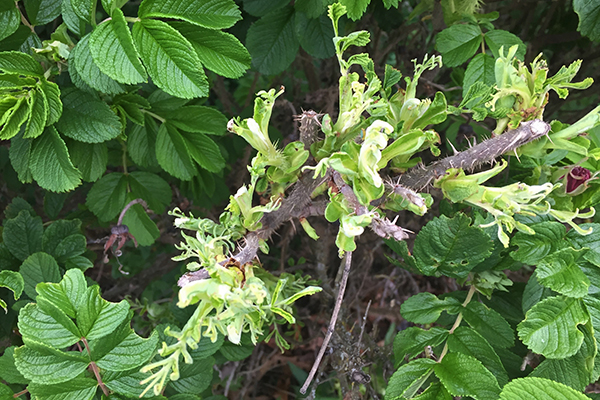
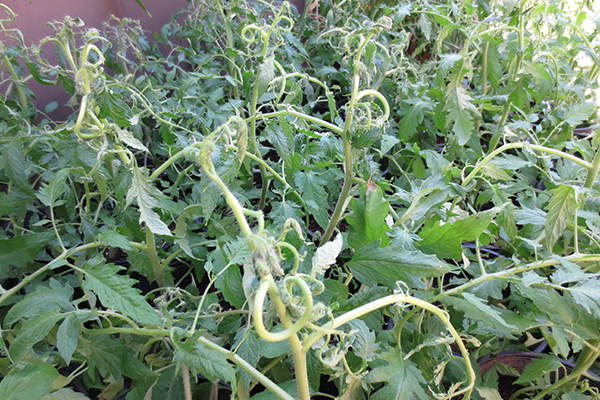
Herbicides are the group of pesticides most likely to cause plant damage if they contact desired plants and vegetation. Many of the herbicides used to kill weeds in landscapes function as plant growth regulators. For example, the active ingredient 2,4-D mimics auxin hormones produced naturally by plants. The auxin mimic causes unsustainable growth which leads to damage or plant death depending on exposure. When this type of herbicide contacts the wrong plant, plant-growth-regulating effects can occur. A common source of such exposure in home landscapes occurs when turf products containing both fertilizer and herbicide are applied to the lawn over the root system of a large broadleaf shrub or tree. The plant’s roots often absorb a damaging, but not lethal, dose of the herbicide so the plant grows distorted foliage. When assessing the potential for growth regulator herbicide injury to plants, look for specific symptoms such as the twisting of needles and leaf petioles, the proliferation of buds, and curling at the margins of leaves (Figure 10).
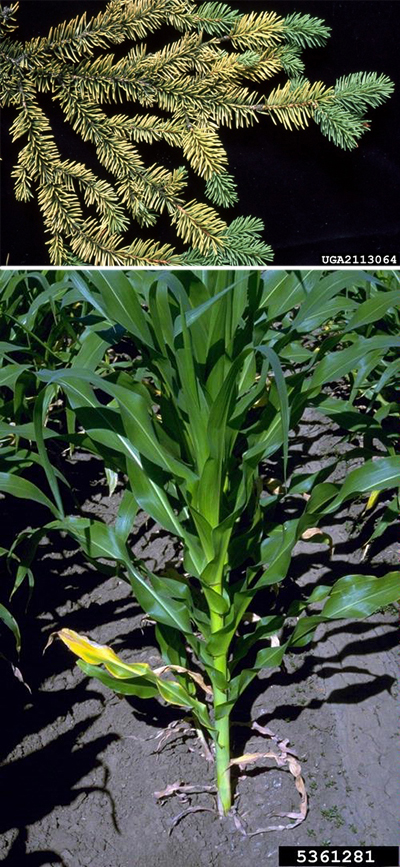
Nutrient stress. Plants require at least sixteen nutrients for healthy growth. If the plant is unable to absorb sufficient nutrients for its needs, nutrient deficiency symptoms may develop. Symptoms can range from chlorosis, to stunting, to leaf roll, to purpling of the tissue. Specific symptomology depends on the element that is lacking.
While sometimes nutrient deficiency results because the soil lacks or is very low in a particular element, in many cases the element is present in the soil but remains unavailable to the plant because of soil pH or root system problems. For example, the roots of rhododendrons and blueberries can absorb iron and manganese if the soil pH is low (acidic), but in eastern Washington and in urban soils of western Washington, the pH of the soil may be neutral to alkaline, rendering iron or manganese unavailable to the plant. Keep in mind that root rot of the tiny feeder roots and other damage to the root system, such as injury from chewing insects, can also cause the plant to exhibit nutrient deficiency symptoms.
Where the symptoms are located on an affected plant may give you a clue about the nutrient that may be lacking, because nutrients are either phloem-mobile or phloem-immobile, depending on whether or not they can be moved from one part of the plant to another via the phloem. Many nutrients, such as iron and manganese, are phloem-immobile, meaning that they cannot be taken from where they have been in the plant tissue and moved around into new, developing growth. If one of these nutrients becomes limited in the soil, nutrient deficiency symptoms will show on new growth. In contrast, if the soil nutrient deficiency is of a phloem-mobile nutrient, such as nitrogen, phosphorus, potassium, magnesium, or sulfur, the element can be withdrawn from older, previously formed leaves and moved, via the phloem, to the growing points of the plant (Figure 11). In this case, the nutrient deficiency symptoms—often expressed as chlorosis—will be observed in older leaves that lost the nutrient, while the developing tissue will appear healthy.
In some alkaline soils in eastern Washington, overapplication of some nutrients when there are already adequate levels in the soil can result in toxic effects on the plant, often exhibited as foliar necrosis (opens in new window). Another common cause of toxicity in plants is foliar exposure to pollutants such as ozone and sulfur dioxide.
Some plants are quite sensitive to a particular element, whether it is a required nutrient or not. Note that leaves of houseplants in the Dracaena genus often develop necrotic spots when irrigated with municipal water containing fluoride.
Biotic Diseases and Their Symptoms
Fungal diseases. The vast number of fungal pathogens, the variety of diseases they cause, and the many environments in which they thrive make them a common issue in the garden and landscape. Depending on the exact pathogen, infection of a plant by fungi can take place in the foliage, the flowers, the stems, the roots, the leaves, or some combination of areas.
There are some pathogens that were historically considered lower order fungi and were treated as fungi for management purposes. Oomycetes (water molds) are now known to be more closely related to brown algae, while plasmodiophoromycetes (endoparasitic slime molds) are more closely related to protozoan animals than fungi. These organisms often require different management strategies than fungi and should be considered separately.
With experience, many gardeners come to quickly recognize many of our common fungal diseases that produce distinctive symptoms on specific hosts. For example, apple scab infection results in the scabby appearance of the fruit surface and brown spots to the leaves. Brown rot, caused by the fungus Monilinia, causes scattered dead branches with brown leaves and flower clusters clinging to them throughout the canopy of a cherry tree. Japanese maple branches dying in a branch-by-branch manner, typically just on one side of the tree, suggests that the plant has become infected by the soilborne fungal disease Verticillium wilt. To confirm the diagnosis of Verticillium wilt, you must look for symptoms within the plant’s water-conducting tissue by making thin cuts under the bark to check for olive-green streaking or discoloration in the xylem tissue of the wood.
Other fungal infections are recognized more by the signs they produce than by any characteristic damage they induce. Powdery mildews, a common problem in Washington, are readily identified by the white, powdery coatings that cover infected leaves. By contrast, rust diseases are easily diagnosed because of their abundant production of colorful yellow, orange, or reddish powdery spores, which are formed in tiny pustules.
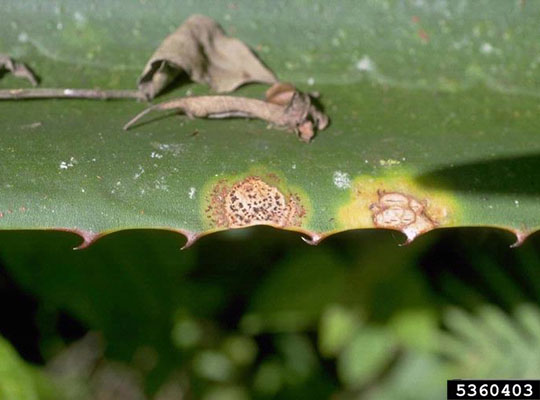
Fungal infections often show foliar lesions that are round with diffuse borders (Figure 12), and within the damaged spot you might even observe concentric rings of damage. These patterns develop because of the way some fungi infect and grow on the tissue and how they move into the uninfected tissue. Fungal leaf damage to plants can also show up as irregular leaf spotting. Small, or even large portions of the plant may blight or die back. Do not fall into the trap of eliminating fungal infections as the cause of a problem simply because the spots are not round. Check the damaged leaf carefully for evidence of the pathogen because many signs, including mycelial growth or the production of fruiting bodies bearing spores, can be observed within lesions.
Fungal infections of stems may develop and present in many ways. Some problems develop as cankers—dead areas of the stem—while other fungal infections induce blights, where large portions of the stem, buds, and leaves die. Still other stem-infecting fungi grow through the plant’s vascular tissue, often inhibiting water movement in the plant, leading to wilting and death of the infected plant.
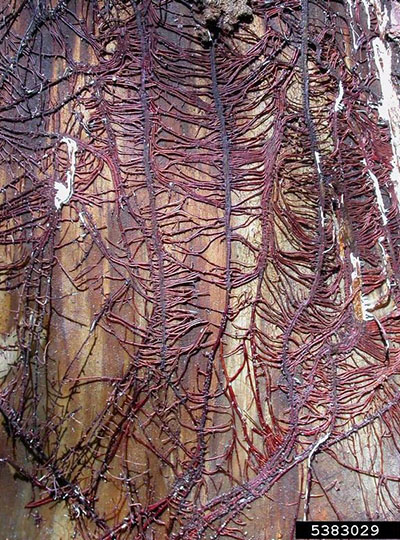
With root rots the earliest symptoms, such as poorly performing or dying plants, can be vague. These cases require further diagnostic efforts to determine the origin of the damage. Root problems are often overlooked because of the extra effort needed to dig around under the soil or at the crown of the plant to locate signs of the pathogen. In general, root damage from fungal pathogens may result in the death of fine feeder roots, discoloration and death of the structural roots, or the rotting of the entire root system. Several root diseases common in Washington have characteristic symptoms, such as the root-pruning of young vegetable seedlings caused by infection from Rhizoctonia species. Another fungus associated with root rots in many landscapes is the pathogen Armillaria sp. which is often found in newly cleared soils and is transmitted between plants by root contact or by spread of shoestring-like rhizomorphs (opens in new window)—dark strands or clumps of fungal mycelia growing on or just beneath the bark (Figure 13). Symptoms of this root rot typically include production of smaller-than-normal leaves, leaf yellowing, leaf drop, dieback of branches, and eventual death of the tree. White, thread-like masses of fungal mycelium, referred to as mycelial fans (opens in new window) or mats (Figure 14), may be found beneath the bark near the crown of infected trees. Honey-colored mushrooms (Figure 15) often grow near the base of infected trees in the fall. Diagnostic experience and a microscope may be necessary to recognize these fungal structures.
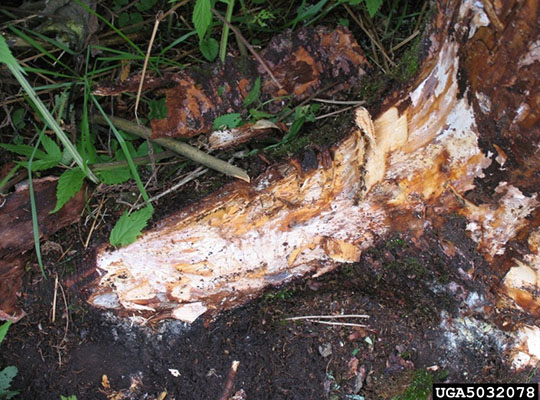
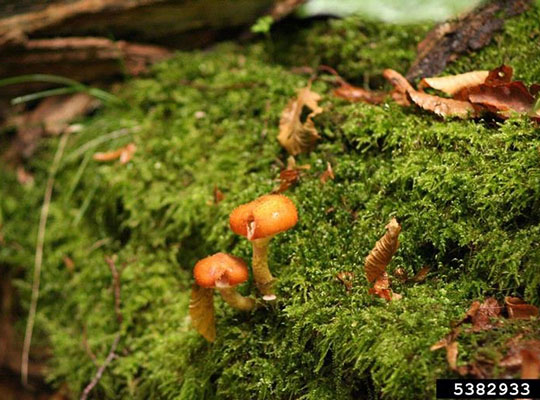
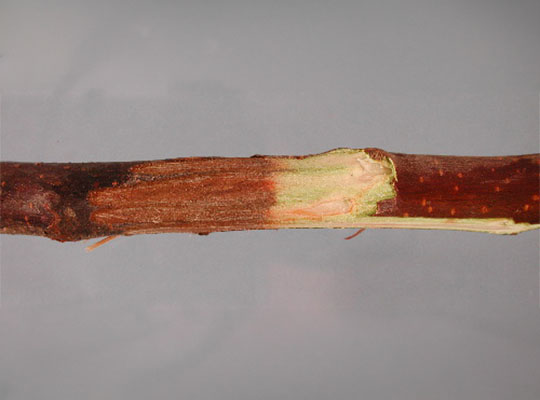
Oomycete diseases. The diseases caused by oomycetes are fewer in number but include some of the most insidious diseases. These pathogens may cause leaf spots, root rots, or other symptoms that can be confused with fungal infections. They typically thrive in wet conditions. Common root rot and crown canker diseases caused by Phytophthora species on shrubs and trees can be identified by the cinnamon-brown discoloration of infected vascular cambium tissue (Figure 16). Late blight is common on tomatoes and potatoes in the cool, damp maritime climates found in the western half of the state or under irrigated conditions in the eastern part of the state and may cause complete collapse of plants within a matter of days, under the right conditions.
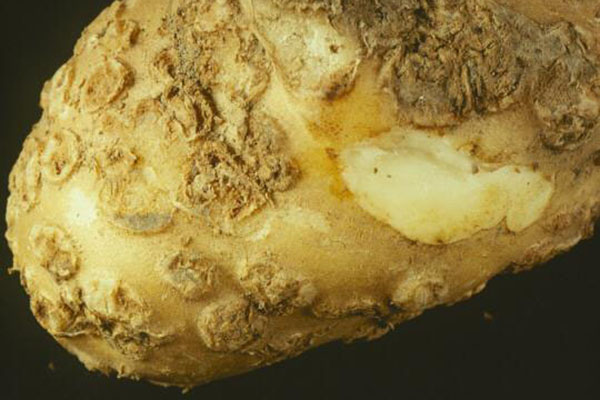
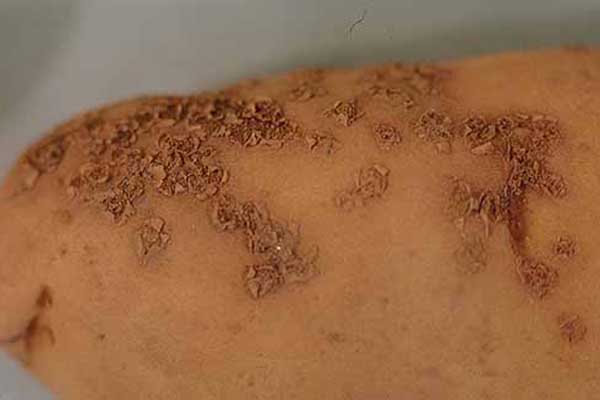
Other diseases. Endoparasitic slime molds cause symptoms including galling, lesions, and leaf deformation, which can be mistaken for diseases caused by other organisms. The symptoms of the endoparasitic slime mold, powdery scab (Spongospora subterranea), on potato may be confused with those of common scab, a bacterial disease; however, the conditions that favor each disease are quite different (Figure 17). Powdery scab is favored by wet soil, whereas common scab may be discouraged by wet conditions and is associated with soils that have a high pH. Some of these pathogens may also act as vectors of plant viruses.
Bacterial diseases. Bacterial diseases are another common problem in Washington landscapes and gardens. Leaf spots and blights of blossoms, foliage, and stems, along with the rotting of fleshy plant parts, are commonly observed damage that may be caused by bacterial infection.
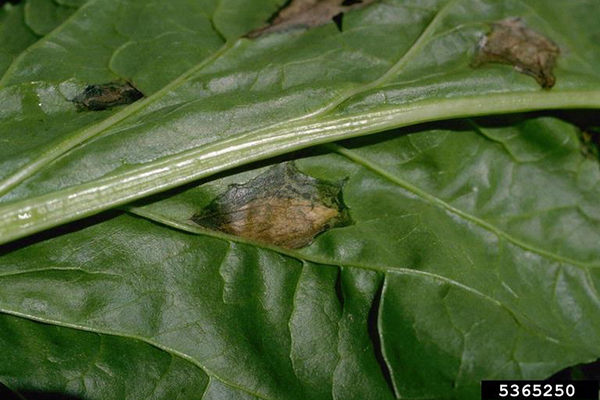
Many bacterial infections develop as leaf spots. Leaf spots include lesions that initially have a water-soaked appearance, then develop into angular-shaped necrotic lesions that are often delineated by major leaf veins (Figure 18). Sometimes the lesions may have a transparent quality when the leaves are held up to the light or may have a yellow halo surrounding the necrotic damage. These attributes of color and shape of bacterial lesions reflect the enzymatic activity of the bacterial pathogen as well as the way the bacteria move from cell to cell in the intercellular spaces of the leaf tissue.
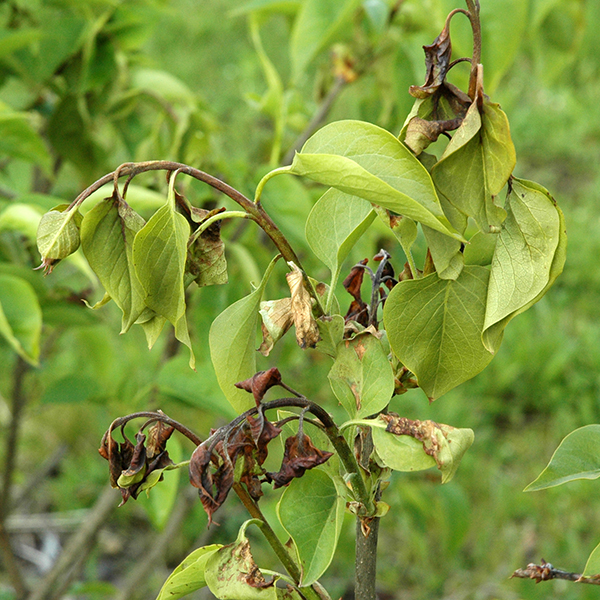
Blights—where large portions of the plant become necrotic and die—are also a common type of symptomology associated with diseases caused by bacteria. Numerous woody landscape plants and fruit-producing plants, including maple, lilac, cherry, and raspberry, are susceptible to the bacterial blight pathogen Pseudomonas syringae. Typical symptoms include leaf spots, dead buds, branch or trunk cankers, and branch dieback (Figure 19). This Pseudomonas pathogen can be very damaging to host plants, as it produces a protein on which ice crystals can form. These crystals create winter wounds on the plant through which further infection occurs. Pseudomonas may also produce syringomycin, a powerful plant toxin that kills tissue and aids in infection. Infections through natural openings and wounds occur during wet periods, especially during cool, wet weather. But, interestingly, Pseudomonas bacteria may also at times live as an epiphyte on plant surfaces without causing damage.
In eastern Washington, fire blight, caused by Erwinia amylovora, is another bacterial blight infection gardeners may encounter as it damages members of the Rose family, such as pear, apple, crabapple, and pyracantha. The pathogen typically attacks host plants via wounds or blossoms. Initially, twigs and flowers appear water-soaked, and infected tissues quickly turn brown to black and die, leaving the infected plant appearing scorched. Cankers can develop on twigs and branches (Figure 20), sometimes girdling the limbs and causing dieback or even killing the plant.
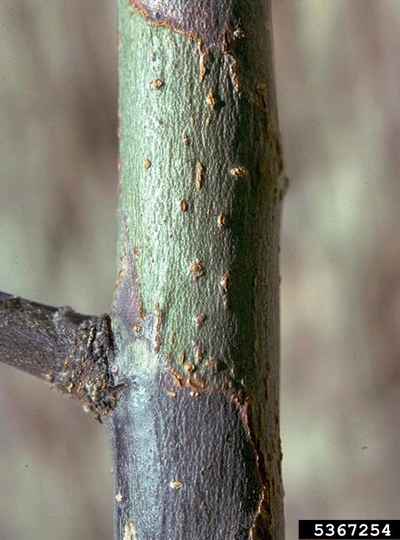
Several bacteria, most notably Rhizobium radiobacter, the cause of crown gall, may induce a plant to grow abnormally, forming galls. Crown gall is found on many landscape plants, fruit trees, and caneberries, most commonly on rose, cherry, apple, euonymus, raspberry, and blackberry. Young galls are fleshy, white, enlarged masses on roots or stems and rarely cause serious plant damage. Older galls are hardened and turn dark brown and woody or corky in appearance and, depending on the location, may seriously weaken or even kill the host plant.
Diagnosticians must typically rely on the symptoms for diagnosis of bacterial diseases, rather than find any confirming signs of the presence of bacteria. The plant pathology literature often suggests looking for the signs of bacterial ooze (opens in new window) and bacterial streaming to confirm the diagnosis of bacterial diseases. Few of the bacterial diseases in our area, however, produce observable bacterial ooze, a sticky liquid containing the plant-pathogenic bacteria associated with lesions or cankers. In many cases, gummosis (opens in new window) of cherry and other Prunus species may be mistaken for ooze associated with bacterial blight, but these globs of sticky plant sap develop in association with numerous issues on cherry, not just due to bacterial blight. Checking for sign of bacterial streaming requires cutting the damaged tissue and using a microscope to examine the sample for the presence of bacterial cells flowing from the cut edge of the lesion. This type of investigation is rarely available to gardeners and only works well when the sample examined is in the early stages of disease, because when the damage is more advanced, the necrotic tissue may be colonized by numerous saprophytic, but nonpathogenic, bacteria.
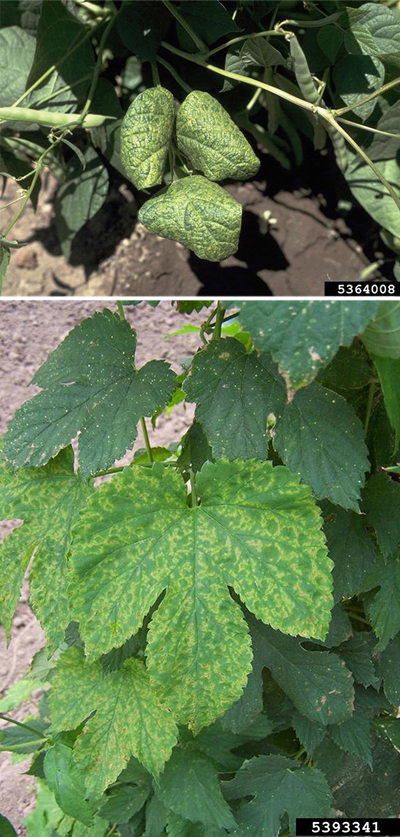
Viral infections. Symptoms of viral infection in plants range from the stunning to the subtle. Since the virus particles in plant cells often impedes the plant’s ability to function normally, leaves of an infected plant may develop striking symptoms, including chlorotic rings or circles of red or black, mosaic (opens in new window) (various shades of green in the leaf tissue, Figure 21), vein banding (tissue surrounding veins turns yellow), and mottling (large patches of yellow on infected leaves). Only a few viruses, such as Impatiens necrotic spot virus, blueberry shock virus, or blueberry scorch virus, create necrosis on their host as a primary symptom. Infected plant tissue may also be distorted in shape. Other times, the viral presence within a plant simply stresses the plant, resulting in a weak, unhealthy, or otherwise stunted plant. That damage could be attributed to other, often more likely, causes, such as nutrient or water stress. Virus infections in plants can also be symptomless with the viral infection going unnoticed.
Virus particles come in a few basic shapes (variations of round or rod shaped) but are too small (typically 20 to 2,000 nanometers in size) to be seen with the unaided eye or even a typical light microscope, without specialized staining techniques. Electron microscopy, in which an electron beam rather than light is used, is necessary to achieve resolution of small objects like virus particles.
Thus, we will not be looking for the actual virus particles in damaged plants. We may, however, check for signs of the insect vector associated with a particular viral disease. For example, thrips can vector several devastating viral diseases, including impatiens necrotic spot virus or tomato spotted wilt virus, so the presence of thrips on damaged impatiens, petunia, or tomato plants expressing large necrotic lesions on leaves, sends the signal to consider that the damage is associated with one of these viral infections. In some cases where identification of the specific virus present may alter management decisions, sample submission to a lab for further analysis may be warranted.
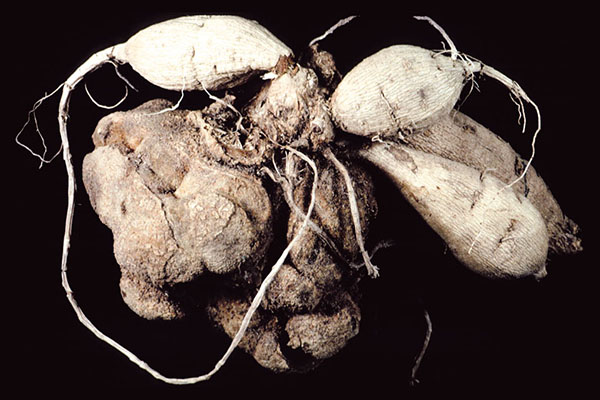
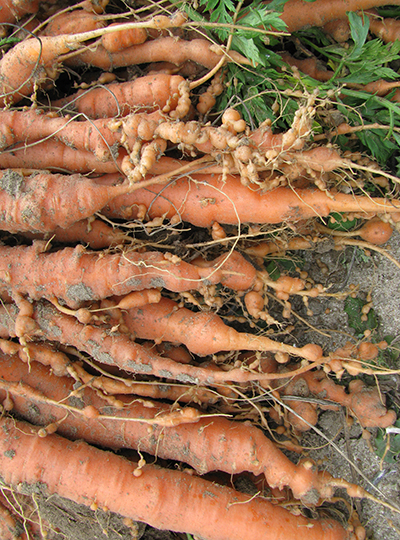
Nematode damage. Poorly growing plants are indicative of nematode damage, or you may notice circular dying patches of plants in a field crop situation. These symptoms result from feeding damage by nematodes on the roots, resulting in the plant’s inability to absorb sufficient water or nutrients for healthy growth. We may find evidence of nematode injury, typically small bumps covering the surface of tubers or roots when crops such as potatoes or carrots are harvested or dahlia tubers are dug up for storage (Figure 22). If a nematode-infested root system or tuber is dug up and examined, galls or lesions induced by the nematode’s feeding may be present on the roots. Some galls on the roots also signal the site where a female cyst nematode is reproducing and protecting eggs within her enlarged body. Take care not to confuse beneficial root associations, such as the nitrogen-fixing bacteria nodules or root colonization by mycorrhizal fungi, with damage from nematode feeding.
Foliar nematodes are a group of nematode that feed on leaves. Their damage is easily recognized. Wedge-shaped, necrotic spots on the foliage of many common host plants, including African violets, ferns, and elderberry, are a typical symptom of foliar nematode infection. Microscopic investigation of the damaged tissue is necessary to observe the actual nematodes feeding within the leaves.
Insect and mite damage. The feeding habits of insect or mite pests and their life cycles are important things to consider when diagnosing insect and mite damage on plants. Plant damage from pests’ feeding will have different attributes depending on whether the pest species involved has either chewing mouthparts or piercing-sucking mouthparts. Matching the damage observed on the plant with the type of mouthpart that would create the injury is the first step in identifying which insect or mite pest is responsible for the injury.
Damage caused by pests with chewing mouthparts results in missing plant tissue, such as leaf notches, holes, and tunnels or mines (Figure 23). Small notches on the margins of leaves are symptomatic of feeding injury by an adult root weevil. Other plant chewers include cutworms, leafminers, leaf cutting bees, and sawflies.
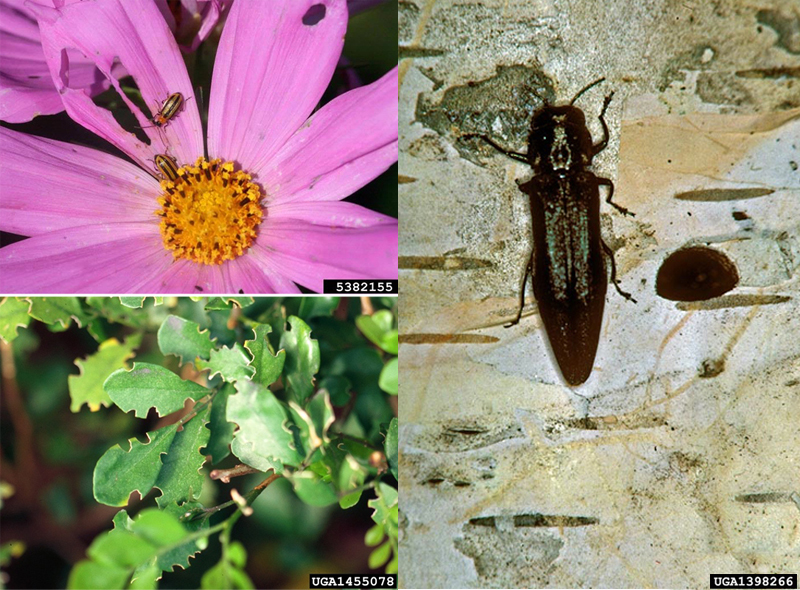
Frass, or insect fecal material, is another common sign of chewing pests. Many chewing insects feed at night, so capturing the pest in action requires going out at night with a flashlight to carefully examine the problem plants. Not all holes result from insect feeding. A slime trail may cover the surface of a chewed leaf, suggesting that snails or slugs are the pest. Certain plants may develop circular “shot holes” in their leaves, a plant defense induced in response to pathogen infection and unrelated to chewing damage.
Many other insect pests, such as aphids, lace bugs, scale insects, and spider mites, use piercing-sucking mouthparts to feed on leaves. They leave chlorotic stippling injury as a result (Figure 24). This stippling injury looks like tiny pinpricks of yellow or brown on a leaf or conifer needle. Often the pest is no longer actively feeding on the plant when the damaged is noticed, so check for signs it may have left behind, especially shed exoskeletons, honeydew, frass, or eggs.
Sometimes, the damage caused by insects or mites comes from toxins present in their saliva that induce abnormal plant growth or damage. Leaves may be curled, or galls may have formed. The presence of a tiny eriophyid mite, the maple bladder gall mite, leads to the production of galls on infested maple leaves. Other common pests that induce gall formation in hosts include the fuchsia gall mite, the poplar petiole leaf gall aphid, the balsam woolly adelgid, and the Cooley spruce gall adelgid.
Details of the suspected pest’s life cycle will come in handy when trying to find evidence to support the hypothesis you have developed about the cause of damage. For example, apple maggot damage is often observed in apple fruit long after the maggot has dropped from the fruit.
Vertebrate animal damage. Larger animals, including birds, rabbits, rats, dogs, and deer, may damage plants. Feeding on plants or scratching of claws along the bark, trunk, or roots of plants results in mechanical injury to the plants. You may notice deep holes in fruit, such as cherries or apples, which indicate that birds have been feeding on the fruit. Salt from an animal’s urine may burn plant foliage or roots if deposited in high concentrations or quantities. Dog urine injury often shows up in lawns as dead spots surrounded by a halo of well-fertilized grass or on low shrubs as yellow or brown areas. For more details on identifying and managing animal pest problems, see Chapter 20: Vertebrate Pest Management.
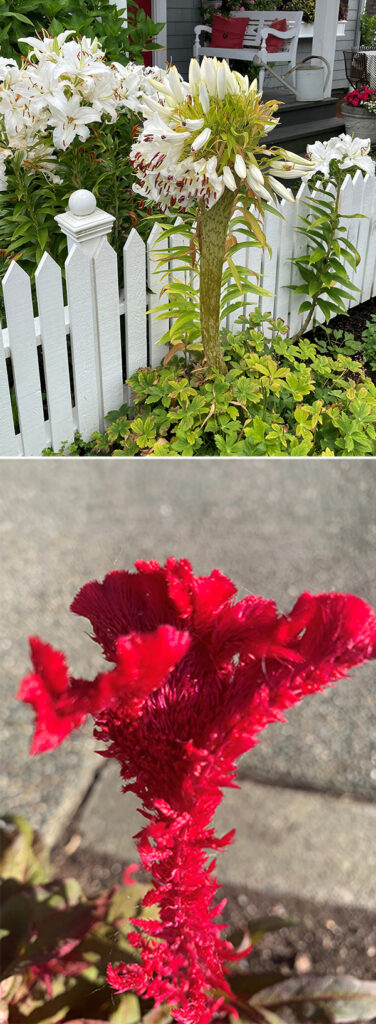
Physiological or genetic damage. Some damage can be induced by the plant itself for no readily apparent reason. We refer to this type of damage as “physiological” or “genetic” in origin. Some sort of abiotic stress is believed to induce many of these problems, but, as of yet, no definitive causes have been determined. Some examples include tissue proliferation at the soil line of the trunk of certain varieties of rhododendron, and fasciation (Figure 25), the flattened, ribbon-like growth of stems found on a variety of landscape plants.
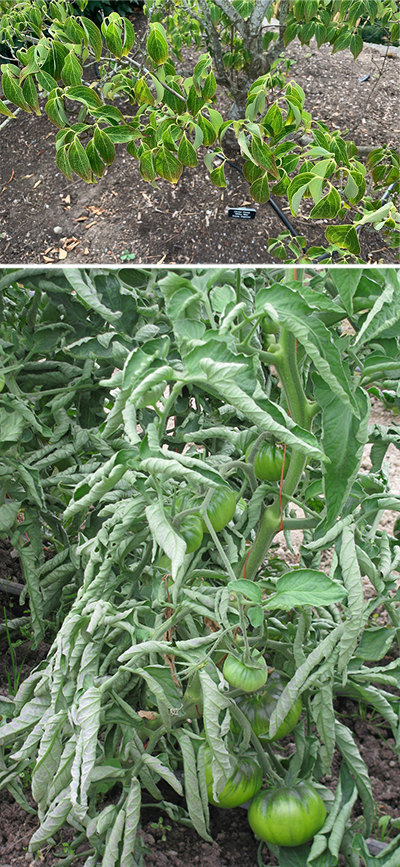
Burrknot, a condition where apple branch tissue starts producing roots, is also thought to be a physiological condition. Another example is certain horse chestnut trees that show severe leaf scorch during the summer while other trees nearby look healthy. Physiologically induced changes, such as leaf curling in potato and tomato crops or by dogwood plants during hot, dry summer weather, may also occur (Figure 26).
Plant Damage Is Not All Bad
When observing plants and learning to diagnose plant problems, it is important to understand that not all damage to plants is bad from an ecological perspective. A rotting tree in the forest may provide an abundance of food and habitat for animals, while the same condition in a tree growing next to a house would be considered a hazard. When root rot shows up in a garden it may kill beloved ornamental trees and limit what can be planted there in the future, but in the forest, die-off of selected trees may create ecological patchiness that makes a forest more resilient. Fungi, insects, and both vertebrate and invertebrate animals are food for other organisms up the food chain. To learn more about the role that plant diseases and insects play in forest health, see Chapter 13: Backyard Forest Stewardship.
First Detectors
WSU and other agencies are there to help and support home gardeners with diagnoses. Some important resources include:
- Invasive pest information from the Washington Department of Agriculture (opens in new window) (WSDA)
- The Washington Invasive Species Council (opens in new window) (WISC)
- The National Plant Diagnostic Network (opens in new window) (NPDN), which currently includes two WSU laboratories serving Washington:
- WSU Plant and Insect Diagnostic Laboratory in Puyallup
- WSU Plant Pest Diagnostic Clinic in Pullman
Summary
After learning more about plant diseases and their diagnosis and management, you may notice a lot of plant damage you had not observed previously, because now your eyes have been opened to the world of plant diseases and insect pests. Do not worry if your diagnostic batting average is not as high as you would like at the beginning, or even in thirty years. The question “What caused the damage on this plant?” is a very big one to answer, and the answer to that question can be complicated by a vast array of landscape practices, plants, diseases, pests, and environments. Do not be discouraged; plant problem diagnosis is something you can become successful at and enjoy doing. Remember, you will have many opportunities to improve your diagnostic skills.
Further Reading
WSU Extension publications (opens in new window)
American Phytopathological Society (opens in new window).
Ball, J. 1995. Rodale’s Garden Problem Solver: Vegetables, Fruits, and Herbs. Rodale Press.
Byther, R.S., C.R. Foss, A.L. Antonelli, R.R. Maleike, V.M. Bobbitt, and J. Glass. 2006. Landscape Plant Problems: A Pictorial Diagnostic Manual. Washington State University Extension Publication MISC0194. Washington State University.
Chase, A.R., M. Daughtrey, and G.W. Simone. 1995. Diseases of Annuals and Perennials: A Ball Guide. Ball Publishing.
Costello, L.R., E.J. Perry, N.P. Matheny, J.M. Henry, and P.M. Geisel. 2003. Abiotic Disorders of Landscape Plants: A Diagnostic Guide. Division of Agriculture and Natural Resources Publication 3420. University of California.
Dreistadt, S.H., J.K. Clark, T.A. Martin, and M.L. Flint. 2016. Pests of Landscape Trees and Shrubs: An Integrated Pest Management Guide, 3rd ed. Division of Agriculture and Natural Resources Publication 3359. University of California.
Elliott, M., K. Pernezny, A. Palmateer, and N. Havranek. 2017. Guidelines to Identification and Management of Plant Disease Problems: Part 1. Eliminating Insect Damage and Abiotic Disorders. University of Florida Extension Publication PP248. University of Florida.
Flint, M.L. 1990. Pests of the Garden and Small Farm: A Grower’s Guide to Using Less Pesticide, 3rd ed. Division of Agriculture and Natural Resources Publication 3332. University of California.
Johnson, W.T., and H.H. Lyon. 1991. Insects That Feed on Trees and Shrubs, 2nd ed. Cornell University Press.
Pacific Northwest Management Handbooks (opens in new window).
Pernezny, K., M. Elliott, A. Palmateer, and N. Havranek. 2017. Guidelines to Identification and Management of Plant Disease Problems: Part 2. Diagnosing Plant Diseases Caused by Fungi, Bacteria and Viruses (opens in new window). University of Florida Extension Publication PP249. University of Florida.
Sinclair, W.A., and H.H. Lyon. 2005. Diseases of Trees and Shrubs, 2nd ed. Cornell University Press.
Washington State University Extension. WSU Hortsense: Home gardener fact sheets for managing plant problems with IPM (opens in new window).