4-H Swine
Projects
- Members must be enrolled in the Beef Cattle, Sheep, or Swine project by May 1st.
- To enroll in large animal projects, members must be age 8 by October 1st of the 4-H year.
- Project animals must be under the management and care of the 4-H member the following # of days prior to fair:
Sheep and Swine: 60 days
Animals will be vet-checked prior to enter in fair and must be free of parasites and diseases.
- All swine must have RFID tag to be entered into the Clallam County Fair. This is a legal requirement, see WAC 16-80-045
- See Exhibitor Guide for information on requirements for out-of-state animals.
This code of ethics applies to anyone exhibiting animals at livestock shows in the United States. It includes Juniors as well as open class exhibitors who compete in structured classes of competition. All classes of livestock offered at the livestock event are included: Cattle (Beef and Dairy), Goats (Angora, Boer, Dairy, Meat, Cashmere), Equine (Donkey, Horses, Mules) Llamas and other specialty animals, Poultry, Rabbits, Sheep, Swine and any other livestock classes
offered. This “National Show Ring Code of Ethics” will be enhanced with additional rules and regulations which individual fairs and livestock shows impose on the local, county, state regional and national levels.
The following practices or procedures are unacceptable and are defined as being deceptive, fraudulent, unethical and inhumane in the care, fitting, preparation and showing of all classes of livestock. The use of any illegal drugs is prohibited. Legal or illegal substances used to phenotypically alter the appearance of an animal entered in livestock events is prohibited. (See rule #4). Use of illegal drugs is considered a pre-meditated act! Furthermore, any information obtained in the practice of illegal alteration of an animal will be turned over to the proper authorities for criminal prosecution. THIS IS A ONE STRIKE YOU ARE OUT POLICY!
Exhibitor will forfeit any premium, awards, or auction proceeds and will be prohibited from further competition at shows in the United States as well as being subject to criminal prosecution if proven guilty.
The following is a listing of guidelines all exhibitors must follow to enter livestock at organized competitive events.
- All exhibitors must have viable proof (Junior division) of ownership available to prove length of time animals have been owned. Market animals (Beef, Sheep, Swine, Goats) must be owned and under exhibitors daily care according to established rules and regulations for the fair or livestock exposition. This also includes all small market animals (rabbit and poultry). The official ownership date is the date shown on the bill of sale, unless the animal was bred by the exhibitor, in which salving or births records must be shown. (Local rules may determine ownership requirements for nonmarket animals). Registered breeding livestock must show the exhibitor as the sole owner of the animal on the breed association paper or certificates.
- No exhibitor may show an animal which has been previously sold at an auction or sale as a market animal through another fair, livestock show, whether or not there is an actual change of ownership (progressive level shows excluded). Any method used to misrepresent the age of an animal for a class in which it is shown is deceptive and considered illegal. Showing an animal for another individual by claiming ownership in order to show in a specific livestock class or event is prohibited. False ownership is illegal.
- Junior exhibitions are expected to care for and groom their animals while at the fair or livestock show. (Individual consideration will be given in extenuating circumstances). Adults will not be allowed to physically assist in the preparation of the animal while at the show. Verbal
instruction will be allowed, but no physical assistance is permitted. Physical assistance may be rendered by other junior aged members in good standing in the 4-H and FFA programs. Any violations of this rule will result in immediate disqualification from the show. - Treating an animal internally or externally, with any irritant, counter-irritant, or other substance used to artificially change the conformation or appearance of an animal for show is considered unethical, inhumane and is prohibited. This includes, but is not limited to, the use of graphite
powders, hemp, artificial hair coloring, common products such as fly spray, ointment or liniment used to the point that it is irritating (unless required to reduce edema at time of calving) or similar type products. The use of dyes, spray paint or other artificial coloring which result in
altering an animal’s true and natural appearance and/or color is prohibited. Adding false hair or hair-like material, fleece or skin at any point, spot, or area of the animal’s body is illegal and will result in immediate disqualification. Any liquid or substance not considered, part of an accepted and normal diet for livestock is deemed illegal and inhumane. For example: the use of alcoholic or carbonated beverages as a drench or filler, etc. - The use of tranquilizers, sedatives, or depressants which alter the physical or physiological state of the animal is illegal. Exceptions to this rule would be a licensed, certified veterinarian’s treatment for a recognized disease or injury, or recommendation for tranquilizing breeding
animals in heat that might compromise the safety of others. The drugs must be approved by The Food and Drug Administration for use in meat producing animals. All exhibitors shall advise show management of any drugs and/or medication administered to an animal that might be detected at the time of showing or at meat inspection. The name of the drug, it’s purpose, the person who administered the drug, time and date of administration shall be presented to show management prior to the showing and sale of the animal. Failure to report this information to the show management will result in severe penalty and/or disqualification. Any use of drugs or substances not approved by the Food and Drug Administration is strictly prohibited. All animals
entered into livestock competition shall be subject to testing for foreign substances that exceed acceptable levels established by the FDA, FSIS, USDA, or EPA.
During the livestock events, in the case of animals requiring treatment, all medications shall be
administered by a licensed veterinarian and the livestock show officials shall be notified. - Surgery, injection or insertion of foreign material under the skin and/or into the flesh of an animal to change the natural contour, conformation or appearance of an animal’s body is illegal. This includes vegetable oil, silicon or any other substance used to alter the shape of the animal. Acceptance practices of physical preparation which are allowed included, clipping of hair, trimming of hooves, dehorning or removal of ancillary teats.
- The balancing of the udder by abnormal means that includes the use of a mechanical contrivance or the injection of fluid or drugs, setting the teats and/or occluding (sealing the ends) with a mechanical contrivance or with the use of a chemical preparation is illegal. Treating or massaging the udder or its attachments with an irritant or counter-irritant is prohibited.
- The use of inhumane fitting, showing and/or handling practices or devices shall not be tolerated. For example: breaking of tails, striking of the animal to cause swelling or for bracing purposes, use of an electrical contrivance, or use of overly severe bits is not acceptable.
- Direct criticism or interference with the judge, show management, other exhibitors, breed representatives or show officials before, during, or after the competitive event is prohibited.
- At the time an animal is sold at auction at the livestock show, the exhibitor shall be held directly responsible for animals that are rejected at the processing center due to the presence of foreign residues. The seller may be liable to the buyer for an amount equal to three times the
purchased price and may also be liable for attorney’s fees and civil penalties. Show Management may share acceptable intelligence and evidence information with FDA and USDA.
If for any reason, any part of the meat animal carcass must be removed by the FDA or USDA inspectors, the market price will be discounted. - Show management reserved the right to require animal health certificates. Health inspections and diagnostic tests may be made before or after animals are on the livestock show premises for exhibitor and animal safety, or to inaugurate disease control procedures which may
become necessary in emergencies as determined by animal health officials.
Any violation of “The National Show Ring Code of Ethics” or specific rules as designated by individual fairs and livestock shows will result in forfeiture of premiums and awards, disqualification, and may result in probationary status and/or loss of eligibility for future participation in organized livestock competition. Possible civil penalties may be imposed by the proper authorities based on evidence provided by the livestock show or exhibitors in violation of the Federal Food, Drug and Cosmetic act/or the animal mistreatment, neglect, and abandonment laws that apply on the local, state, and national levels.
The decision of the livestock show management will be final.
Other cooperating shows, (The International Association of Fairs and Expositions, The American Livestock Show and Rodeo Managers Association, and Western Fairs Association) will be notified of the action taken by the show management, which may affect the eligibility of the individual, group, or sponsoring organization for participation at other shows who are also members of these organizations.
By making entry in a livestock show or event you are verifying you have read “The National Show Ring Code of Ethics” and understand the consequences of the penalties involved for illegal, unethical, inhumane, and unfair practices of competition. You also verify that you and your family may be prohibited from future participation in organized fairs and livestock shows in the United States, and could face possible criminal prosecution and/or civil penalties if implicated in any of the aforementioned acts.
- Enter animals using a Clallam County Fair 4-H Entry Form(s) postmarked by July 1st.
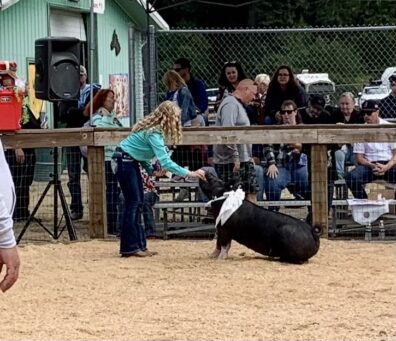
- All 4-H Members must participate in Fitting and Showing and herdsmanship.
- All animals must be able to be handled safely by the 4-H member. Animals demonstrating unsafe behavior must be removed from 4-H events and or fair.
- The Vet’s word is final. Always treat the vet with respect.
- Clallam County Fair Information
Neat, clean, and professional. A collared, western style shirt, jeans in good condition, western boots or good sturdy leather shoes, and belt. No open toed shoes or shorts will be allowed!
4-H Members in the Beef, Sheep, or Swine Projects may participate in the livestock auction.
The PNWJLA is the only auction recognized by Clallam County 4-H, therefore it is the only auction that can be listed as a 4-H event in your record book.
Members and project animals must meet qualifications outlined in the Pacific Northwest Junior Livestock Auction Rules including attendance of the Mandatory Parent meeting in Feb./March. Contact the PNWJLA for specific information about raising market animals.
Traditionally held at 4:00pm on the Wednesday of Fair. Juniors and up may participate. Learn more about Judging contests by visiting our WSU 4-H website or contacting your 4-H leader.
Top Senior 4-H exhibitors in Beef, Sheep, Swine, Dairy, Goats & Llamas compete against each other for the title of overall best showman. Rules are outlined in the Clallam County Fair Exhibitor Guide. Show is traditionally held at noon on the Sunday of fair.
Traditionally held on Saturday morning of fair. Juniors and up may participate. Questions are based on Swine, Dairy, Beef, and Sheep Quality Assurance Kits available for clubs to check out from the Extension office.
4-H State Fair Exhibitor Guide
State Fair Requirements:
- 4-H’er must notify the County Fair Barn Superintendent of the animal project they wish to enter at State Fair by Sunday morning of the county fair.
- 4-H’er must register in Fair Entry by the end of the Sunday of the county fair.
- Be a part of the qualifying allotment. See State 4-H fair Exhibitor’s guide, and or ask barn Superintendent.
At State Fair:
- Each Species of animal stalls as a county. All clubs in our county are stalled together and must share the responsibility of stall decorations.
- Members share herdsman ship duties with all members of our county exhibiting the same project.
Practice outings at the fairgrounds are strongly encouraged for all cattle and livestock projects. Look for educational opportunities provided through the county 4-H program.
Extension programs and employment are available to all without discrimination. Evidence of noncompliance may be reported through your local Extension office.
Clubs with Swine Projects:
East Port Angeles /Sequim Area:
Lambchops
Rascals 4-H Club
Port Angeles Area:
East Clallam Livestock Club
Forks Area:
Quick Links

Program Contact
Melanie Greer, 4-H and Youth Empowerment CoordinatorPhone Number360-912-2062 Email Address • melanie.greer@wsu.edu