In collaboration with the WSU Clallam County Extension Farm to School team, Lincoln High School was awarded a 2025 Waste Not Washington School Award from the WA Department of Ecology to implement a waste prevention project at their school.
Their project aims to integrate waste prevention into several areas, including hospitality education, school food service and their school garden, to create educational and participatory circular systems within the school. The project will set the stage for Lincoln High School to serve as a model for composting and waste prevention across other schools in the district and the broader community.
With the $5000 grant awarded by the Washington State Department of Ecology, Lincoln High School principal Mace Gratz, Lincoln teachers Alex Carlson and Angela Tamas and WSU Clallam County Extension will work together to upgrade their current school garden and orchard with growing and composting space, which will allow the garden to be further integrated into their 5-period hospitality and ecotourism program. Alex Carlson, Lincoln’s environmental science botany teacher oversees the garden and orchard and will work closely with WSU on garden upgrades, which will include raised planter boxes and a drip irrigation system to increase food production while reducing strain on water supply and staff/ community volunteers.
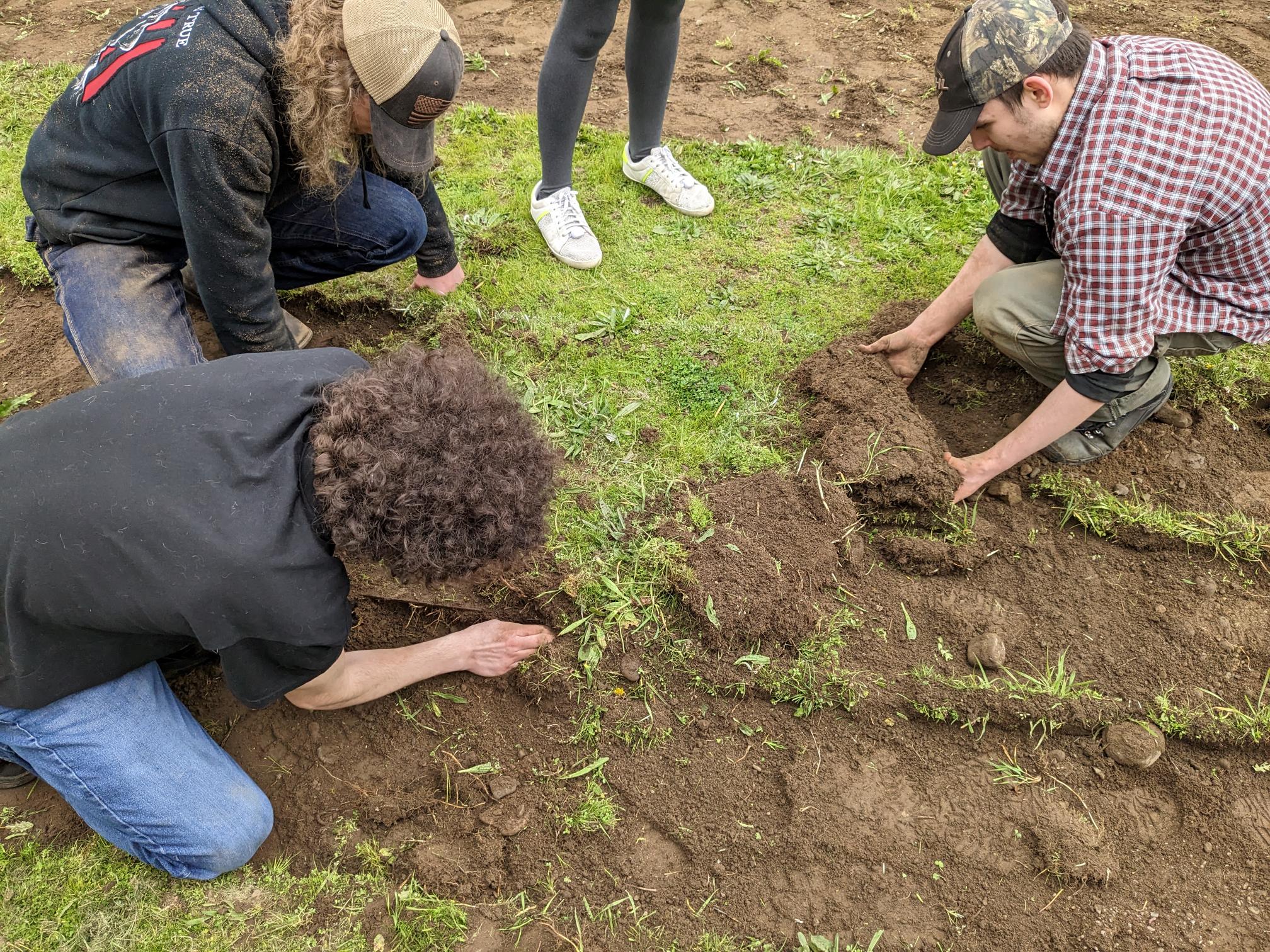
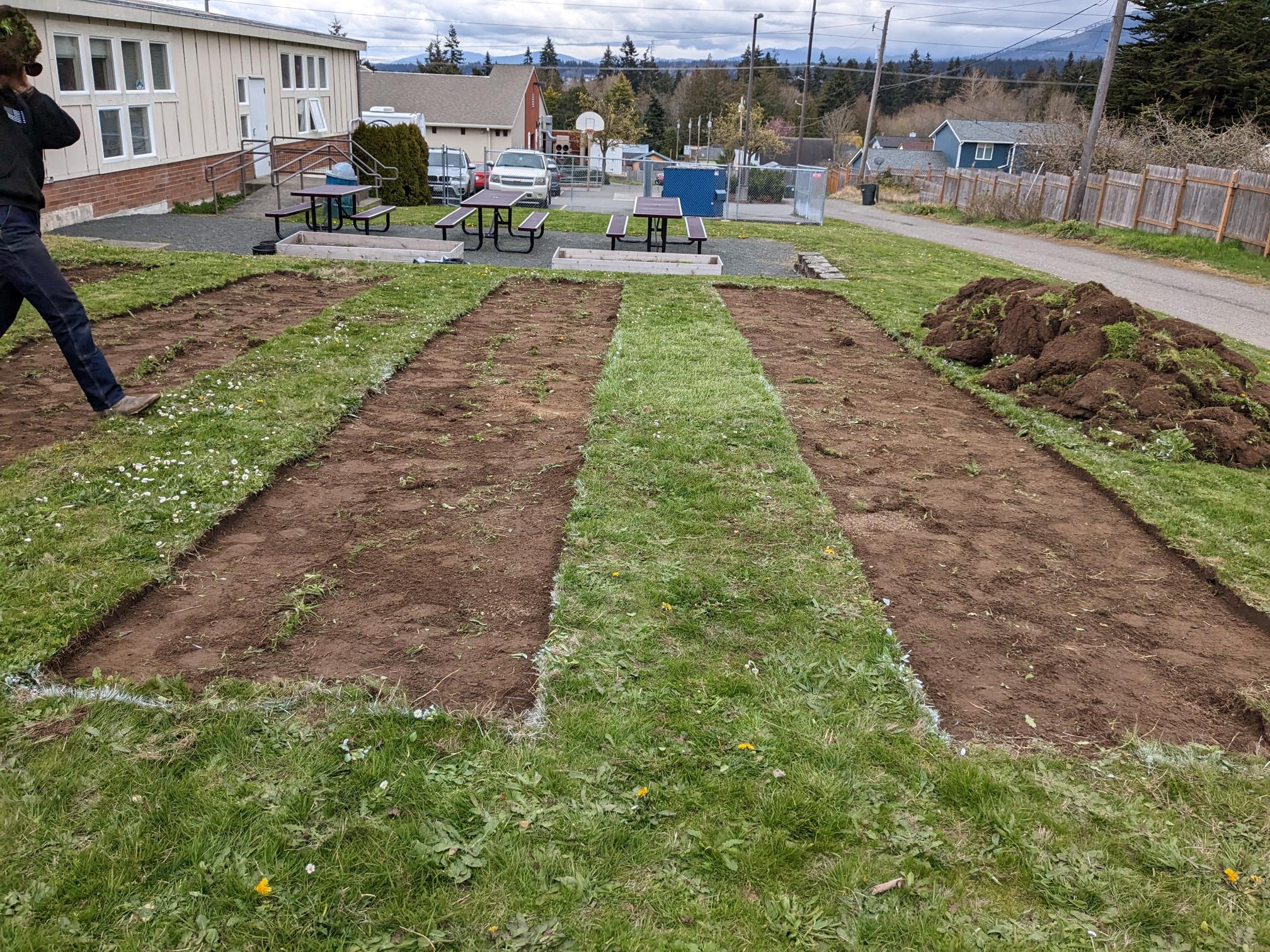
Lincoln students rolling sod to create the foundations of their garden (top). The garden space is located behind the school and will be improved with raised planter boxes and drip irrigation (bottom).
With an anticipated increase in food production, students in their Salish Sea Ecotourism and Hospitality Program (SSEAH) will have the opportunity to utilize the food for freshly prepared items served at Wildcat Café, their on-campus, student-run café that is open for lunch to the community five days per week. Students in the program, which is created and led by Lincoln Teacher Angela Tamas, will then send fresh food waste back into the garden space to be composted in a new pest-resistant compost unit. To reduce the amount of organic and inorganic waste leaving the hospitality program, we plan to engage botany, environmental science, and math students in routine waste audits to determine where changes can be made in both district-wide and Wildcat Café food service. Overall, the goal of this project is to create a sustainable low-waste garden-to-cafeteria model that can be adopted by other schools in the District.
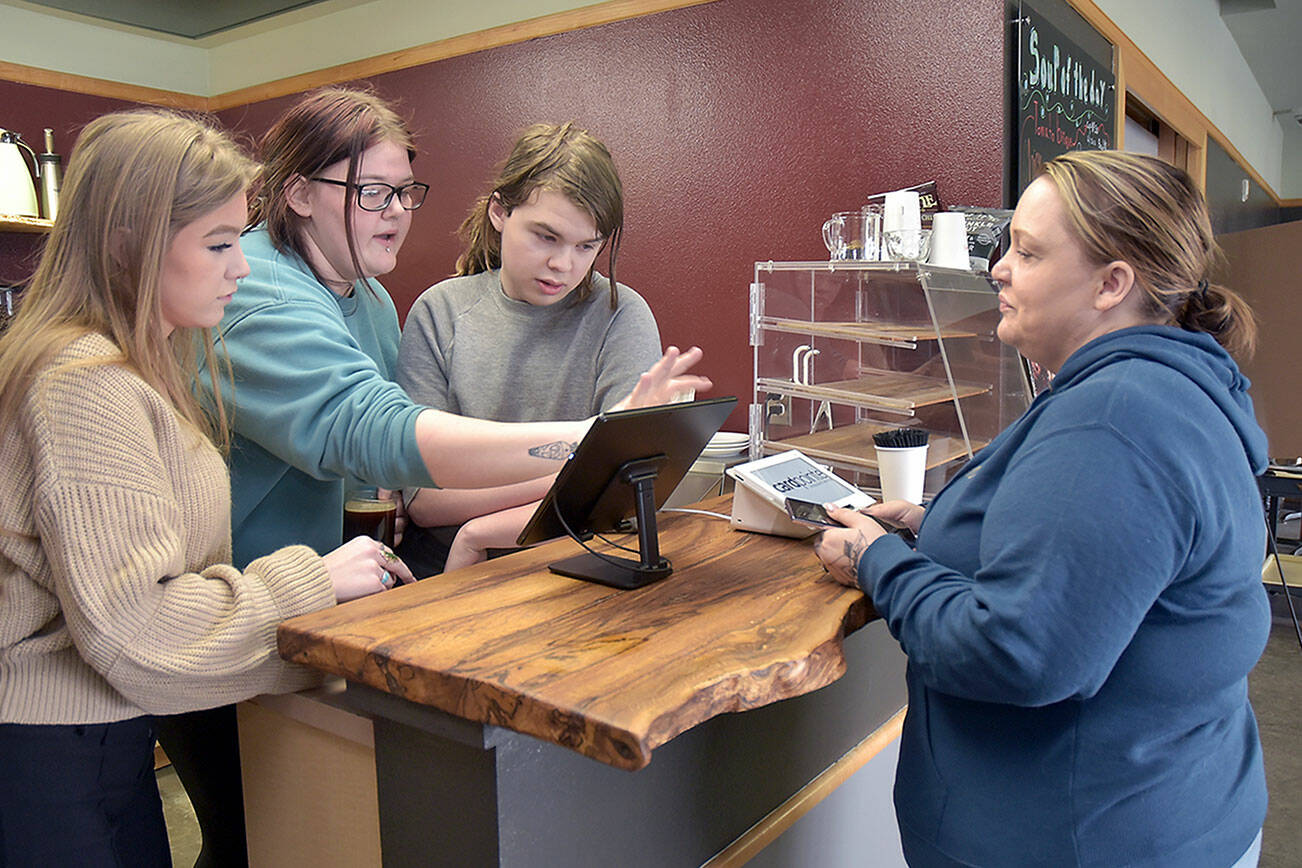
As part of their Hospitality and Ecotourism program, Lincoln High School Students help run Wildcat Café, which is open to the public five days a week. Photo credit: Peninsula Daily News
Other schools in the PASD have participated in waste-prevention projects such as composting, but this will be the first project that is fully student-run and that incorporates waste audits. Unlike previous waste prevention efforts, this program will generate data to improve efficiency and reduce waste in food services district-wide that will benefit students, staff, budgets and the environment.
This project sets the stage for long-term goals to improve the waste capture infrastructure in our community, and this project is setting the stage. Over the long term, Principal Gratz plans to install a large biodigester– a machine that captures methane gas from decomposing food and animal waste– to be able to accommodate waste from restaurants in their neighborhood while generating renewable energy.
“My blue-sky plan is to have a large biodigester that would be incorporated into a student-run business model that could provide local restaurants a service that composts food and animal waste into useable soils, rather than taking it to the landfill,” Gratz said. “In keeping with the Salish Sea Ecotourism and Hospitality Program (SSEAH) principles, we look at ways we can support the Port Angeles business community—by creating models that source locally whenever possible and provide services that benefit the overall health and success of our region’s cultural, environmental, and economic elements—while we train a workforce that is thoughtful, innovative and community-centered.”
WSU Clallam County Extension has successfully built waste prevention programing in the past and is ecstatic to work with Lincoln High School on this project. Our current work has been led by Waste Prevention Coordinator Benji Astrachan, and has focused on implementing a composting program at Franklin Elementary in the Port Angeles School District. During the 2023 school year, the composting program diverted over 740 pounds of school lunch waste from the landfill, then conducted a school-wide compost turning event during Food Waste Prevention week in April 2024. The compost was then used in the Franklin School garden. This program continues into the 2024/2025 school year.
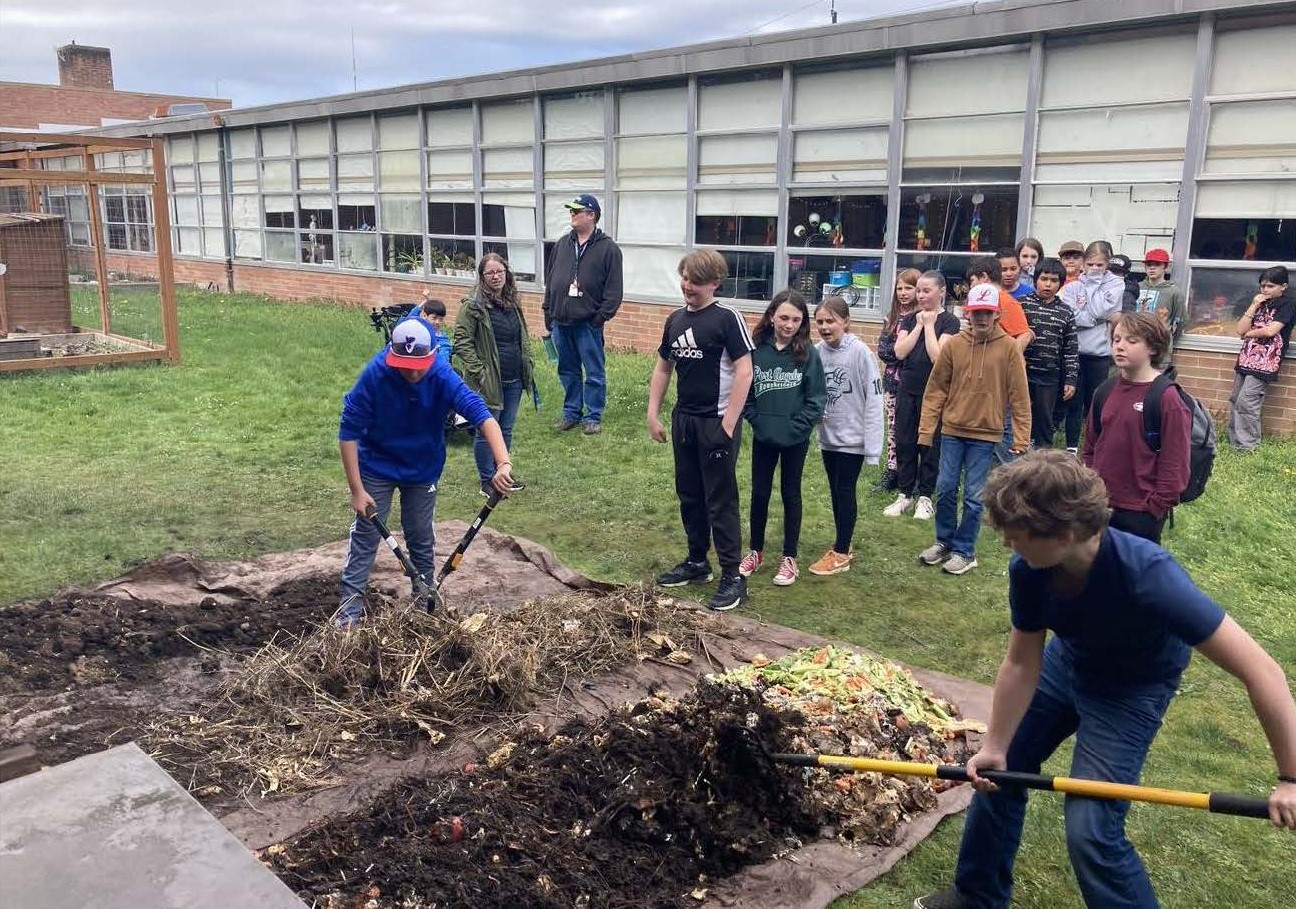
During Waste Prevention week in 2024, Franklin students participated in a compost turning event to prepare their school lunch compost to be used in their garden.
The WSU Waste Prevention program also provides composting units and composting education to several PASD classrooms. WSU Clallam County Garden-based Education coordinator Amelia Depue says that composting is one of the students’ favorite topics to learn in school gardens.
From the Washington State Department of Ecology Website: “A crucial issue that children face is the uncertainty of the world they will inherit. Schools that teach and practice sustainable behavior are important role models to children and their communities. These schools provide students knowledge and skills to understand and respond to a rapidly changing world.”
Thank you to the Washington State Department of Ecology for supporting Lincoln High School in their mission to create a healthier school and community.